Start With the Story, Not the Sofa
Most homes that feel quietly beautiful have less to do with expensive furniture and more to do with a clear point of view. A cohesive home aesthetic begins long before you choose a paint swatch; it starts with deciding what kind of story you want your rooms to tell.
Rather than asking, "What style am I?" try a different question: "How do I want this space to feel at 8 p.m. on a Tuesday?" Cozy and cocooned, bright and social, calm and spare. Write down a few adjectives and keep them close. They will become the filter for every choice that follows, from coffee table books to cabinet hardware.
Look at what you already own with this emotional filter in mind. Spread photos, textiles, and small objects on a table. Notice what repeats: perhaps there are more natural woods than you realized, or an unexpected affection for deep blues. Those repetitions are clues to your underlying aesthetic, even if your home currently feels scattered.
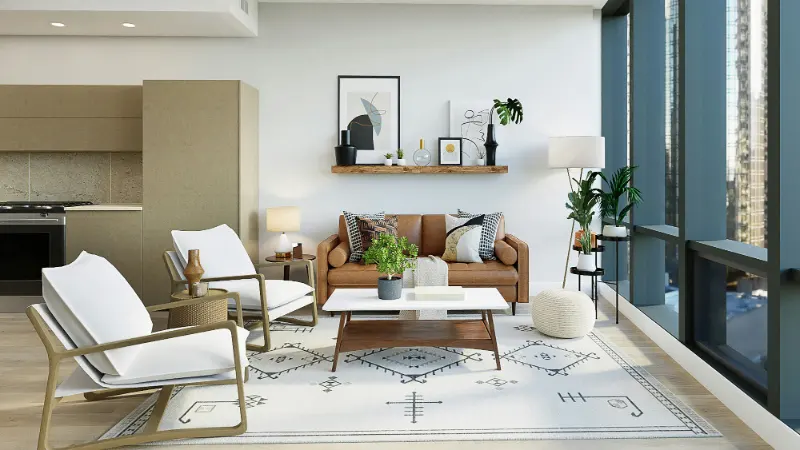
Cohesion is less about everything matching and more about nothing arguing. A midcentury chair can sit comfortably beside an antique cabinet if they share a common thread: similar wood tones, a shared silhouette, or a restrained palette. When pieces feel at odds, it is usually because they clash on several levels at once: color, scale, and style. Adjust just one or two of those and discord softens into contrast, which is far more interesting than uniformity.
Designing a cohesive home is also an exercise in editing. A beautiful object can still be wrong for your story. If your guiding mood is "light, calm, quiet," the ornate mirror you inherited might be better celebrated elsewhere, or repurposed with a simpler frame. The point is not to erase your history, but to curate it so each room feels intentional rather than accidental.
When you are unsure about an item, step back—literally. Stand in a doorway and look at the whole composition. Ask, "Does this support the feeling I want, or interrupt it?" That simple pause is where aesthetic coherence begins.
Color, Rhythm, and the Art of Repetition
Once you have a story, color becomes your most powerful tool for coherence. Choose two to three main hues that can travel throughout your home, plus one or two accents that appear sparingly. This does not mean every room must be the same, only that there is a detectable thread from space to space, like recurring characters in a novel.
One way to do this is to assign roles. Perhaps a soft neutral becomes the backdrop on walls and larger furniture, a deeper tone grounds floors and textiles, and one saturated color shows up in art or smaller objects. When these hues reappear in different proportions from room to room, the home feels related without being repetitive.
Rhythm matters as much as the palette itself. The eye likes to find echoes: a stripe on a pillow that reappears as a rug pattern; the curved line of a lamp mirrored in the back of a chair. When shapes, materials, and colors are allowed to repeat, the brain relaxes. This sense of recognition is what makes a space feel coherent, even if you cannot immediately say why.
Texture provides another subtle form of cohesion. Decide which textures belong in your visual vocabulary. Maybe it is a dialogue between matte and gloss, or between nubby linen and smooth metal. Allow those materials to circulate from room to room so the home feels like one continuous thought. A woven basket in the entry, a similar weave echoed in bedroom storage, and a related fiber in the living room rug quietly stitch spaces together.
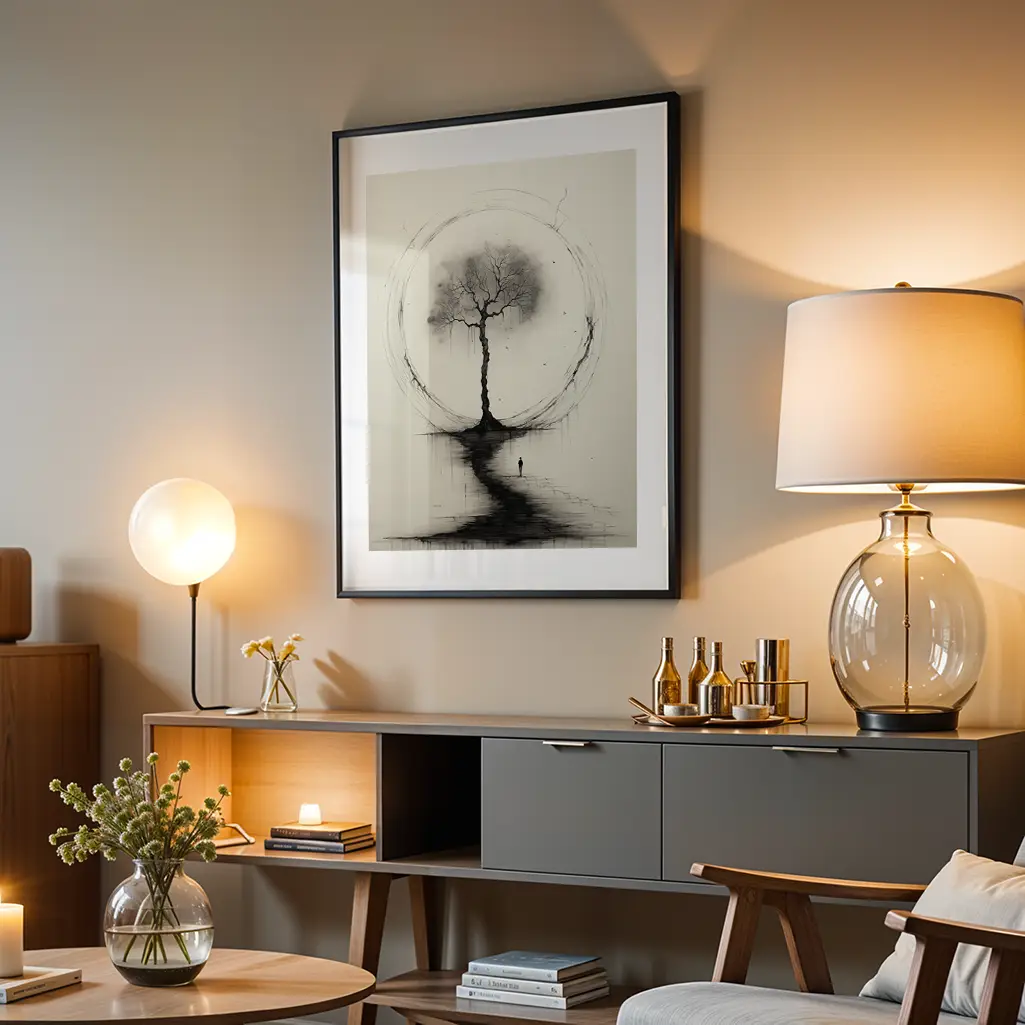
Light is the final, often overlooked, ingredient. A cohesive home aesthetic requires that lighting do more than simply banish shadows. Aim for layers: a gentle ambient glow, focused task lighting, and small pools of accent light. Choose fixtures that share either a finish, a shape, or a mood, so a pendant in the kitchen can feel in conversation with a lamp in the living room. Even the temperature of the bulbs matters; warmer light tends to flatter both people and materials, and it helps maintain a consistent atmosphere as you move through different rooms.
Composing Rooms That Speak to One Another
Cohesion is most convincing when each room is treated not as an isolated scene, but as part of a larger composition. Stand at the longest sightline in your home—perhaps the view from the front door toward the back windows. Notice what you see all at once: colors overlapping, furniture silhouettes layered, artworks partially visible. This composite view is often where a home either feels gracefully connected or visually chaotic.
Begin by simplifying these sightlines. If three different bold colors are competing across adjoining rooms, allow one to dominate and let the others play supporting roles, or move one accent to a more contained space. Align furniture so that it respects circulation: pathways should feel intuitive, not like obstacle courses. The way pieces relate in height also shapes cohesion. A room full of items at the same level reads flat; a varied skyline of low sofas, mid-height tables, and taller bookcases creates movement while still feeling orderly.
Scale is another quiet but decisive factor. A single oversize sofa in a petite room or a cluster of tiny side tables in a large one can throw off the balance of an entire home. Where possible, keep the visual weight of major pieces somewhat consistent. If a large, dark bookcase anchors the living room, a similarly weighty piece in the dining area will make the transition feel deliberate rather than abrupt.
Personal objects are where cohesion most often unravels and, paradoxically, where it can be most powerfully restored. Instead of scattering mementos everywhere, gather them into thoughtful groupings. A cluster of family photographs on one wall will have more impact—and less visual noise—than similar frames sprinkled across every surface. Treat sentimental items as part of your composition, arranging them by color, material, or theme so they harmonize with the rest of the room.
Above all, give yourself time. A cohesive home aesthetic rarely arrives with one shopping trip; it emerges slowly, as you live in the space, notice what feels off, and make small, intelligent adjustments. The goal is not perfection but a kind of visual kindness, a home that greets you each day with a steady, recognizable voice. When your rooms begin to feel like variations on a theme you chose deliberately, rather than a chorus of competing impulses, you will know that cohesion has quietly taken root.