Reframing Chores as Quiet Rituals
Most of the tasks that fill a day are neither glamorous nor dramatic. They are the dishes in the sink, the shirts waiting to be folded, the crumbs on the counter, the emails in the inbox. They pull at you like static, humming in the background of your life. Yet these same ordinary gestures are also the most reliable structure you have, repeating again and again. When you learn to work with that repetition, you can turn chores into a kind of low, steady meditation.
The shift begins with the way you think about what you are doing. Meditation is not about escaping life; it is about noticing life with a quieter mind. Washing a plate, wiping a table, or making the bed are already rhythmic, embodied activities. Instead of seeing them as obstacles between you and your “real” life, you can treat them as small rituals that bookend your day. You are not just clearing a counter; you are preparing a stage where the rest of your life will unfold.
There is a practical benefit to this reframing. When you expect chores to be unpleasant, your body tightens and your mind scatters to any distraction. The task takes longer and feels worse. When you regard the same task as a chance to settle your thoughts, you need less willpower to begin and you gain a natural boundary between one part of your day and the next. The aim is not perfection. The aim is a slightly softer nervous system each time you wipe the sink or sweep the floor.
To help this mental shift, it helps to name your ritual. You might think of the nightly kitchen reset as "closing the studio" or the morning bed-making as "setting the stage." The names are private, but their emotional tone matters. They reinforce that you are doing something for your future self, not simply erasing a mess from your past.
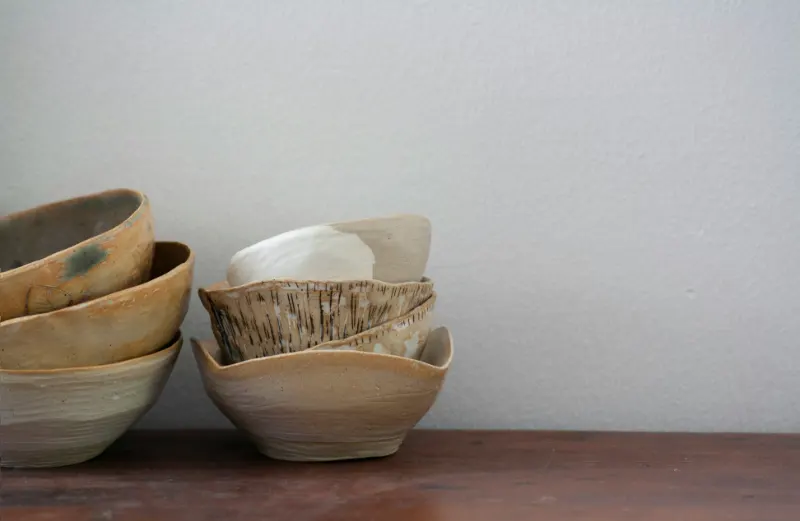
Design, too, plays a role. You are more likely to experience a task as meditative if the tools feel considered and the setting is not hostile. A single well-made dish brush, a heavy ceramic bowl by the entry for keys, a laundry basket that is sturdy and quiet when set down: these details do not guarantee serenity, but they remove points of friction that keep your mind on annoyance rather than presence. The more you can strip away small irritations, the easier it is to rest your attention on the movement of your body, the texture under your hands, the pattern of your breathing.
Using the Senses to Anchor Attention
Meditation often begins with a sensory anchor: the feeling of breath in the nose, the weight of the body in a chair, the sound of a distant street. Ordinary tasks provide anchors everywhere, if you choose to notice them. The trick is to engage your senses deliberately, one at a time, instead of letting them fade into the blur of habit.
Take washing dishes as an example. You can feel the precise temperature of the water on your skin, the slickness of soap, the changing weight of a plate as it goes from coated to clean. You can listen to the clink of ceramic, the hush of the sponge, the drip of water off the edge of the sink. You can watch the way bubbles collect along a glass, then vanish. Each of these elements is a place to rest your attention, even for a few breaths. The task has not changed, but your relationship to it has become less rushed and more curious.
Sound is especially powerful. Many homes are filled with overlapping noise: devices pinging, televisions leaking from other rooms, an endless scroll of podcasts. It can be hard to feel meditative when there is no room for silence. Try occasionally turning off the background media when you begin a task. Let the job itself create the soundtrack. The swish of a broom, the soft thud of folded towels, or the low mechanical murmur of a dishwasher can form a kind of domestic chant. You may find that even five minutes of relative quiet around a chore gives your nervous system a chance to regulate.
Light also shapes how a task feels. Scrubbing the sink under a harsh overhead bulb late at night is a different experience from doing it in late afternoon light, when the room is softer. Where possible, align repetitive tasks with the more gentle light in your home. Open blinds before you wipe surfaces. Turn on a single lamp for evening tasks, rather than flooding every room. The choreography of light tells your body whether it is time to wind up or wind down, and meditative tasks thrive in lighting that feels intentional.
Even scent can become part of the ritual. One soap for dishes, another for hands after gardening, a particular cleaner you reserve for weekly floor washing. Over time, these specific scents become cues. As soon as you smell them, your mind begins to associate the task with a predictable, calming routine. It is the domestic version of the way incense signals the start of a formal meditation session in a temple.
Shaping Your Space for Quiet Attention
If you want ordinary tasks to feel more meditative, the layout and logic of your space should support clear, simple sequences. Anxiety thrives in cluttered, confusing rooms, where every action requires a micro-decision. Meditation thrives in paths that are obvious and tools that are within easy reach. You are designing not just how your home looks, but how your attention moves through it.
Consider the entry area. When you walk in burdened with a bag, shoes, keys, and the remains of the day, the first minute at home sets your mental tone. If the doorway is a tangle of coats and mail, you are already negotiating with chaos. But if there is a small tray for keys, a single hook for your most-used bag, and a bench or chair where you can sit to remove shoes, those same movements can resemble a gentle ritual of arrival. You hang, you place, you sit, you breathe. You cross an invisible threshold from the outer world to the inner one.
The kitchen offers similar opportunities. Keep the tools for your most frequent tasks in the simplest possible line of movement. If making coffee is your morning meditation, arrange your kettle, grinder, and mugs so that your hands can flow in one steady arc from sink to stove to counter. Clear the surrounding area of unrelated items. Every time you have to move something out of the way, your mind shifts back into problem-solving mode and away from the simple repetition that fosters calm.
In living spaces, look for one or two daily tasks you can consistently link to tidying or resetting. You might smooth the sofa cushions and fold a throw blanket each evening before dimming the lights. You might clear and wipe a small portion of the dining table after you finish using your laptop. These gestures are short, but if you perform them with attention, they signal closure. They say, in effect, "this activity is complete; a new one can begin." Over time, they become like punctuation marks in the long sentence of the day.
Finally, accept that not every chore will feel meditative every time. Some days you will be restless, impatient, or distracted. The value lies in returning, over and over, to the possibility that these small gestures can carry more meaning than simple maintenance. Each time you choose to notice the weight of a towel, the sound of a drawer closing, or the arc of your arm as you sweep, you are weaving a quieter thread through the fabric of your home life. Your space begins to feel less like a stage set you must constantly repair and more like a companion in the daily practice of being present.