
What Zen Really Is: Attention, Not Aesthetic
“Zen” has become shorthand for a tidy kitchen, a beige sofa, or a perfectly rolled yoga mat. In online listings, everything from a bath mat to a salad bowl is described as “very Zen.” Yet the tradition itself began as a fierce insistence on seeing reality clearly, not styling it tastefully.At its root, Zen is a school of Buddhism that developed in China as “Chan,” and later in Japan as “Zen.” The word itself simply means “meditation.” It points less to beliefs than to a practice: sitting still, breathing, and noticing the mind in real time. While other Buddhist traditions often emphasize scripture, Zen has a reputation for side‑stepping elaborate doctrine and going straight for direct experience. A famous Zen saying captures this: “A special transmission outside the scriptures, not dependent on words or letters.”
That doesn’t mean Zen rejects thought or study. It means that no description of calm can substitute for actually feeling your breath in your chest; no theory of compassion can replace the brief, disarming silence when you listen to someone without planning your reply. The practice is about returning—again and again—to this ordinary moment, without the usual fog of distraction and commentary.
Zen, then, is less about adopting an exotic worldview and more about noticing the one you already live in but rarely see clearly. You still pay bills, cook dinner, and answer emails. Zen simply asks: Can you be fully present for those moments instead of treating them as corridors you hurry through on the way to something better? That shift from “corridor living” to “room living,” from rushing through to inhabiting, is where Zen and domestic life quietly meet.
This is also where Zen is most often misunderstood. When people say “I want a Zen home,” they often mean “I want fewer things and less noise.” That wish is understandable, but furnishings alone do not create a Zen life. If you carry the same frantic mind into a quieter room, you have simply created a more elegant backdrop for your anxiety. Zen begins not with what’s in your space, but with how you are in your space.
What Zen Isn’t: Minimalist Branding or Emotional Numbness
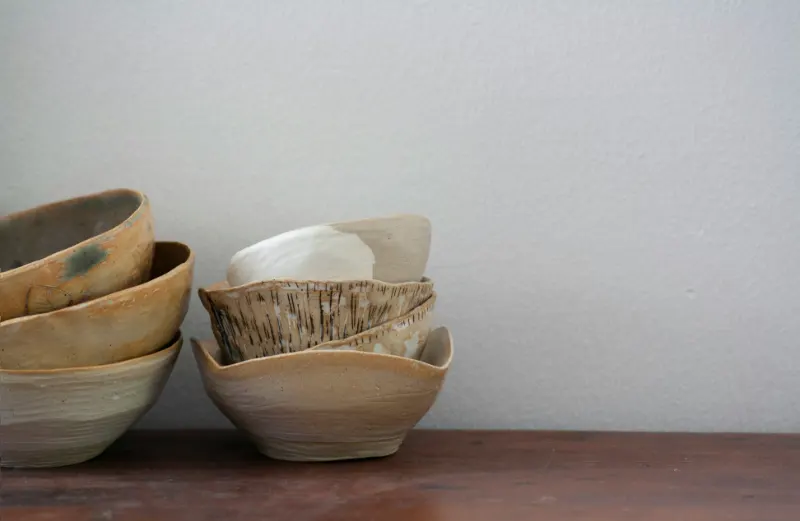
Because Zen aesthetics can be spare—think of a simple tatami room or an empty garden raked with care—it is often confused with contemporary minimalism. But the two are not identical. Minimalism tends to focus on reduction for efficiency or visual clarity: fewer objects, more productivity, less clutter. Zen is less interested in low inventory than in intimacy with whatever remains.A Zen monk’s room might be plain, but each object in it is used, repaired, and regarded with attention. A chipped bowl is not automatically discarded because it offends the eye; it might be mended with care, or kept as a quiet teacher of impermanence. The value is not in owning less for its own sake. It is in seeing more deeply into what you already hold, whether that is a cup, a memory, or an uncomfortable emotion.
Another common confusion is the idea that Zen is about being unbothered by everything, a kind of premium emotional detachment. Social media often turns “Zen” into a lifestyle of perpetual chill: no anger, no grief, no difficult conversations, just eucalyptus steam and matching linen sets. The actual tradition is more demanding. Instead of smoothing over feelings, it invites you to sit so still that you can feel them completely, without immediately acting them out or pushing them away.
In a home, that can look disarmingly simple. You notice the rise of irritation when someone leaves dishes in the sink and you pause for a breath before you speak. You feel the sting of loneliness in a quiet apartment and, instead of drowning it in streaming shows, you light a candle, sit on the floor, and give your full attention to that ache for a few minutes. “Zen” in these moments is not a mood but a way of meeting experience without disguise.
It is also not a matter of cultural props. A statue of the Buddha on a coffee table does not make a home more Zen than a child’s drawing taped to the fridge. If anything, the drawing—with its crooked lines and earnest color—may be closer to the spirit of Zen, which values immediacy over perfection. The question is not whether an object looks spiritual, but whether you actually see it and let it teach you something about the person who made it, the time of day, or the life you are living right now.
Bringing Zen Home: Space As a Teacher, Not a Showroom
If Zen is not a décor style or a personality filter, how can it help you create a nicer home space? The key is to treat your rooms as living partners in attention rather than as finished projects to be admired from a distance.Start with one spot you use every day: a corner by a window, the end of a dining table, a small stretch of floor beside your bed. Clear just enough for you to sit comfortably. Place one or two objects there that invite you to return: perhaps a cushion, a low stool, a simple lamp, or a plant that needs regular watering. The aim is not to fabricate a perfect meditation nook, but to declare to yourself, “This is a place where I come back to my breath.”
When you sit there, even for five minutes, notice the actual sensory life of the room. The particular sound of your neighbor’s footsteps above, the changing wash of light on the wall, the hum of an appliance you usually ignore. This is not background noise to tune out; it is the fabric of the life you are already in. By paying attention without judgment, you are practicing Zen more directly than you would by buying any number of themed accessories.
From this small center, you can gradually let the practice spill into the rest of the home. Washing dishes can become a chance to feel warm water on your hands and the subtle satisfaction of a plate going from greasy to clean. Making the bed shifts from a chore you rush through to an act of quiet hospitality toward your future self, who will arrive tired and find the sheets already smoothed. Rearranging a shelf is less about impressing a guest and more about asking, “What do I actually use, and what quietly burdens me?”
Over time, you may notice that a certain kind of object no longer belongs: something you bought to signal a lifestyle rather than to support a life. Letting it go is a Zen act not because it creates a more photogenic room, but because it aligns the space with what is genuinely lived, rather than with an image you are trying to maintain. Your home slowly becomes not “Zen” in the branded sense, but more honest, more breathable, and more capable of reflecting who you are when you are fully present.
In this way, Zen Buddhism explained simply is less a distant Eastern philosophy than a daily, domestic practice of paying attention. A “Zen home” is not a museum of tasteful restraint. It is a place where the ordinary details of living—light on a table, the sound of water, the feel of a floor under bare feet—are allowed to matter, and where you are invited, room by room, to show up for your own life.
.webp)