The quiet architecture of Chadō
The Japanese tea ceremony, known as "Chadō" or "Sadō"—literally "the way of tea"—is often described as a single bowl of whisked green tea shared in silence. That description is accurate but incomplete. Behind the spare choreography lies a full philosophy of attention, hospitality and spatial design. It is, in a sense, interior design performed as a sequence of gestures.Historically, Chadō took shape in the sixteenth century, refined by tea masters such as Sen no Rikyū. At the time, the ruling elite favored lavish, imported Chinese objects. Rikyū turned instead to rustic Japanese bowls, plain walls and low ceilings, shaping the "wabi-cha" aesthetic: a deliberate embrace of simplicity, irregularity and the quietly weathered. This shift was not only a matter of taste. It was an argument about what kind of space the mind needs to become honest.
At the moral core of tea are four principles: harmony, respect, purity and tranquility. They sound abstract, but in the tearoom they are entirely physical. Harmony appears as a subtle echo between a bamboo scoop and a reed mat, or between the deep green of the tea and the muted grey of a wall. Respect is the way a guest turns a bowl before drinking, protecting the most beautiful side from their lips. Purity is not sterility but an ongoing, visible act of cleaning: the host wipes each utensil before everyone’s eyes, making care a shared experience rather than backstage labor. Tranquility arises not from the absence of sound but from each sound having its rightful place: the dry rustle of footsteps, the faint clink of ceramic, the bubbling of water that is just about to boil.
The ceremony’s power lies in how it compresses an entire worldview into a small room and a brief encounter. Time is slowed, but not stopped. Conversation is allowed, yet never dominates. Every choice in the room, from the height of the doorway to the flower in the alcove, is quietly advocating for a way of being awake to others and to oneself.
If you are thinking about how to design a more graceful home, Chadō provides more than poetic inspiration. It offers a concrete template for how space, object and gesture can work together so that ordinary acts—sitting, pouring, drinking—feel dignified and meaningful without becoming grand.
Space as a gentle gate: lessons for the home
A traditional tearoom begins with an intentional threshold. Guests pass through a garden path, then bend through a small entrance, symbolically leaving social rank outside. The route is short, but it is sequence, not distance, that does the work. The guest is guided to change pace, posture and attention before the first bowl of tea appears.Most homes do not have a tea garden, but they do have thresholds. The space just inside your door can either be a dumping ground for shoes and mail or a modest version of the tea path. A simple bench, a tray for keys, a single artwork or branch can serve as a quiet invitation to arrive. This is not about aesthetic virtue; it is about allowing the body a cue that home time has begun. In tea, the space tells you how to behave without raising its voice. Your hallway can do the same.
Inside the tearoom, the architecture is intentionally modest. Ceilings are low, tatami mats regulate where bodies settle, and natural materials frame everything in soft light. Nothing shouts. The smallness is not deprivation but a form of editing. By reducing distractions, the room amplifies the remaining details: the steam rising from the kettle, a single calligraphic scroll in the alcove.
Applied at home, this suggests that comfort is less about quantity than about clarity. A living room crowded with decor can make each item mean less. If you remove a few pieces and give more space to what remains, a favorite chair or bowl begins to feel almost ceremonial, not because it is expensive but because it is legible. Think of each room as a conversation with one or two key notes rather than a chorus of competing voices.
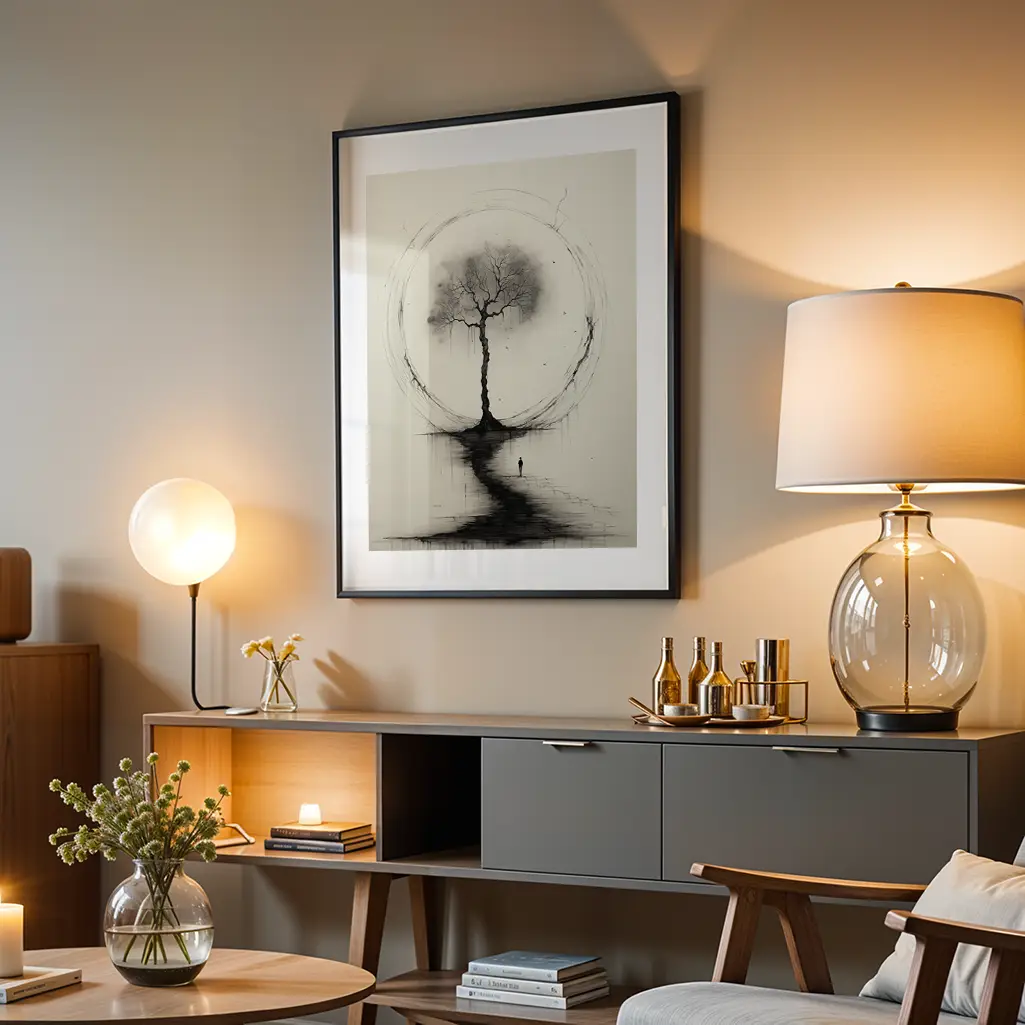
Light in tea spaces is typically indirect, filtered through paper or falling at an angle that avoids glare. The effect is not dimness for its own sake but a softness that allows nuance. In harsh light, objects flatten; under gentler illumination, the curve of a cup or the texture of plaster becomes noticeable. At home, adjusting a lamp so it grazes a wall rather than shining straight into the room can quietly change the mood. The tea room’s lesson is that technical brightness is not the same as psychological clarity. Often, we think better when the light is kind.
Objects, ritual and the everyday bowl
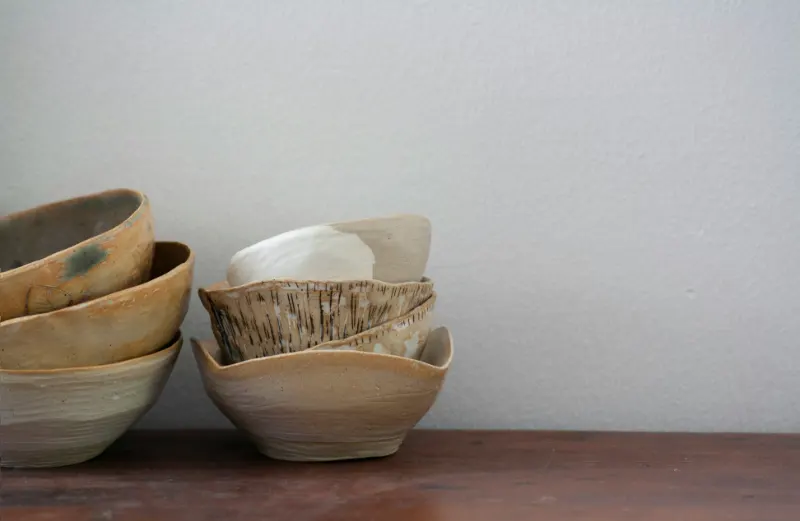
In Chadō, objects are never just tools. Each utensil carries a memory of its maker, the season and the particular gathering. Yet the most treasured bowl might be visibly cracked, repaired with gold lacquer in the spirit of "kintsugi." Imperfection is not concealed; it is framed as part of the object’s biography. This is wabi-sabi in action, and it stands in opposition to the disposable perfection of many contemporary goods.Translating that into a home does not require a collection of Japanese ceramics. It means choosing a few things you are willing to see every day and allowing them to age in your company. The mug with a hairline chip, the wooden table that holds the ring of an old water glass, the linen cushion that has softened with use: when you keep them and care for them, they stop being background and become quiet companions. The art of tea suggests that an object’s meaning deepens as its surfaces record time, provided you are willing to see wear as evidence of life rather than failure.
Ritual in the tea room is precise but not stiff. The host’s movements are taught and repeated, yet each performance is responsive to the guests, the weather, the particular day. In contemporary life, the word ritual often conjures obligation. Tea offers a gentler framing: a recurring, simple sequence that makes space for attention. At home, this might be the way you prepare coffee every morning, the order in which you open a window, light a candle, sit for a few breaths before touching your phone. The sequence does not need to be long; it needs to be deliberate.
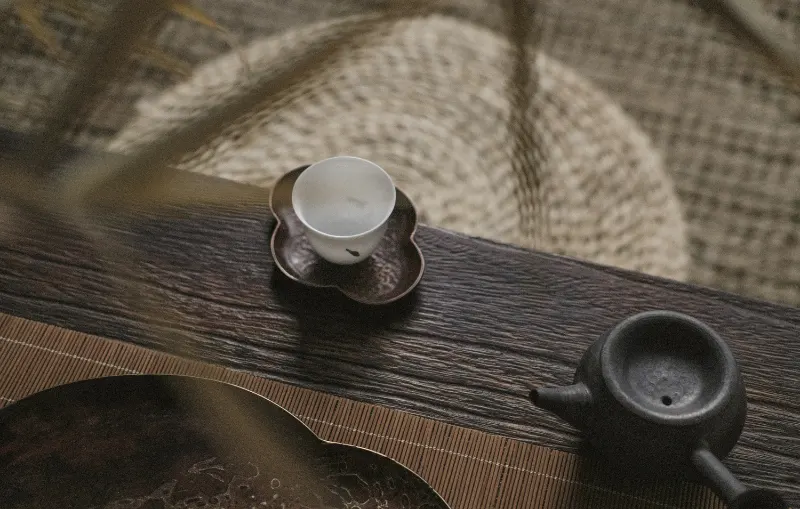
From a design perspective, supporting such rituals can be as practical as dedicating a corner of a counter to a tray with your chosen cup, kettle and tea canister. When things have a stable home, your actions can settle into a pattern. Over time, that pattern becomes a kind of moving architecture, as shaping to your day as any wall. The tea ceremony reminds us that meaning is not hidden in rare events but built slowly, using ordinary gestures repeated with care.
To bring a touch of Chadō into your space is not to recreate a historic tearoom. It is to ask, room by room and moment by moment, how your surroundings might help you arrive, notice and offer hospitality. The way of tea is ultimately a way of seeing: the willingness to let a single, well-used bowl of something hot and fragrant be enough, and to design your home so that such moments are not accidents but almost inevitable.