
Reframing the Bathroom as a Daily Retreat
The bathrooms that feel closest to a spa rarely begin with lavish square footage or marble budgets. They begin with a different question: instead of asking what you can store or hide in the room, you ask how you want to feel in it.
A spa atmosphere is less about surface luxury and more about orchestrating a sequence of small, sensory experiences. The space slows you down, tells you where to place your eyes, what to touch, even how to breathe. Translating that into a home bathroom is not about copying a hotel; it is about editing your own space so every object is either soothing or quietly useful.
Start by standing in the doorway and noticing your first impression. You might see a tangle of bottles, an exhausted bath mat, bright overhead light. Ask yourself what the room is currently saying. "Wake up now" is different from "Rest for a moment." When you aim for spa vibes, you are training the room to whisper the second message.
One way to shift this message is to think in terms of visual silence. A spa rarely shouts at you with branding or primary colors. It leans on calm surfaces, repeated tones, and a few carefully placed objects. Even if you cannot change the tile or fixtures, you can control everything that touches them: towels, bottles, trays, and light. That is where simple, strategic changes have outsize impact.
Light, Color and Texture: The Quiet Architecture of Calm
If structure is hard to change, light is often the easiest and most powerful lever. Most bathrooms are designed like operating rooms, with a single bright source overhead. Spas, by contrast, use layers and softness. The goal is not darkness, but gentler contrast.
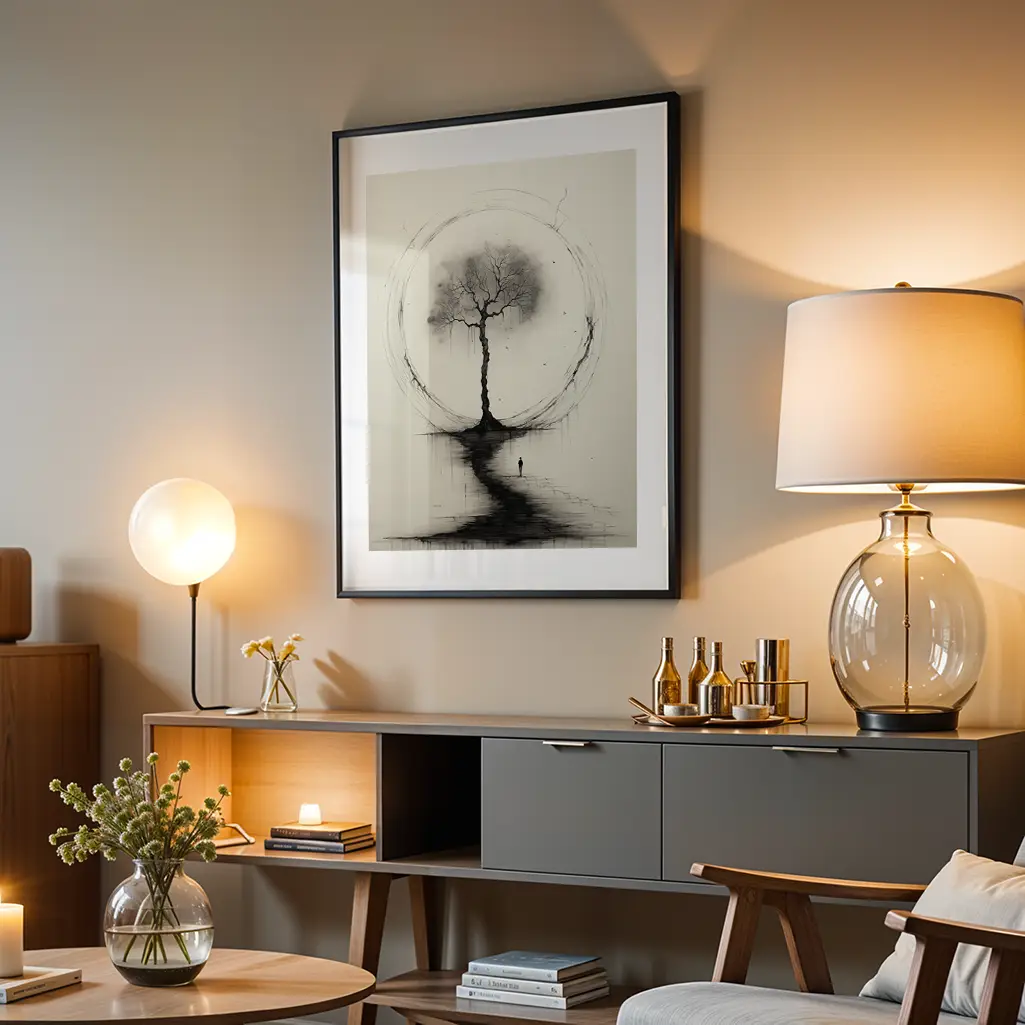
Swapping a harsh bulb for a warm, dimmable one can immediately change the room’s temperature, both visual and emotional. Look for bulbs around 2700K to 3000K, which mimic candlelight more than daylight. If you have a ceiling fixture only, a dimmer switch offers control without renovation. If there is an outlet, a small, low-wattage lamp placed on the vanity or a nearby shelf can create a pool of glow that feels instantly more spa-like than a blazing overhead.
Candles or flameless candles deepen this effect. Their flicker introduces movement, a subtle reminder that light can breathe. Place one where its reflection doubles in the mirror; you now have two flames for the price of one, and the room gains depth.
Color is the next layer. A spa rarely depends on loud hues to create mood. Instead, it leans on a narrow palette, usually drawn from stone, sand, water, or plant life. You do not need to repaint to move in this direction. You can treat your existing tile color as the base note and choose textiles and accessories that either soften it or repeat it.
If your tile is cool white or gray, bring in warmth through beige, taupe, or clay-colored towels and a wood or bamboo bath mat. If the space already leans warm, consider linen-colored textiles and a few charcoal or deep green accents to ground it. Limiting yourself to two or three tones creates visual cohesion; the eye no longer works as hard, and the nervous system follows.
Texture is where the body understands luxury, even in a modest space. A single thick, generously sized bath towel feels more spa-like than a stack of thin ones. A plush mat underfoot, or a smooth wooden slatted mat, changes how you exit the shower. Swap the scratchy plastic shower curtain for a fabric one that drapes elegantly, perhaps with a simple waffle weave or linen look. These tactile shifts are the design equivalent of turning down the volume in the room.
Storage should also participate in the quiet. Decanting products into simple, matching bottles is not about aesthetics alone; it turns a chorus of labels into one calm line on the vanity. A small tray to corral daily items transforms clutter into a still life. The rule of thumb is that everything visible should belong to a soothing scene. Anything that does not serve that scene can move into a drawer, a basket, or another room entirely.
Rituals and Details That Make the Room Feel Alive
Even the most beautiful bathroom falls flat if it feels static. Spas understand that what you do in the room is as important as how the room looks. Ritual is the final, often missing layer.
Begin with scent, because it meets you at the threshold. Choose one or two fragrances that feel like a destination: eucalyptus if you like a "steam room" clarity, lavender if you want evening softness, citrus if mornings are your main concern. Use them consistently, through an essential oil diffuser, a room spray, or a single candle. Over time, that scent becomes a cue that you are stepping into a different mode.
Next, consider what you touch in the first 30 seconds. Is the soap dispenser sticky, the towel a little tired, the mirror spotted. Upgrading a plastic dispenser to a heavy glass or ceramic one, or investing in a single beautifully made hand towel, can change your perception of the entire room. In a spa, small gestures matter: the folded edge of a towel facing you, a washcloth rolled rather than crumpled, a brush or comb laid neatly in a tray.
Plants, or even a single stem of greenery in a small vase, remind the brain that life exists outside the tile. Many bathrooms have low light, but hardy species like pothos, philodendron, or a simple cutting in water can survive and even thrive. The goal is not a jungle, but a sign of the living world.
Finally, define one small ritual that turns an ordinary shower into a brief retreat. It might be placing a few drops of essential oil on the shower floor before you turn on the water, keeping a body brush nearby for a quick exfoliating sweep before you step in, or setting a timer for five minutes where your only task is to stand under warm water and feel your breath slow.
When the space, the objects, and your actions are all pointed in the same direction, the bathroom stops being a hallway closet with plumbing and becomes something closer to a personal sanctuary. The changes are simple, often inexpensive, and entirely reversible. Yet together they create a quiet choreography: light that softens, textures that invite, and rituals that teach the room to help you rest.