
Why the Walls Matter More Than the Bed
Most people begin a bedroom makeover with the obvious question: "Which bed should I buy?" Yet the walls, quietly wrapping the room, do more to dictate how it feels than the headboard ever will. A bare expanse can amplify visual noise; the right art can muffle it. To design a bedroom that feels calm and cozy rather than simply decorated, it helps to think of the walls as a kind of emotional climate system.
In a living room, art can be loud, witty, and insistently present. The bedroom asks for something subtler. Your brain is still processing images as you drift toward sleep, which is why neon posters and chaotic gallery walls often feel fine in a hallway but jarring over a pillow. You want to aim for "whisper" rather than "shout"—art that rewards a slow gaze instead of demanding attention.
Begin with scale. Above the bed, a single large work can act like a visual headboard, grounding the entire wall. If your bed is a queen or king, something that spans at least two-thirds of its width typically feels balanced. The goal is not to fill space just to avoid emptiness, but to create a calm horizon line for the eye to rest on. Too many small frames scattered high and low force your gaze to ping-pong; one or two substantial pieces let the room exhale.
Color is the next quiet negotiator. Designers often recommend echoing the softer notes of your existing palette—muted blues from your quilt, the beige of the rug, a smoky green from a plant. Treat art as a way to deepen, not disrupt, that harmony. High-contrast black and white can still be serene if the composition is spare and the framing simple. But if you already own a bold piece you love, consider positioning it opposite the bed rather than directly above it, allowing your last view of the night to be softer.
Texture matters as much as color. A linen-textured print, a washed canvas, or a deckled paper in a float mount reads gentler than a slick, reflective surface. Even the frame has a role: pale wood, thin black metal, or painted frames in the same tone as the wall feel lighter than heavy, ornate moldings. In a small bedroom where every object counts, the frame can quietly decide whether a piece of art feels like an invitation or an intrusion.
The practical test is simple: imagine lying in bed, light off, room dim. The art you choose should feel like something you could half-see in that almost-dark and still find comforting. If it would feel better shut away in a closet at night, it probably belongs in another room.
Composing a Wall That Feels Like a Deep Breath
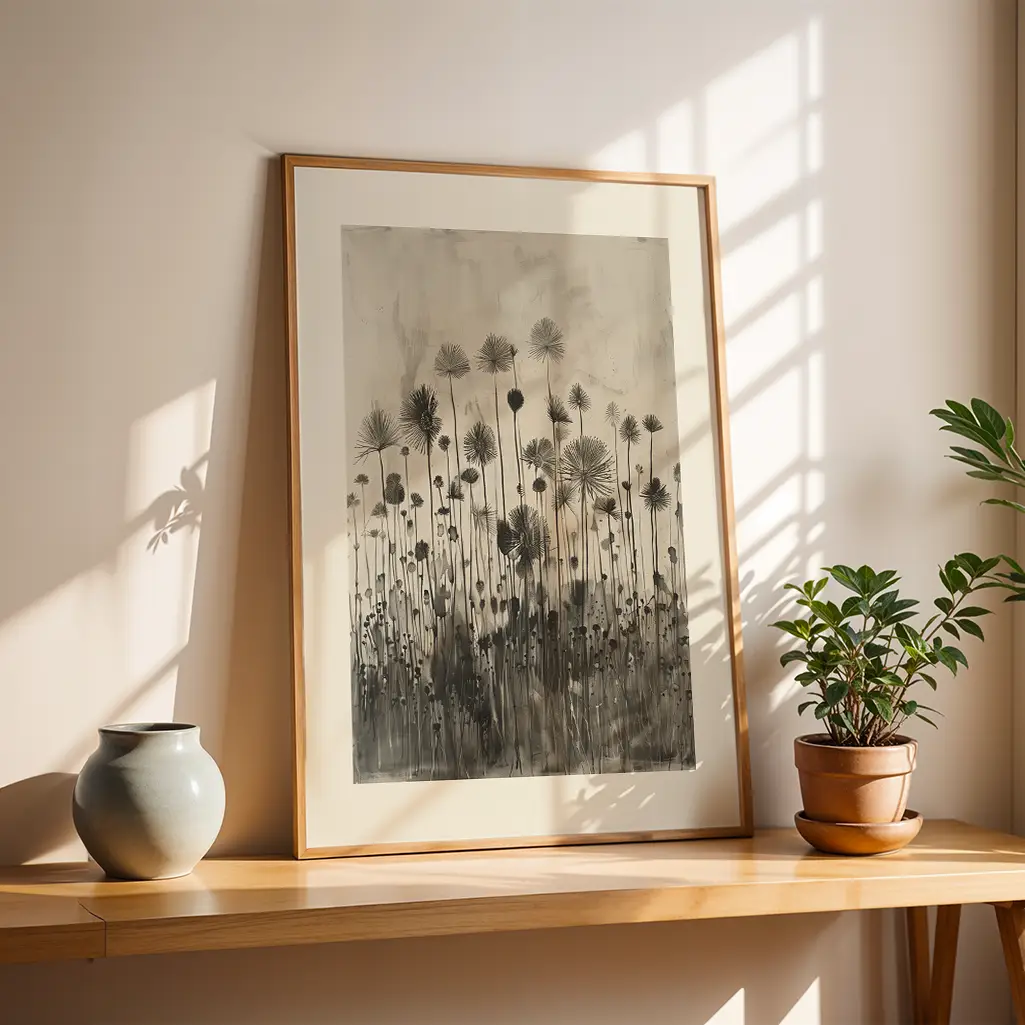
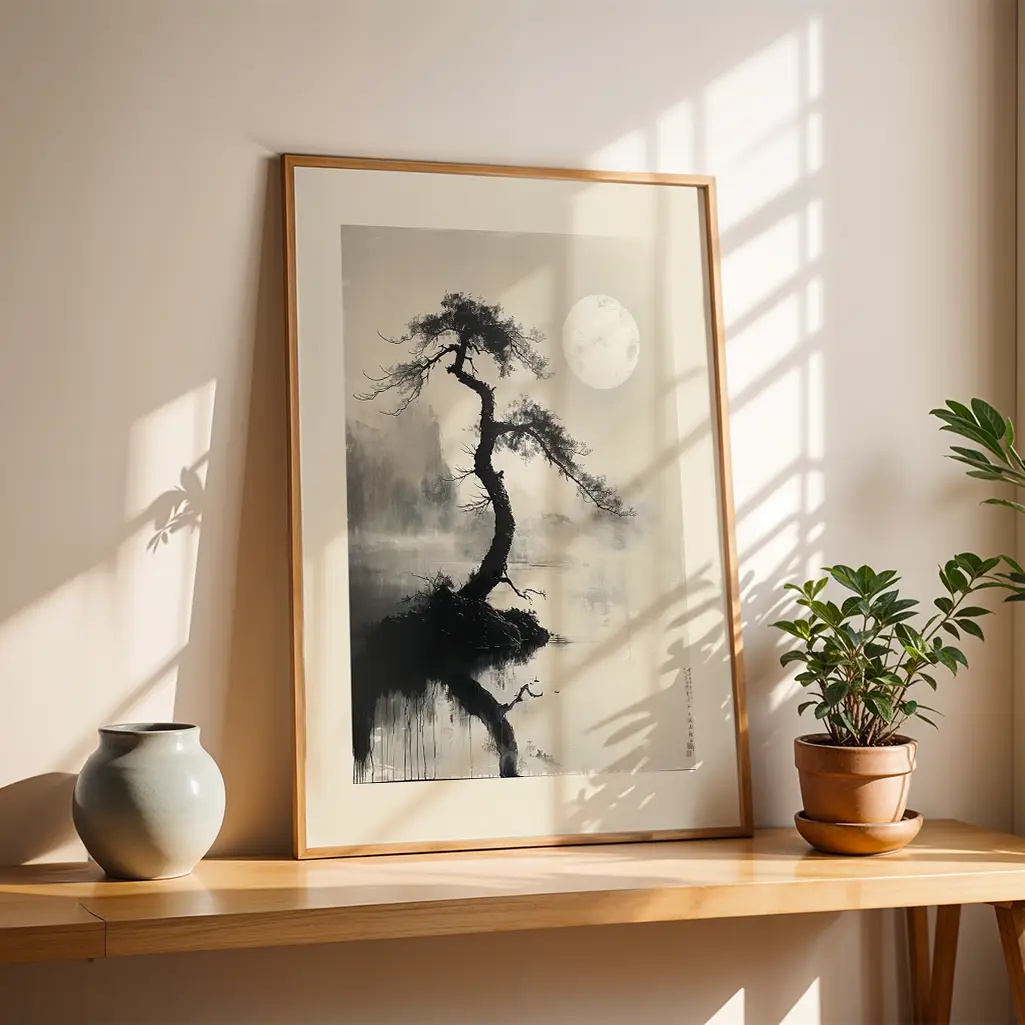
Once you know the mood you want—"calm" and "cozy" rather than "gallery opening"—you can start composing actual bedroom wall art ideas with more intention. Think of the main wall, often the one behind the bed, as your anchor. If you prefer a single strong piece, choosing imagery that suggests depth—misty landscapes, abstract washes, or soft, repeating shapes—encourages your mind to drift rather than analyze. If you lean toward photographs, those taken at a slight distance, such as a shoreline or quiet street, tend to feel safer than intense portraits staring back at you from two feet away.
For those tempted by gallery walls, restraint is your ally. Instead of a dense cluster running from bed to ceiling, imagine a looser constellation. Keep the frames in one or two finishes, vary sizes in small increments rather than extremes, and hold the overall shape in a soft rectangle so the composition feels intentional, not anxious. A gallery can still be calm if negative space—the untouched wall between frames—is treated as part of the artwork.
You can also use art to suggest a sense of ritual. A pair of smaller pieces flanking the bed, hung just above the nightstands, can frame the space where you read, journal, or simply breathe before sleep. Drawings, pressed botanical prints, or minimalist line work feel almost like visual lullabies in these positions. If you share the room, consider a loose pairing: two works that speak to one another without mirroring, like different verses of the same poem.
Cozy does not have to mean cluttered. Instead of filling every available inch, allow one wall to remain almost bare except for a single, quiet piece—perhaps a painting in tones barely darker than the wall itself. The emptiness around it functions like a pause in music, letting the rest of the room feel more generous. A bedroom gains warmth not only through objects but through the respect it shows for your need to rest among them.
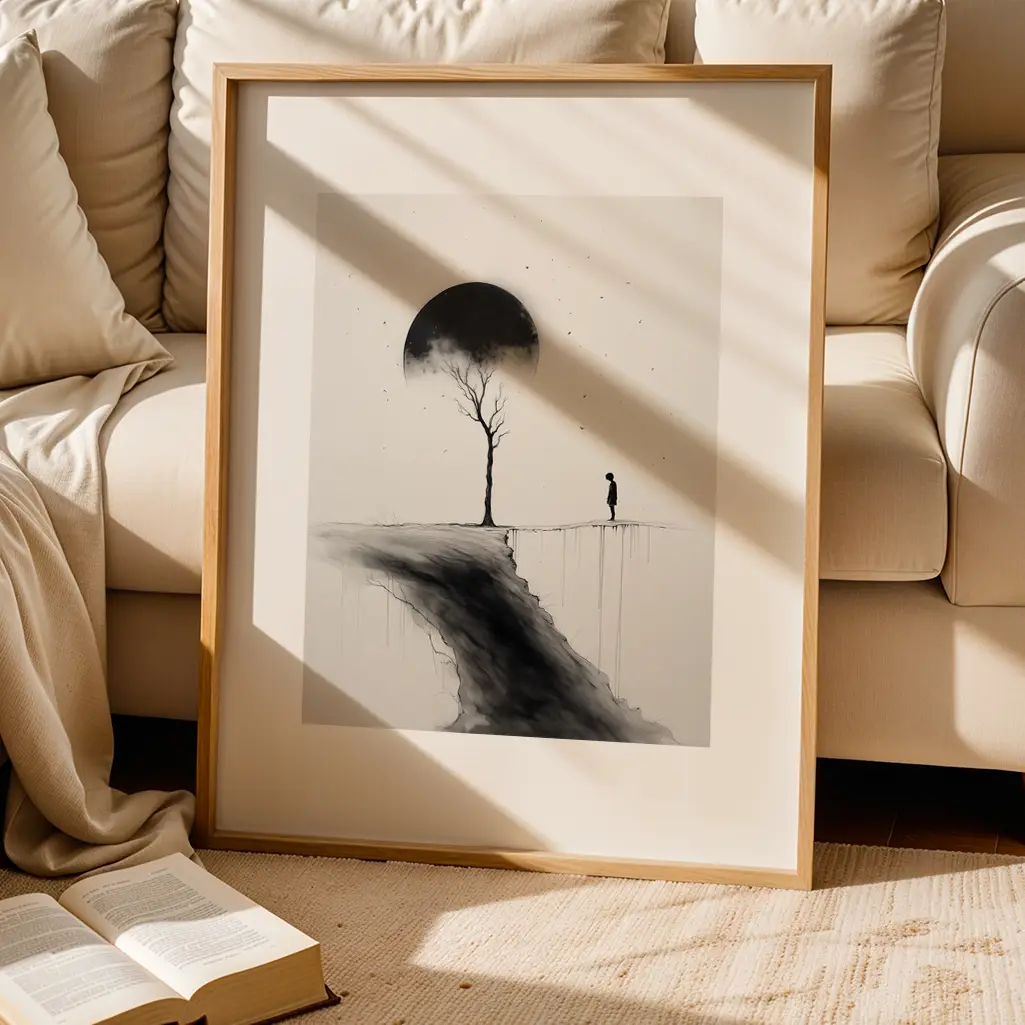
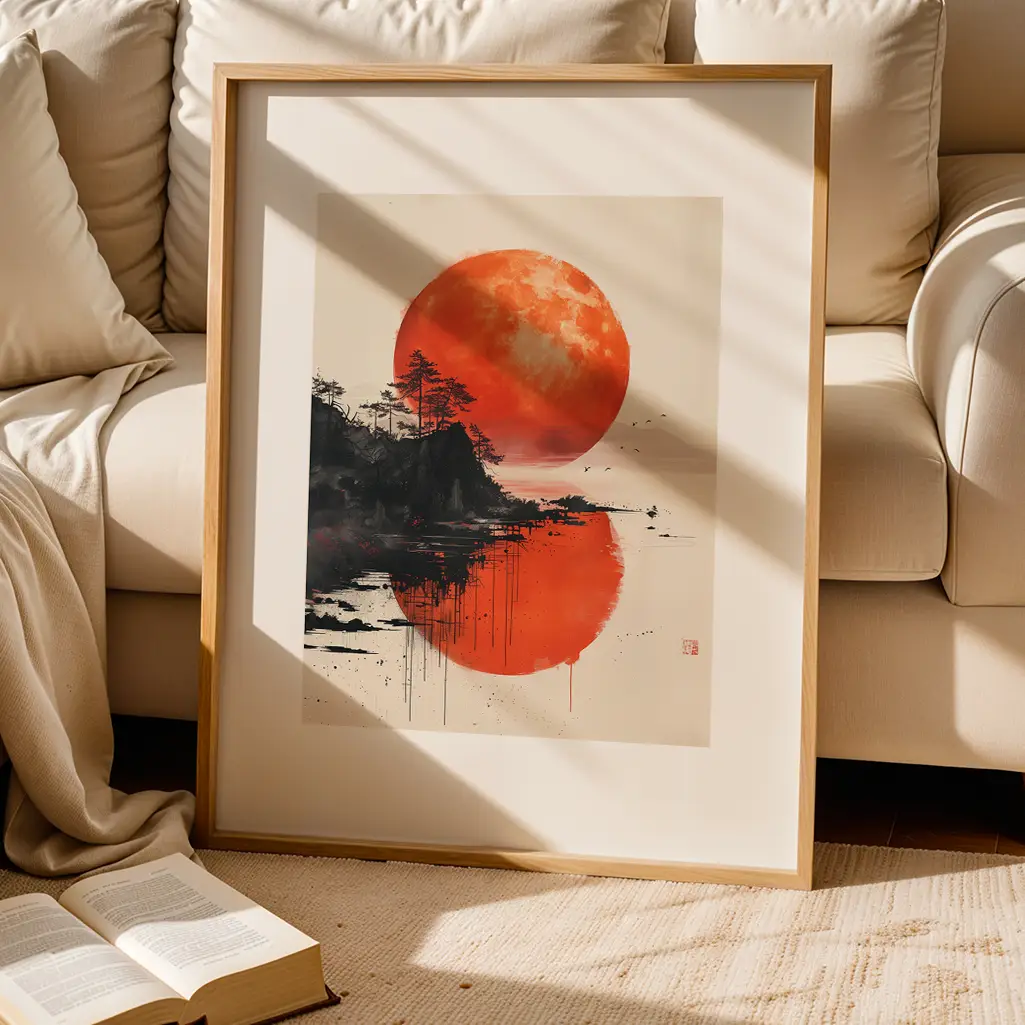
For renters or the nail-averse, leaning art is an underused strategy. A framed piece on a dresser, propped against the wall and layered with a smaller photograph, reads intimate and temporary in the best way. A low picture rail behind the bed can hold rotating works without new holes, allowing the room to evolve with the seasons or with your own shifting sense of calm.
Using Art to Tune Light, Memory, and Mood
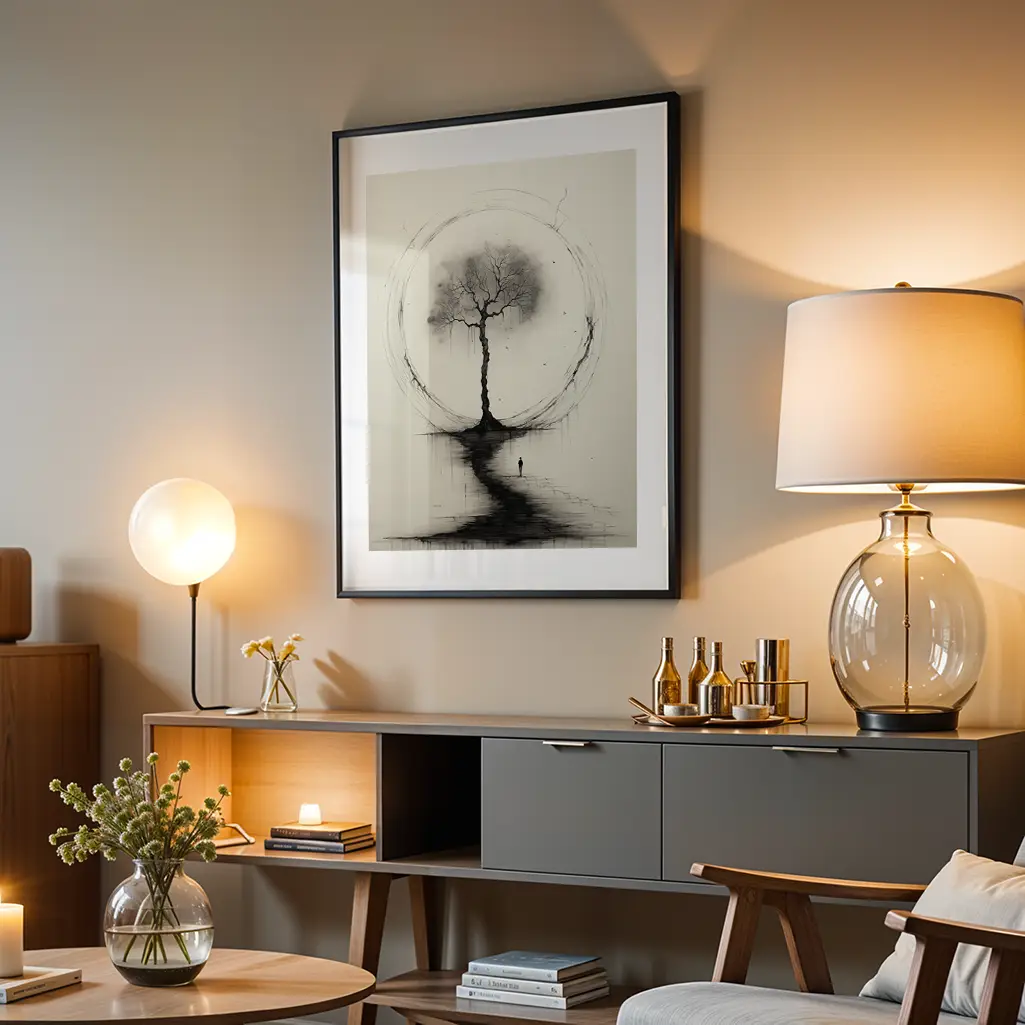
The most successful bedroom wall art ideas tend to consider light first. Morning light can reveal harsh whites and glare from glass; evening light, especially from warm lamps, can turn soft colors into something almost edible. Before committing, tape printed stand-ins or existing pieces to the wall and live with them for a week. Notice how they behave at sunrise, mid-afternoon, and just before you sleep. A work that looks stunning in photos may feel too sharp in the intimate half-light of an actual nightstand.
If you want the room to feel like a refuge, resist using the bedroom walls as your entire autobiography. Instead of a collage of every milestone, choose a few images that function as "quiet memories"—a vacation photo with more sky than faces, a childhood sketch, an inherited print. Framing these with care elevates them from cluttered nostalgia to intentional anchors. You are curating which parts of your life you want to be alone with at 2 a.m.
Cozy, in design, often comes down to perceived softness. Wall hangings with fabric—like a small woven textile, a framed fragment of vintage linen, or a simple quilt square—literally soften the sound in a bedroom and visually temper hard surfaces. One well-chosen textile above a low dresser can warm a room more effectively than multiple slick prints. Think of it as adding another layer of bedding, but for the walls.
Above all, treat your bedroom art as a conversation you will have with yourself every day, sometimes in your most unguarded moments. The question is less "Does this look stylish?" and more "Can I live with this quietly?" A calm, cozy bedroom is not one that imitates a hotel, but one that understands your particular thresholds for stimulation and comfort. When your walls are tuned to that understanding, the rest of the room can be surprisingly simple: a good lamp, a soft rug, a bed that holds you. The art becomes the silent architecture of your rest, shaping the space where your waking life lets go.