Mapping the Online Art Landscape
Buying wall art online can feel like scrolling through everyone else’s taste while trying to locate your own. The sheer volume of images turns a personal decision into a numbing one. The trick is not to hunt for the single perfect piece, but to understand the kinds of places that sell art and how each shapes what ends up on your walls.
Most online art sources fall into a few overlapping worlds. There are fine art platforms that behave like digital galleries, where you will find limited editions, original works and higher price points. There are marketplaces for independent illustrators and photographers, where the emphasis is on prints and flexible formats. There are home retailers that treat art as decor, bundling it with frames and styling suggestions. And at the edge are vintage and secondhand marketplaces where you search by instinct more than algorithm.
Each type has strengths. Digital galleries often offer better paper, controlled editions and more rigorous curation, which can help if you are overwhelmed. Independent marketplaces excel at personality; they are where you discover that oddly specific print that feels like an inside joke with yourself. Big home retailers bring reliability and coordination, making it easier to get something framed and on the wall within days. Vintage sources bring patina and a sense of history that brand new work simply cannot fake.
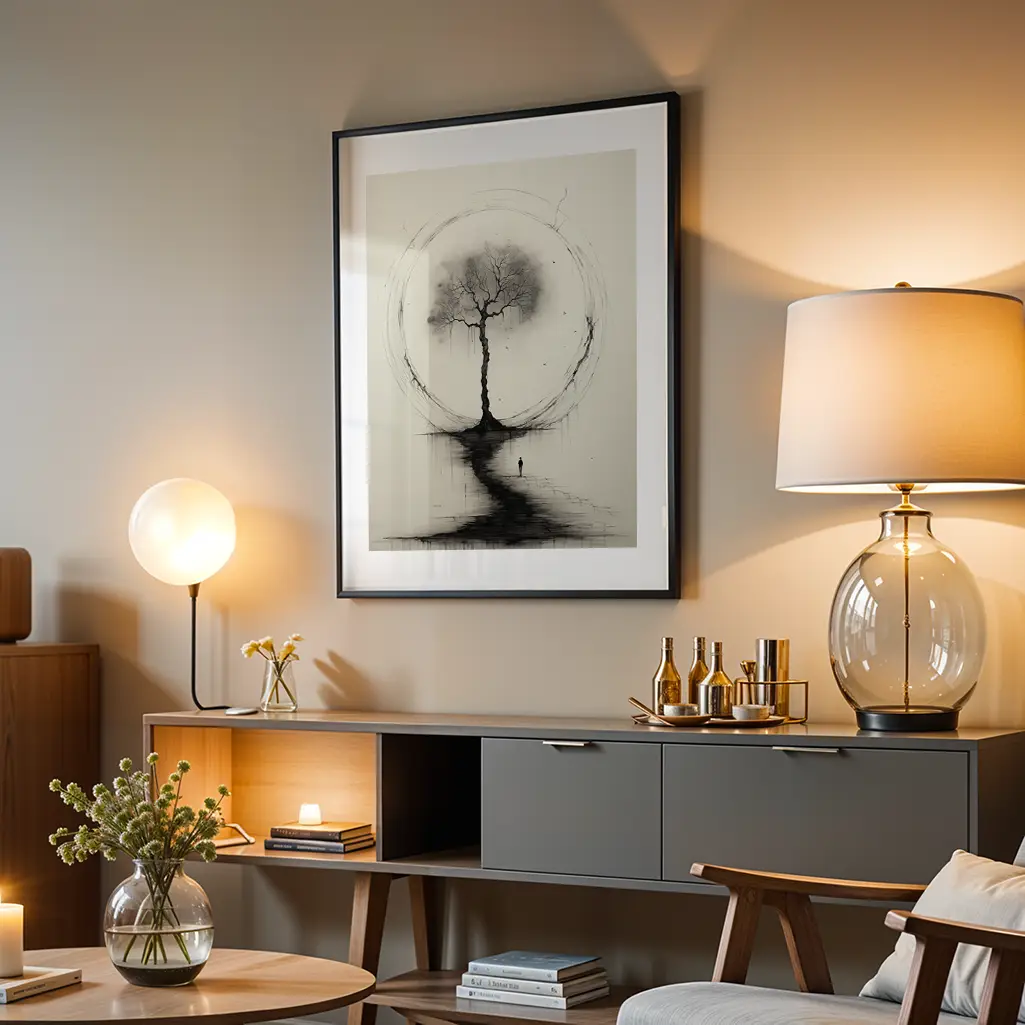
Before you click buy, pause and ask what role the piece will play in your space. A large work over a sofa has a different job than a small, intense drawing next to your bed. A gallery wall can be a chorus of voices; a single statement piece is closer to a solo performance. Deciding the role clarifies where to shop. A quiet graphite drawing for a reading corner may live on a small independent site; the oversized abstract you want to anchor your living room may come from a platform that specializes in large-scale prints and custom framing.
It also helps to notice how a site treats artists. Do they name them clearly and link to full portfolios, or is every work reduced to a generic style label. Sites that foreground artist names invite you into a relationship with the maker, however small. Over time, following a few artists you love can be more satisfying than endlessly browsing generic wall decor because it turns your collection into an ongoing conversation rather than a series of disconnected purchases.
How to Read Quality Through a Screen
Because you cannot touch the paper or stand back from the canvas, buying wall art online requires learning to read the clues hidden in small text and zoom buttons. Quality is not only about status; it affects how the work ages, how colors hold up to sunlight and how convincing the piece feels once it is on your wall.
Start with materials. Look for descriptions that specify paper weight, printing method and inks. Phrases like archival cotton rag, museum grade giclée and pigment based inks generally signal a more durable print with richer color. Vague language like premium paper without detail is less reassuring. For photographs, check whether the print is a true photographic process or a digital reproduction and whether the finish is glossy, matte or lustre, because that surface changes how light moves across the image in your home.
Framing deserves the same scrutiny. A site that offers custom framing should show close up photos of corners and mention glazing type. Real glass feels heavier and stays clearer but is more fragile and reflective; acrylic is lighter and safer, especially in kids rooms or over beds. If your room receives strong daylight, look for options that mention UV protection or museum glass, or consider buying the print unframed and taking it to a local framer who can help you balance cost, protection and aesthetics.
Scale and proportion are where many online art purchases go wrong. On your laptop, a twenty four inch print and a forty inch print feel almost identical. In your living room, one hovers politely over the sofa while the other commands the wall. Study the size options carefully and measure your wall, not once but twice, including existing furniture and outlets. A common guideline is that art above a sofa should be roughly two thirds the sofa width, but what matters more is the feeling. Do you want the art to envelop, to speak quietly or to disappear until you are close.
Use tape on your wall to outline the dimensions you are considering. Stand at the distance from which you usually see that wall and imagine the weight of color and line. Many sites now offer augmented reality previews, but the humble tape rectangle teaches you just as much about how the work will inhabit the room, especially in smaller spaces where a few inches can shift the balance from calming to cluttered.
Choosing Art That Actually Belongs to You
Once you know where to look and how to evaluate quality, the most difficult part remains taste. Browsing online exposes you to what is popular right now, which is not the same as what you will want to live with in three years. The goal is not to create an impressive backdrop for other people, but to assemble a set of images and objects that quietly strengthen your daily life.
An easy way to begin is by paying attention to the moods you are drawn to, rather than styles. Do you seek out calm, desaturated landscapes at the end of the day, or graphic, high contrast shapes that jolt you awake. In a small apartment, you might want the bedroom art to lower the volume while the entry piece offers a sharper hello. When shopping, imagine the moment you will most often share with the piece, morning light while making coffee or late evening on the sofa, and choose accordingly.
Think in terms of layers more than matches. If your furniture is already neutral and streamlined, art with visible brushwork or collage can soften the room with a bit of human irregularity. If your home is filled with pattern and color, a restrained photograph or minimal drawing can create a visual resting place. Online filters that sort by color or style can be useful, but ignore them occasionally and browse by artist, subject or even medium to avoid narrowing your options too quickly.
Finally, leave room for serendipity. Some of the most beloved pieces in a home are not those that seem perfect on paper, but those that arrive with a quirk you did not expect, a color slightly off or a composition stranger than your usual choices. Vintage and secondhand platforms are particularly good for this; you search with loose terms and allow oddities to surface. In a world where the algorithm keeps trying to show you what everyone else is buying, letting one or two pieces break from the pattern can make your walls feel undeniably your own.
Over time, buying wall art online becomes less about filling empty spaces and more about editing the story your home tells. You start to see each wall as a pause or a sentence, each frame as a decision about how you want to feel in that corner of your life. The best places to buy art are the ones that respect that slow accumulation, offering not just endless options but enough clarity, detail and humanity for you to choose with your eyes open.