Seeing Your Walls as Quiet Companions
A calm, Zen atmosphere at home rarely starts with what you buy; it starts with what you are willing to let go of. Wall art is no exception. Before searching for the perfect piece, stand in the room you want to soften and simply look. Notice where your eye feels restless: the crowded gallery wall above the sofa, the busy posters in the hallway, the tiny prints scattered like visual static. Zen-minded decorating asks a quieter question: how little is enough for this space to feel alive, but not agitated.
In a typical home, walls are treated like blank invoices that must be paid in full with images and frames. A Zen approach reverses that logic. The wall is already doing something; it is holding space, light, and shadow. The art you add should feel like a respectful interruption, not a takeover. This is where negative space matters. A single, well-chosen piece with generous blank wall around it will calm a room more than ten modest prints perfectly aligned.
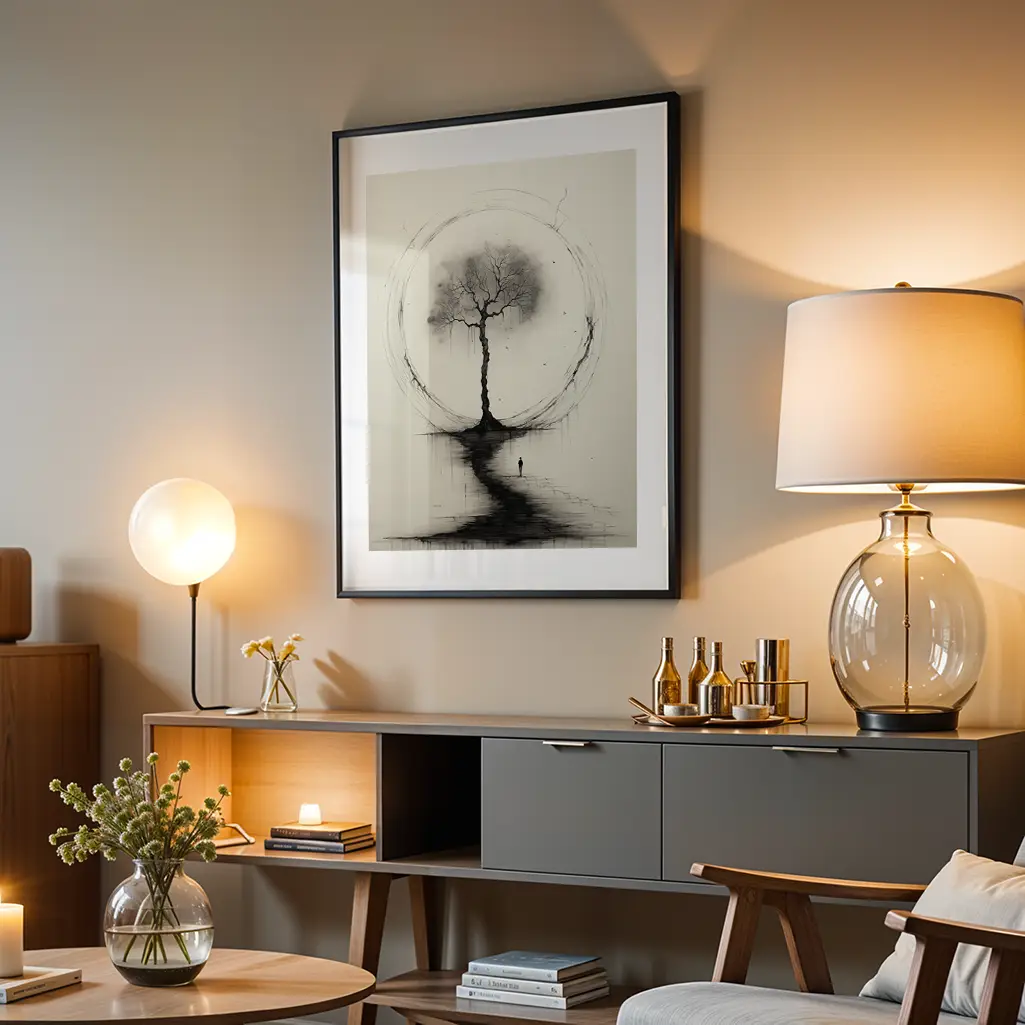
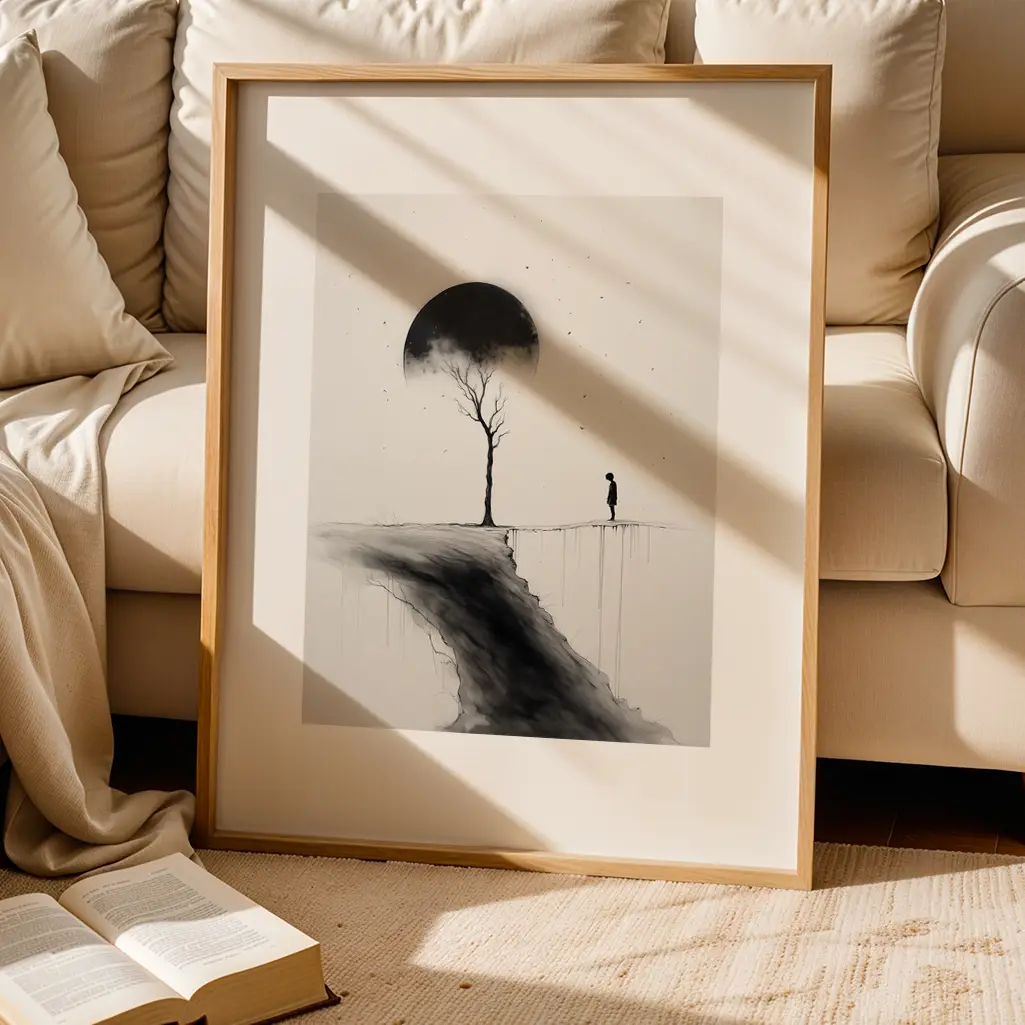
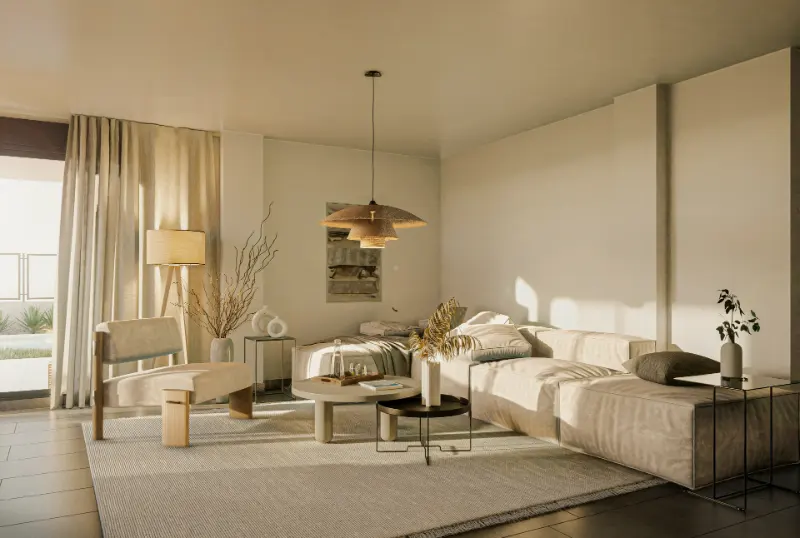
Imagine a pale, textured canvas with only a few charcoal lines, hung above a low, simple sofa. The eye rests on the lines, then on the empty canvas, and then on the surrounding wall. Your gaze slows down. That slowing is the beginning of a Zen atmosphere. The art is not merely decorative; it is pacing the room’s attention.
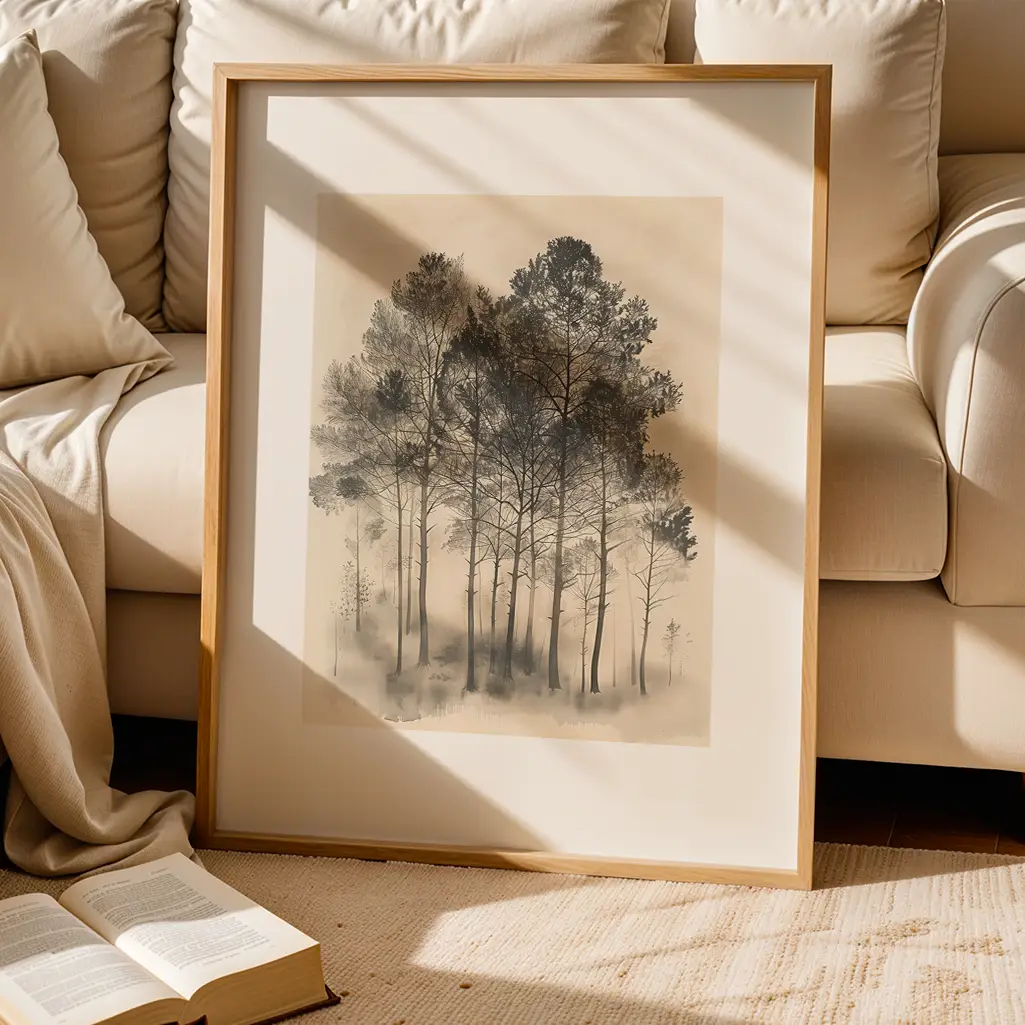
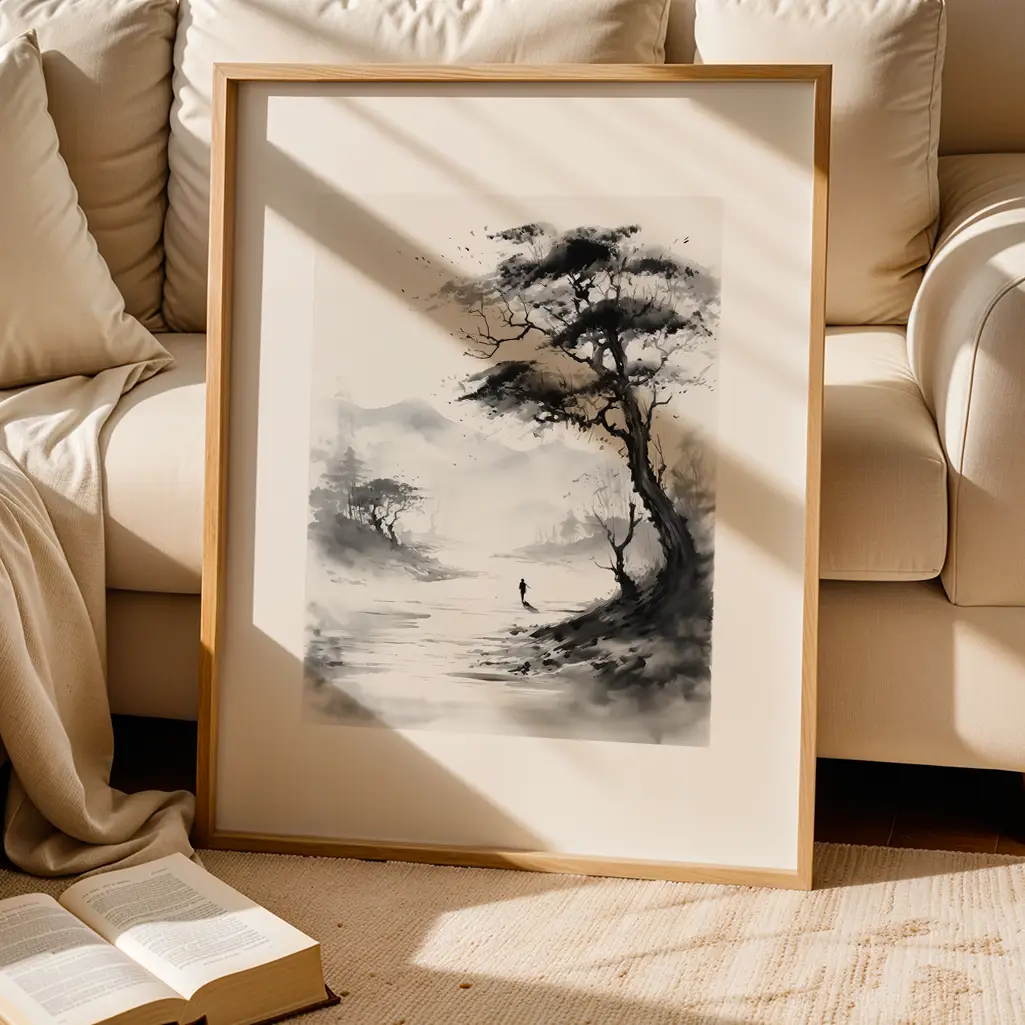
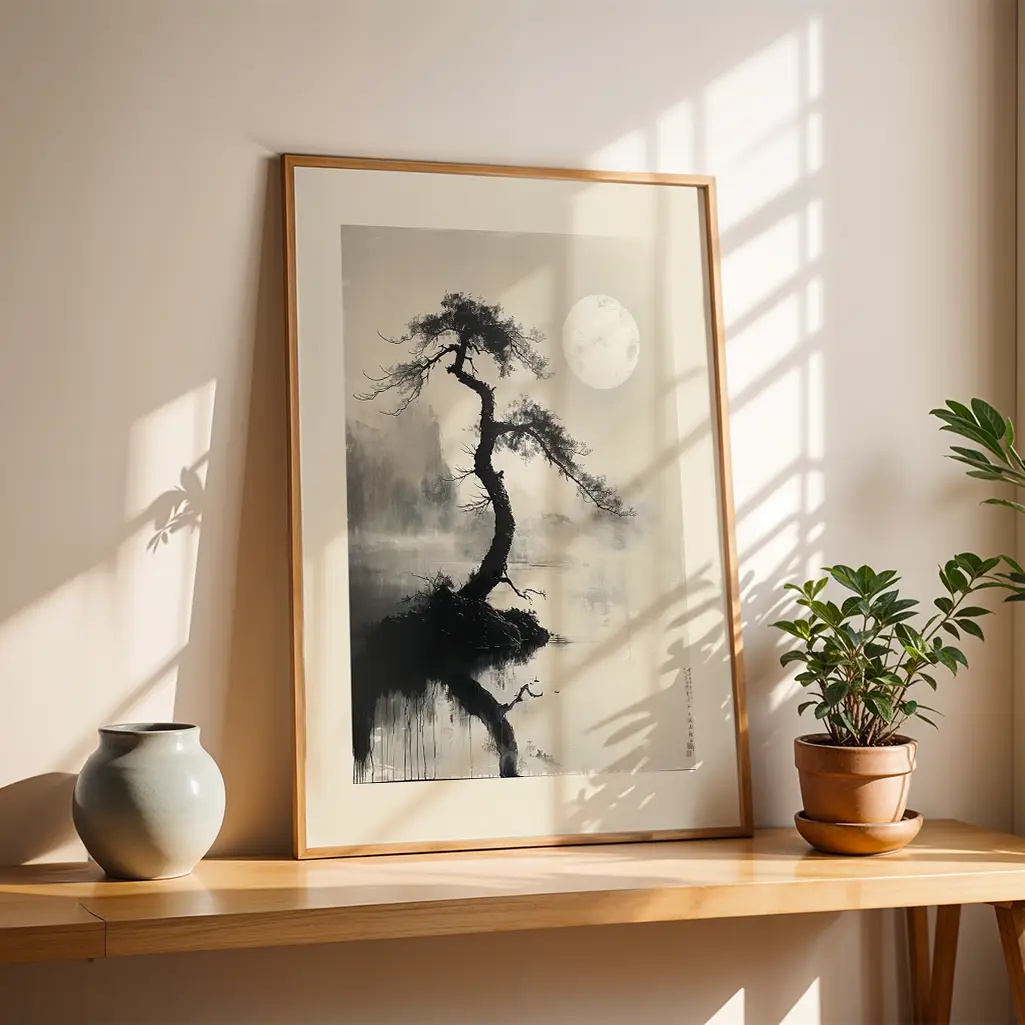
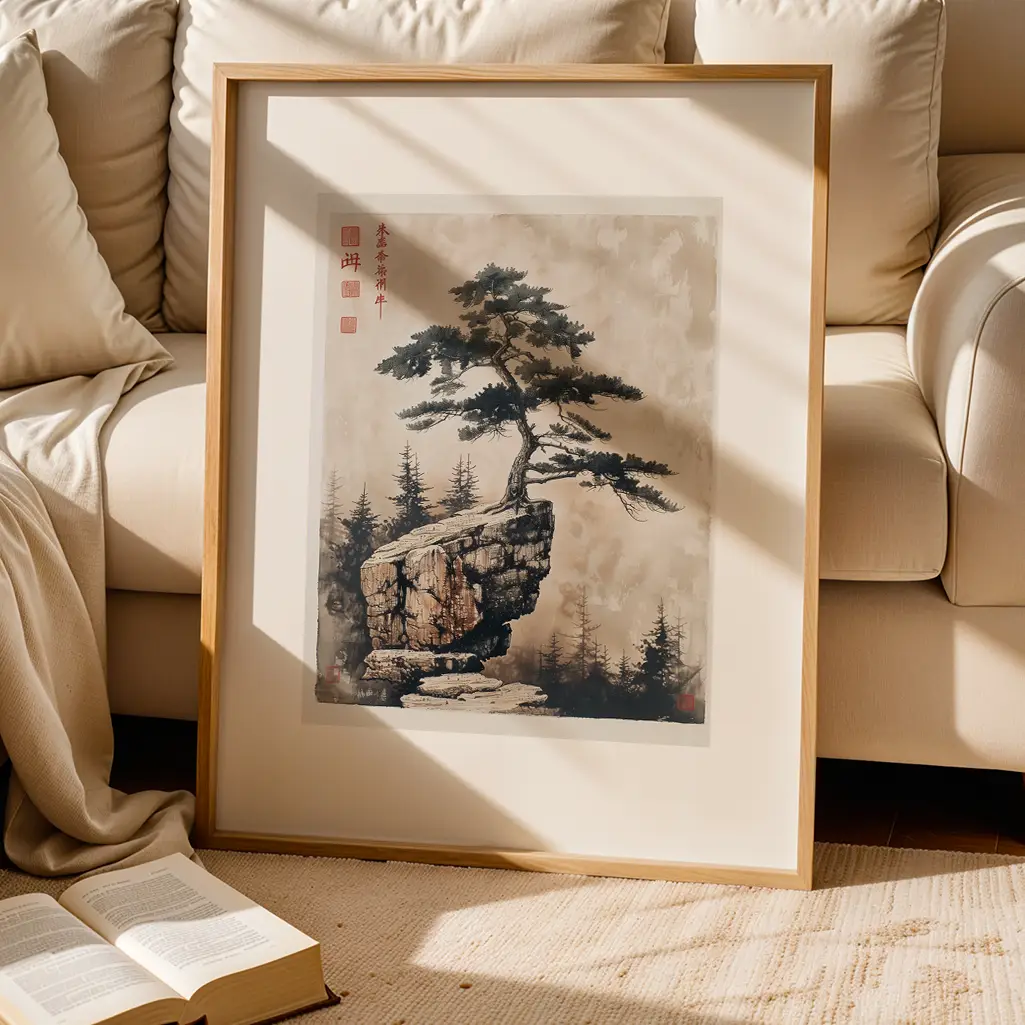
When choosing the best wall art for calm, prioritize work that suggests rather than insists. Abstract compositions with soft transitions, landscapes rendered in misty tones, or ink drawings with more paper than ink can all create a feeling of visual exhale. Pieces that leave a little unresolved space let the viewer’s imagination breathe. In Zen aesthetics, the unfinished is not a flaw; it is an invitation to quiet participation.
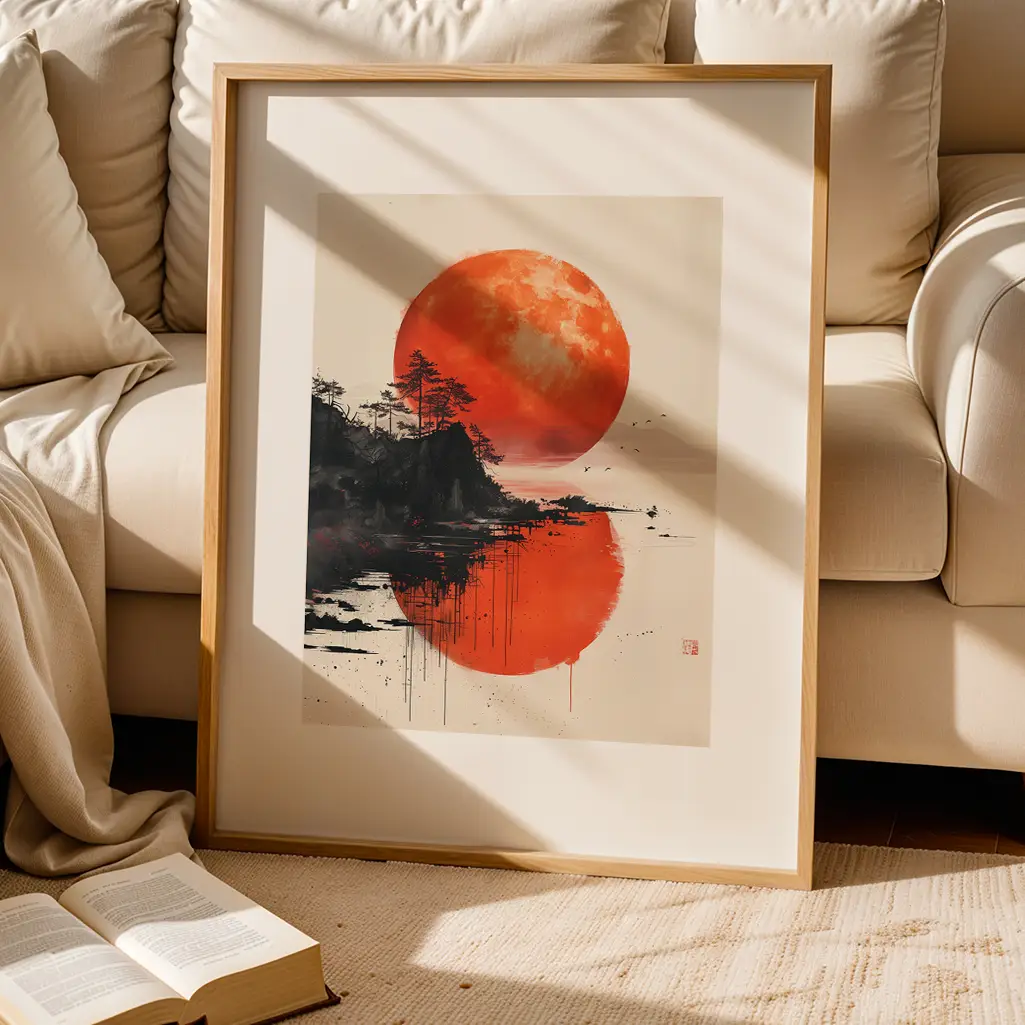
Color is your most powerful and most misunderstood tool. Instead of asking whether a piece “matches the couch,” ask whether the colors change your breathing. Muted palettes of stone, sand, clay, moss, and cloud tend to ease the nervous system. Blues lean cool and contemplative, while warm neutrals foster a sense of grounded comfort. Stark neons, high contrast graphics, or oversaturated photographs sharpen the senses; they have their place, but that place is rarely in a room meant for rest and reflection.
Scale matters just as much as hue. Too small, and the art feels anxious, like it is apologizing for existing. Too large and overbearing, and it dominates the room. The best wall art for a calm atmosphere usually sits in that balanced middle, big enough to feel intentional and singular, but not so bold that it shouts across the room. Ideally, the piece relates to the furniture below it, forming a simple, stable composition rather than a scattered one.
Choosing Art that Feels Like a Deep Breath
Once you begin to notice the emotional temperature of images, you will see that some artworks speed you up while others gently slow you down. A Zen-inspired space benefits from pieces that feel like a pause: they carry a quiet rhythm, a soft edge, a sense of air. Think of a monochrome photograph of fog over water, or a line drawing of a single branch, its leaves rendered as open shapes rather than dense detail. These works do not compete with your thoughts; they give them room to settle.
Texture is another subtle but important factor. Matte finishes, natural fibers, and visible brushstrokes tend to feel humbler and more grounded than slick, glossy surfaces. A simple linen canvas, a hand-brushed ink wash, or a woven textile wall hanging can soften acoustics and light at the same time, turning a sharp, echoing room into something more cocooned. When light hits these surfaces, it diffuses rather than bounces, which quiets the space almost imperceptibly.
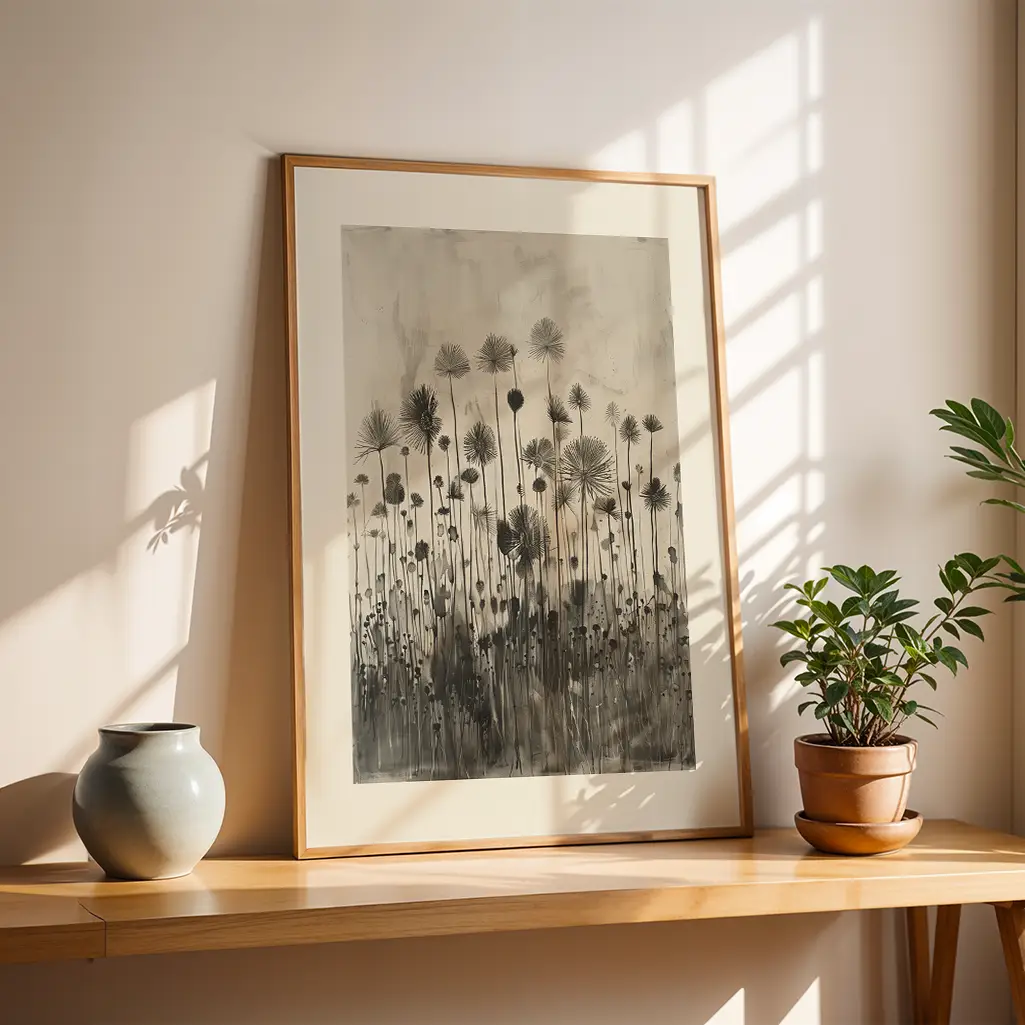
Content, too, shapes calm. Nature-based imagery is almost always a reliable partner for a Zen atmosphere, not because it is trendy, but because the brain is wired to read it as non-threatening. Softly rendered mountains, water, sky, stone, and plants evoke duration rather than urgency. The best versions are not postcard-literal; they are slightly abstracted, so your mind is aware of nature without being bombarded by detail. A field of reeds suggested with just a few strokes can be more soothing than a high-resolution photograph of every blade of grass.
Equally important is what you do not show on your walls. Aggressive typography, ironic slogans, or imagery tied to work, deadlines, or status can quietly reintroduce tension into a room meant for unwinding. If you love these pieces, consider relocating them to more active areas of your home. In your calmest rooms, allow the walls to speak in slower, gentler sentences.
Point of view offers another layer of serenity. Art that draws your gaze slightly downward or horizontal tends to calm more than art composed with dramatic upward thrusts or diagonals. Gentle horizons, softly curved forms, and repeated, even patterns communicate stability to the body. When you sit with these images, your posture mirrors them; shoulders release, breath returns to the belly, the room suddenly feels a little larger than it did before.
Arranging, Editing, and Living with Quiet Walls
Selecting tranquil art is only half of the work; the way you arrange and edit it can undo or amplify its effect. In a Zen-influenced home, you rarely see every inch of wall filled. Instead, artworks are given room to breathe, with wide margins of plain wall acting like the white space on a carefully designed page. This negative space is not empty; it is what allows each piece to be seen fully without strain.
Try a simple experiment. If you currently have a dense arrangement, remove half of the pieces and rehang a few favorites at eye level with generous spacing. Live with this lighter composition for a week. Notice whether the room feels calmer, or whether you miss the visual chatter more than you expected. Often, what feels bare on the first day feels like relief by the third, as your eyes adjust to the reduced workload.
Height and alignment also shape the mood. When art floats too high, you experience it as a distant idea rather than a companion in the room. Hanging pieces at a natural, human eye line, especially in seating areas, creates a sense of quiet conversation instead of spectacle. Align frames with architectural lines such as doorways, window tops, or the back of a sofa, so the room reads as composed, not scattered.
Consider the transitions between spaces. A calm bedroom with thoughtful art can be undermined by a hallway that feels like a visual gauntlet. Instead of treating corridors as display galleries for every leftover frame, let them become intentional pauses. A single piece at the end of a hall, softly lit, can act as a visual bow, guiding you into the next space with composure.
Most importantly, allow your collection to change as you do. Zen is not about freezing your home in a perfect state; it is about re-evaluating what feels necessary over time. If a once-beloved piece now feels too loud, set it aside without guilt. Rotate art with the seasons, or with changes in your own inner climate. The best wall art for a calm, Zen atmosphere is not defined by a trend or label, but by the quiet, unmistakable sense that when you look at it, your whole body softens, and for a moment, the room and your mind arrive in the same, unhurried place.