
Reading the Room Before You Hang a Single Frame
The best wall art placement for bedrooms starts long before a hammer meets a nail. A bedroom is a place where your nervous system is supposed to exhale, so the rhythm of what you hang on the walls matters as much as the images themselves. Think of the room as a quiet conversation between the bed, the walls, the windows and the light. Your art is just one voice in that mix, and placement decides whether it whispers or shouts.Begin with the bed, because in most bedrooms it is both anchor and focal point. If the bed has a headboard, imagine an invisible rectangle above it. That is the primary home for art. As a rule of thumb, the bottom of the artwork should hover a few inches above the headboard so that it feels connected but not cramped, and the overall width of the art should be somewhere between half and three quarters of the headboard width. Anything much wider can make the bed look oddly small, like a child beneath an oversized painting. Anything too narrow can make the wall feel empty and unfinished.
Height is your next quiet decision. Galleries talk about "eye level," but in bedrooms people spend a surprising amount of time lying down, so the room has two eye levels: standing and reclining. If the piece is over the bed, lean slightly toward the lower side of traditional hanging height so that the art still feels present when you are on the pillow. A single large piece centered over the bed feels calm and hotel-like, while a pair of vertical pieces can echo the symmetry of matching nightstands and lamps.
Look at the remaining walls with a similar sense of hierarchy. Ask which wall a person sees first when entering the room. That wall becomes a strong candidate for a larger work or a composed grouping. A narrow wall near a door or closet prefers something slim and vertical, which visually "stretches" it, while longer uninterrupted walls can carry horizontal arrangements that steady the room.
As you plan, notice windows, radiators and vent covers. They are not enemies of art; they are constraints that help you locate balance. Instead of forcing a piece to share breathing room with a window frame, let the window be one compositional element and place art so it either clearly aligns with or clearly offsets that line. The worst feeling in a bedroom is visual almost-symmetry, when a frame is "nearly" centered on something and the eye never fully settles.
Light finishes the reading. Morning light across a pale photograph might be dreamy, while the same light bouncing off glass above the bed can be harsh. Before committing, tape paper cut to the size of your art on the wall and live with it for a day. Watch how natural and artificial light touch those rectangles at different hours. You are not just choosing where art goes; you are choosing how it will behave.
Over the Bed, Beside the Bed: Calming the Focal Point
If the bed is the stage, the wall above it is the backdrop. Many people instinctively center the largest piece they own there, but size and subject matter both need to suit the role. Bold abstract art can be wonderful in a dining room, yet feel aggressive above a headboard. A bedroom tolerates some visual drama, but the placement should tame it.Over the bed, a single large work offers the most serene effect: one clear shape, one horizon for the eye. Imagine the headboard and the art forming a gentle stack. The headboard grounds you; the art lifts your gaze. When you hang the piece, step back far enough to see the bed and artwork together. If the art pulls your attention away from the bed rather than completing it, lower or narrow the piece until the whole ensemble reads as one object.
If your walls are tall, resist pushing the art too high just to "fill space." Large empty space above the art can create a cathedral feeling that does not always belong in a bedroom. Instead, let most of the visual weight remain within the central band of the wall, roughly between the top of the headboard and a couple of feet above it. Negative space above that band can stay quiet; it is part of the room’s softness.
When using multiple pieces over the bed, imagine them as a single larger rectangle. The outer boundaries of that phantom shape should still respect the proportions of the headboard below. Keep the spaces between frames consistent; the regularity is more calming than you might expect. A small mismatch in gaps is the kind of subtle tension your brain notices even when you think you do not care about alignment.
Beside the bed, art has to negotiate with lamps, windows and nightstands. Hanging a piece so that its lower edge is just above the lamp’s top can knit the elements together visually. If one side of the bed has a window and the other does not, art can act as a window’s echo. Place a piece on the windowless side at roughly the same height and width as the glass opening opposite it, which restores a sense of balance without forcing strict symmetry.
Finally, think about what you see from under the covers. The wall opposite the bed is often second choice for art, but it quietly becomes the one you look at most. A low, wide piece above a dresser or a trio of smaller works can create a soft horizon that meets your gaze in the morning. Keep the centers of these pieces slightly lower than typical gallery height to acknowledge that your primary vantage point here is horizontal, not vertical.
Empty Walls, Quiet Corners and the Art of Leaving Space
Not every wall in a bedroom needs art, and some of the most sophisticated rooms lean into intentional emptiness. The decision to leave a wall bare is itself a placement choice. Visual silence gives the eye a place to rest, which the nervous system often reads as relief. When you stand at the doorway and sweep the room with your eyes, you want a rhythm: moments of focus where art gathers, followed by stretches of plain wall.Corners are where placement becomes more intuitive and more personal. A small reading chair under a sconce might welcome a single framed drawing hung lower than usual, creating what designers sometimes call a "conversation" between seating and art. Here, the center of the artwork can almost align with the head of someone seated, an intimate height that would feel too low elsewhere but just right when you are curled up with a book.
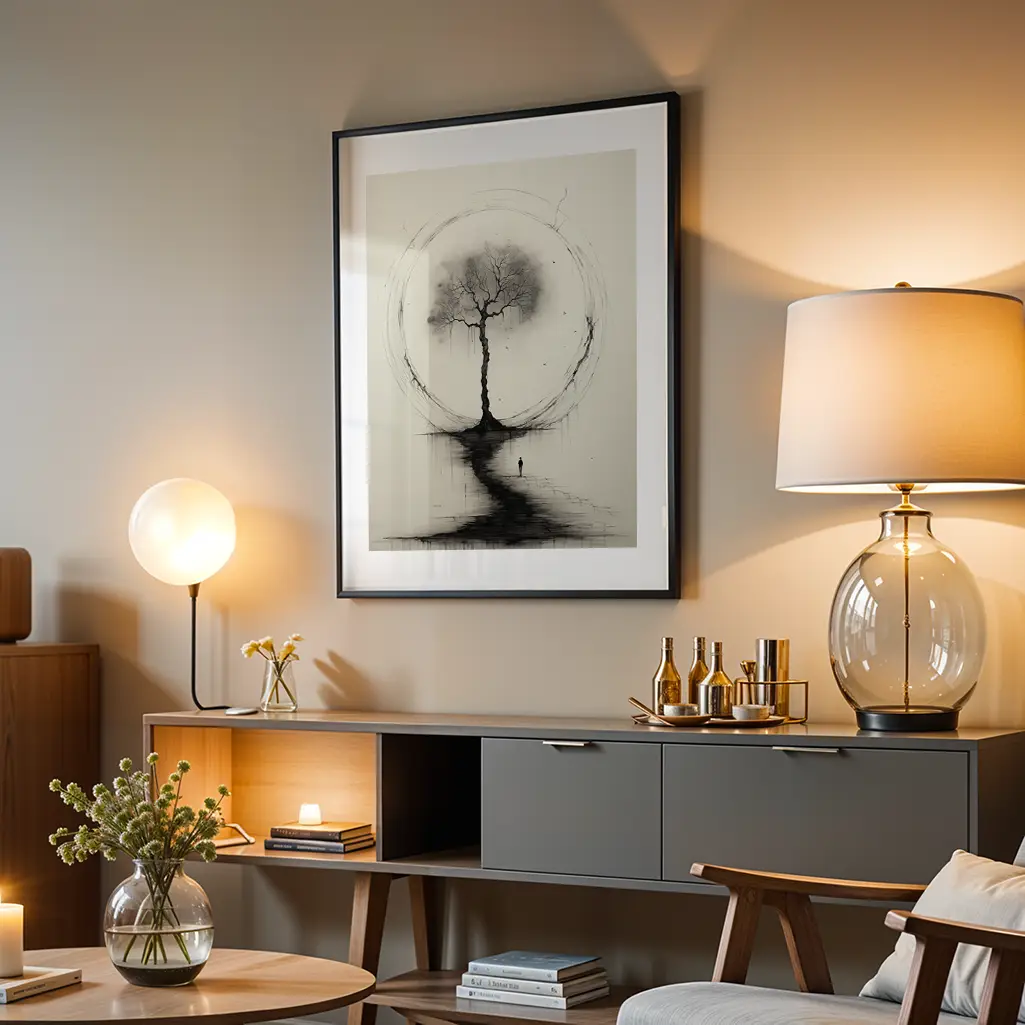
Long, low furnishings like dressers or benches invite art to hover just above them. If there is a mirror already, do not feel obliged to add more images; the mirror is a large visual object in its own right. When you do add art near a mirror or television, treat those black or reflective rectangles as part of your composition rather than obstacles. A single soft painting offset to one side can keep the overall arrangement from feeling like a wall of screens.
Ultimately, the best wall art placement for bedrooms is less about fixed measurements than about proportion, rhythm and how your body feels in the space. If a wall of art leaves you oddly alert at midnight, it is the wrong wall, even if the spacing and alignment are textbook perfect. Take time to adjust. Move a piece an inch lower, slide a frame a little closer to its neighbor, remove something entirely and notice how the air in the room changes.
The quiet luxury of a well-placed piece of art is that it stops demanding attention and starts supporting the mood of the room. When the bed, the walls and the art finally feel as if they are listening to one another, you will sense it not just with your eyes, but with the deeper part of you that walks into the bedroom at the end of the day and feels, unmistakably, at home.