The smallest possible pause
Busy people tend to treat breathing advice the way they treat unread newsletters: they know it might be good for them, but it sits in a mental pile marked "later." The irony is that breathwork is one of the few practices that shrinks to fit the life you already have. You do not need a yoga mat, a candle, or even a full minute of free time. You only need a decision to use the breath you are already taking.Think of your home as a nervous system made of furniture, light and sound. Your own nervous system is constantly taking cues from it. A cluttered hallway keeps your shoulders subtly raised. A harsh overhead light in the kitchen keeps your eyes slightly tense. Breathwork does not erase those conditions, but it changes the way your body receives them. The more often you guide your breath, the more your living room, bedroom and work nook feel like places you can actually exhale in, instead of performance stages for the next task.
Physiologically, this is concrete. Slow, deliberate exhalations nudge the vagus nerve, tipping your body toward "rest and digest" rather than "fight or flight." In domestic terms, that shift is the difference between walking through your front door and mentally scanning dishes and laundry, and walking in with a noticeable softening behind your eyes. You still see the dishes; they simply stop announcing an emergency.
The key is to stop treating breathwork as an item on a wellness checklist and instead embed it inside the movements you already make at home. Doorways, screens, sinks and chairs become cues. Your space turns into a kind of quiet, invisible coach: every time you touch a familiar object, you remember to adjust your inner tempo by a single notch.
Practice one: the doorway reset
Most homes are divided by thresholds. Every doorway marks a tiny change of role: parent to partner, employee to friend, task-doer to almost-resting human. The "doorway reset" takes advantage of this architecture.Each time you pass through a frequently used doorway, pause just long enough to take one slow inhale and one even slower exhale. That is all. No special posture, no closed eyes. Your only job is to let your out-breath last a beat or two longer than your in-breath. If you inhale to a quiet count of three, see if you can exhale to a count of five. Longer exhalations signal safety to the body, like an internal hand on your shoulder.
At first, you will remember this in only one place, perhaps the doorway from your kitchen to your living room. That is fine. Over time, you can "assign" other thresholds their own small roles. The bathroom door might pair with releasing jaw tension. The entryway might pair with dropping your shoulders half an inch when you arrive home, the subtle bodily equivalent of putting down your work bag.
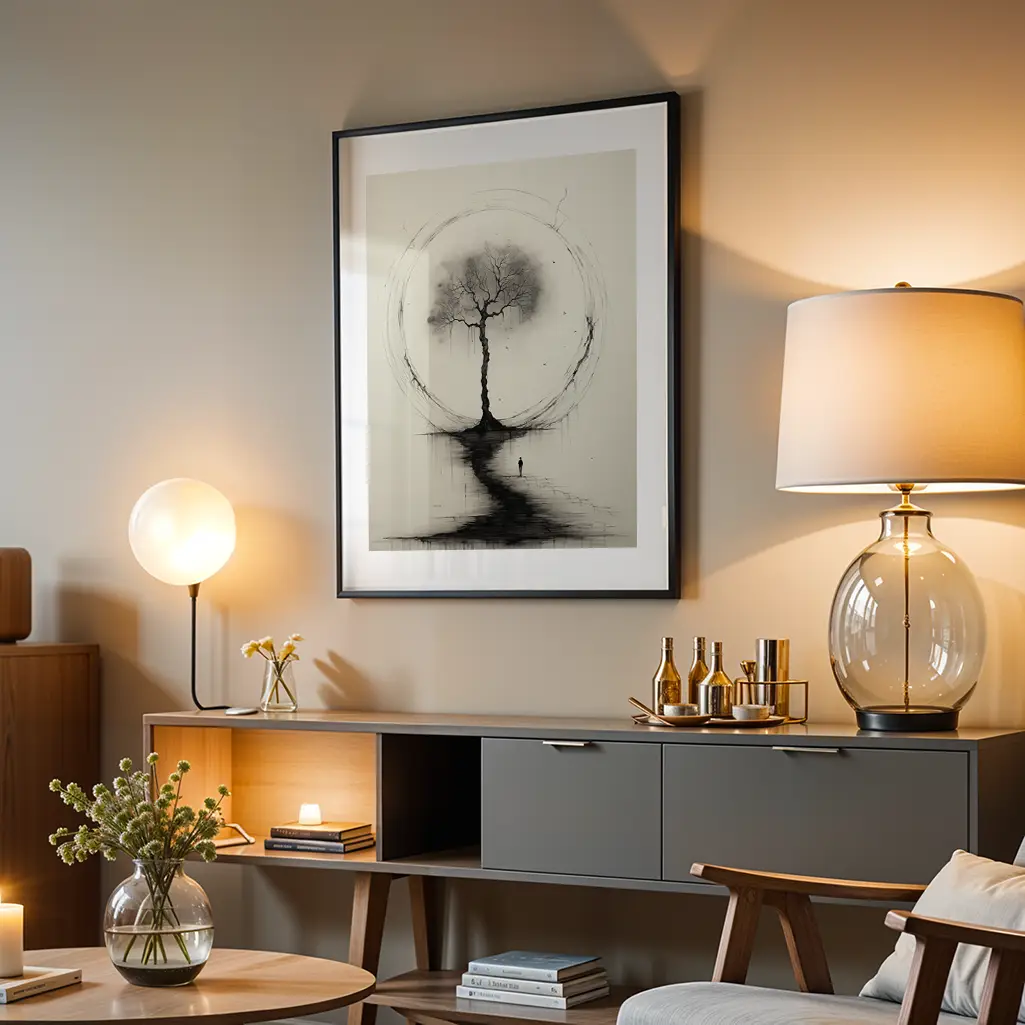
This kind of breathwork does not look like a ritual from the outside, and that is a strength. Guests will notice the art on your wall before they notice that you briefly slowed your breathing as you crossed the room. But you will notice that the space feels fractionally kinder. The hallway becomes more than a path between rooms; it becomes a valve where pressure can escape instead of accumulating.
To support this, your interior design can participate. A small, calming object near a doorway can function as both decor and reminder: a smooth stone on a shelf, a piece of textile art whose texture you like to imagine touching, a photograph that suggests open space. Each time you see it, your nervous system gets an additional invitation to take that slightly longer exhale.
Practice two: the screen exhale and the evening landing
Screens are the new hearth of the home, though they warm us differently. They attract our gaze, tighten our focus and compress our breathing into shallow sips. If you do only one breath practice, let it be the "screen exhale." Every time you hit send on an email or message, let your finger on the key be a signal: inhale once, gently, then release one unhurried exhale through the nose or mouth, as if you are fogging a cold window. Do not count. Just lengthen it until it naturally ends. Then move on.This simple habit has two quiet effects. First, it breaks the seamless chain of mental tasks that makes work feel endless. Second, it starts to separate the intensity of the screen from the atmosphere of the room around it. That distinction matters. A dining table that doubles as a desk holds less residual stress in the evenings when your body has been gently off-loading tension all day through repeated, deliberate exhales.
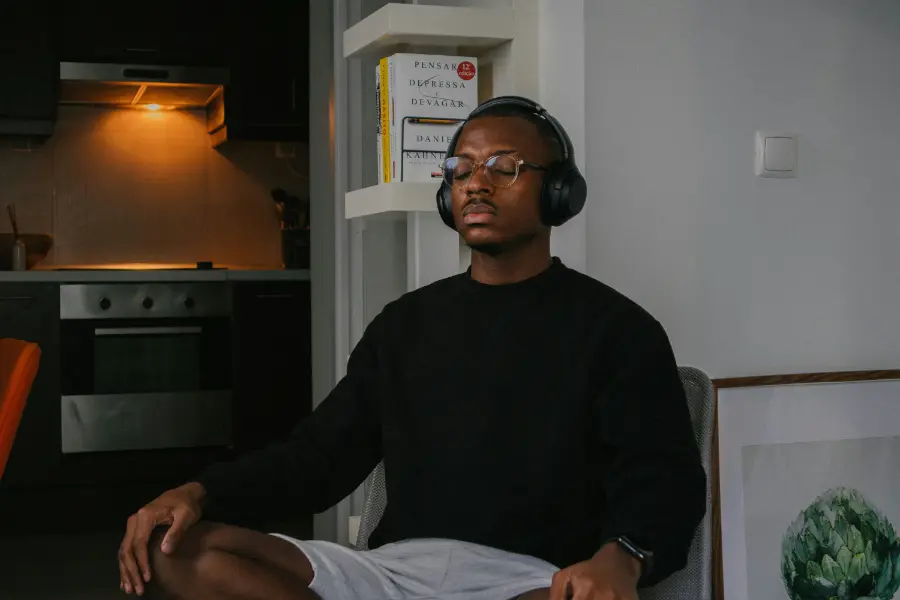
As day slides toward night, an additional practice can help your home feel like a place you land, rather than a place you continue falling through tasks. Choose a spot you reliably pass each evening: the chair where you drop your bag, the edge of the bed where you take off your shoes, the kitchen sink as you rinse a glass. Once there, sit or stand with your spine as comfortable and upright as your furniture allows, and try four rounds of a simple pattern: inhale for four counts, hold for four, exhale for six. The numbers are not magic; the proportions are. A brief pause after the inhale and a slightly longer exhale both encourage the nervous system to downshift.
If four rounds sound like too much, do two. Let the design of the space help you. A softer lamp instead of the overhead light, a chair angled toward a window rather than a screen, one uncluttered surface within your field of vision: these choices subtly tell your body that this is a place where nothing urgent is required of it. Your breath will follow that cue more willingly. Over weeks, these small, repeatable practices turn breathwork for busy people into something intimate and architectural. The air in your home does not change, but your relationship to it does: from background necessity to a quiet, loyal tool you can reach for, in the very spaces you already inhabit.

.webp)