Why Evenings Feel So Fast, And How Home Can Help
Most evenings arrive carrying the unfinished business of the day. Emails linger in the mind, bright screens stay on longer than the sun, and the nervous system, tuned for constant alerts, never receives a clear signal that the work of vigilance is over. Designing an evening ritual is less about adding tasks and more about sending your body a series of quiet, reliable messages: it is safe to slow down now.Biologically, a calmer night begins with the shift from sympathetic to parasympathetic dominance. The sympathetic system is your internal accelerator; it dilates pupils, speeds the heart, preps muscles. It is useful for deadlines and commutes, less so for sleep. The parasympathetic system, led largely by the vagus nerve, is the brake pedal. It slows the heart, supports digestion, and invites repair. Evening rituals are simply patterned behaviors and sensory cues that nudge this brake, again and again, until the body believes it.
Architecture, light, texture, and even scent can become part of this language. A hallway lamp at a particular time, the feel of one favorite blanket, the smell of a single candle you only light at night; these are domesticated versions of dusk on a shoreline or the cooling of a forest. The goal is not to imitate nature literally but to echo its rhythm. When your home becomes a predictable transition place between the day and the dark, your nervous system needs to work less hard to interpret what comes next.
The key is consistency. A ritual is not a performance for special occasions; it is repetition. If you choose three small actions and repeat them in the same order every evening, your body will preemptively begin the work of downshifting at the first step. Decision fatigue lessens, and what started as an experiment becomes a kind of interior choreography. You are training your rooms, and yourself, to recognize the difference between "on" and "enough."
Designing a Space That Whispers "Slow Down"
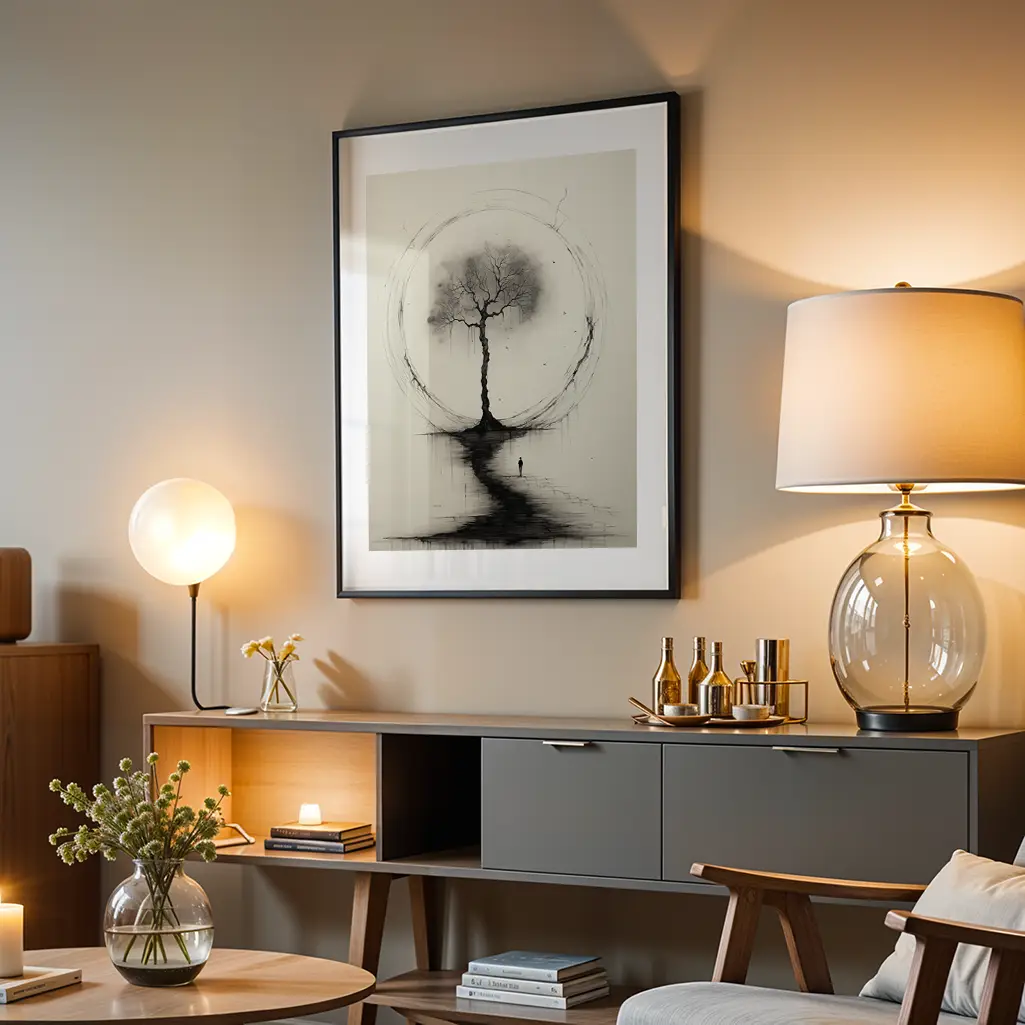
Environment is often the first thing the nervous system reads, long before conscious thought. An evening ritual works best inside a space edited for calm. This does not require minimalism or a complete redesign, only attention to what your senses keep noticing after dark. Start with light. Overhead fixtures are the shouting voices of a room; at night, they push the body to stay alert. Lower, warmer sources are closer to candlelight and dusk, the signals that historically paired with safety and rest.You might choose a single lamp that becomes the "evening switch." When that lamp is on, others go off. Its bulb is warm, not blue, ideally with a shade that softens edges. Place it where you naturally pause, perhaps near a chair that you intend to claim as your landing zone. Over time that simple spatial cue trains the nervous system to associate that corner with exhale. If possible, let this be a place where no work happens at all, not even an open laptop.
Texture is the next message. The sympathetic system is fueled by sharpness, contrast, and constant input; the parasympathetic loves repetition and softness. Look at the objects you touch most between dinner and bed. Cold counters, hard dining chairs, the rigid rectangle of a phone. Now introduce one or two materials that feel like an invitation rather than a demand. A heavy cotton throw folded intentionally, not tossed. A low, supportive cushion held in the same place each night. Linen or washed cotton bedding that rustles softly rather than crackles.
Sound can be curated in the same way. Silence in a city apartment can be oddly tense, full of distant sirens and elevator cables. Instead of fighting that noise, layer something steadier over it: a slow instrumental playlist that appears only after a certain hour, or a small tabletop fountain whose repetition blurs sharper sounds. The nervous system is less rattled when it has one coherent pattern to follow rather than many competing signals.
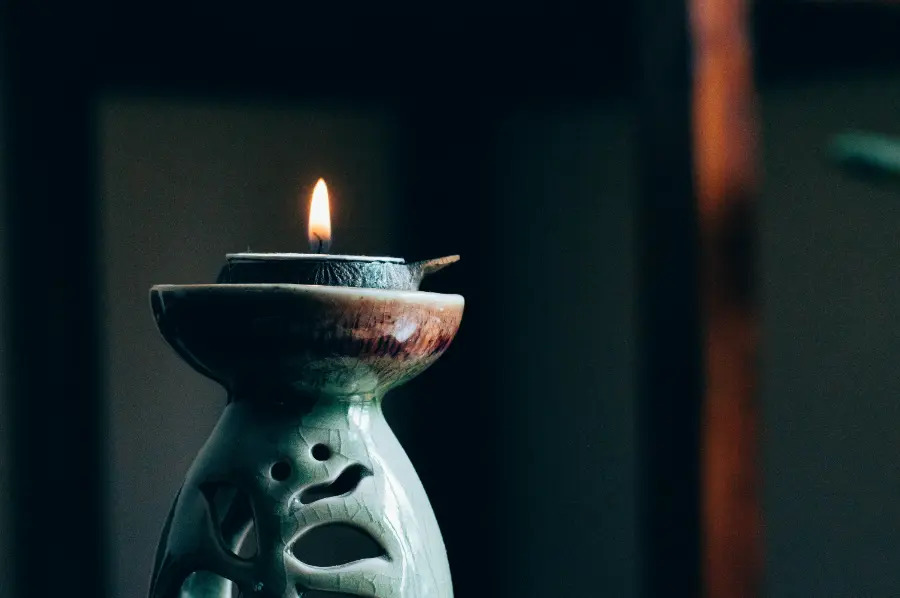
Even scent becomes part of the spatial script. You do not need a shelf of options. Choose a single aroma that you reserve for late evening, perhaps a resinous incense, a simple lavender oil in a ceramic diffuser, or the faint sweetness of beeswax candles. By using it only at night, you teach your body that this smell belongs to slowing. The moment the first trace appears, the association begins to work, often before you notice mentally.
Most importantly, edit visual clutter where your eyes land last before bed and first upon waking. A bedroom nightstand crowded with chargers, receipts, and half-read books forces the nervous system to keep scanning. Clear it to just a lamp, a glass, and one object that feels grounding, such as a stone from a place you love or a small bowl that receives your jewelry. Order outside does not guarantee order inside, but it removes one layer of friction from the transition to rest.
Building The Ritual: Small Acts, Same Order
Once the space begins to whisper, you can answer with actions. An evening ritual for a slower nervous system does not need to be elaborate. In fact, elaborate plans often collapse under real life. What matters is having a short, repeatable sequence that carries you from stimulation toward stillness. Think of it as a runway, not a cliff. The body does not jump from buzzing to serene; it descends in steps.Choose a consistent starting moment. It might be when you finish washing dishes, when you dim the lights to a certain level, or when you place your phone in a designated spot away from the bed. That first gesture is a boundary marker, a clear distinction between the workday and whatever remains. If you live with others, announcing it quietly can help; a simple "I am starting my evening now" can sound theatrical at first but soon becomes a shared cue, especially for children.
From there, link three or four sensory actions in the same order each night. You might make a warm drink in a favorite mug, preferably something without caffeine. Feeling the weight of that mug becomes an anchor. You could spend ten slow minutes tidying only the room where you sleep, not to chase perfection but to reassure your waking self that tomorrow will not begin in chaos. You might then sit in your designated chair under that familiar lamp and read a few pages of something that makes no demands on your ambition.
Breath can be the quiet hinge between the outer world and the inner. A brief, predictable practice in the same spot every night teaches the vagus nerve to expect rest. It need not be complex. Try gently lengthening the exhale, perhaps inhaling to a count of four and exhaling to six, for a handful of cycles. The point is not to perform calm but to offer your body a pattern it can slowly entrain to. Even three minutes, done daily, changes the baseline.
As you experiment, notice what truly soothes versus what merely entertains. Endless streaming can feel like rest but often keeps the nervous system in a state of bright, jumpy focus. If you do watch something, consider ending with a quieter scene: music without dialogue, a familiar film you half-ignore, a period of simply sitting in dim light afterward to let your senses empty a little before bed. The last image you see has a way of echoing in the mind.
Over weeks, this chain of small acts becomes a kind of architecture inside time, as real as any wall. It holds you when motivation is low and the day has been jagged. The nervous system begins to trust the promise your ritual makes: that no matter how fast everything felt before sunset, there is a corridor of slowness waiting in your own home, and you know the way through it by heart.
.webp)