Why We Rush, And What It Does To A Home
Most of us do not decide to live rushed lives; we drift into them. A few extra commitments, a commute that grows longer, a phone that never quite stops talking to us. Rushing becomes a kind of background setting, like the hum of a refrigerator, and the home absorbs it.Psychologists sometimes describe rushing as a chronic mismatch between perceived demands and perceived resources. There is too much to do and not enough time, energy, or attention to do it. The key word is perceived. External demands matter, of course. But so does the story we tell ourselves about what “has” to happen, what “must” be perfect, and what counts as being a good partner, parent, worker, or friend.
Inside a home, rushing leaves fingerprints. Objects pile near the door because nothing has a true landing place. Laundry lives half-finished between washer and closet. The kitchen counter becomes an archaeological record of meals almost cooked, then abandoned. We reach for the fastest option, not the one that nourishes us. Even the air feels slightly tense, as if the walls have learned to hold their breath.
The paradox is that constant speed rarely equals real efficiency. Rushing scatters attention, and scattered attention makes us clumsy. We misplace keys, forget emails, buy duplicates of what we already own because we cannot face the search. Every small mistake steals more time, feeding the very urgency that created it.
There is also a quieter cost. A rushed home cannot offer true rest. When every corner whispers “you are behind,” the nervous system never fully powers down. Over time, this low-grade alarm can harden into irritability and numbness. Partners start talking in clipped phrases. Children learn to hurry because they learn that being slow is a kind of problem. The home, which might be a sanctuary, becomes another arena of performance.
Stopping the rush is not just about time management. It is a design project, a psychological reset, and a set of tiny practical experiments. The goal is not to create a life where nothing is busy. It is to build enough inner and outer spaciousness that busyness does not own you.
Designing Time So It Stops Running Ahead Of You
If rushing is a mismatch between demands and resources, then one way to change it is to stop treating the calendar as an empty container and start treating it as a physical room with walls. Walls, after all, are what make a home feel coherent. They are what let one activity end and another begin.One practical shift is to schedule margins instead of only tasks. Most people plan for the meeting, not the walk to the meeting. For the dinner, not the cleanup. The result is a day built of touching edges, like furniture jammed so tightly you cannot cross the room without bruising a shin. When you begin to insert “white space” around each obligation, even ten or fifteen minutes, you turn each activity into a complete experience with a beginning and an end. It sounds small. It feels enormous.
Another is to renegotiate your idea of enough. Many of us approach time as perfectionists approach interiors: every room styled, every corner finished, every surface photogenic. In practice, life works more like a lived-in studio. Some zones are fully resolved, others are clearly in process, a few are deliberately blank. Deciding which parts of your week deserve the full, layered treatment and which can be “good enough” is an act of design as much as of discipline.
A helpful question, when a new commitment appears, is almost architectural: where does this live. Not metaphorically, but concretely. If someone asks for a weekly call, you do not simply say “yes” or “no.” You ask, “On which day, at what time, in place of what.” The same way you would not bring home an oversized sofa without first knowing where it fits, you stop importing obligations without a clear location.
Morning and evening are structural beams in the day, and they are usually the first to collapse under rushing. Reshaping them does not require a complete overhaul; it requires a single protected pocket of slowness. That might be ten device-free minutes by a window, a short stretch beside your bed, or a quiet coffee at the kitchen table before any screens wake up. The content matters less than the quality of attention. You are telling your nervous system, at least twice a day, that not everything must be done quickly.
This is also where technology choices function like hidden load-bearing walls. Notifications fragment time into tiny, anxious slivers. Turning most of them off is the temporal equivalent of clearing a cluttered hallway. Suddenly there is room to walk through your day without constantly bumping into alerts. The time is the same; the texture is different.
Letting Your Space Teach You To Move More Slowly
If time is one half of rushing, space is the other. The way your home is arranged quietly trains your body in habits of speed or calm. Interior designers know this instinctively when they shape circulation paths and sightlines. You can borrow the same principles, even in a small apartment.Notice the choke points, the places where you almost always feel hurried. Perhaps it is the entryway, where shoes, bags, and mail gather in a toppling pile. Perhaps it is the kitchen, where you pivot between fridge, counter, and trash can in a tight, impatient triangle. These are the functional bottlenecks that convert ordinary tasks into sprints.
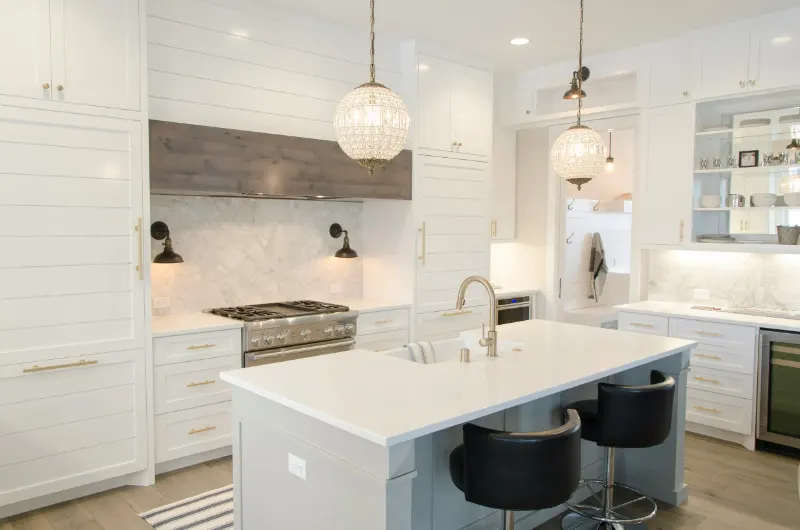
The solution is rarely aesthetic at first; it is logistical. Near the door, a single sturdy hook at adult eye level and a lower one for a child can erase five frantic minutes of hunting for bags. A simple tray for keys, always in the same spot, is a design decision that pays you back every rushed morning. In the kitchen, placing the frequently used items within a calm reach zone and letting rarely used gadgets migrate to higher or lower shelves slows the micro-panics of cooking.
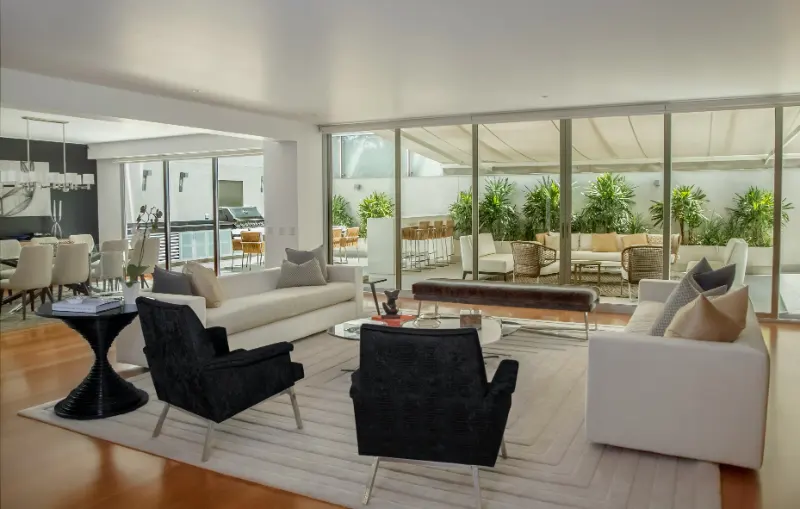
Just as important are the slow corners. Every home benefits from at least one deliberately unhurried spot. It might be a chair with a decent lamp and a small side table, angled toward a window or a favorite artwork. It might be a cushion on the floor, tucked beside a plant that catches afternoon light. The point is not to create a magazine-ready vignette but to build a physical invitation to linger.
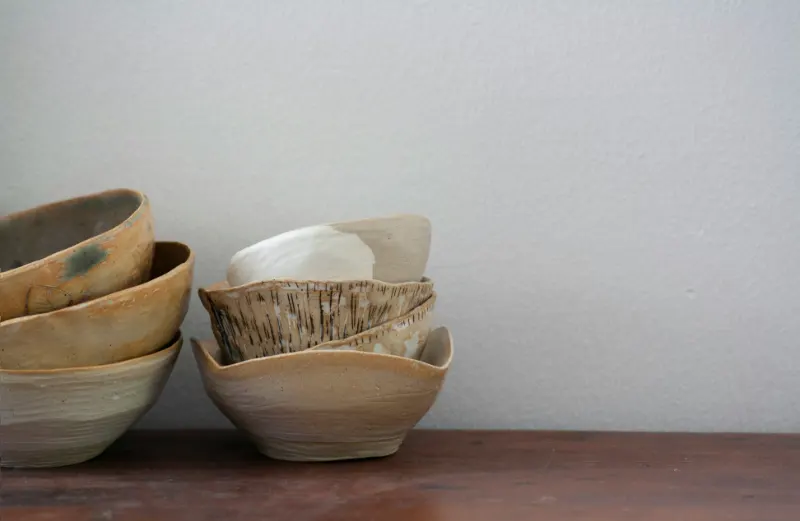
When you give this corner an object that can only be enjoyed slowly, you deepen the cue. A heavy book that resists being skimmed, a small ceramic bowl you like to hold, a sketchpad and pencil. Over time, your body starts to associate this micro-zone with a different pace. You sit down and something in you unclenches. You do not need to declare a ritual; the space does the teaching.
Visual noise contributes to a felt sense of rush more than we often admit. Every item in view makes a tiny bid for attention. When the eye has nowhere to rest, the mind struggles to rest as well. Editing surfaces so that each one has at least a small area of emptiness—a clear stretch of counter, a breathing space on a shelf—produces a low, background calm. It is the spatial equivalent of leaving white margins on a page.
Light and sound complete the sensory architecture. Harsh overhead lighting keeps the nervous system on high alert, as if the day is always noon in a supermarket. Adding a few warm, lower lamps allows evenings to signal an actual descent into rest. Similarly, permitting a little silence at home, especially in transitions between activities, prevents life from feeling like one continuous broadcast. These are not decorative touches; they are tools that gently tell your body it is safe to stop hurrying.
In the end, learning how to stop rushing is less about heroic self-control and more about wise design—of time, of space, of expectation. You create margins in your calendar the way you create pathways in a room. You let certain corners remain calm, even imperfect, so that the home can support a more human pace. And slowly, almost imperceptibly, your days begin to feel less like an emergency and more like a place you are allowed to live.