The Real Question Behind Framed vs Unframed
“Framed vs unframed prints” sounds like a technical decor decision, but what you are really choosing is how visible you want structure to be in your home. A frame is structure made literal: “Here is where the image begins and ends.” An unframed print is a gentler boundary, more like a pause in the wall than a full stop.Designers quietly use this difference to tune how a room feels. Frames add weight, clarity and a sense of finish. Unframed prints add ease, softness and a slightly undone energy that can make a space feel lived-in instead of staged. Neither is categorically better; each speaks more clearly in certain rooms, with certain art and under certain light.
Before thinking about style labels like “minimalist” or “traditional,” look at what your walls are already doing. Are they busy with doors, bookcases and windows, or are they long planes of uninterrupted drywall? In a busy room, heavy frames can become another competing element. In a sparse room, those same frames might be the needed punctuation that keeps everything from floating away.
There is also the question of distance. Framed prints, especially behind glass, introduce a thin layer of separation. The art becomes an object you look into. Unframed works feel closer, almost like a direct mark on the wall. If you want a calm reading nook to feel cocooning, that closeness matters. If you want a more formal dining room that quietly says “special occasion,” that little distance is useful. Think of framing not as a default but as a tool that shifts how intimate the art feels in relation to you.
Material reality plays a part too. Paper is vulnerable to moisture, sunlight and fingerprints. A frame with UV-protective glazing, even a simple one, acts like a very polite bodyguard. If the print is sentimental, irreplaceable or expensive, you are buying time as much as aesthetics. On the other hand, if the print cost less than the dinner you ordered last weekend, the freedom to pin, tape or clip it without guilt might be more valuable than archival perfection. The way you intend to live with the piece should guide the level of protection you build around it.
When Frames Transform the Room
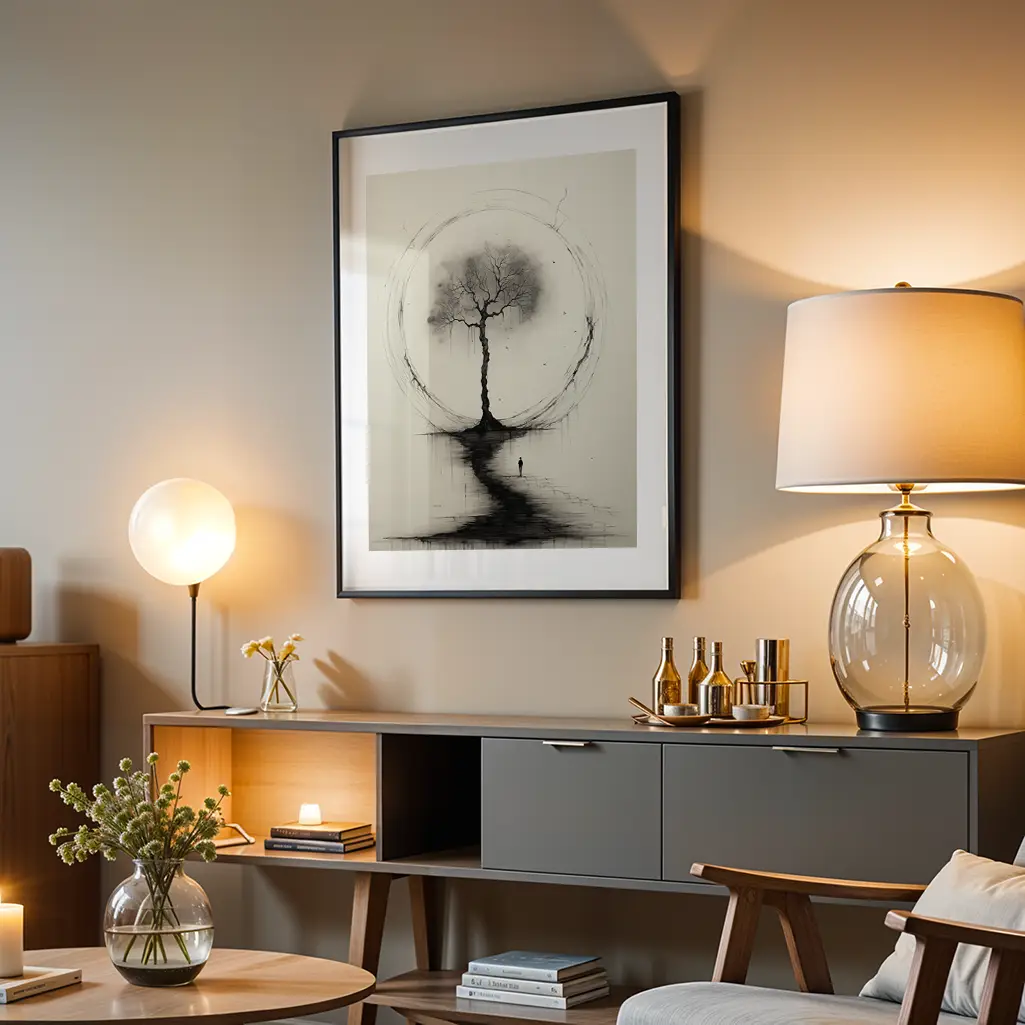
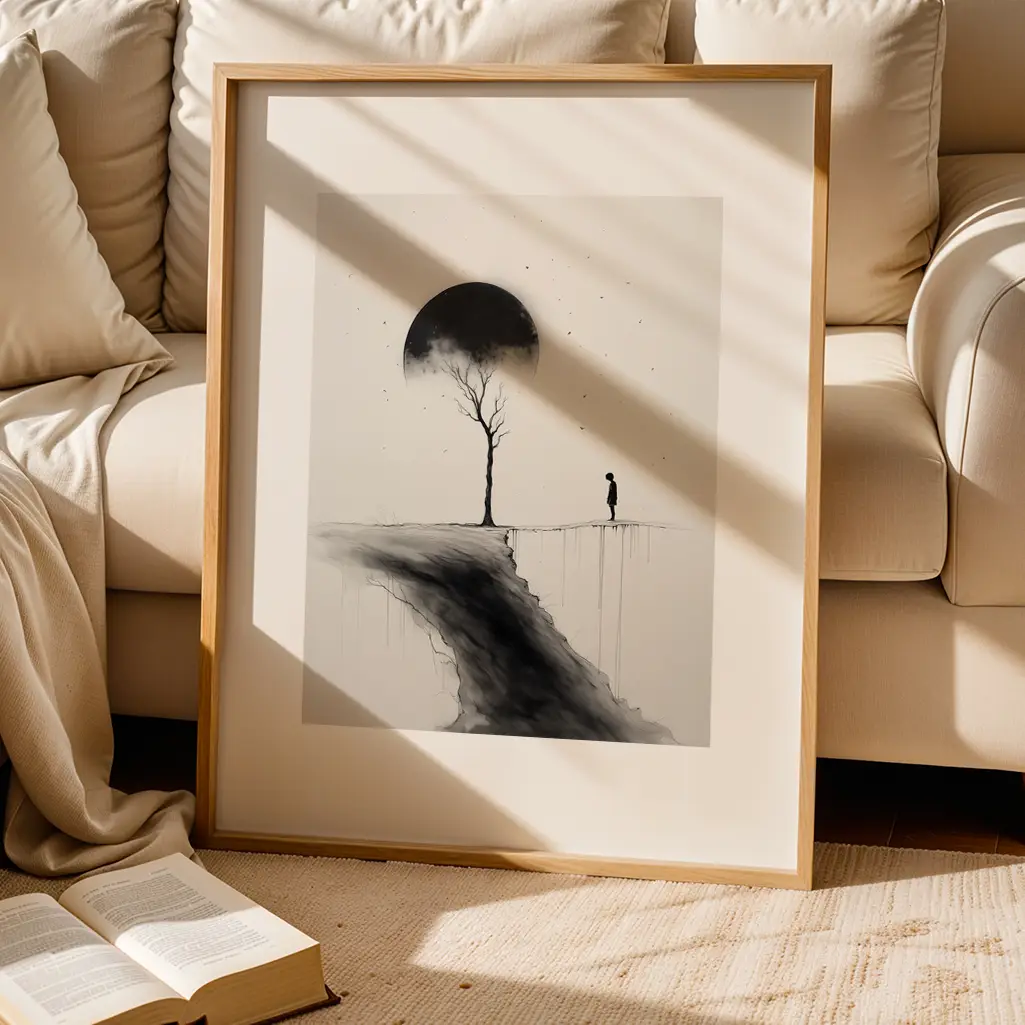
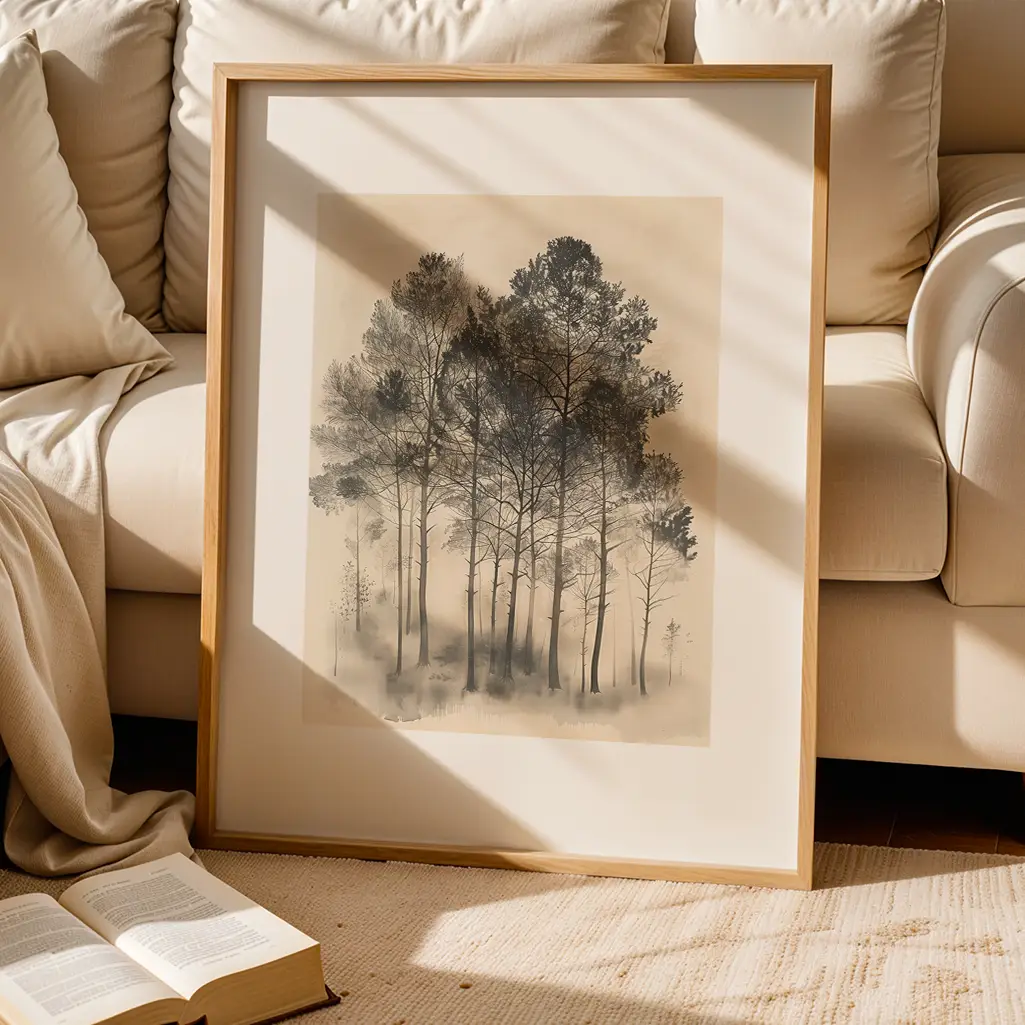
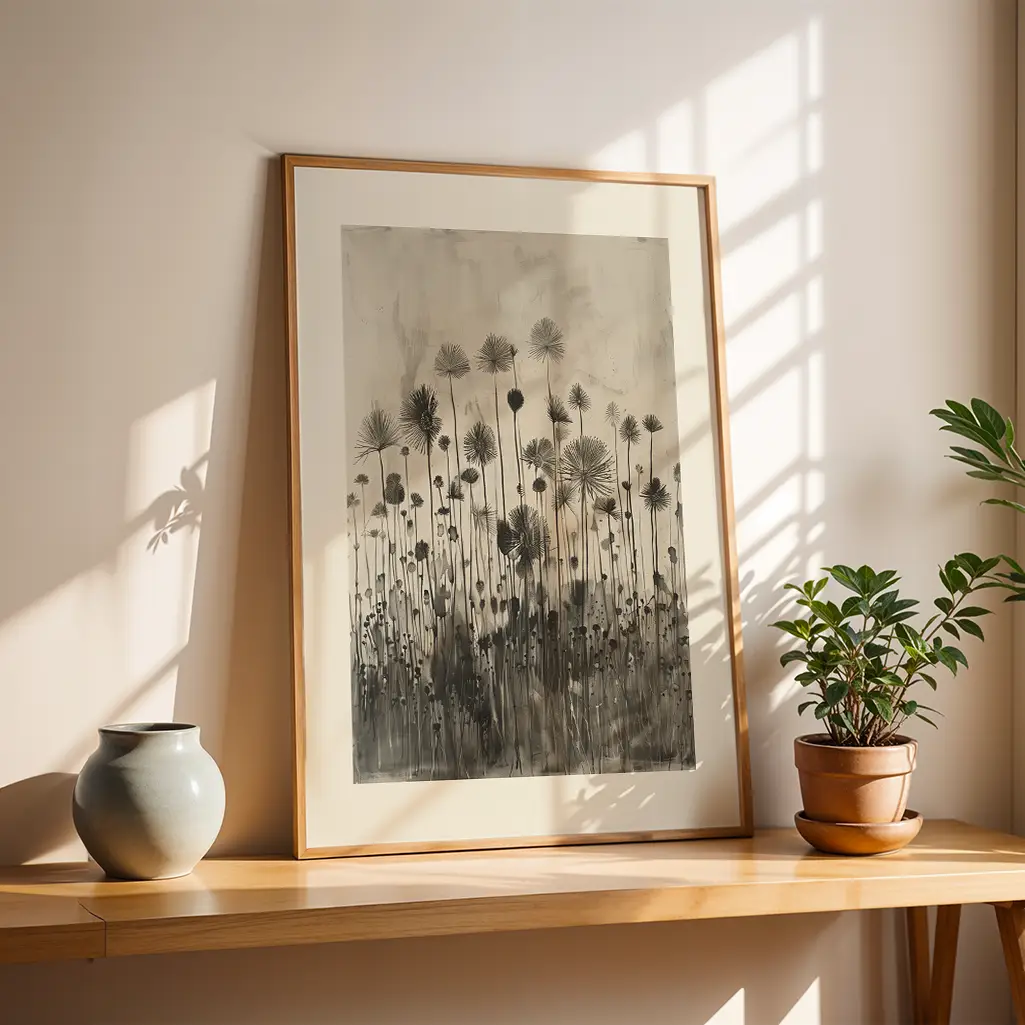
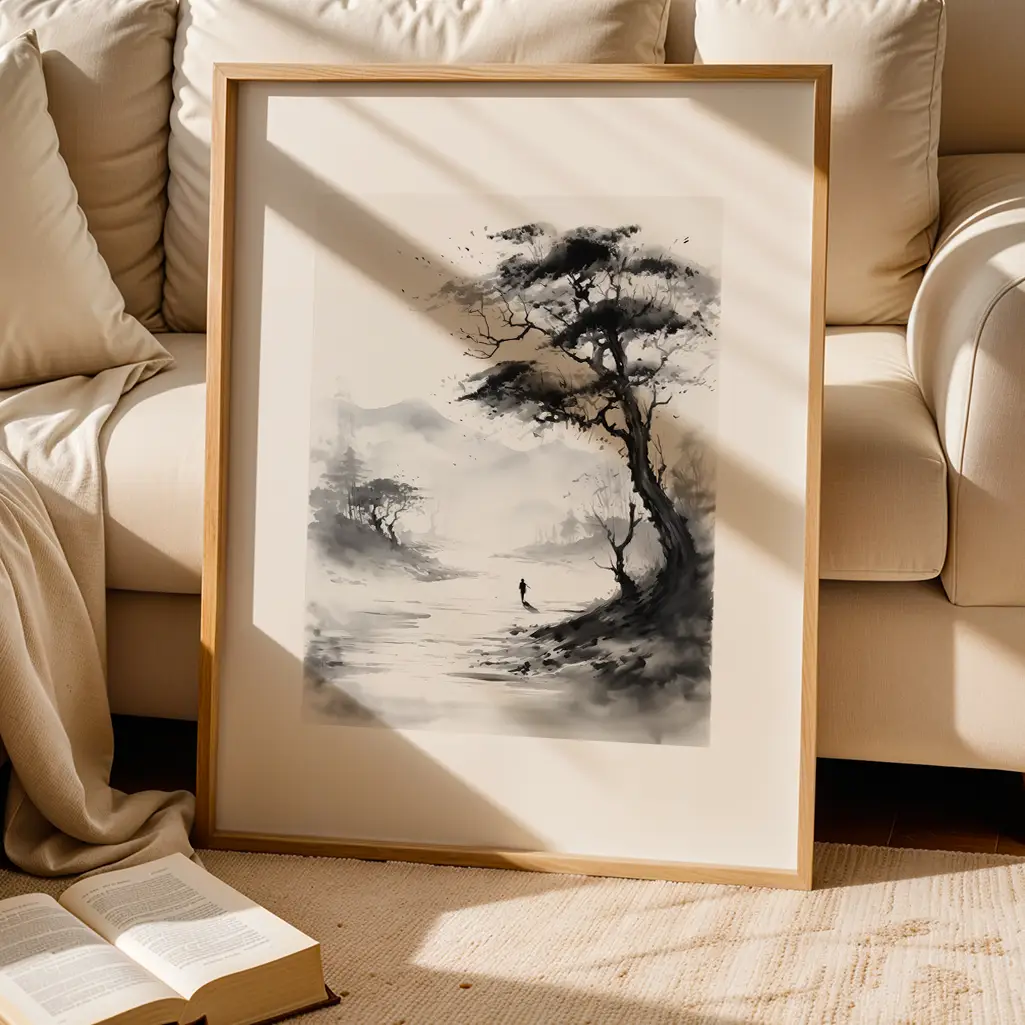
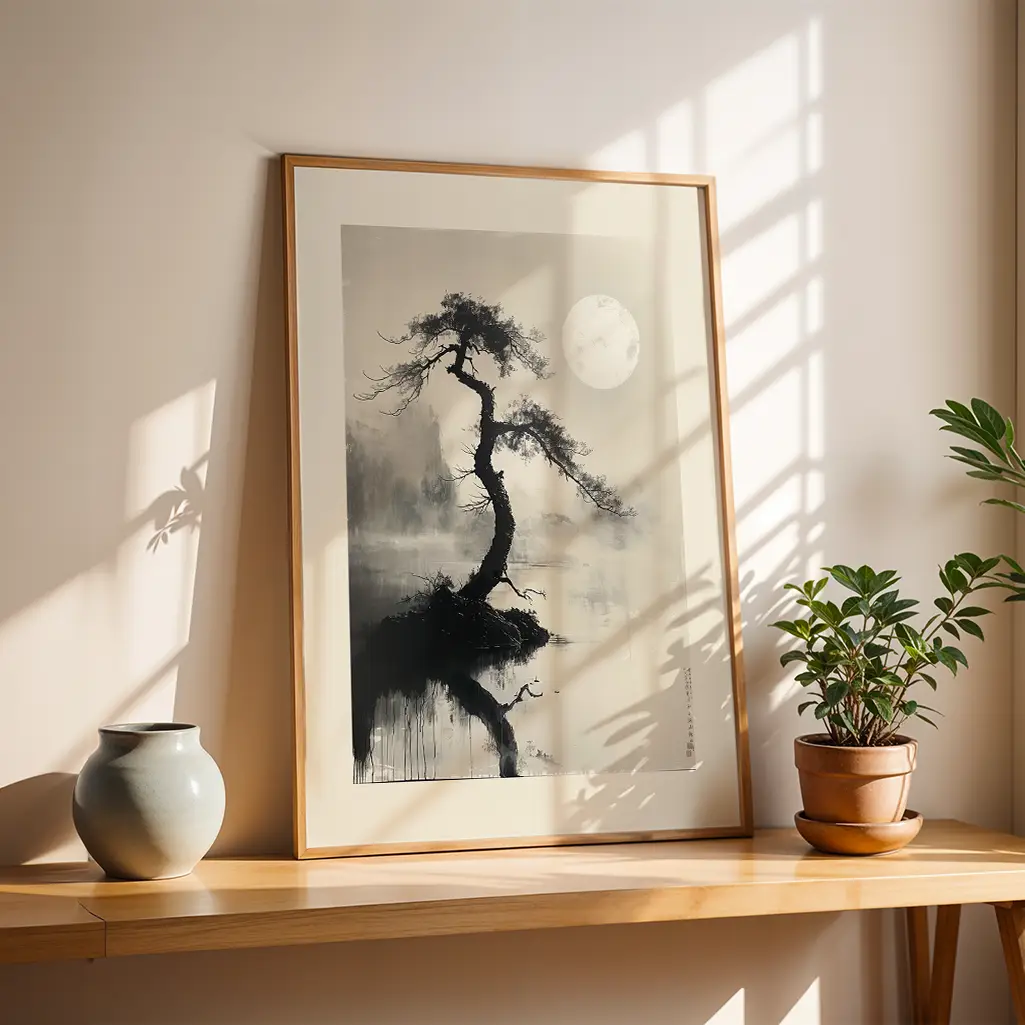
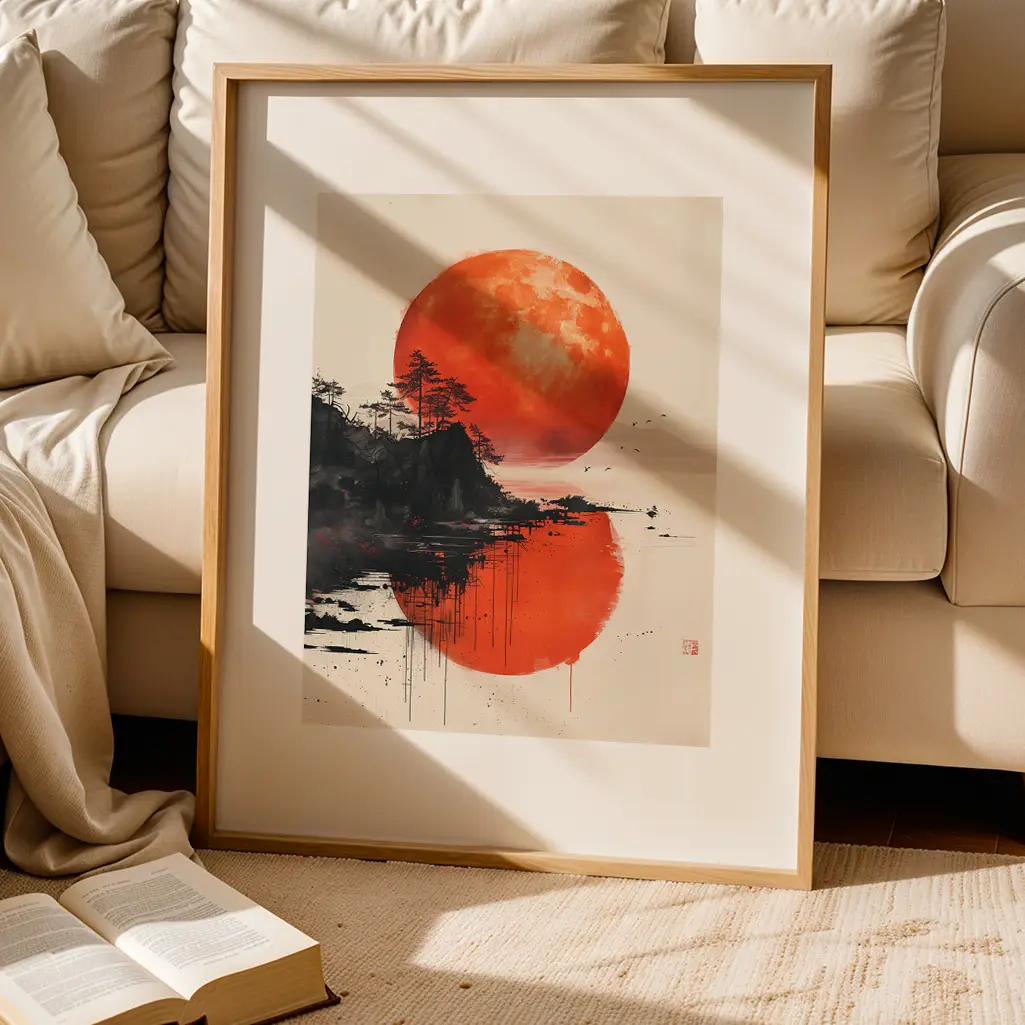
Framed prints are the architectural option. They introduce lines, edges and often a subtle shadow on the wall. In rooms that feel too casual or undefined, that architecture can be the missing ingredient. A hallway with framed black-and-white photographs becomes a gallery, not a passageway. A single, large framed print over a sofa can pull a living room into focus the way a rug does for the floor.The power of a frame lies in proportion and contrast. A narrow frame around a large work reads as elegant and quiet; a wide frame or a mat around a small work elevates it, saying, “Pay attention, this is important.” Designers gravitate toward simple profiles in wood, black or white because they let the art speak without shouting. But don’t underestimate a deliberate contrast. A delicate line drawing in a slightly chunky, warm wood frame creates a conversation between fragile and solid that can anchor a whole vignette of furniture and objects.
Frames also organize chaos. If you love a gallery wall but fear visual noise, consistent framing is your ally. Different images in the same frame color and similar scale look like a single composition instead of a pinboard of afterthoughts. This becomes especially valuable in small apartments, where every wall has to multitask. Above a desk that doubles as a dining table, a grid of framed prints can draw the eye up and lend seriousness to an otherwise flexible corner.
There are tradeoffs. Glass, even non-glare, will reflect. In a bright room with large windows opposite the art, a glossy framed print might show more of the outside world than the image itself. This is where deep reasoning about placement pays off. If the room demands framed art for structure, look for walls at an angle to your main light source, or invest in non-reflective glazing. It is less romantic than choosing the art, but it preserves the quiet relationship between you and the image, instead of inserting a mirror between you.
Framed prints also carry a whisper of formality. They suggest decisions have been made, that the arrangement is not temporary. If you are building a home that needs to feel like a long-term choice after years of renting and improvising, that seriousness can be psychologically grounding. The act of framing is a way of telling yourself, “This is worth keeping,” and your eye reads that conviction each time you walk into the room.
Where Unframed Prints Quietly Shine
If frames are architecture, unframed prints are breath. They loosen the grid of a room and let the wall feel more like a surface for thought than a backdrop for objects. In a small bedroom where you want softness rather than structure, an unframed print taped with neat, intentional edges can feel almost like a fresco: an image that has simply appeared out of the paint.Without the border of a frame, the art and the wall share the same visual “air.” This makes unframed prints powerful in already tight or visually cluttered spaces. Above a crowded bookshelf, a framed piece can feel like one more box; a carefully placed unframed print can hover like a fragment of a story, less demanding but still present. Designers often lean on this in kitchens, where cabinets, appliances and tiles already draw hard lines. A small print clipped to a rail or resting on a ledge lightens the mood without competing with the geometry of doors and drawers.
There is an emotional tone to unframed work as well. It suggests process over finality, like a studio wall where ideas evolve. If your home is a place where you write, draw or simply think, that feeling can be more supportive than the perfection of finished frames. Rotating prints seasonally or as your interests shift becomes simple. You can overlap pieces, let edges curl slightly, or lean a stack of prints on a shelf so that the act of display itself feels alive.
The vulnerability of an unframed print is not only a problem; it can be part of its beauty. A slight softness at the corners, a visible paper texture catching side light, all of these make the piece feel less protected and more human. The key is to let this be intentional rather than accidental. Use clean washi tape instead of gummy office tape, or slim clips instead of random pushpins. The message to the eye should be “casual by design,” not “temporary until I decide what I really want.”
In the end, the answer to what looks best is specific to each wall in your home. Where you need clarity, weight and protection, framed prints bring order and ceremony. Where you crave looseness, immediacy and room for change, unframed prints offer a gentler, more experimental rhythm. Walk through your rooms slowly, noting where you feel cramped, where things feel vague, and where there is an invitation to pause. Let those sensations decide which surfaces call for frames, and which are asking to simply breathe with a piece of paper and an image you love.