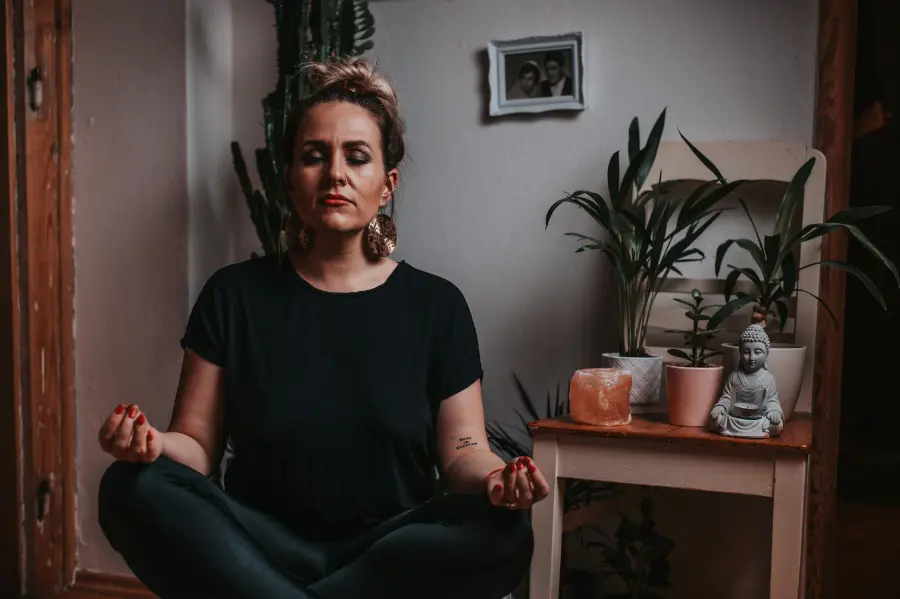
The Case for 60 Seconds of Stillness
Stress rarely arrives as one dramatic moment. It seeps in through unanswered emails, a sink full of dishes, the glare of an overhead light at 10 p.m. In the same way, stillness rarely appears as a grand retreat or a week off-grid. It’s built, minute by minute, in the smallest pauses of your day.Micro-practices are those pauses: 60-second rituals that interrupt the automatic rush of ordinary life. They are not about self-improvement at scale; they are about micro-adjustments in perception. You are not trying to become a new person in a minute. You are simply learning how to notice that you are already here.
The overlooked power of these practices lies in two places. First, they are frictionless. You can do them waiting for the kettle to boil or in the four steps between your desk and the bathroom. Second, they are spatial. The way you arrange your home either supports that pause, or quietly cancels it. A chair turned toward a window is an invitation. A counter buried in mail is a message that there is always more to process before you rest.
Think of stress as a tight lens. It narrows your field of vision until all you can see is the next task. Micro-practices are brief, intentional moments of widening that lens. They use breath, texture, light, and sound to remind your nervous system that it is not, in fact, under attack; it is simply over-informed.
One useful mindset shift is to drop the fantasy of the perfect routine. Perfection is slow; reality is fast. Instead, treat these 60 seconds as “pockets of presence” braided into an otherwise ordinary day. You are not trying to carve out a separate life of calm. You are trying to seed your actual life with tiny, repeatable pauses that the body can learn to trust.
Your home becomes both the container and the collaborator. The objects around you can either mirror your internal agitation or gently contradict it. The question is not only “How do I calm down?” but also “What in this room keeps nudging me back into noise?”
Micro-Practices That Rewire the Room
Begin with breath, because it is the fastest route to the part of the nervous system that manages threat and safety. Stand in a doorway, place one hand on your chest and one on your belly, and exhale longer than you inhale. Four counts in, six counts out, three times. The architecture matters: the doorway acts as a literal threshold, a reminder that you are stepping from one state into another. Over time, that exact spot becomes associated with a micro-reset.Now add a visual practice. Choose a single view in your home that feels even marginally soothing. It might be the soft collapse of a blanket on a chair, a plant reaching for the window, or the way afternoon light falls across the floor. For 60 seconds, simply rest your eyes there and track detail: the edge of a leaf, a shadow line, the weave of a cushion. When your mind tries to drag you back to your to-do list, notice the tug and then quietly return to texture and shape.
This is not escapism; it is retraining. Under stress, the brain fixates on what is wrong or unfinished. By naming a few neutral or pleasant details in your field of vision, you are proving to your body that the present moment contains more than threat. The space becomes a co-therapist, offering evidence that you are not only a mind orbiting future problems.
Your hands are another direct line to calm. Keep one object in each main room that feels good to the touch: a smooth stone on a windowsill, a linen napkin folded on the dining table, a wooden spoon worn to silk. When you feel yourself tightening, pick up the object and let your attention live in your fingertips for one minute. Notice temperature, weight, grain, the way your grip softens as you stop thinking about holding and start noticing contact.
These tactile anchors accomplish two things. They interrupt mental spirals with physical sensation, and they slowly reframe your home as a landscape of small refuges. Your living room is no longer just the place where you doomscroll; it is also the place where the clay mug waits to remind your palms of warmth.
Even the air around you can become part of the practice. Once a day, open a window for 60 seconds, even in cold weather. Stand there and feel the shift: cooler air on your face, distant traffic, a bird’s call, or simply city hum. You are letting your awareness move beyond the room’s closed circuit, which often mirrors the closed circuit of anxious thinking. The frame of the window becomes a temporary horizon line.
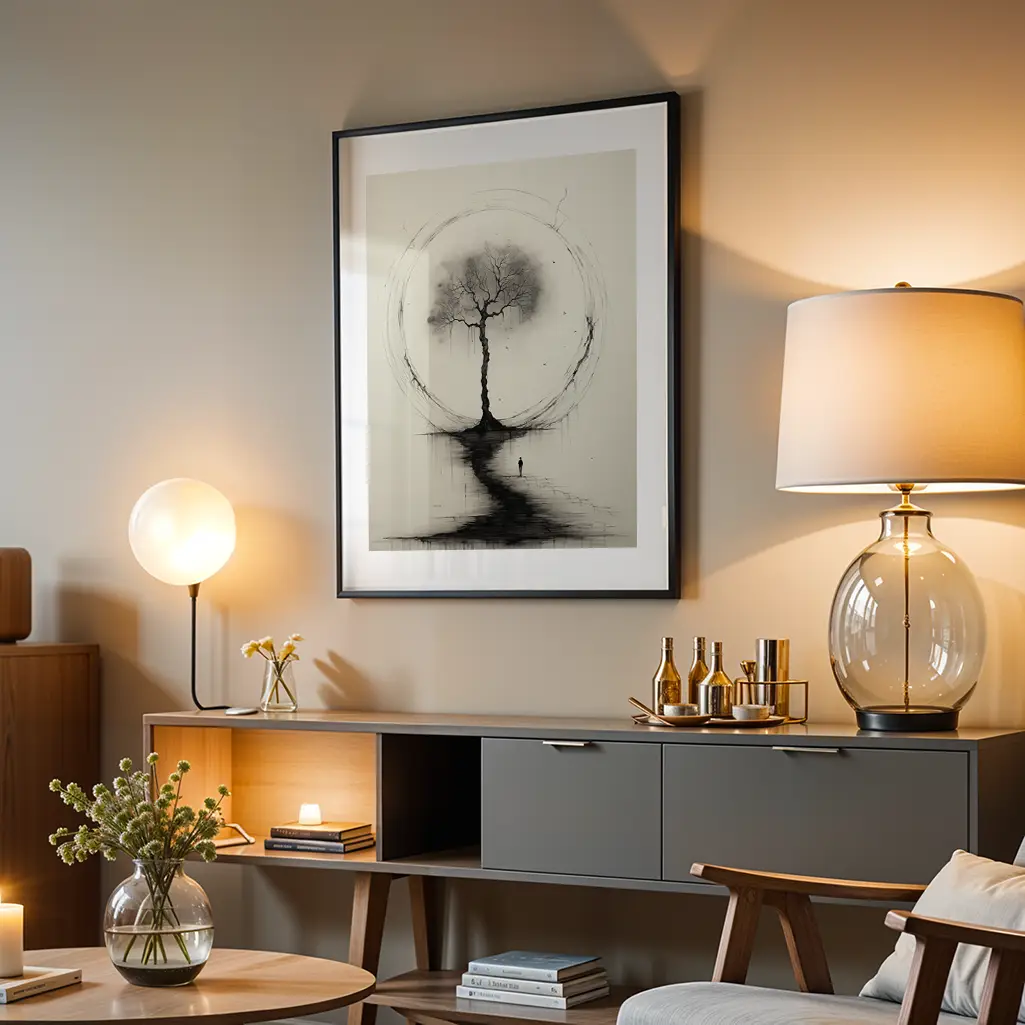
As you experiment, watch for subtle feedback. A single plant that thrives on a cleared windowsill may give you more calm than a cluster of high-maintenance greenery in a corner you rarely visit. A bare stretch of wall might feel restful, or it might echo; maybe one low artwork at eye level when seated invites a different kind of exhale. The test is physiological, not theoretical: do your shoulders drop, even a little, after 60 seconds here?
Designing a Home That Remembers to Breathe
Micro-practices become durable when the space itself keeps asking you to do them. Instead of adding more to your environment, think of subtracting visual noise so that a few small cues can stand out. Clear one small surface completely and decide that this is your daily “reset altar,” even if it only holds a glass of water and a book. When you pass it, that is your prompt: one slow breath, one softening of the jaw, one glance out of the nearest window.Consider the choreography of your day. The path from bed to bathroom, from front door to kitchen, from desk to sofa: each is a quiet opportunity for a 60-second shift. Place your most calming object exactly where your hand naturally reaches. Angle a chair slightly toward the view that steadies you, not toward the television that agitates you. Swap a harsh overhead bulb for a warm lamp in the corner, so that turning it on at dusk is a small ceremony rather than a reflex.
What you are designing is not just a prettier room, but a “behavioral stage set” for calmer choices. Every time you tuck your phone out of sight and leave an open book on the coffee table instead, you tilt the probability that your next spare minute will be spent reading rather than scrolling. Every time you keep the dining table mostly clear, you make it more likely that 60 seconds of candlelight and quiet conversation will happen there.
The real transformation is cumulative. A single 60-second pause will not erase a hard day. But dozens of such pauses, repeated over weeks, carve a new default path through your body and home. Slowly, your nervous system begins to expect that movement from stress to stillness is available, not rare. Your rooms stop broadcasting busyness and start whispering something else: “You can land here.”
You do not need a meditation room or a total renovation to begin. You need a doorway to pause in, a window to look out of, an object that feels kind in your hand, and a willingness to treat one minute as enough. From there, your space and your attention learn to co-operate. The home becomes a quiet ally in the work of staying human in a fast-moving world, one 60-second practice at a time.

.webp)