The Quiet Drama of a Minimalist Gallery Wall
A gallery wall in a minimalist home is a paradox that can work beautifully. On paper, rows of frames sound like clutter, the exact thing minimalism is supposed to avoid. But in practice, a carefully edited gallery wall becomes the room’s calm focal point, concentrating visual energy in one place so the rest of the space can breathe.Minimalism isn’t an absence of personality; it is an insistence on clarity. The difference between a gallery wall that feels museum-grade and one that reads as visual noise is not the number of frames but the intention behind them. In a minimalist setting, every piece must justify its presence and participate in a quiet conversation with the others, with negative space acting as a kind of punctuation between them.
Before choosing frames or hammering a single nail, consider what you want the wall to do. Should it soften an angular room, add warmth to a stark white space, or provide a narrative thread in a long hallway? Minimalist gallery walls tend to succeed when they have one clear job: to draw the eye, calm the mind, and create a sense of gentle rhythm rather than spectacle. When you approach it this way, the wall becomes less of a collage and more of a composed paragraph written in line, tone, and light.
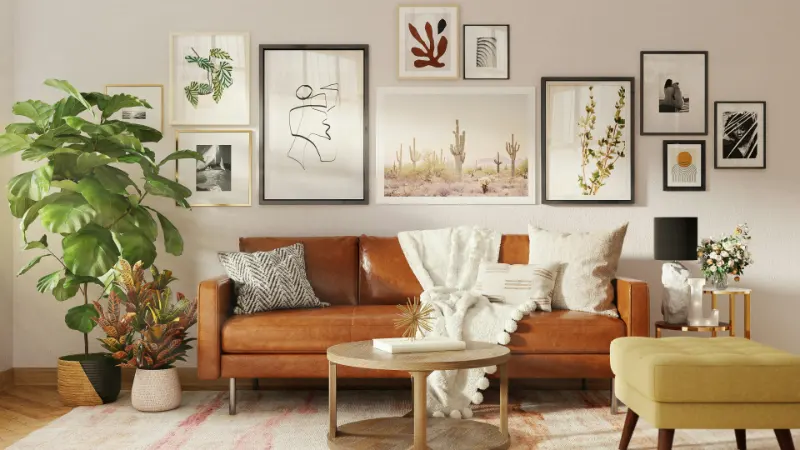
The architecture of the room offers your first clues. A long, low sofa suggests a horizontally oriented arrangement that echoes its silhouette. A tall, narrow wall near a staircase might prefer a vertical column of works, like visual notes climbing upward. Allow the proportions of your space to set the basic geometry, and then let your artwork move within that structure as if it were a score of music, with accents and rests carefully placed.
Choosing, Editing, and Framing with Restraint
The strongest gallery walls in minimalist homes begin at the editing table, not on the actual wall. Instead of starting with everything you own, pull out only what you absolutely love or what feels essential to your daily visual diet. Spread pieces on the floor and notice what they share. Maybe it is a cool grayscale palette, a love of bold negative space, or a subtle thread of botanical forms. That shared quality is your through line, and in a minimalist home, one through line is usually enough.Once you see the common denominator, you can be ruthless about removing what disrupts it. This is where deep reasoning becomes practical design: if one exuberant, colorful piece keeps insisting on showing up in your mind, consider building the entire wall around its energy and quieting everything else to support it. Alternatively, if your space is already saturated with natural light and strong architectural gestures, a suite of soft, monochrome works might be what lets your eye rest.
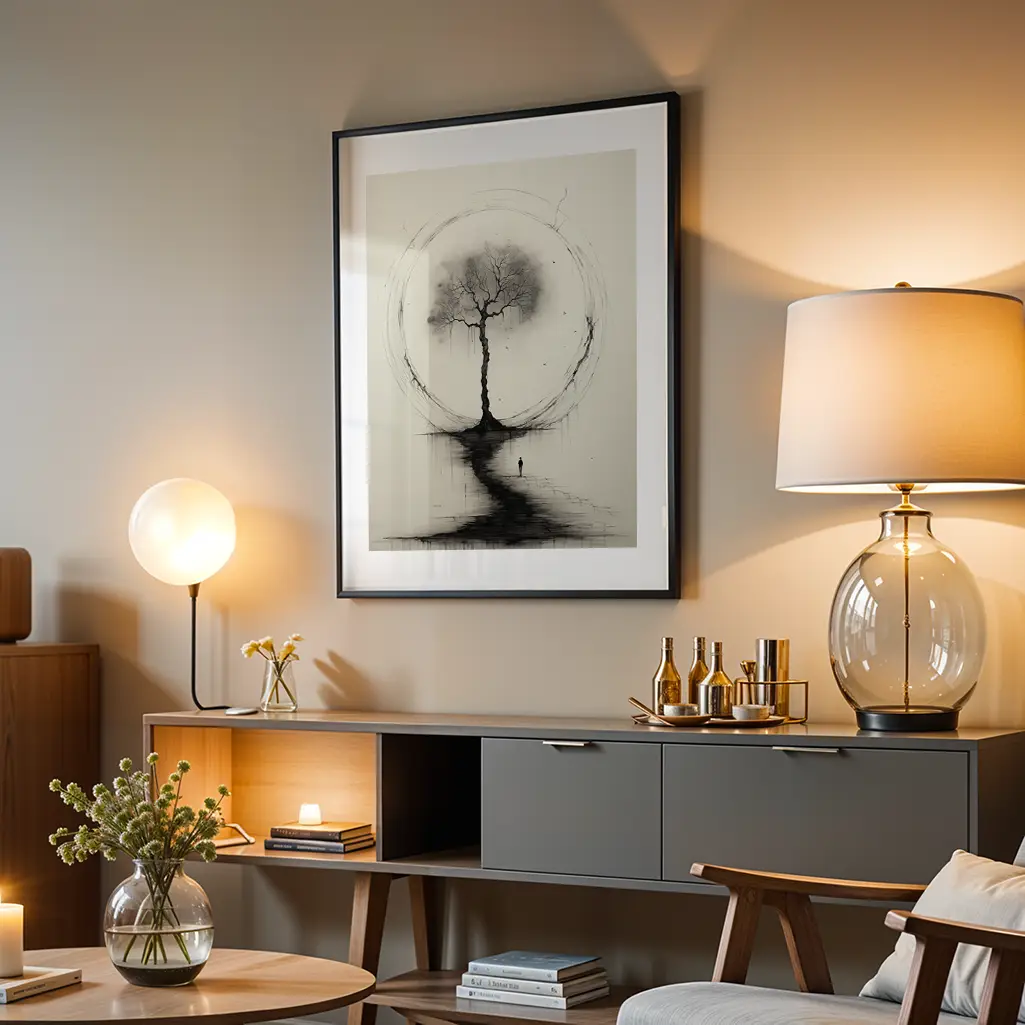
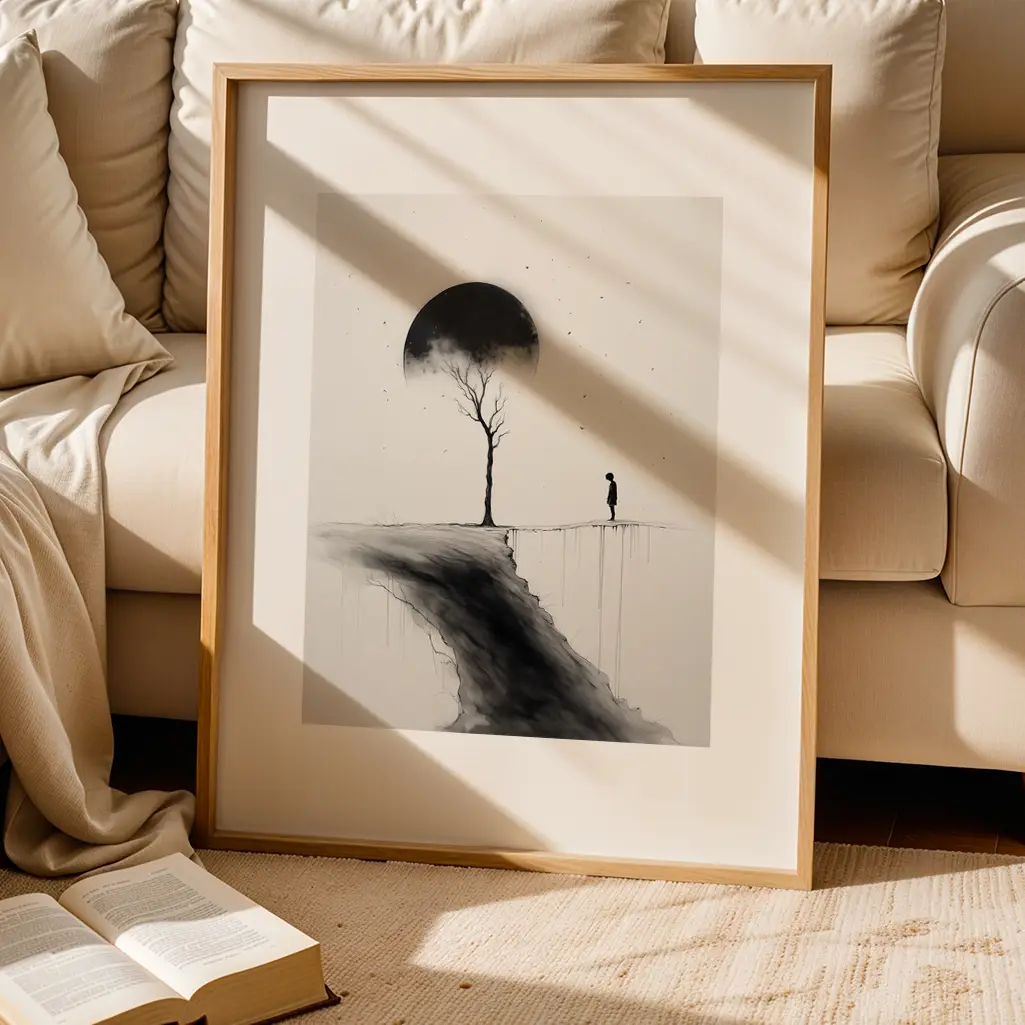
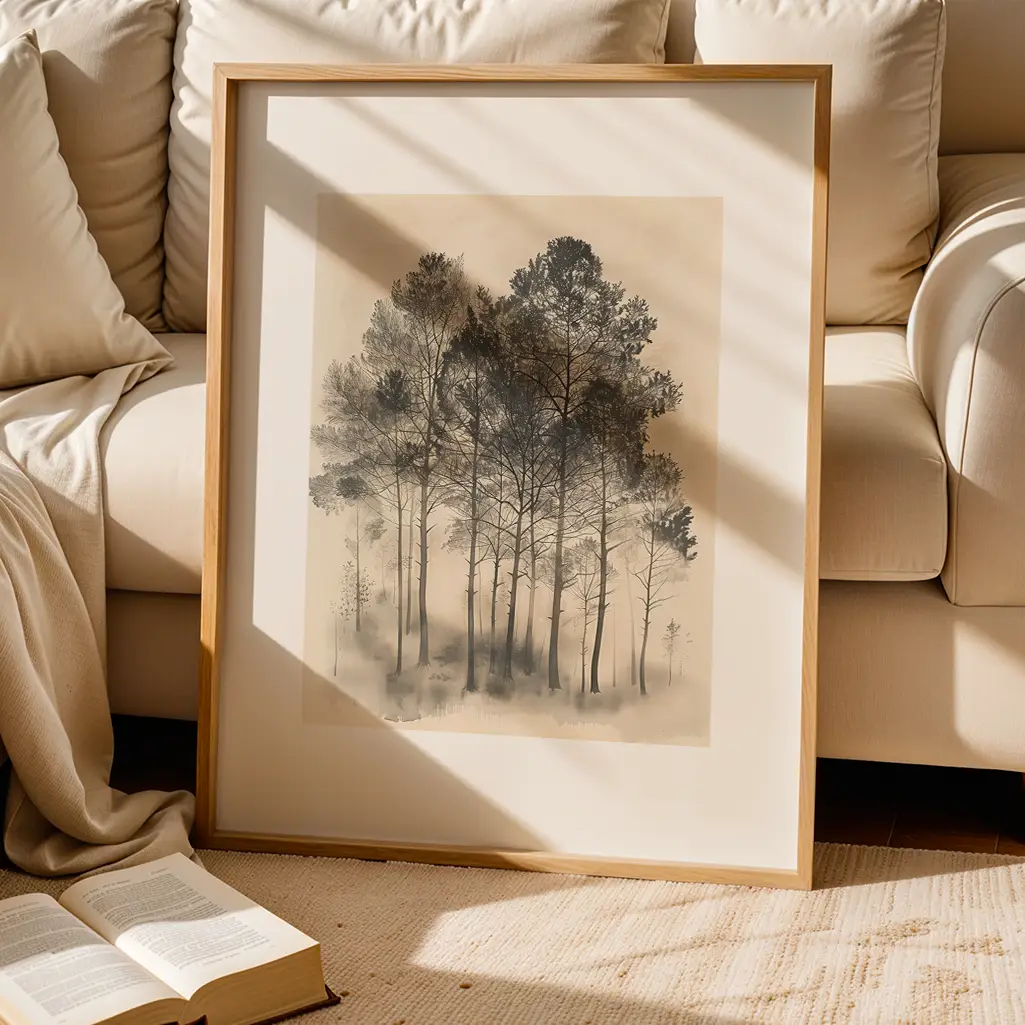
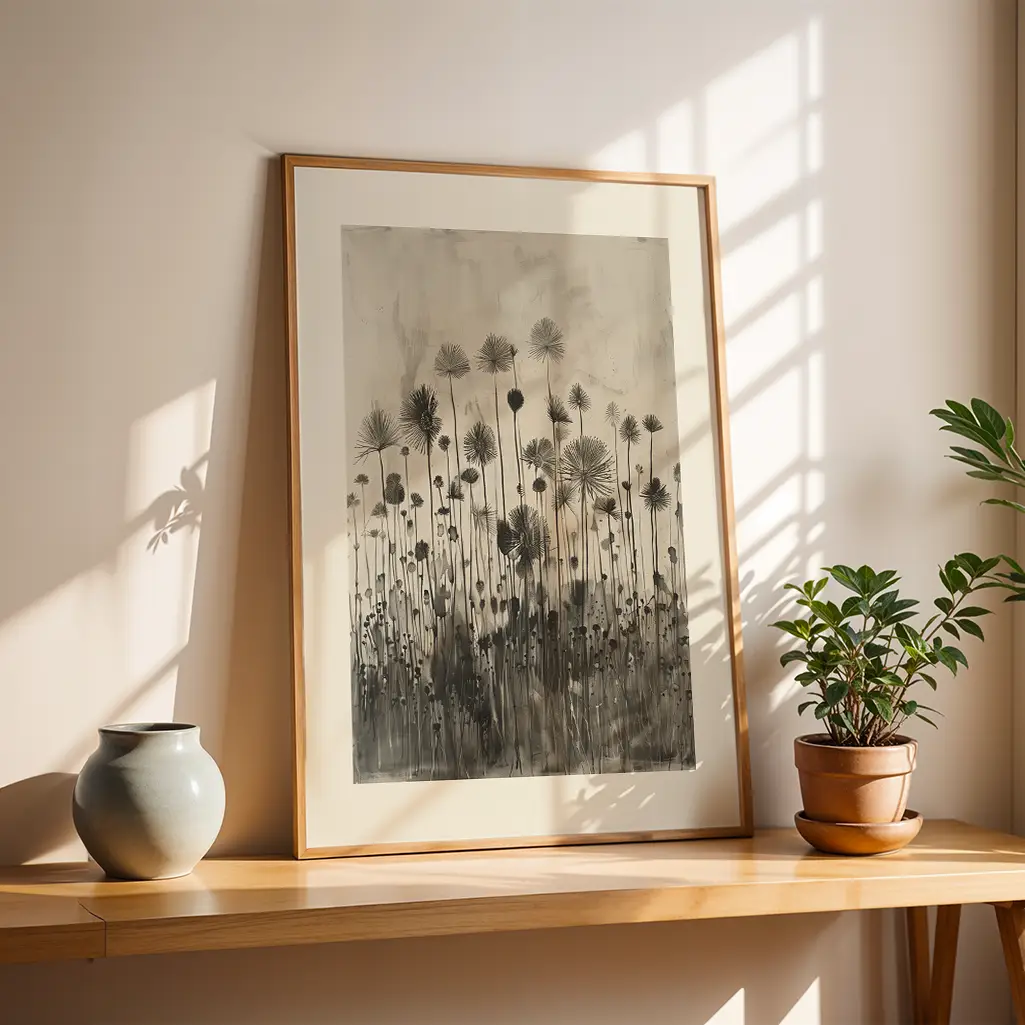
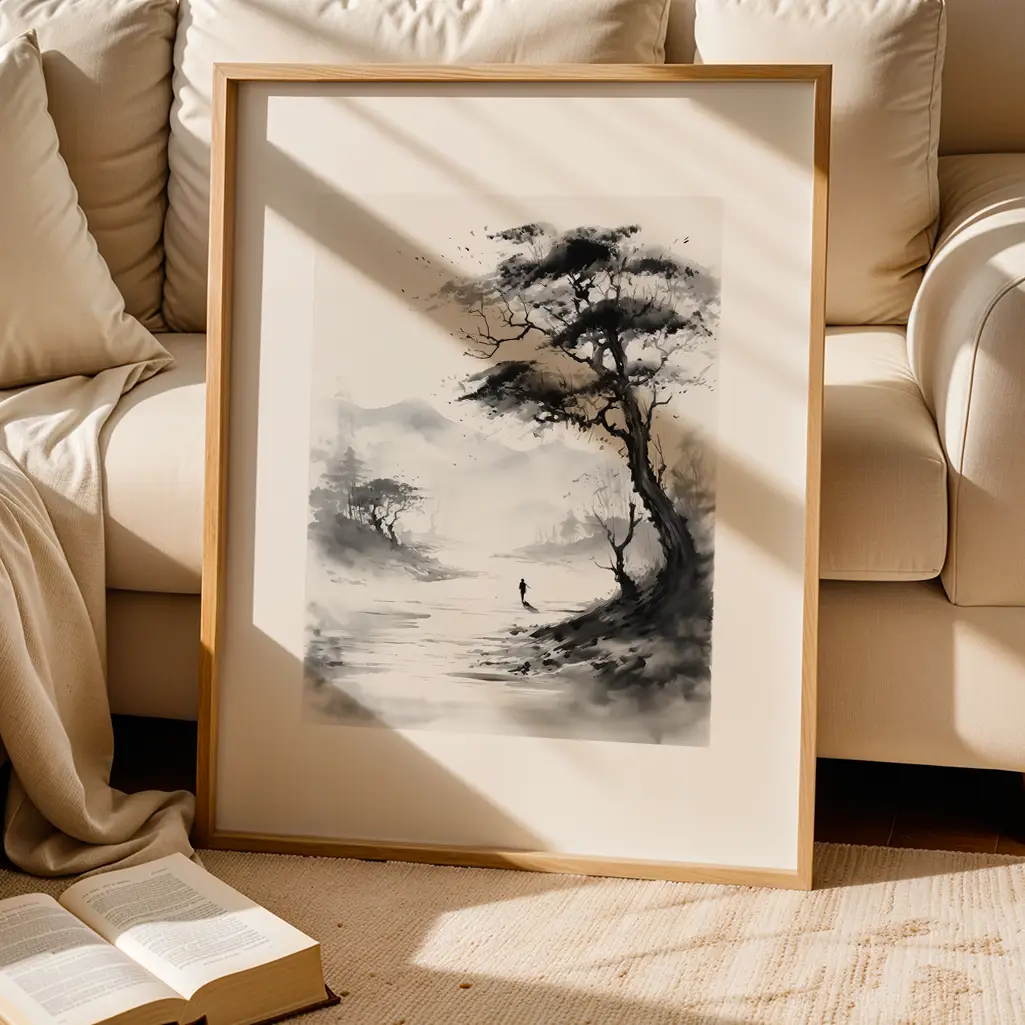
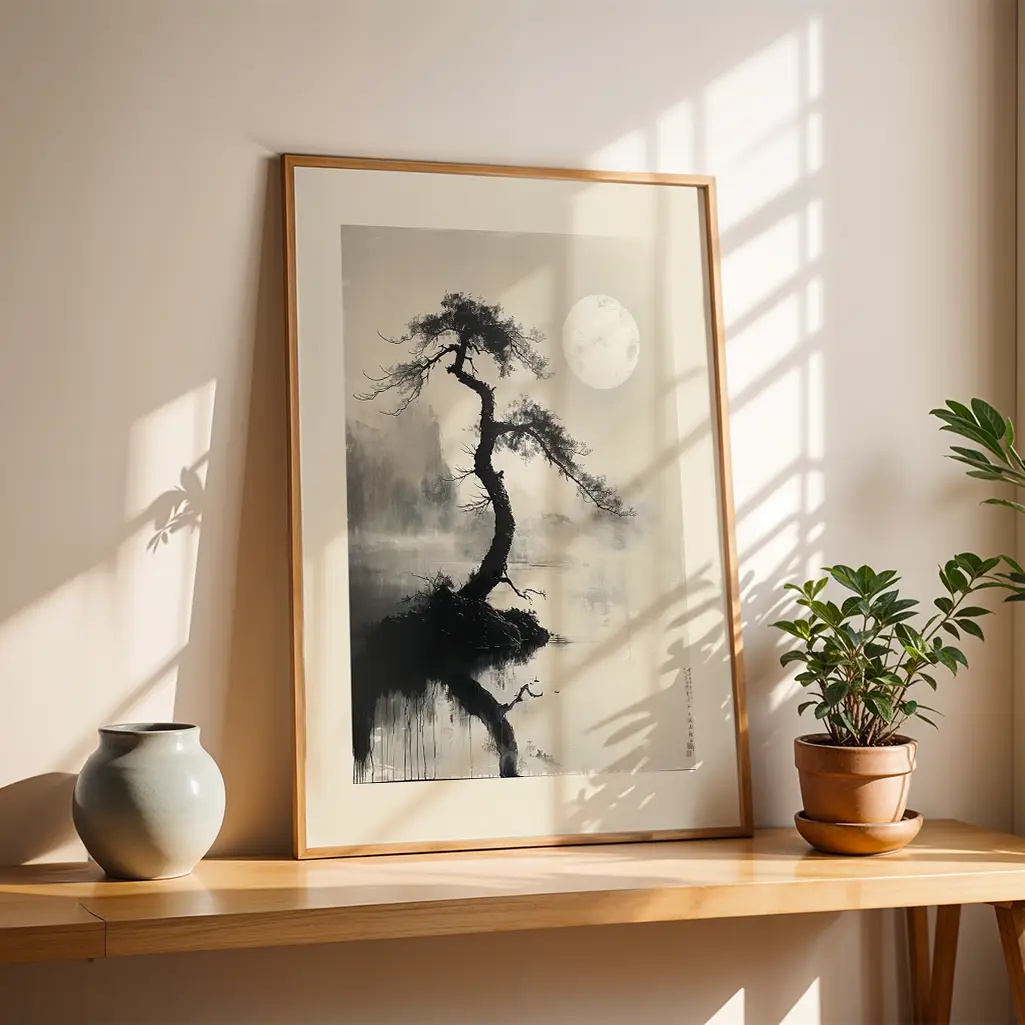
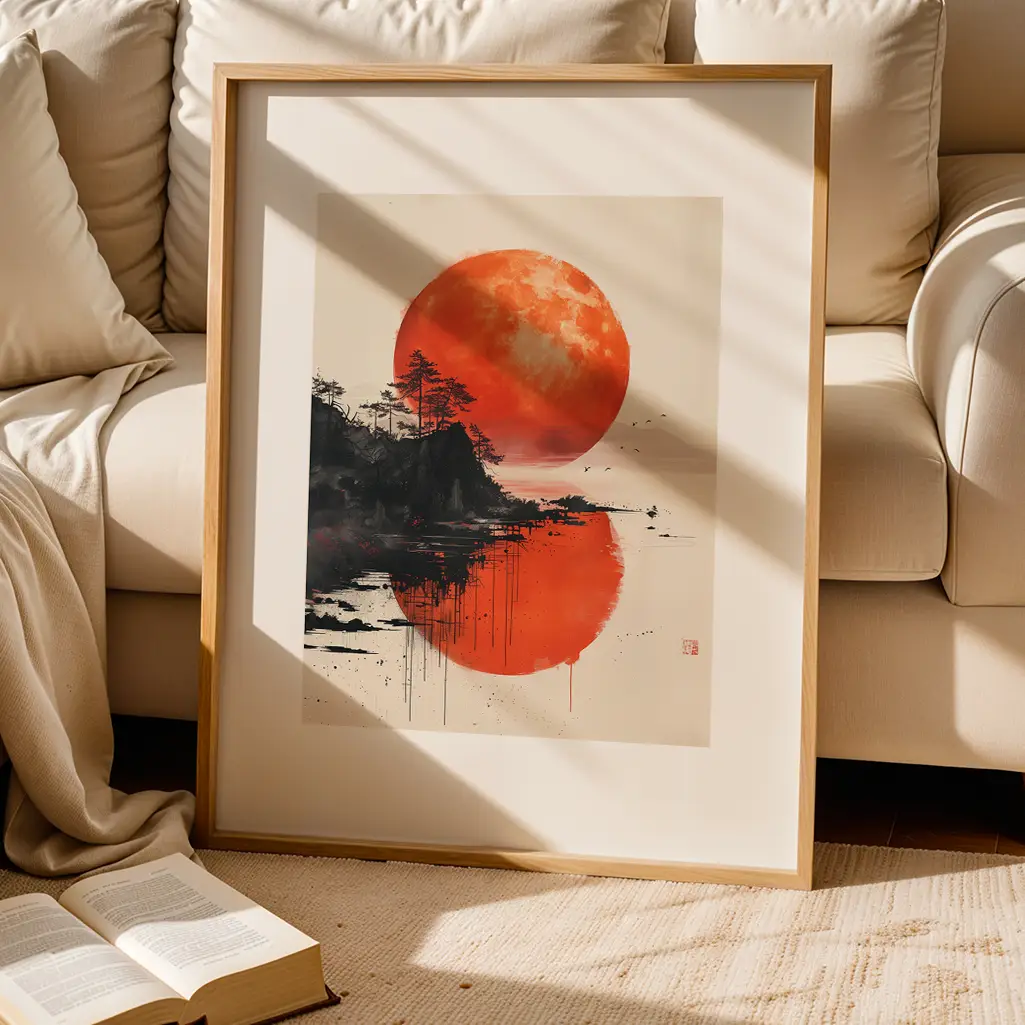
Framing is where minimalism is most visible. Matching frames in black, white, or pale wood create instant cohesion and read as a single, calm gesture rather than many small interruptions. The thinner the profile, the more the work seems to float; the thicker the profile, the more architectural and solid the wall will feel. In a minimalist home, simple usually wins, but simple does not have to mean sterile. A slight variation in wood tone or a mix of matted and unmatted pieces can add nuance without noise.
Matting, in particular, is a powerful tool for minimalist gallery walls. A generous white mat acts like additional negative space, allowing each work to breathe while preserving an overall sense of order. It also allows small, intimate works to hold their own in a larger composition. Think of each mat as a frame within a frame, echoing the minimalist impulse to create clarity around what matters and remove what does not.
As you refine your selection, ask a simple question of every piece: “Does this calm or does this agitate?” Minimalism does not require that art be quiet or neutral in subject, but the net effect of the collection should be a felt sense of ease. A single dynamic piece can be balanced by more contemplative neighbors, the way one strong note in a chord is tempered by softer tones around it.
Hanging, Spacing, and Letting the Wall Breathe
When it comes to actually hanging a gallery wall in a minimalist home, the white space around the art is as important as the art itself. Resist the urge to fill the wall edge to edge. Instead, imagine an invisible border around the arrangement where nothing will hang, a margin that lets the composition float freely on the surface. This negative space keeps the wall from feeling like a collage and instead like a single, deliberate installation.A common minimalist strategy is to establish a strong baseline. Align the bottoms or centers of frames along an invisible horizontal line and then let the heights vary slightly above or below it. This creates visual calm, even if the works differ in size and orientation. In hallways or above a sofa, a consistent center line is particularly effective, echoing furniture lines and architectural elements to knit the whole space together.
Spacing between pieces is where the gallery wall finds its rhythm. Wider gaps feel more serene and more in keeping with minimalist principles. Narrow gaps can work, but they demand absolute consistency or the eye will catch the irregularities. If you are unsure, err on the side of more space and fewer frames. A group of four or five works, thoughtfully spaced, can have more impact than a crowded array of fifteen, especially in a pared-back home.
Consider also the choreography of how you move through the room. Your first sightline when you enter should land on the calmest, most grounded part of the composition. From there, smaller pieces can lead the eye outward, like stepping stones. If a bold piece keeps shouting from an awkward corner, the wall may need rebalancing. Sometimes moving one work an inch higher or lower can restore the quiet cadence you are seeking.
Finally, live with the wall for a few days before you decide it is finished. Minimalist spaces reward patience. Notice how the arrangement looks at noon light and again in the early evening. Does a particular frame throw a distracting glare, or does a dark piece feel too heavy once night falls? Small adjustments in height, angle, or placement can bring the wall into alignment with the rest of your home. In the end, a minimalist gallery wall should feel like an exhale, a composed pocket of meaning that makes the surrounding emptiness feel intentional rather than bare.