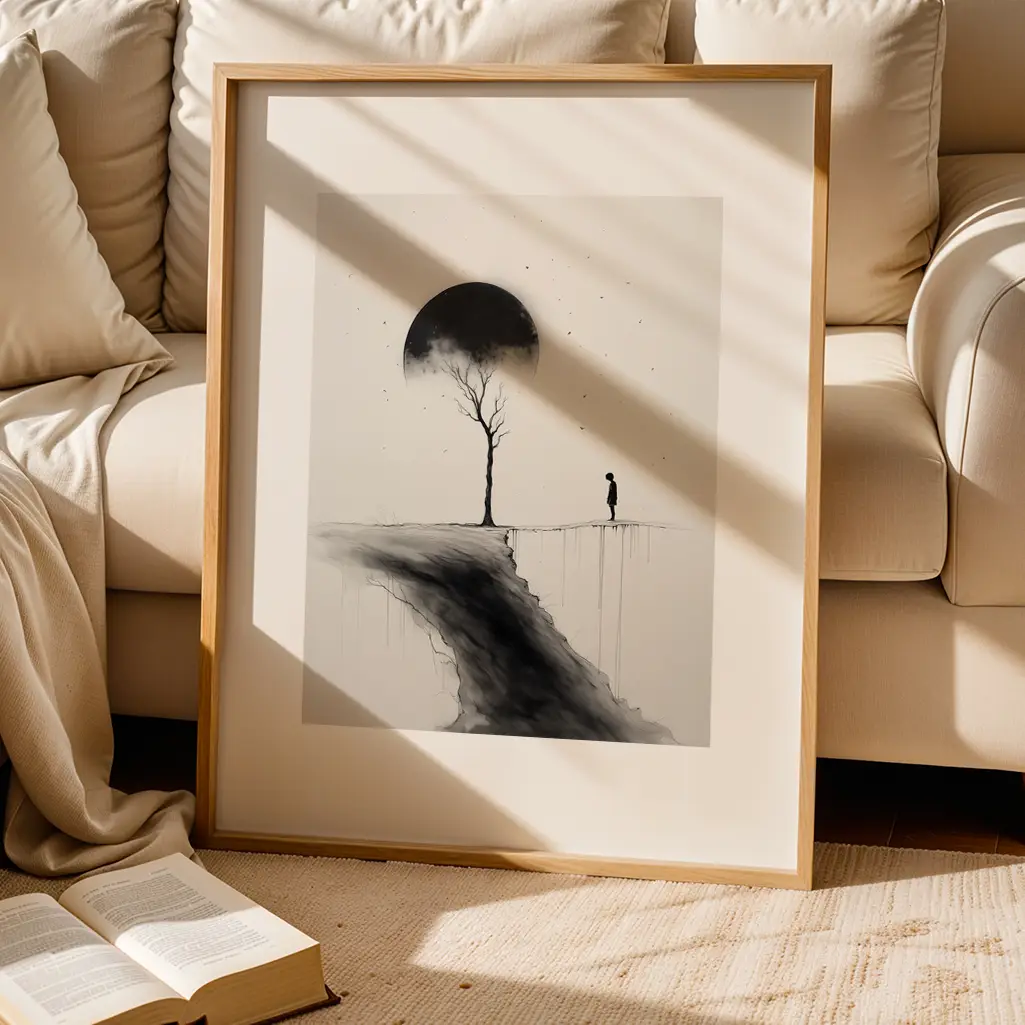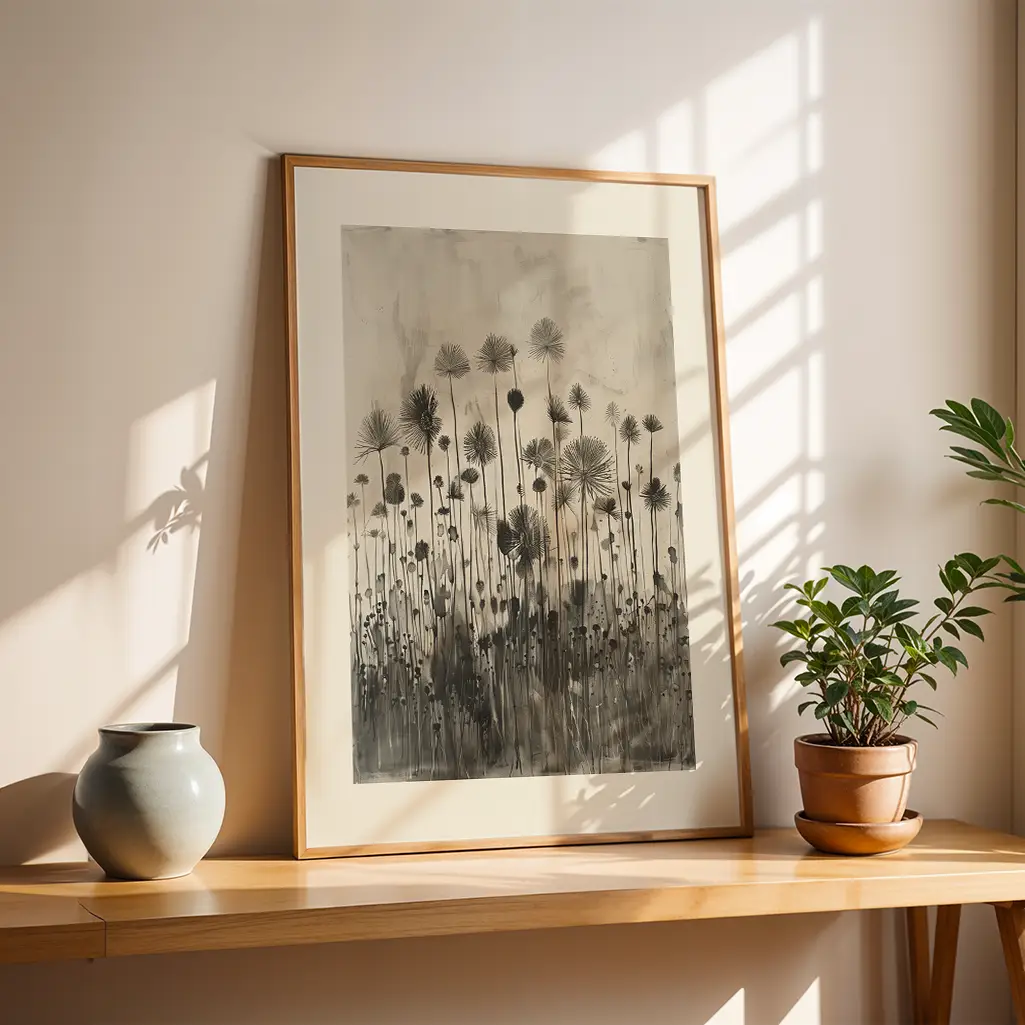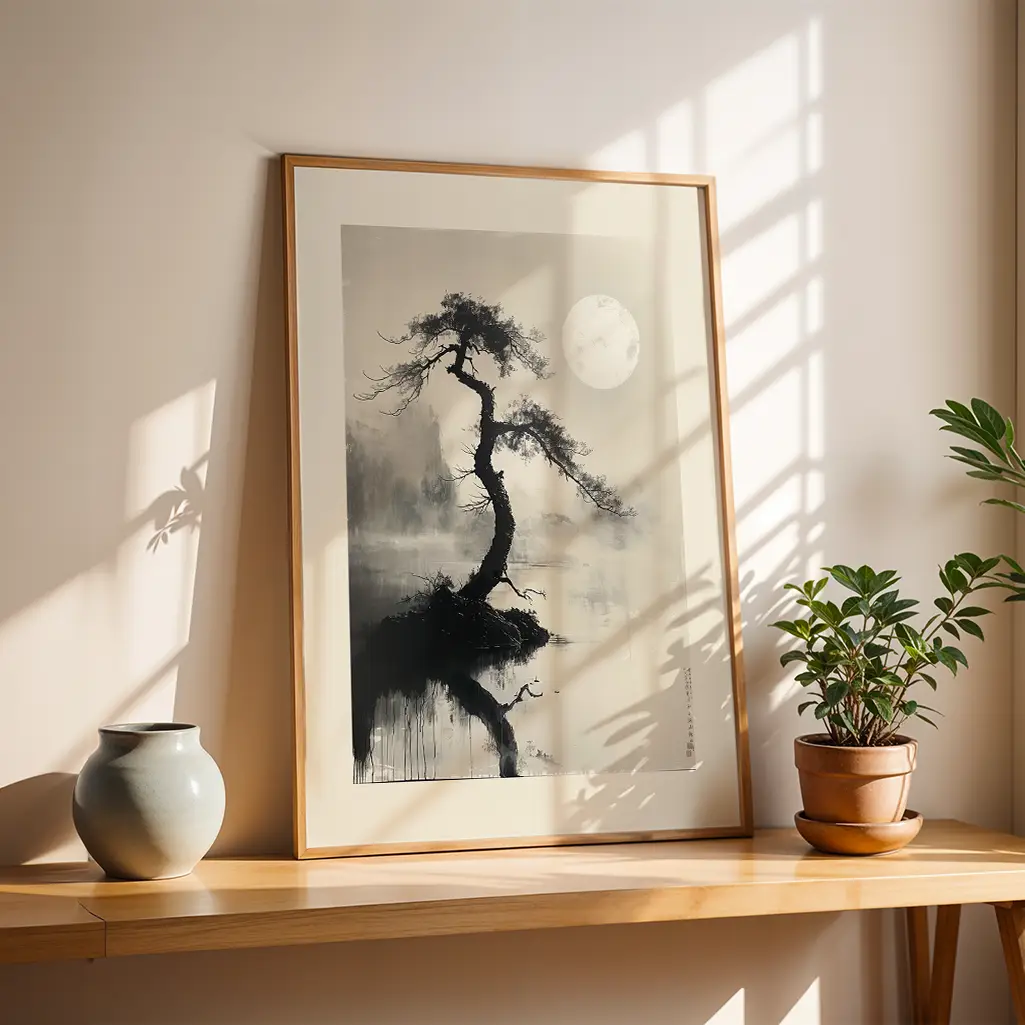
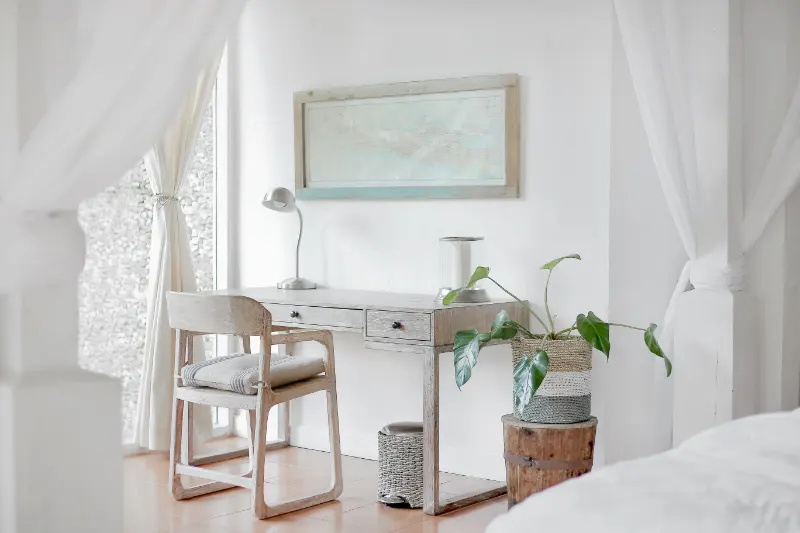
Why Your Home Office Feels the Way It Feels
A home office is never just a desk and a chair. It is a long conversation between your nervous system and your surroundings. The room’s light, the height of your laptop, the color of your walls, the clutter in your peripheral vision; all of it quietly edits how long you can concentrate, how tense your shoulders stay, and how you feel about your work when you close the door at night.
In an office tower, those choices are often made by a facilities team, with ergonomic consultants and standardized layouts. At home, you become that team, usually without a plan. The result is a setup that grows organically out of convenience: you place the desk where the outlet is, you keep every cable you have ever owned, you promise to deal with the piles of paper "later." Over time, the space starts to feel subtly hostile to focus. You need more coffee than you should. You reach for your phone more often than your pen.
Designing a calmer, more focused home office starts with acknowledging that it is both a tool and a small ecosystem. A tool must fit your body. An ecosystem must balance stimulation and stillness. Too much stimulation and your attention keeps scattering toward whatever is brightest or loudest. Too much stillness and the space can start to feel flat, like a waiting room where ideas go to sleep.
Psychologists sometimes describe attention as a finite budget that renews itself when your mind can wander in a gentle, undemanding way. In design, the equivalent is giving your eyes somewhere soft and simple to land. That might be a blank section of wall near your monitor, a plant by the window, or an uncluttered stretch of desk that is kept almost ceremonially clear. The goal is not austerity. It is the deliberate placement of calm so that focus has space to collect.
Calm also depends on predictability. If your workspace changes every day, your body never quite settles. Decide what is permanent and what is temporary. Permanent is your main work surface, primary light source, and storage for daily tools. Temporary is the notebook you are using this week, the book you are reading, the mug that will eventually need to leave. When the permanent elements are stable and thoughtfully arranged, the temporary clutter stops feeling like chaos and starts feeling like the trace of an active mind.
Finally, consider how your home office separates you from the rest of your life, even if it sits inside your bedroom or at one end of the dining table. A sense of threshold, however subtle, is crucial. A folding screen, a rug that defines the work zone, or simply turning your desk so you face away from the bed or kitchen can signal that you have crossed into a different mental mode. The work itself may still be demanding, but the space around it can feel like an ally instead of a blur.
Designing for Focus: Light, Layout, and Visual Quiet
The most powerful design element in any home office is light, and it is often the least considered. Natural light tends to lift mood and regulate your internal clock, but glare is the enemy of focus. Place your desk so that the window is beside you rather than directly in front of or behind your screen. This sideways arrangement gives you daylight in your peripheral vision without forcing your eyes to battle reflections. If you work after sunset, layer light instead of relying on a single overhead fixture. A warm, diffuse lamp near your monitor and a brighter task light for reading can make hours at the desk feel less like interrogation and more like quiet conversation.
Your layout should acknowledge your body’s limits. If the desk is slightly too high, you will hunch your shoulders. If the chair does not support your lower back, every email becomes a negotiation with discomfort. You do not need a high-end ergonomic chair, but you do need a stable seat whose height allows your feet to rest flat, with knees roughly at a right angle. A small cushion at the base of your spine can transform a basic chair. The top of your screen should sit just below eye level so that your gaze is slightly downward, easing the strain on neck and eyes. This is not just about comfort; chronic micro discomfort is a constant tug at your attention, a quiet insistence that something is wrong.
Visual noise is another quiet thief of focus. Every visible object in your line of sight is a question your brain is trying to answer. "Do I need this?" "Should I deal with it now?" When the answers pile up as "not yet," they mutate into a low hum of guilt. The solution is not to hide everything but to assign each object a role. On your desk, keep only what you use every day and what earns its place emotionally, such as a single framed photograph or a small object that makes you exhale when you see it. The more intentional the display, the calmer the background chatter.
Color can help organize this calm. Cool, desaturated hues such as soft blues, grays, and greenish neutrals tend to recede, creating a sense of distance and air. Warmer, saturated colors lean toward stimulation. A home office that aims for focus can borrow the logic of traditional study rooms: neutral walls, a darker work surface that grounds the space, and small islands of color in artwork or textiles. The trick is contrast with restraint. A single richly colored rug under your chair can keep the room from feeling sterile while still allowing your attention to gather at the workspace itself.
Storage should behave like a stagehand: vital, invisible, and always nearby. Open shelves invite visual clutter, so reserve them for items you are comfortable seeing every day, arranged in clean lines or quiet stacks. Closed storage, even if it is a simple set of boxes or a modest cabinet, lets you sweep the day’s disorder out of sight. A consistent ritual at the end of your workday, where you return objects to their homes, is itself a design element. It turns the room back into a place of potential, ready for the next morning’s focus.
Inviting Calm: Sound, Texture, and Small Rituals
Calm is not silence; it is the absence of unwanted demand. In a home office, demand often arrives as sound leaking from other rooms or from the street. Total soundproofing is usually unrealistic, but you can shift the acoustic texture. Soft materials absorb echo. A rug, thick curtains, and fabric on at least one wall soften the room’s edges. A small bookshelf filled with irregular objects doubles as a diffuser, breaking up sound waves and making intrusive noises less sharp.
Some people work best in a cocoon of near silence. Others need gentle background noise to keep their thoughts moving. Instead of leaving this to chance, treat your soundscape as part of your design. A white noise machine, a playlist of unobtrusive instrumental music, or even the constant murmur of a distant radio in another room can become a cue for your brain: this is what it sounds like when I focus. The consistency is more important than the specific choice.
Texture is the tactile counterpart to sound. The surfaces you touch all day either soothe or irritate. A cold, glassy desk can be visually striking but emotionally distant. Adding a fabric desk mat, a wooden tray, or even a linen-covered pinboard near your screen introduces warmer textures that quietly suggest comfort. Your chair’s fabric, the feel of your notebook’s paper, the weight of your favorite pen; these are the contact points between your attention and your environment. When they feel considered, your work starts to feel more considered as well.
Small rituals can anchor your home office in time as well as space. Lighting a single candle when you begin, then blowing it out when you are done, turns on and off more than a flame. Opening the window for five minutes at the end of the day, clearing just one square foot of desk, or placing your laptop in a specific spot every evening; these gestures turn the room’s design into a living practice. They mark the boundary between work and the rest of your life, reminding you that the room serves you, not the other way around.
There is a quiet discipline in arranging a home office for calm and focus, but it is not about perfection. It is about listening to what the space is already telling you: which corner feels spacious, where the light falls kindly, what objects make your shoulders lift or drop. When you respond to those signals with modest, deliberate changes, the room begins to answer back. You sit down, the light is right, the desk is clear enough, and the day seems just a little easier to begin.