The Quiet Power of What Hangs Behind Your Screen
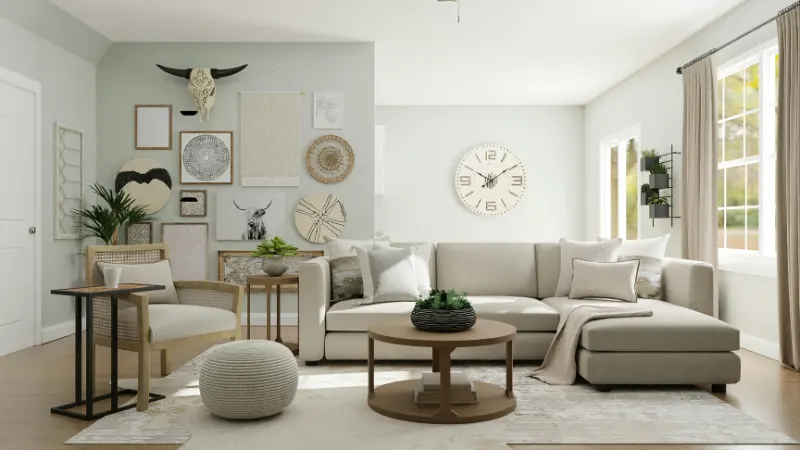
Your home office wall is often the most underused collaborator in your workday. It sits there, just outside your line of sight, quietly shaping your mood, your energy and even how long you can concentrate. When you think in terms of home office wall art ideas that serve focus and clarity, you stop treating the wall as blank space and start treating it as a tool.The challenge is that most walls fall into one of two traps. The first is visual emptiness, a flat, vaguely lonely backdrop that makes the rest of the room feel provisional, as if your work is temporary. The second is visual noise, a “gallery wall” of competing images and colors that can make your eyes and brain work harder than they need to. Neither extreme helps you think clearly.
To find the middle path, it helps to ask what kind of mind you bring to your work. If you tend to scatter, your wall art should act like a gently closing door, narrowing your attention. If you tend to overfocus and tense up, your wall can soften the edges and remind you to step back. In both cases, art is less about decorating and more about tuning the mental temperature of the room.
A simple way to start is to look at your visible field from your chair. What does your eye land on when you look up from the screen for three seconds. If it is a pile of papers, your brain reads “unfinished tasks.” If it is a blank wall, your brain reads “nothing here for me.” Thoughtful wall art offers a third option. It gives your eyes a place to rest that is neither work nor distraction, an in‑between space that quietly resets your attention.
The most useful home office wall art ideas, then, are not about style labels but about function. Does this piece calm or agitate. Does it pull you into daydreams or bring you gently back. The answers are personal, but there are clear patterns in how color, scale and imagery tend to influence focus. Understanding those patterns will help you curate walls that feel intentional rather than accidental.
Choosing Art That Helps You Think, Not Just Look
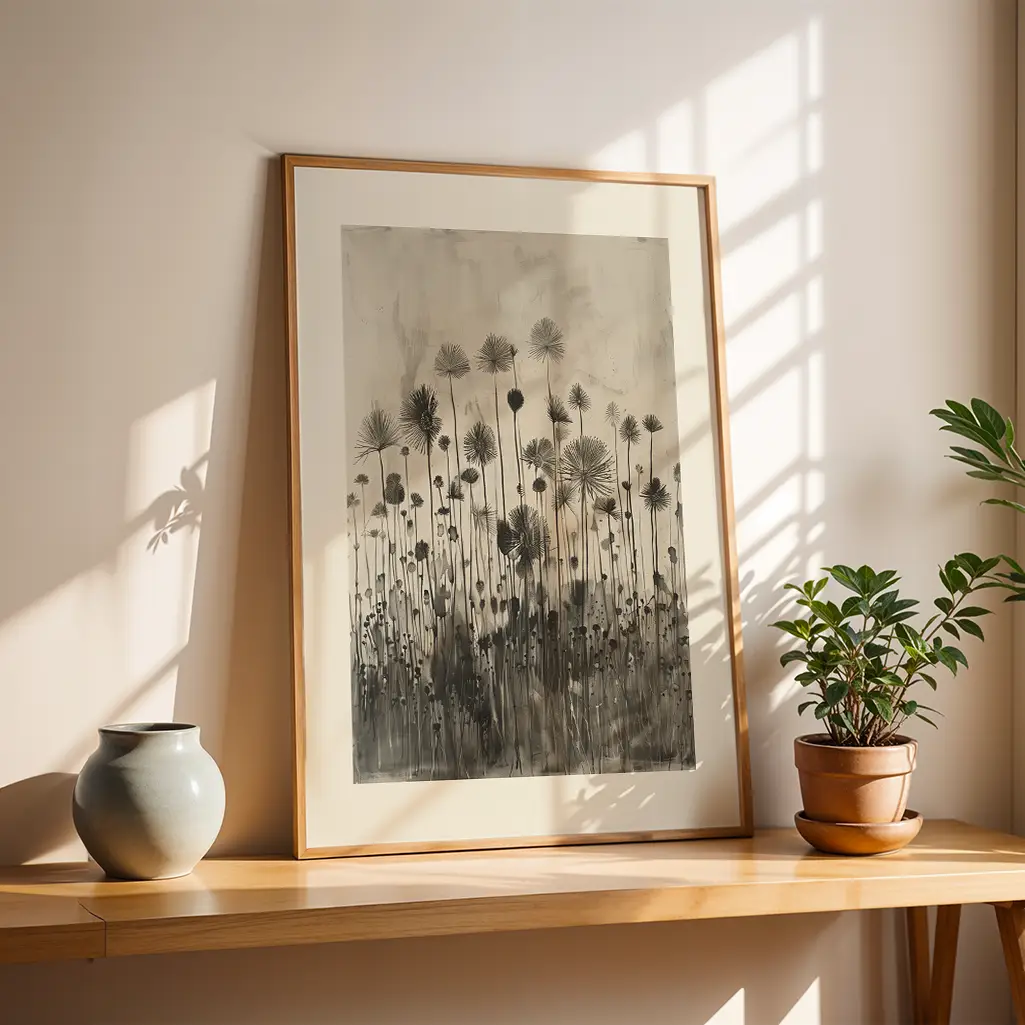
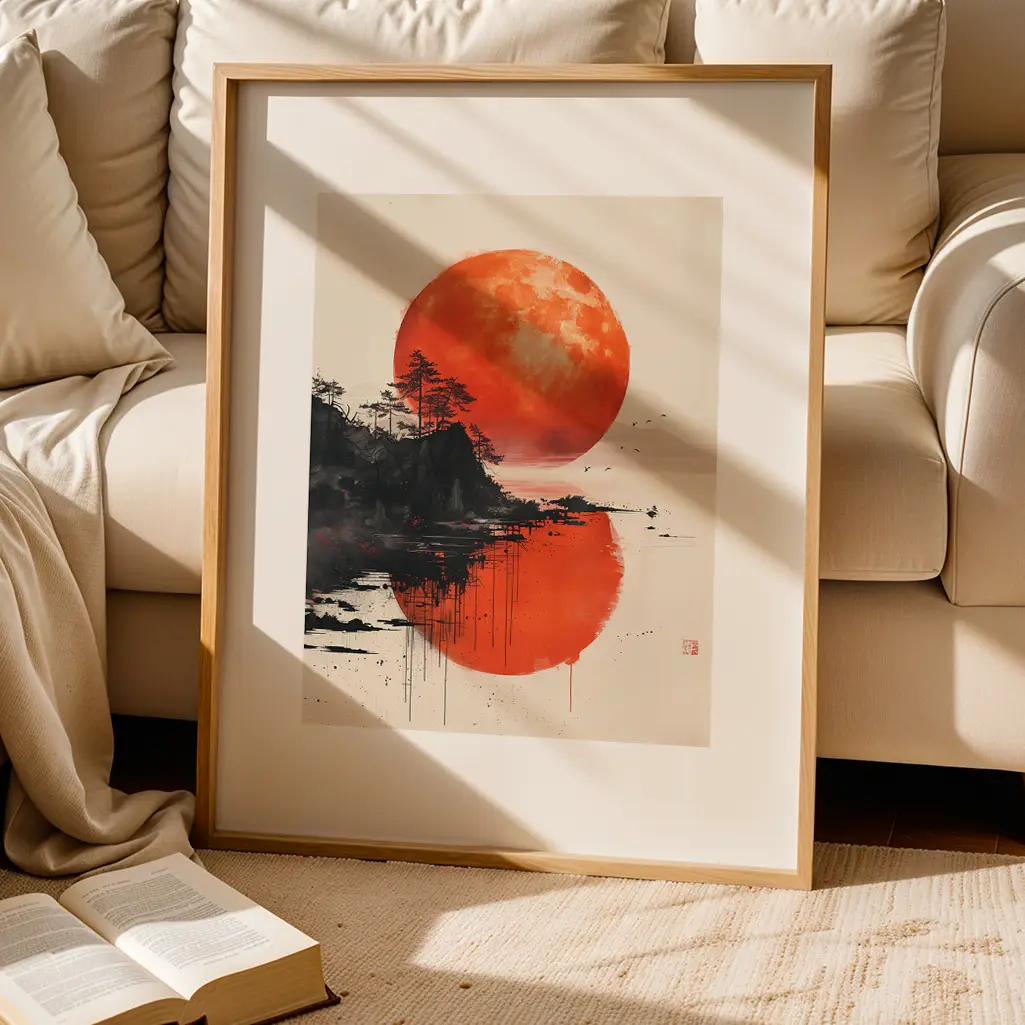
Color is usually the first thing you notice, even if you are not aware of it. In a workspace, high‑saturation reds and oranges can be energizing in short bursts but mentally loud when you are trying to write, code or analyze. Softer blues, greens and neutrals tend to support longer periods of focus. They echo landscapes that our nervous systems evolved to trust. A single, large piece in a calm, limited palette often does more for clarity than many small, busy images competing for attention.If you like bolder color, consider confining it to one zone of the wall, framed by plenty of breathing room. The surrounding negative space is not wasted; it functions as silence around a sentence, making the art feel intentional instead of overwhelming. This is where the discipline of minimalism can be useful even for maximalists. You are not denying yourself expression; you are editing the visual field so your brain can spend its bandwidth on the work that matters.
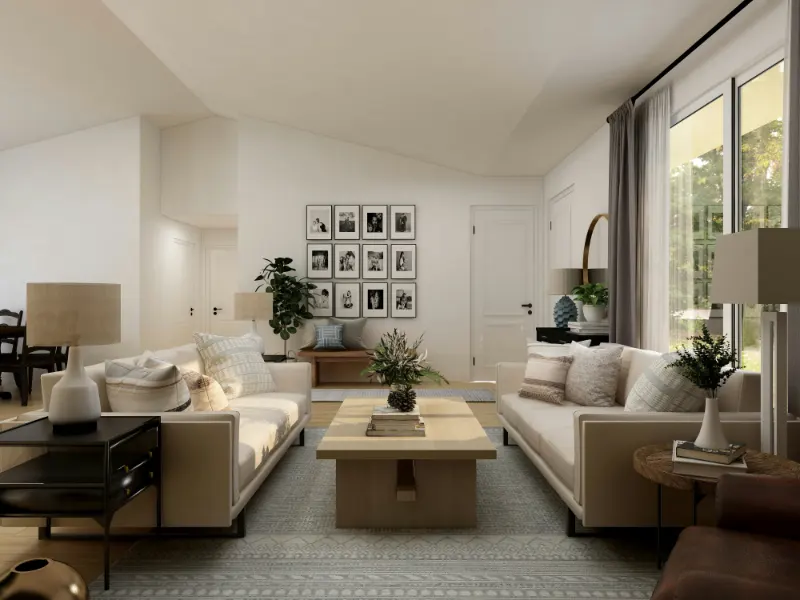
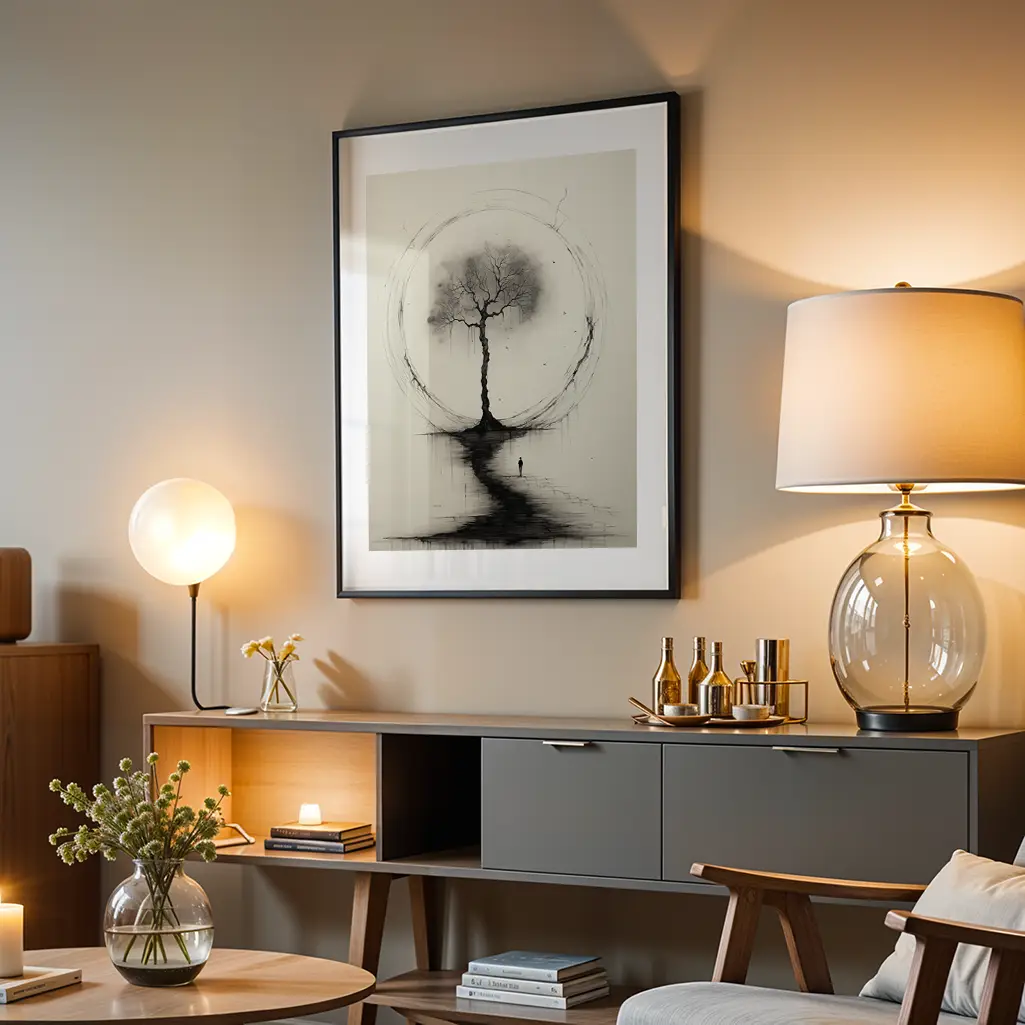
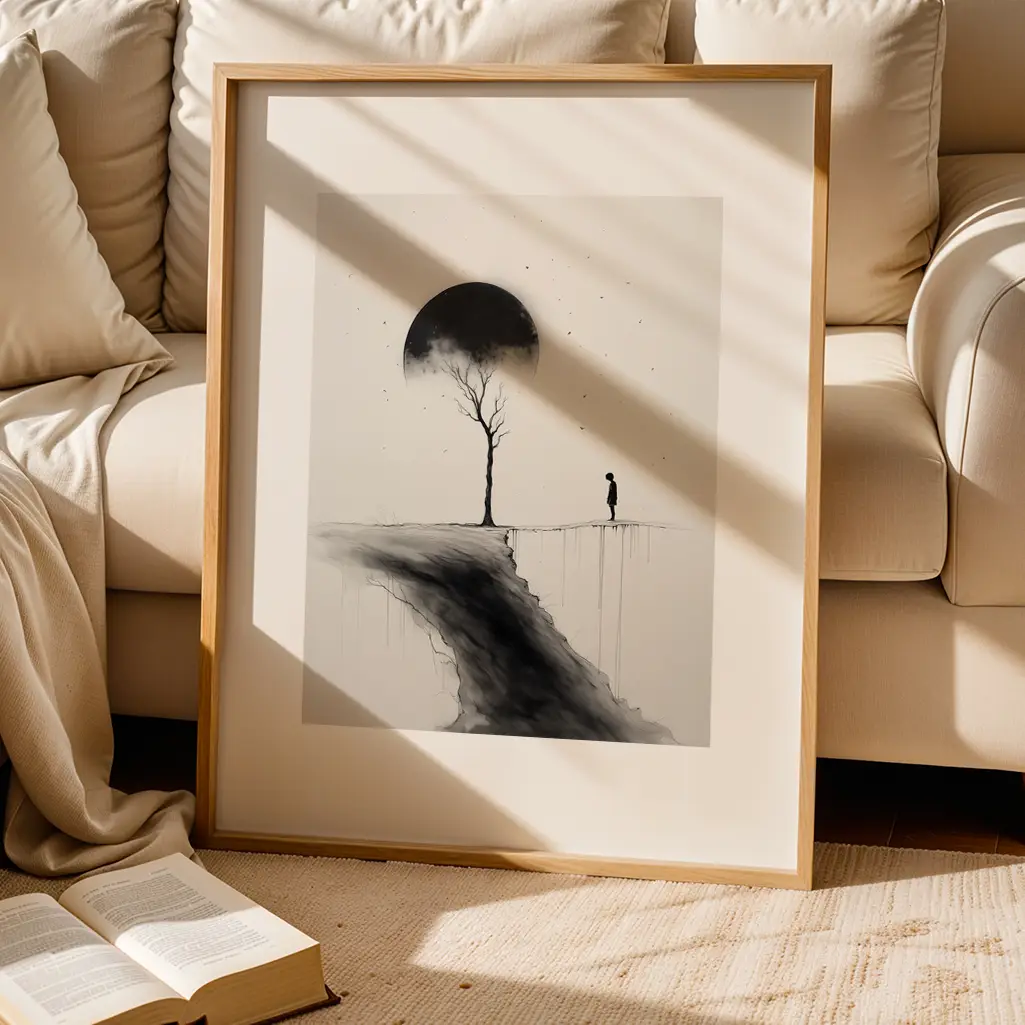
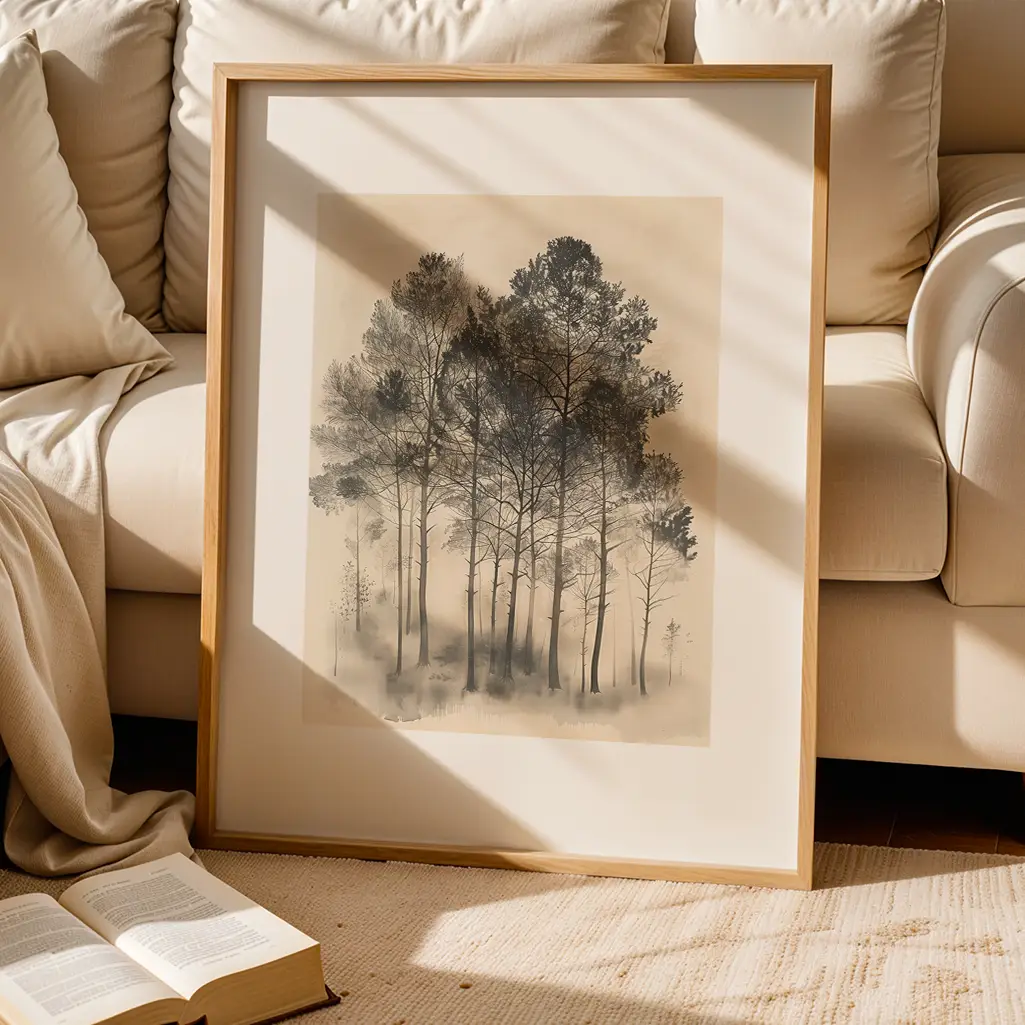
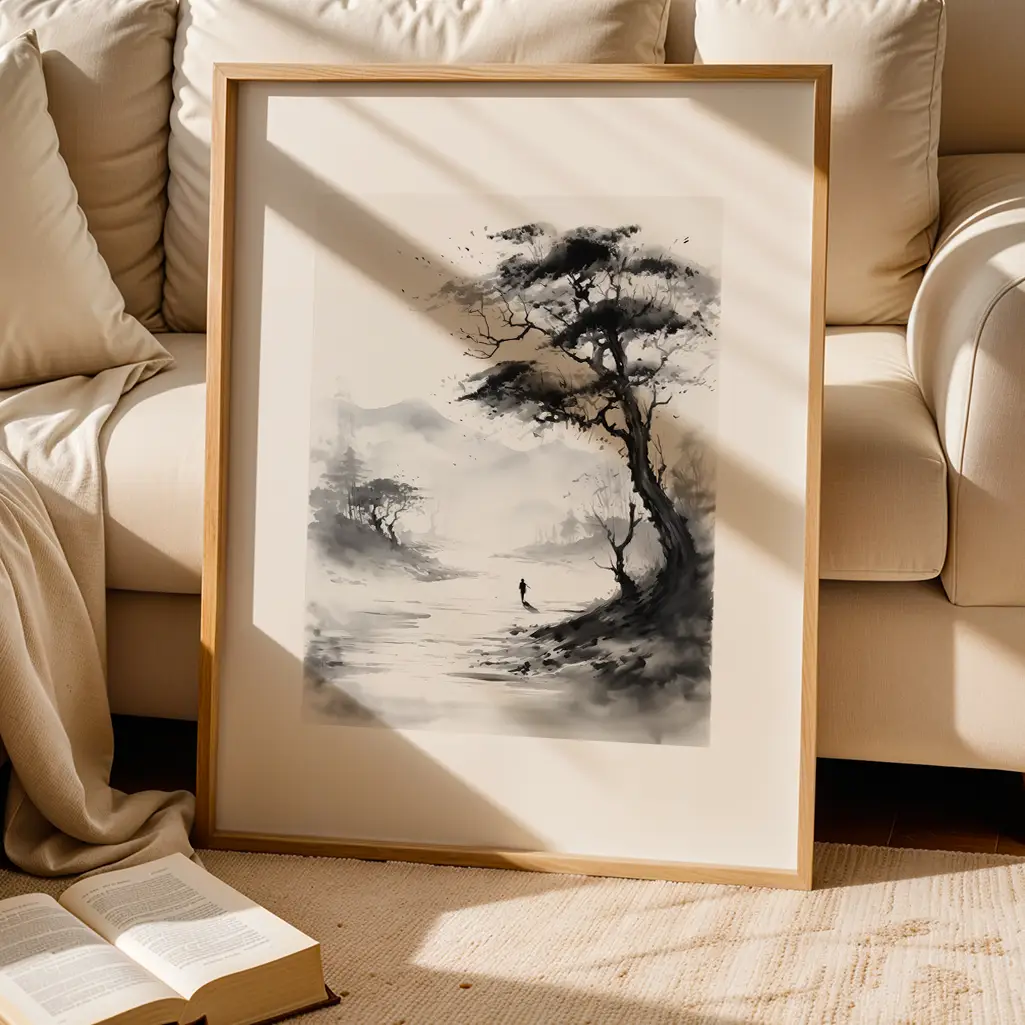
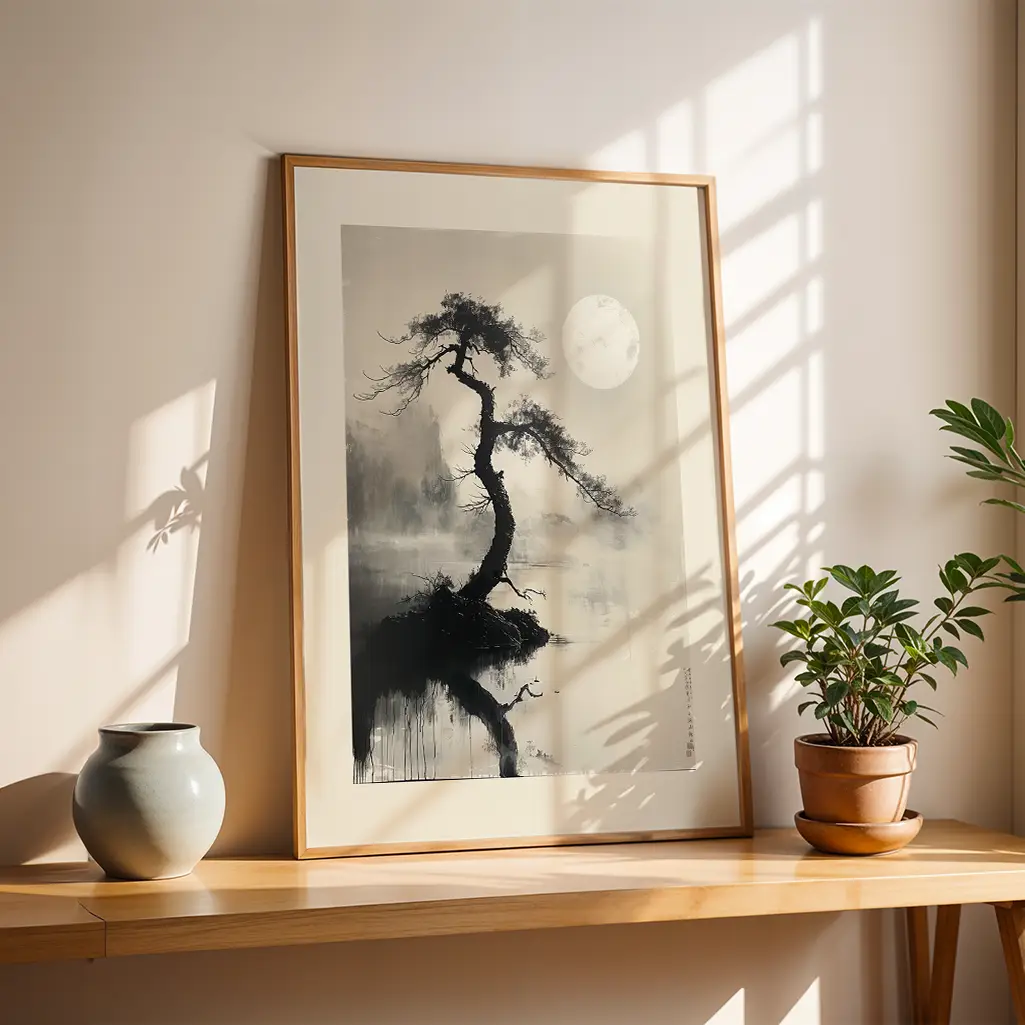
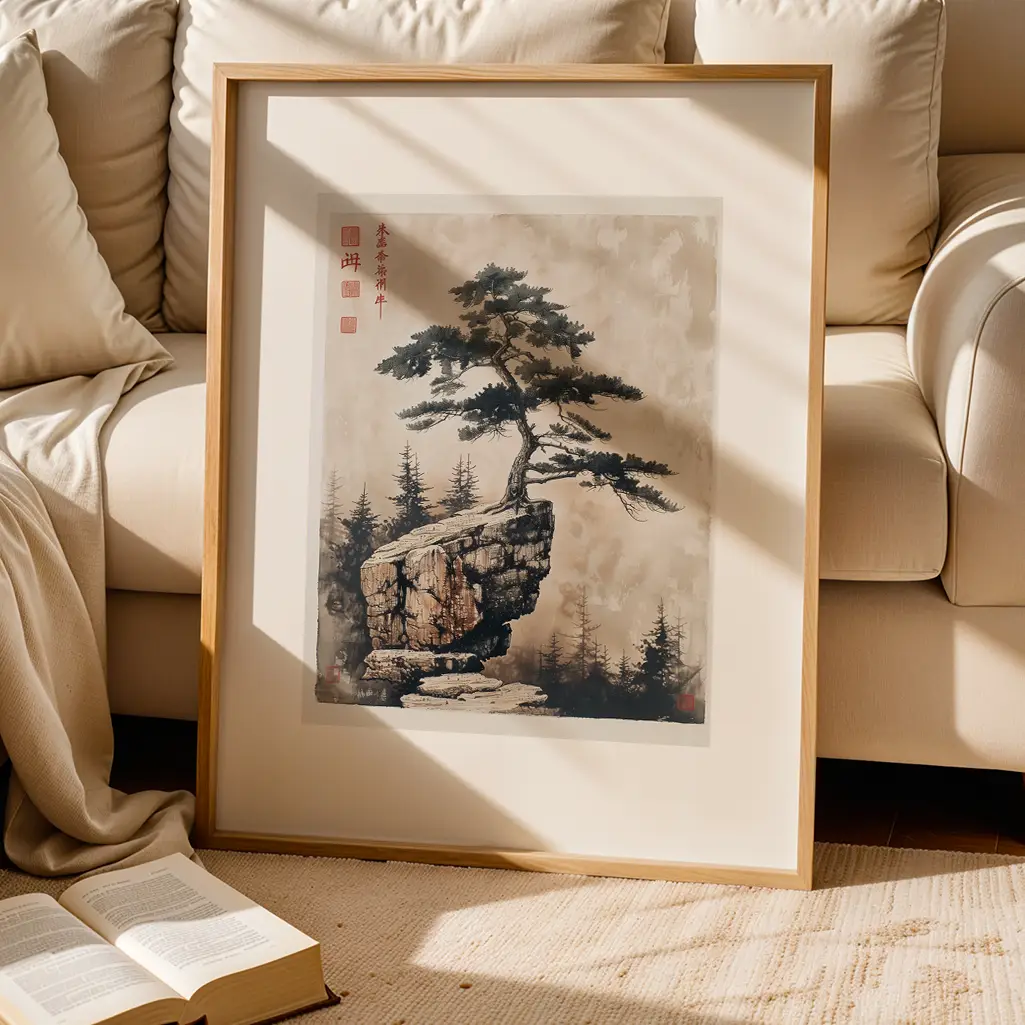
Imagery matters as much as color. Complex scenes filled with faces or narrative details invite the mind to wander. You start to “read” the artwork instead of glancing at it. For deeper focus, abstract forms, gentle gradients, line drawings or simplified landscapes usually serve better. Their job is not to entertain you but to steady you. A soft horizon line, for example, gives your eye somewhere to land without pulling you into a story.
Typography can be effective, but it is also risky. Large, loud inspirational quotes can quickly become visual shouting. The words demand to be read every time your eyes flick upward, which adds to cognitive load over the course of the day. Smaller, more intimate text pieces placed off to the side can act like a quiet reminder instead of a billboard. A single word that matters to you, rendered with care, might offer more grounding than a paragraph of motivation.
Scale and placement complete the picture. A tiny frame lost on a large wall makes the room feel bigger but you feel smaller, as if you are working in a space that does not quite belong to you. One or two pieces sized in relation to your desk and monitor can visually “anchor” the workstation. Centering a calm artwork behind or beside the screen creates a stable axis. When your attention drifts, it meets something steady rather than clutter or blankness.
Even functional elements can become art when arranged thoughtfully. A pinboard framed like a painting, a grid of clipboards, or a shallow shelf holding a rotating single object can all read as composed rather than chaotic. The key is to keep the visible information on them curated. If every scrap of paper goes up on the wall, your to‑do list turns into wallpaper, and focus has to fight for oxygen.
Designing a Wall That Evolves With Your Work
Your relationship to your work is not static. Deadlines swell and recede, roles change, and so does your energy. Your home office wall art can reflect that fluidity instead of fighting it. One way is to design the wall as a flexible system rather than a fixed composition. Think of rails, ledges and modular frames that allow you to swap in new images without starting from scratch.For example, a single long shelf above the desk can hold three or four leaning frames. Behind the frames, the wall remains mostly untouched, but the contents can shift with seasons, projects or mood. During an intense focus period, you might keep only a soft abstract and a simple line drawing on display. When your work leans more conceptual and you need stimulation, you might add a more complex photograph or a color study, while still respecting the need for empty space between pieces.
Materiality also influences how the wall feels. Matte paper, unvarnished wood frames and uncoated linen pinboards all absorb a bit of light and sound, contributing to a quieter atmosphere. Highly reflective glass and metal can make a small office feel sharper and more anxious, especially under harsh overhead lighting. If you already work with bright screens, balancing them with softer textures around them can calm the visual field.
A useful question to revisit every few months is “What is this wall saying to me now.” Stand back, as if you are a guest entering the room for the first time. Does the wall say “rush,” “unfinished,” “look at me,” or “breathe and begin.” Small adjustments can change that message. Removing one piece can be as powerful as adding another. Sometimes clarity is less about more clever home office wall art ideas and more about subtracting what no longer supports the work you do.
There is also room for a quiet personal note. One photograph that actually means something to you, printed simply and given proper space, can act as an emotional ballast without hijacking your attention. The key is intentional scarcity. When everything on the wall is sentimental, nothing is. When one or two pieces carry your story, the rest of the wall can stay calm.
Ultimately, the goal is not a magazine‑ready backdrop but a wall that makes it easier to start, to continue and to finish. When you sit down and your nervous system recognizes the space as both clear and alive, you spend less effort resisting your environment and more effort doing the work only you can do. In that sense, what hangs on your wall is less decoration than quiet architecture for your mind.