
The Strange Weight of Modern Noise
Silence, in most homes, has become a missing material. We choose paint colors with care, argue over sofa fabrics, and spend weekends scrolling for the “right” lamp, yet the actual sound of a room is often an accident. The refrigerator hums, a podcast spills from another room, traffic presses against the windows, and our phones chirp like anxious birds. What passes for ordinary background noise is, in fact, a constant occupation of mental space.
Psychologists sometimes describe attention as a kind of currency; every sound is a tiny tax. A neighbor’s subwoofer, the elevator’s ding, even the soft buzz of a dimmer switch add up to a steady stream of micro-withdrawals from your capacity to think, rest and notice. Silence, then, is not merely the absence of sound. It is the deliberate shaping of what claims your attention, much like a well-edited room shapes what you see when you walk in.
Designers and monks, who rarely occupy the same sentence, share an intuition: “quiet” is architectural before it is emotional. Monastic cloisters are built around courtyards, corridors buffer sleeping cells from the outer world, and thick walls are less a luxury than a spiritual technology. You may not be able to rebuild your apartment, but you can borrow their logic. Creating more silence in daily life begins with subtle interventions in how your home receives, absorbs and releases sound.
Imagine silence not as a switch to be flipped, but as a gradient you can thicken. This is not about erasing the character of life—the kettle boiling, children laughing down the hall—but about turning down the static so a smaller, more human scale of sound can be heard. The goal is a home in which sound is chosen, not constantly imposed.
Shaping a Quieter Home: Materials, Layout and Ritual
Start with the envelope of your space, the surfaces that hold your days. Hard materials—glass, tile, bare plaster, polished concrete—are virtuosos at throwing sound back at you. Softer ones are listeners. Rugs, curtains, books, upholstered chairs and textured wall hangings act as informal acoustic panels, absorbing and scattering sound waves before they return as echo. A large wool rug in a living room can make the same furniture feel suddenly slower and kinder, simply by swallowing the sharp edges of footsteps and conversation.
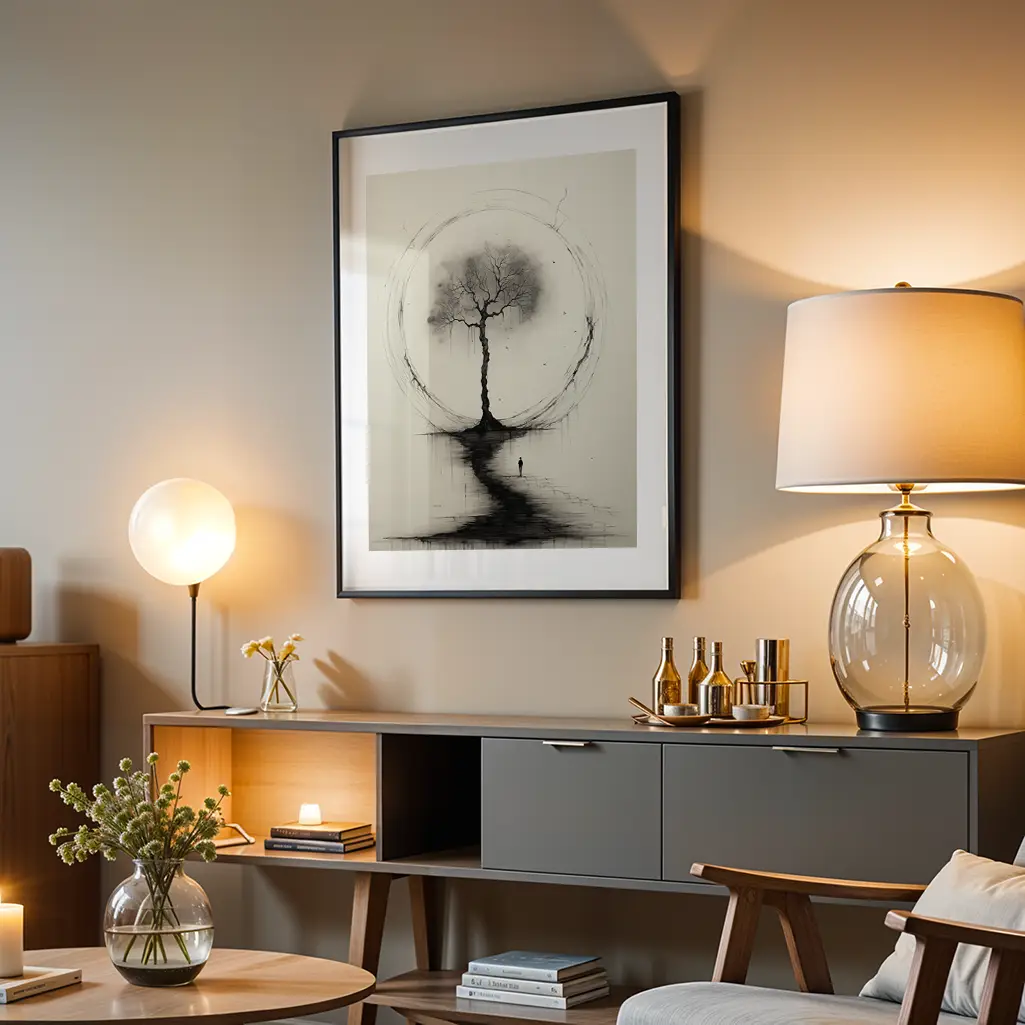
Think of textiles as the “acoustic paint” of your home. If your bedroom feels brittle with noise, heavier curtains or layered shades can curb both street sounds and the high, restless brightness of morning. A narrow hallway that clangs with every step might want a runner, a row of framed prints, perhaps even a slim fabric-covered notice board; each piece takes a small bite out of the echo. Silence rarely arrives in a single gesture. It accumulates through modest, overlapping decisions.
Layout matters as much as material. Where possible, decouple quiet functions from noisy ones. If you can, move your reading chair away from the refrigerator wall, or angle your desk so you face a window or a blank section of wall rather than the door. Even a small shift—from sitting “in the thoroughfare” of a room to occupying a tucked-away corner—changes how much sound passes through your field of attention. Corners, in particular, are allies: one chair, a small table, a lamp with a warm, low-wattage bulb, and a plant can become an acoustic and emotional shelter inside an otherwise busy home.
Technology, meanwhile, deserves a deliberate choreography. Every device that can vibrate, ping or autoplay will eventually do so. Gather your noisiest objects—phones, tablets, smart speakers—into defined zones. A charging station near the entry, for example, keeps phones from following you to the pillow. In the bedroom, replace the habit of streaming shows until sleep with an actual alarm clock and a single, chosen sound: perhaps a small fan, or nothing at all. The absence of screens is itself a form of silence, because it deprives the rest of the world of your immediate attention.
Ritual helps anchor these physical adjustments. Choose one room or even one corner to become your “quiet station,” and teach the household that this pocket has different rules. No speaker volume, no conference calls, no toys that chirp. You are not enforcing a monastic code so much as creating a local custom, like taking shoes off at the door. Over time, both your body and the people you live with will recognize the atmosphere of that space as a cue to lower their own volume, internally as much as externally.
Interior Silence: Attention as a Design Material
Once the decibels have softened a little, a subtler kind of noise appears: the ongoing commentary in your own mind. This is where the language of interior design becomes unexpectedly useful. Just as a room becomes overwhelming when every inch is filled, attention frays when every moment is furnished with stimulation. You can design stretches of inner quiet the way you would design negative space around a painting.
Begin with thresholds. Mornings and evenings are natural doorways between worlds, and whatever happens at those edges echoes through the hours that follow. Give yourself a few minutes each morning before the first notification, not as a grand “practice,” but as a quiet zoning rule: no phone until you have looked out the window, stretched, or simply noticed the air in the room. In the evening, choose a time when the house begins to dim down—not only the lights, but also the pace of your speech, the number of tabs open in your mind.
Breath can be treated as the most portable of design elements. You do not need a cushion, incense or a perfectly edited living room to sit still for three minutes and watch your inhale and exhale. In fact, doing so in the midst of ordinary disorder is powerful: you are proving to yourself that silence is not the prize at the end of perfection, but a capacity you can exercise under less-than-ideal conditions. Think of it as rearranging the furniture of your attention so that one object—the rhythm of breathing—occupies the center, and everything else is temporarily placed along the walls.
Sound itself can also be curated rather than merely resisted. The goal is not to create a vacuum, but to refine the soundtrack of your days. A single piece of music played consciously, then stopped, is very different from hours of random playlists in the background. Opening a window to let in leaves rustling or distant church bells invites a scale of sound that humans have lived with for centuries, one that tends to settle rather than agitate the nervous system. By choosing when and what you hear, you give silence a kind of frame, making it noticeable when it returns.
Ultimately, creating more silence in daily life is less about heroically escaping noise than about quiet authorship: deciding what gets to live with you, on your walls and in your head. A rug here, a curtain there, a corner converted from storage to sanctuary, ten unspectacular minutes without a screen—the effects are cumulative and humane. If you keep adjusting the acoustics of your rooms and your routines with this kind of gentle intention, you may find that silence is not somewhere you visit on rare retreats, but a resident presence in the home you already have.


.webp)