Why Quiet Zones Matter More Than Ever
In a busy family home, silence is rarely a given; it is something you design. The hum of the dishwasher, the ping of group chats, the thud of sneakers in the hallway: these sounds form the background score of modern domestic life. Many people assume that a quiet zone requires a spare room and expensive renovation. In reality, it is more about intention and a few strategic choices than square footage or budget.
A quiet zone is not only an acoustically calmer area; it is a small ecosystem where sensory input softens and your nervous system can stand down. You feel the difference the moment you cross its threshold. Eyes adjust to gentler light, your body has a clear place to land, and your mind receives an implicit invitation to slow its pace. In design terms, this is environmental cueing: space sending signals about how you are meant to use it.
In a family home, the challenge is that most rooms are asked to perform too many roles at once. The kitchen becomes office, homework station, snack bar and social club. The living room doubles as wrestling ring, movie theater and laundry staging area. Without boundaries, every surface is eligible for every activity, and rest gets crowded out. Creating a quiet zone is essentially an act of editing: you are deciding that one corner will privilege restoration over productivity or entertainment.
The first step is noticing how the household actually moves and sounds across the day. Where does the morning chaos gather. Where do late night conversations swell. Stand in each room at different times, and simply listen. The loudest zones are obvious; more interesting are the borderlands where noise fades a bit, perhaps at the top of a stair, by a window that faces a calmer side of the street, or next to a bookcase against a thick wall. These liminal areas are the raw material for a quiet zone, because they already do a bit of the work for you.
It also helps to be honest about what quiet means for your particular household. For a parent of toddlers, quiet might just mean a space where toys do not talk back or light up. For a teen, it may be a place where no one asks a question for fifteen minutes. For an introverted adult, it could mean a corner with a chair, real light and no obligation to be entertaining. The more specifically you define the function, the easier it becomes to design around it.
A quiet zone is not an escape from family life so much as a pressure valve for it. When everyone has somewhere to retreat, conflict tends to soften because there is an alternative to staying in the fray. The home begins to offer more than a single emotional temperature; it gains a cool shaded porch to balance the sunny, high-energy rooms. This is not about perfection or magazine spreads. It is about building in a pocket of ease that makes the rest of the house more livable.
Finding Space: Corners, Thresholds and Vertical Calm
Once you start looking for potential quiet zones, you notice how many spaces are underused not because they are small, but because they are undefined. The spot behind the sofa, the end of a hallway, the landing halfway up the stairs: these areas already resist heavy traffic. The task is less about carving out new space and more about coronating a neglected one with a clear new purpose.
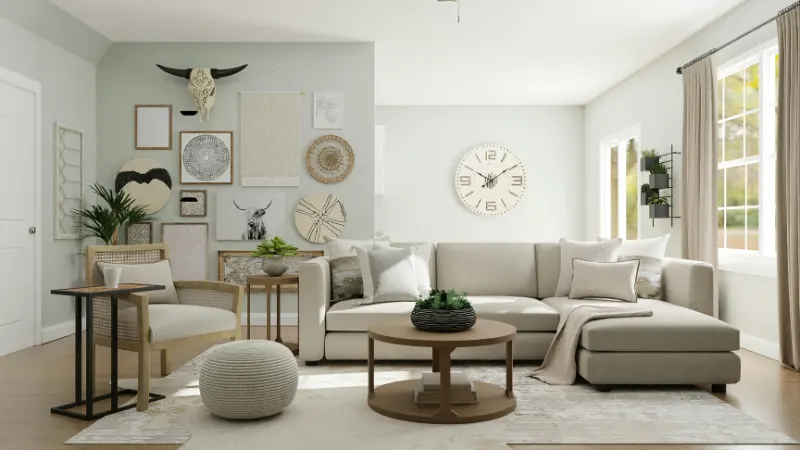
Begin with the corner that naturally feels a bit removed from the household’s main arteries. That could be a window nook where footsteps thin out, or the place where a large piece of furniture already blocks some sound. Quiet is often a side effect of obstruction; a bookcase, a wardrobe or even the back of a sectional can act as a visual and acoustic shield. Position a chair just beyond that shield, and you have the seed of a quiet zone without building a single wall.
If horizontal floor space is scarce, think vertically. A tall bookcase lined with real books absorbs sound more generously than you might expect, and it creates a visual buffer that psychologically shrinks the field of view. A narrow ledge under a high window, wide enough for a cushion and a small lamp, can claim its own identity as a micro retreat. Even a stool tucked beside the bedroom wardrobe, paired with a lamp that targets light downward, can function as a small island of calm.
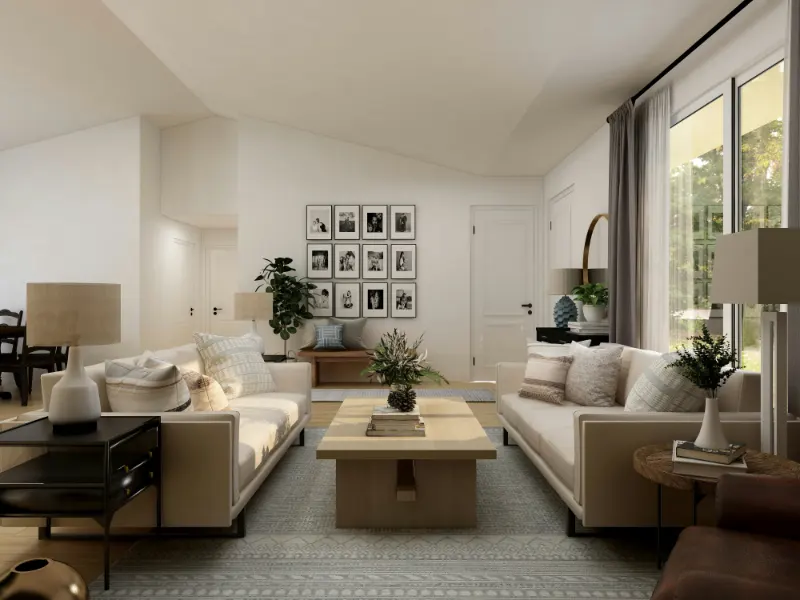
Sound management becomes a subtle craft here. Rugs, fabric upholstery and curtains all act as soft sound catchers. If the only available quiet corner sits on a hard tile floor, a simple rug or layered runner immediately changes its acoustic character. A few fabric surfaces do more for quiet than a single large decorative object. If closing a door is unrealistic, consider heavier curtains or a fabric panel that can slide across a wide opening, signaling a shift even if it cannot erase the household entirely.
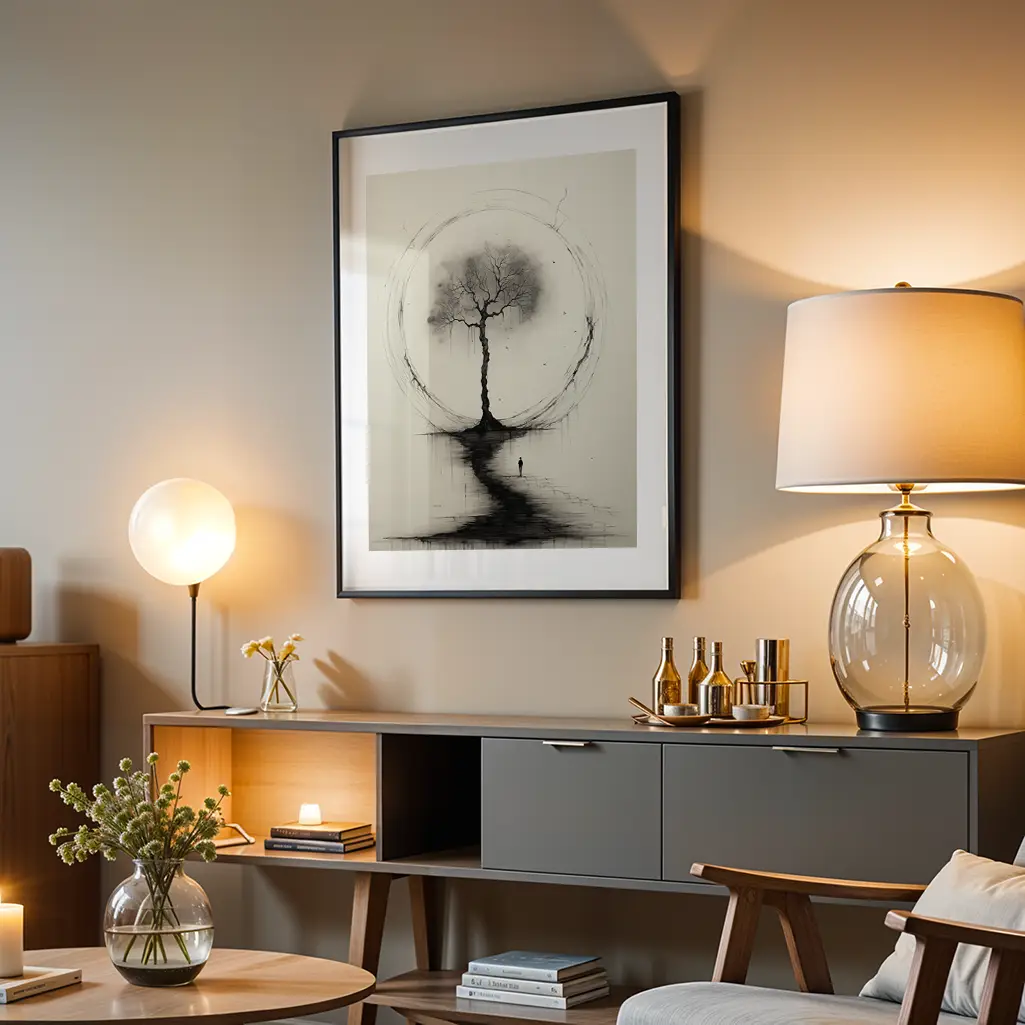
Light is the other key ingredient. Quiet rarely thrives under the brightest ceiling fixture in the house. In your chosen spot, try turning off the overhead light and introducing a single, dimmable lamp. Light that falls from the side or downward tells your nervous system you are offstage; you are no longer under a spotlight. If your quiet zone borrows space from a living room, a footed floor lamp behind a chair can carve out a separate pool of light that belongs more to reading than to television.
Furniture choices seal the invitation. Instead of trying to layer in multiple functions, choose one main posture and support it well. If the goal is reading or journaling, a chair with arms and a small side table is more useful than a daybed that invites napping, scrolling and snacking all at once. If the aim is meditation or simple breathing time, a low cushion and a folded throw might be enough. The point is to make the quiet zone physically comfortable for its purpose, but slightly less accommodating for distractions that tend to overtake it.
Teaching the Household to Protect the Stillness
Even the best designed quiet zone will fail if the household treats it as just another patch of floor. The final step is cultural rather than aesthetic: turning the space into a shared agreement. This is where visual cues and simple rituals matter as much as color palettes and lamp choices.
Begin by naming the space out loud. Call it the reading corner, the calm chair, the morning nook. A playful name gives children something concrete to respect. Then, set two or three rules that are easy to remember and repeat them without drama. Perhaps no loud toys cross the invisible border, no work laptops open here after dinner, no casual interruptions unless something is truly urgent. These rules work best when they apply to everyone, adults included, because fairness is its own kind of quieting force.
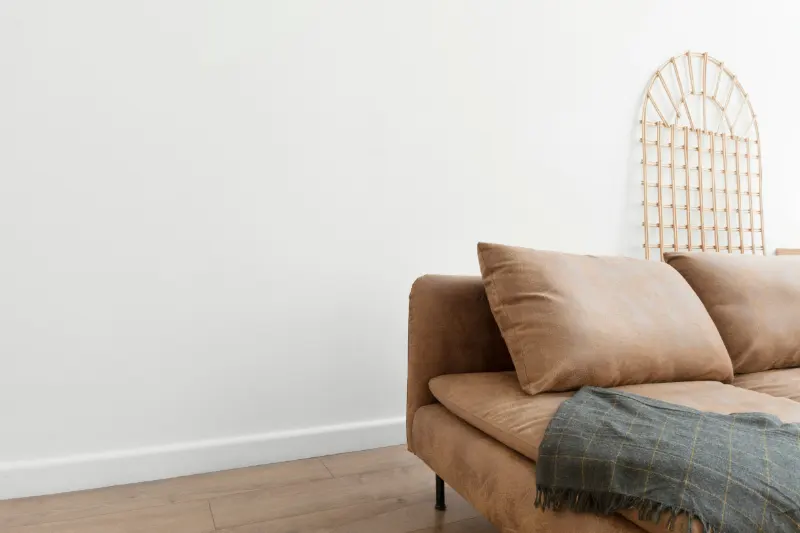
Physical signals can reinforce the boundary. A folded throw draped over the chair might mean the zone is open to anyone; wrapped around a person’s shoulders, it might mean they are asking for uninterrupted time. A small tray for a mug and a book helps prevent the slow migration of clutter that eventually destabilizes any calm corner. When objects that belong elsewhere begin to accumulate, the quiet zone loses its clarity and the mind responds by treating it as just another surface to use up.
It is also worth accepting that in a lively family home, quiet will be relative. The goal is not absolute silence but a measurable dropping of intensity. Children may still chatter in the next room, music might hum faintly down the hall, a washing machine might tumble in the background. Your quiet zone’s success lies less in muting every sound and more in changing your relationship to them. The layers of fabric, the softened light, the clear boundary of purpose all tell your body that, in this small radius, it does not need to participate in every signal.
Over time, the quiet zone can become a shared resource rather than a private escape. Partners might trade turns in the chair after work, each taking fifteen minutes before rejoining the household. A child might choose that corner for sketching rather than spreading paper across the kitchen table. On difficult days, the very existence of the space serves as a reminder that the home can hold more than one emotional state at once. This is the deeper work of design: not just arranging objects in a room, but creating conditions where everyone can return to themselves, even in the middle of a busy, beloved household.