Rethinking Home as a Daily Retreat
There is a moment that happens in the best hotels and quiet ryokans: you close the door and the world falls away by a few noticeable degrees. The lighting softens, sounds blur, and your nervous system starts to believe that rest is possible. Making your home feel like a retreat is not about simulating a resort. It is about creating that tiny internal exhale on an ordinary Tuesday.The first shift is conceptual. Most of us design rooms around what they need to contain: the sofa, the desk, the bed, the television. Retreat spaces flip the priority. They are designed around what they are meant to do to the body and mind. Instead of asking where the couch fits, you start by asking what you want to feel in the room. Clear is better than grand. You might choose three anchors: calm, light, and restoration. Everything else becomes negotiable.
This means editing. Retreat spaces rarely feel crowded, not because they are minimalist showrooms, but because every object has earned its right to be there. Walk through your living room and briefly hold each item in your eye: if it neither supports comfort nor makes your heart lift, it is visual noise. Visual noise acts on the nervous system like cluttered sound. The brain must work to filter it out, and that effort leaves you more tired than when you entered.
Start by clearing surfaces, one at a time. A coffee table with three intentionally chosen things reads as generous, while one swamped with remotes, mail and chargers reads as ongoing obligation. The goal is not perfection; it is reducing the number of visual decisions your eyes are forced to make. Less for your eye to process means more space in your mind.
Retreat also depends on a sense of boundary. If every room is multipurpose, no room can fully relax. When a dining table doubles as office, craft station and homework command center, it is carrying the story of all those tasks. You may not have the luxury of dedicated rooms, but you can carve micro-zones. A reading chair with a floor lamp and a small tray becomes a tiny retreat even if it sits beside the kitchen. The brain reads repeated cues: sit, soften, stay.
Think of your home as a series of thresholds rather than a fixed container. The entry might be where you symbolically drop the day. A basket for keys and mail, a hook for a coat, a small dish for a ring or watch: these are not mere storage solutions. They are rituals dressed up as organization, teaching your body that there is a before and after to your workday.
Light, Color and the Quiet Work of the Senses
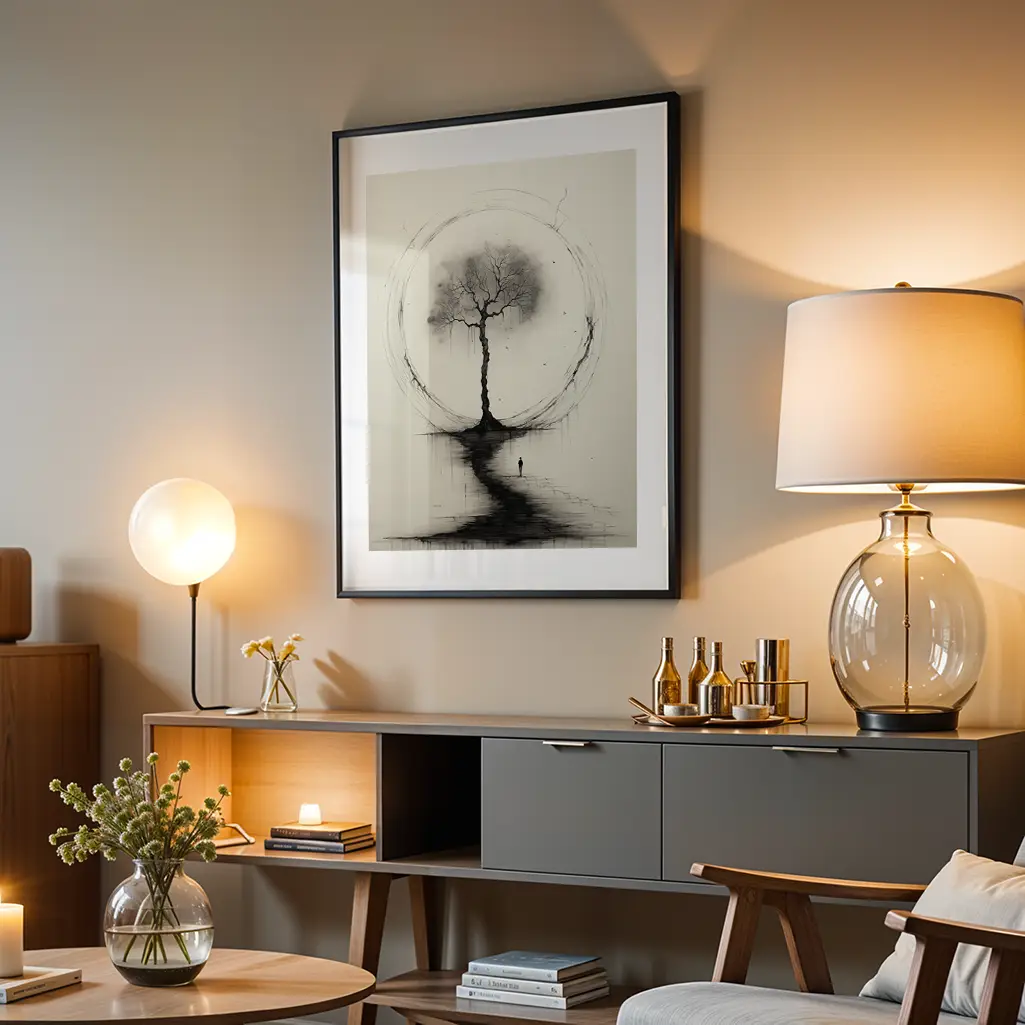
Retreat spaces are choreographed more than decorated. Light, color and sound do much of the quiet work. Light especially is often too bright, too uniform and too flat in most homes. Overhead lighting is practical but almost never restful. Hotels know this, which is why the ceiling fixture stays off and smaller, gentler sources do the heavy lifting.Begin by layering light sources at different heights. A floor lamp, a table lamp and a small wall sconce together can create a soft gradient that flatters faces and calms the eye. Choose bulbs with a warmer temperature in spaces where you want to unwind; the slightly amber cast signals evening to the body. Position light to wash walls rather than blast the center of the room. Light that grazes texture, such as linen curtains or a plaster wall, creates a sense of depth that feels enveloping rather than stark.
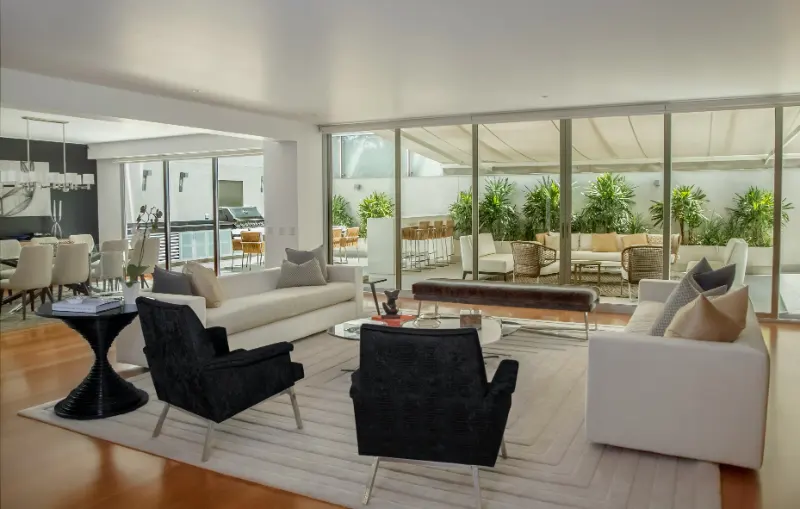
Color, too, can act as a kind of atmosphere control. Retreat colors are rarely loud, but they are not necessarily beige. The aim is low contrast rather than low personality. When wall, furniture and textiles sit near each other on the color wheel, the eye glides instead of stopping abruptly. That gliding is a form of ease.
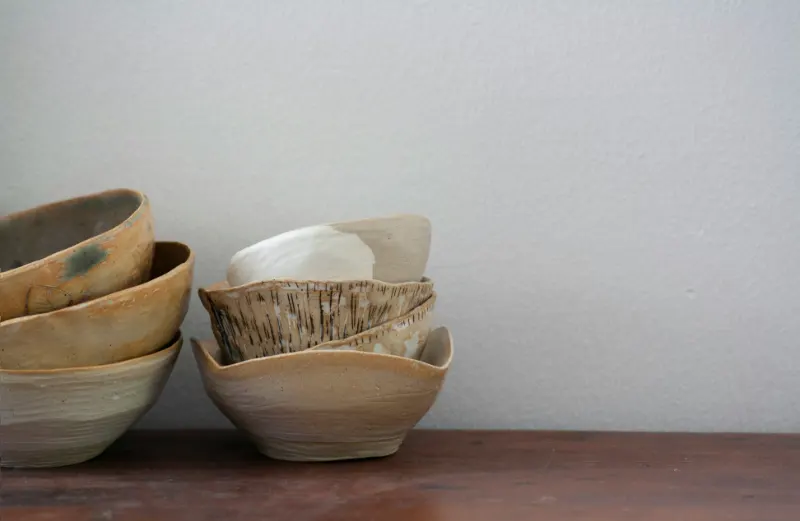
You might soften a cool gray room with warmer neutrals in the textiles, or ground an all-white space with natural woods, clay and stone. Nature is an honest palette partner. Materials that age, show grain or hold subtle irregularities bring a quieting effect. They record time without shouting for attention.
The senses beyond sight deserve equal authorship. Sound is often ignored until it becomes a problem, but retreat depends on some control of the acoustic field. Soft elements such as curtains, rugs and upholstered pieces absorb the small echoes that make rooms feel a little harsher than necessary. Even in a minimalist space, one well-placed wool rug and a set of lined drapes can lower the sonic temperature.
Scent and touch belong to the realm of ritual. A single candle you light only in the evening, or a drop of essential oil near a vent, can mark the transition from doing to being. The point is not constant fragrance but a consistent cue. Likewise, prioritize at least one deeply tactile element in every room, whether it is a throw with real heft, a nubby pillow, or a smooth wooden armrest. These textures give your hands somewhere to land, reminding you that rest is a physical practice, not a purely mental one.
Designing for Everyday Ritual and Restoration
If retreats feel special, it is because they orchestrate small rituals on your behalf. You wake to filtered light, you find a carafe of water by the bed, you slip into a robe that is exactly where you need it to be. At home, you become the designer of these rituals, and design becomes an act of care rather than display.Choose one or two daily moments and quietly redesign around them. Morning coffee might move from a hurried kitchen counter to a small corner by a window, chair angled toward light, mug resting on a surface that is not shared with bills. Place the kettle, beans, and favorite cup within arm's reach. This is not indulgence; it is reassigning importance to the way your day begins.
Similarly, think about how your bedroom behaves in the last fifteen minutes before sleep. If the nightstand is crowded with charging cords, unopened books and half-finished tasks, it is broadcasting unfinished business. Clear it to the essentials: a light at the right height for reading, water, perhaps a single object you genuinely love. Dim light that can be controlled from bed lets your body stay in the arc of winding down.
One powerful but overlooked strategy is to design for what you want less of by placing gentle friction between you and the habit. If you hope to watch less late-night television, the remote does not need to live on the coffee table. It can live in a drawer that requires a small, conscious decision to open. In its place, you might keep a book or a sketchpad. The environment is not policing you; it is quietly tilting probabilities.
Above all, understand that making your home feel like a retreat is a process of tuning, not a single renovation. You will rearrange, remove, and reintroduce objects as your life shifts. Pay attention to the micro-responses in your body as you enter each room: does your breath catch or drop, does your jaw tighten or soften. These are the most honest design critics you have.
A true retreat at home does not demand that you escape your life. It allows your life to unfold with a little more spaciousness. Each choice in light, color, layout and ritual is a quiet vote for the kind of days you wish to live. Over time, those votes accumulate, and one day you close your own front door and find, to your surprise, that the world has fallen away by a few noticeable degrees.