Making Space Before You Close Your Eyes
Meditation begins well before you sit down and close your eyes. It starts with the quiet decisions you make about your home: where light should fall, how sound travels, and what your body touches when you finally pause.For complete beginners, the first step is not a posture or a mantra but a corner. Look for a place that feels slightly apart from your daily traffic, ideally not the same spot where you answer email or scroll your phone. A bedroom nook, the end of a sofa near a window, or even a cleared patch of kitchen floor can work. The genius of meditation is that it does not demand a perfect environment, only one that is “good enough” for attention.
Notice the light in this place at the time you are most likely to meditate. Early morning light tends to soften the edges of objects and of your thoughts, while evening light can feel like a long exhale. If your space is harshly lit, close a shade or turn on a smaller lamp. You are not setting a mood so much as reducing visual noise.
Sit on something that whispers “stay” to your body: a firm cushion, a folded blanket, or a straight‑backed chair. Your knees should be either level with your hips or slightly lower, so your spine can rise without effort. This simple alignment is a structural kindness; if your body is fighting the posture, your mind will struggle to rest in it.
Declutter the immediate field of vision. You do not need a minimalist home to meditate, but the area directly in front of you matters. A few books stacked neatly will feel different from the same books spilling out like a to‑do list. You are gently telling your nervous system that, for a short while, nothing urgent is required.
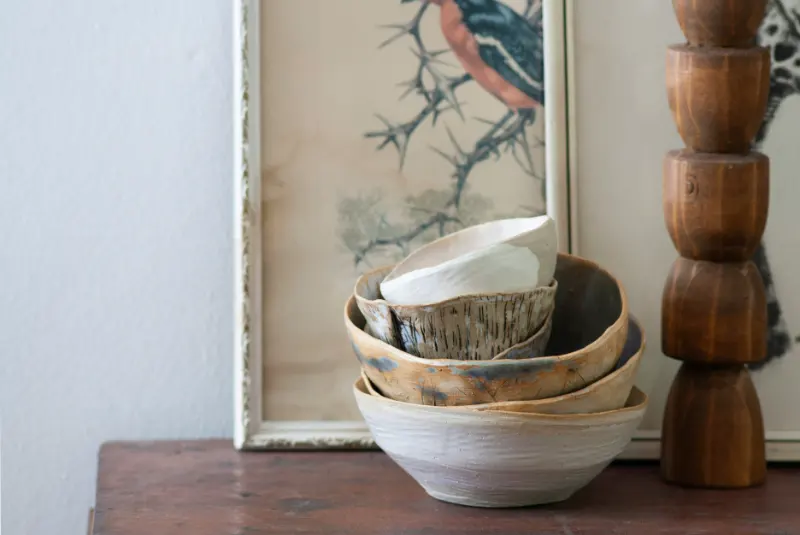
If you like, add one small object that signals “this is my practice.” It might be a stone from a beach, a candle you do not always light, or a small plant. The object is less about spirituality and more about continuity. Each time you see it, your body will remember the stillness you are rehearsing.
Finally, negotiate with your home’s soundscape. Silence is not mandatory. In many city apartments, it is impossible. Instead, you are listening for the difference between sound and intrusion. A fan, distant traffic, or rain against glass can become part of your practice. A blaring television in the next room probably cannot. If you live with others, a simple spoken boundary—“I’m going to sit quietly for ten minutes; I’ll be done at seven fifteen”—can be as important as any cushion.
The Actual Sitting: A Simple Sequence
Once your space is ready enough, the method for complete beginners can be disarmingly simple. Think of it as a sequence you repeat, rather than a performance you must get right.Sit down and allow your hands to rest wherever they can forget themselves: palms on thighs, cupped in your lap, or lightly holding each other. Let your spine lengthen as if someone gently lifted the crown of your head by a thin string. This is not a military posture; it is closer to what your body discovers in a good stretch.
Gently close your eyes, or keep them half open with a soft, unfocused gaze toward the floor. Take three slightly deeper breaths than usual, in through the nose if possible, and out through the mouth. Feel the exhale as a quiet permission slip to arrive.
Now, find the breath as it is when you are not managing it. Notice where it is most obvious: the air cool at the nostrils, the rise and fall of the chest, or the subtle movement of the belly. Choose one place and silently label it “home base.” Your only job is to know, in each moment, whether your attention is at home or away.
As you sit, thoughts will appear with the persistence of notifications. Planning, replaying old conversations, designing a new room in your mind, worrying about work—this is not a failure of meditation but its raw material. The skill you are cultivating is not to stop thought but to see it clearly.
Each time you notice you are lost in a thought, mark the moment gently. You might mentally say “thinking” or “wandering,” as if you were labeling a file, not scolding a child. Then escort your attention back to your breath at home base. This simple loop—notice, name, return—is the essence of the practice.
In the beginning, set a modest container of time. Five minutes done most days will change you more than a heroic, uncomfortable twenty minutes done once and abandoned. Use a quiet timer so you are not peeking at a clock. When the time ends, resist the urge to spring up. Open your eyes, notice the room again, and let one or two normal breaths pass before you move. You are practicing the art of not rushing the transition.
Over days and weeks, you may find that the quality of your inner room begins to shift. The constant furniture of worry and planning is still there, but you have more space to move around it.
Letting Meditation Rearrange Your Home and Your Day
As your practice settles, something quiet happens: the way you arrange your home starts to echo the way you arrange your attention. The corner you chose for meditation may slowly influence the rest of the room.You might notice that surfaces stacked with objects feel mentally louder. Without declaring yourself a minimalist, you start to keep the coffee table clear, or you decide that the chair once buried under clothes is better as a reading and sitting place. This is meditation leaking into interior design, not as a style but as a felt sense of spaciousness.
Consider expanding the idea of “practice” beyond formal sitting. One evening, wash dishes as if it were meditation: hands in warm water, attention tuned to the small sounds of plates and running tap. Another morning, drink your coffee at the window and give the first three minutes entirely to the view, the cup, and the breath. These are not replacements for sitting but extensions, the way a hallway extends from a well‑loved room.
Over time, the home itself can become a kind of ally. A certain lamp turned on at dusk might become your cue to sit for ten minutes. A neatly folded blanket on the chair might signal rest rather than work. Even the act of making your bed can become a brief, tactile meditation: smooth fabric, deliberate corners, one small decision to bring order to a surface.
On difficult days, when your mind feels like a crowded subway car, remember that meditation does not ask you to be calm before you start. The practice is to sit with exactly the room you find inside you, in exactly the room you have made outside. You show up, you notice, you return, and you let both spaces gently inform each other.
For complete beginners, this is enough: a chosen corner, a steady posture, a breath that keeps welcoming you back, and a home that, little by little, learns to hold you in that returning.