Redefining Slow Living for Real Life
Slow living has been marketed as a life-size reset: quit your job, move to the country, grow tomatoes, delete your inbox. No wonder it feels impossible. Most people do not have the time, money, or desire to abandon their lives for a cottage in the hills. They have deadlines, children, noisy neighbors, and a lease.Underneath the curated photos, though, slow living is much quieter and more flexible than the aesthetic suggests. At its core it asks a single question: "What would my day look like if I respected my limited time and energy?" You can answer that question without changing your career or zip code. You begin by changing your pace inside the life you already have, starting with the space you wake up in.
The first shift is philosophical, not logistical. Instead of treating your home as a storage unit where you sleep between tasks, slow living treats it as a "pressure regulator" for the rest of your life. The space does not have to be big or perfectly styled. It only has to be arranged to support the kind of attention you want more of: less scattering, more anchoring; less numbing, more noticing.
Think of your home as a landscape of cues. The chair facing the television invites one kind of evening. A chair angled toward a window, with a lamp and a blanket, invites another. A cluttered kitchen counter signals panic and postponement; a mostly clear counter with one bowl of lemons or apples quietly says, "You have enough." Slow living begins not with buying new objects, but with noticing which objects are currently steering your behavior.
If you live with others, especially children or roommates, you will not be able to choreograph every corner. That is healthy. Slow living is not design authoritarianism. It is more like editing: removing the visual noise that strains your nervous system, so you can meet the beautiful, chaotic parts of your life with a steadier mind.
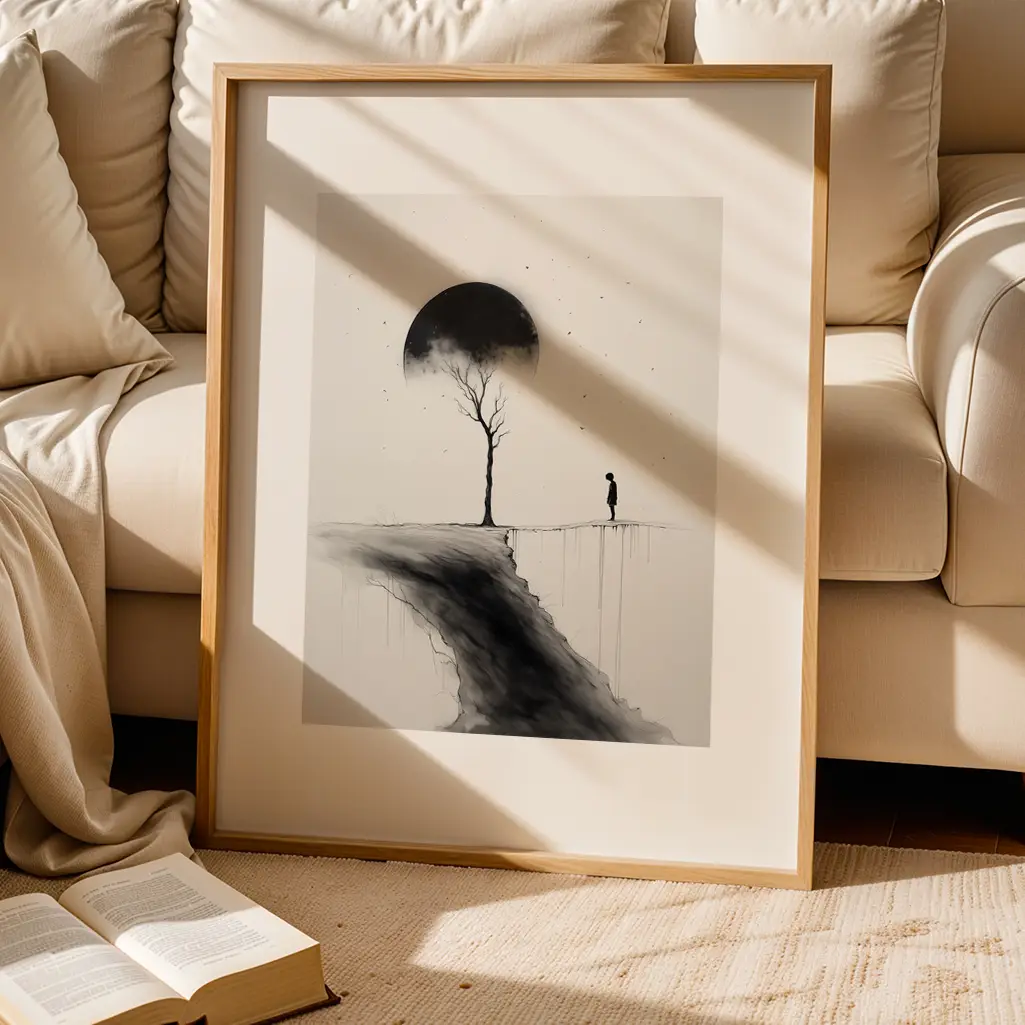
One practical way to start is to choose a single "slow zone" at home. This might be the end of the sofa by the window, a chair in the bedroom, or even half of the kitchen table. The only requirement is that this zone is not shared with screens, laundry piles, or unpaid bills. You are marking a small territory for unproductive time: reading one page, drinking tea while you look at the light on the wall, writing a few lines in a notebook. It may feel self-indulgent at first. Over time it becomes training for a different internal tempo.
Instead of aiming to transform the entire house at once, ask what feels "one shade calmer" than your current normal. Maybe it is stacking books instead of scattering them, or keeping a tray near the door for keys, headphones, and mail so you are not hunting for them each morning. These are not aesthetic upgrades for their own sake. They are tiny negotiations with your future self: I will make this easier for you, so you do not have to rush later.
When slow living is understood this way, it stops being a personality and becomes a practice. You are not performing a lifestyle; you are rehearsing a different relationship to time within the rooms you already inhabit.
Designing a Slower Rhythm Room by Room
To make slow living practical, begin where your day tends to speed up against your will. For many people, that is the morning and the late evening. These windows are less about willpower and more about architecture: the way your space is set up either accelerates you or cushions you.Start with the entryway, however small. This is the psychological airlock between the world and your interior life. If the first thing you see when you open the door is a pile of shoes, bags, and packages, your nervous system spikes before you have taken off your coat. Simplify this view. A small mat, a single hook rail, a basket for drop-and-go items can convert this zone from "landing pad for stress" to "threshold to exhale." You are not adding slowness to your day; you are removing friction.
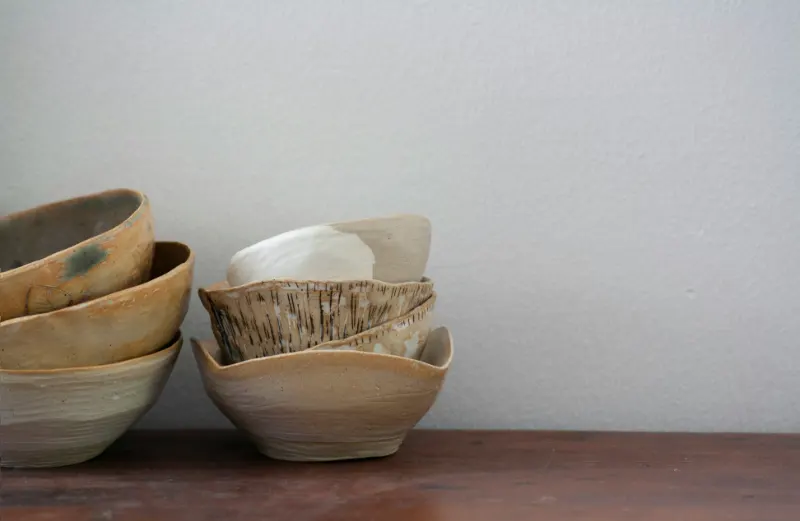
Move next to the surface that bothers you most. For many people it is the kitchen counter or dining table. Instead of attempting a full minimalist sweep, experiment with a constraint: decide that this one surface will hold only three types of things. Perhaps a cutting board, a lamp, and a bowl of fruit. Or a vase, a tray for daily essentials, and nothing else. The point is not visual perfection; it is clarity. A partially empty surface is an invitation to use it, whether for cooking, writing, or simply placing your coffee without shoving aside yesterday’s chaos.
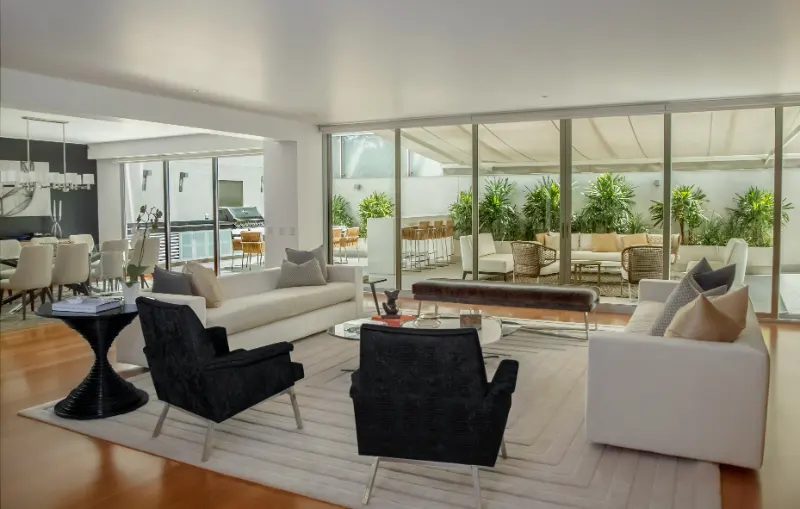
In the living room, examine the hierarchy of attention. If every seat faces a television, the room will default to "background noise plus scrolling." Try shifting just one seat toward a window or a bookshelf. Place a small table and a lamp next to it. You have not banned screens; you have offered a competing script. On a tired evening, the difference between "I collapse in front of whatever is on" and "I sit in the chair by the window for five minutes" is the difference between unconscious and chosen time.
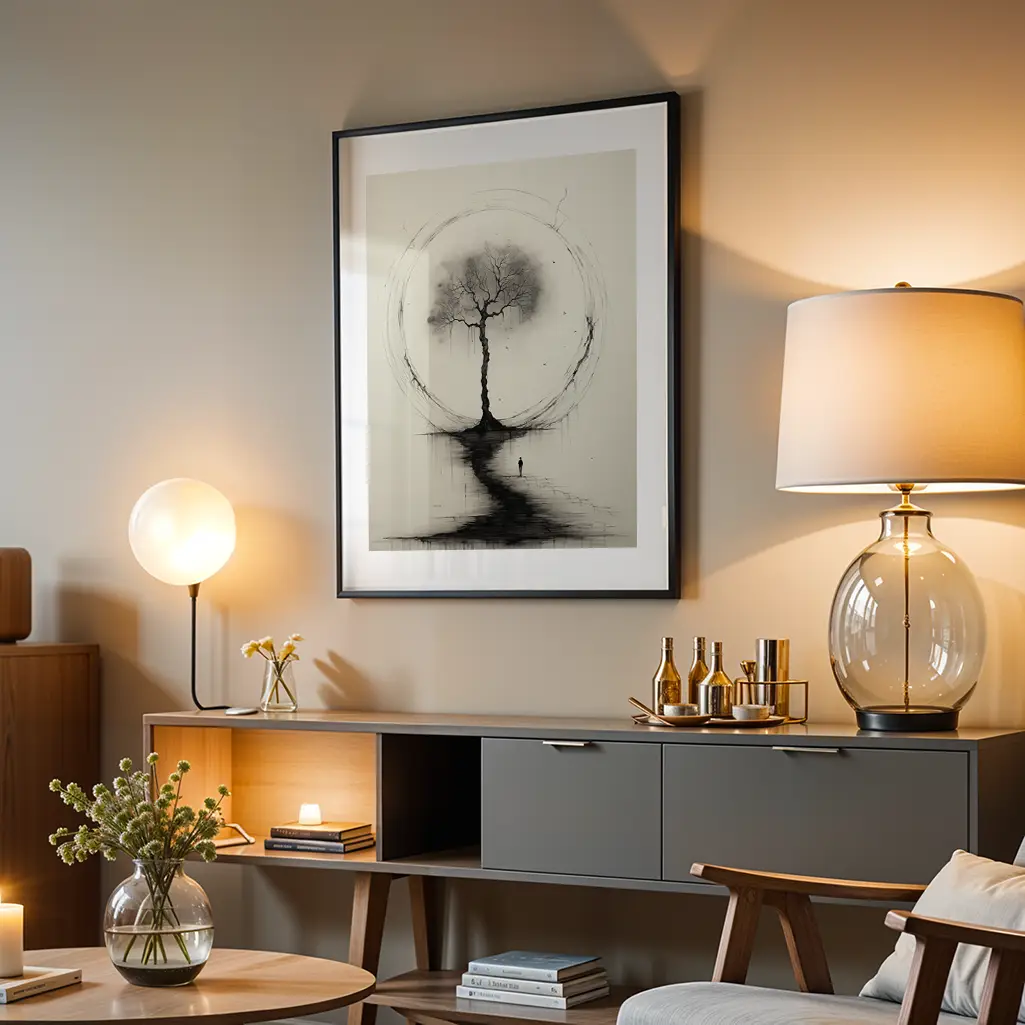
Lighting plays an outsized role in pace. Bright overhead light keeps the body in productivity mode; lower, warmer pools of light signal winding down. You do not need designer fixtures. A simple paper shade, a secondhand lamp, or a string of warm-toned lights can tilt the mood from braced to receptive. Slow living often begins the moment you can see the texture of objects again instead of just their outline.
In the bedroom, think in layers of stimulus. The bed should not compete with a glowing screen across from it. If you cannot remove the television, drape a cloth over it when not in use, turning it into a quiet rectangle rather than a black mirror. Place a book, a notebook, or nothing at all on your bedside surface. This is not a moral statement about reading; it is a gentle rearrangement of what your half-asleep hand reaches for first.
None of these changes require you to "opt out" of modern life. They are adjustments to the choreography of your day through small spatial nudges. Slowly, the cumulative effect is that you rush a little less not because your calendar has emptied, but because your home no longer pushes you toward hurry.
Making Slowness Stick Without Turning It Into a Project
The paradox of slow living is that it is easy to treat it like one more assignment, complete with rules, guilt, and a shopping list. That defeats the point. The question is not, "Am I doing slow living correctly?" but "Does my space make it easier to live at a human speed today?" Human speed changes. Some days are relentlessly fast, no matter how artfully arranged your shelves are.To keep slow living from hardening into perfectionism, focus on experiments rather than standards. Try a one-week experiment where your dining table is cleared each night, not as a virtue practice but as a reset button. Notice not just how it looks, but how it feels to walk past an empty surface in the morning. Try placing your phone to charge in the hallway and keeping only analog objects on your bedside table. Pay attention to the first 15 minutes after you wake: does the absence of a glowing rectangle expand or shrink your sense of possibility?
There will be relapses into clutter and speed. They are not failures; they are feedback. A perpetually chaotic corner might be telling you that the function assigned to it does not match the reality of your life. Maybe the sleek chair you imagined reading in is actually where bags land each night. You can fight that, or you can concede and give the bags a proper home, then relocate your reading chair to a place you naturally pause instead of pass by.
The deeper work of slow living is learning to trust sufficiency. Enough light, enough seating, enough storage, enough objects you genuinely use and love. When you accept "enough" as a design principle, you are no longer compelled to upgrade every deficit with a purchase. You begin to upgrade with subtraction: one fewer knickknack on the shelf, one fewer app on the phone, one fewer nightly obligation that starts with "I should." The home responds accordingly, feeling more spacious not because it grew, but because you removed what did not serve you.
You do not have to move to the woods to live more slowly. You do not even have to move to a bigger apartment. You only have to decide that the rooms you already occupy deserve a pace that matches your actual heart rate, not the pace of your inbox. From there, slow living stops being a distant ideal and becomes something closer to muscle memory: the way your hand reaches for the lamp instead of the remote, the way your shoulders drop when you step through your front door and see not perfection, but a place arranged with enough care to let you breathe.
.webp)