What Is Ma, Really?
Walk into a room you love and try, for a moment, not to look at the objects. Instead, pay attention to the intervals between them. The slight gap between chair and table, the untouched stretch of wall, the empty corner that seems to glow more softly than the rest of the room. In Japanese aesthetics, that interval is called "ma," often translated as the "space in between," but more accurately understood as a living pause, a kind of silent rhythm that gives shape and meaning to everything around it.
In Japanese, the character for ma combines the sign for "gate" with the sign for "sun," as if light were filtering through a doorway. It suggests that space is not an absence but a medium through which experience passes. In this sense, ma is less about minimalism as a style and more about awareness as a practice. It asks how much room we are willing to give an object, a gesture, or even a thought so that it can fully breathe.
You can feel ma in a tea room where the alcove holds only a single flower and a scroll. You can hear it in music, in the silence between notes that lets the melody land. In conversation, it is the unhurried pause that allows words to sink in. And at home, ma is the way a bare stretch of floor invites you to sit, the calm plane of a table that holds only what is needed now, the quiet zone by a window that has not been crowded with furniture.
The Western eye is often trained to see value in what fills a space: the artwork, the sofa, the stack of books. Ma pushes against this reflex by suggesting that the space around those things is not neutral. It, too, is doing something. It shapes how light moves, how sound settles, how your body can navigate the room. To work with ma is to design not just with matter but with its opposite, to treat emptiness as an active material.
This requires a subtle but important shift in perception. Instead of asking, "What else can I add here," the question becomes, "What can I remove or relocate so that what remains feels more vivid, more necessary". When you begin to see gaps, pauses, and blank surfaces as participants rather than leftovers, your home starts to feel less crowded and more intentional, even if you have not changed very much at all.
Ma as Rhythm: The Art of Pause at Home
To bring ma into a home, it helps to think less in terms of static style and more in terms of rhythm. A room with ma has a tempo you can sense. There are moments of visual quiet followed by accents of intensity, just as in poetry there are lines that hold emotion and spaces where the reader can breathe.
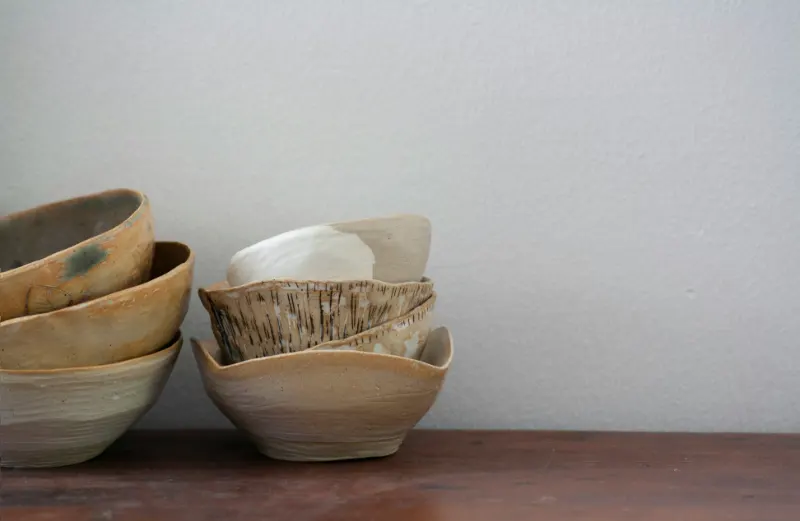
Imagine a shelf lined edge to edge with objects. Every piece competes for your attention; the eye has nowhere to rest. Introduce ma by clearing a span of that shelf so that a single bowl or stack of books can sit with some air around it. The shelf has not become barren. It has gained a beat, a pattern of sound and silence. Your gaze lands, pauses, and moves on. The pause is ma.
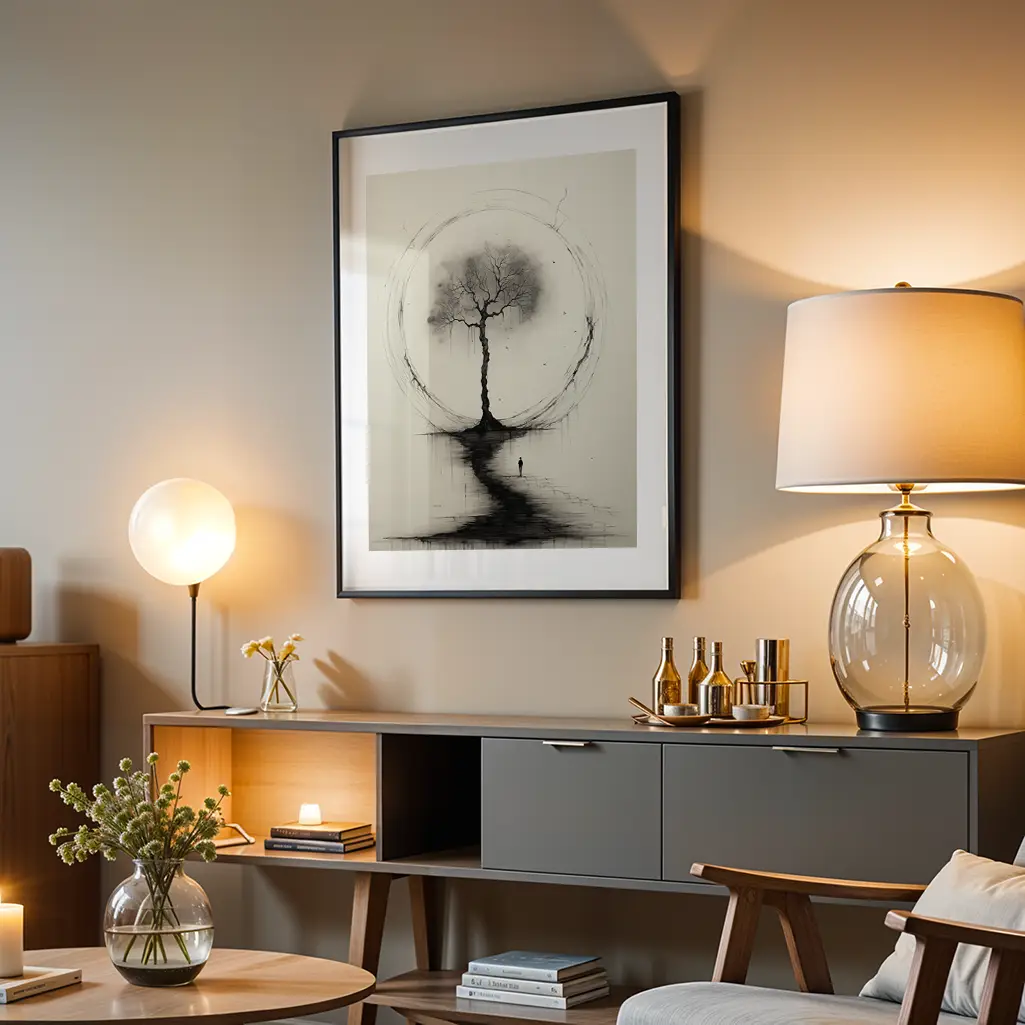
This principle applies across scales. On a coffee table, it might mean leaving most of the surface empty, allowing a single vase or a tray to anchor the scene. Along a wall, it might mean stopping the gallery of frames before it reaches the ceiling, letting a portion of plaster remain unadorned so the artworks feel more precise. On the floor, it might mean resisting the urge to fill every corner with a plant or a lamp and instead letting negative space outline the shape of the room.
Ma is also temporal. It unfolds over time as you move through your day. A clear patch of counter near the stove creates a pause in the visual noise of the kitchen, asking only to hold the ingredients you are working with now. A bench by the door with nothing stored under it offers a small breathing space between outside and in. These pauses become rituals, even if unspoken. You step into them, slow down, and then move on.
Cultivating ma does not require a life of perfect order. It does, however, invite a different kind of attention. Instead of organizing purely for efficiency or display, you begin to organize for clarity of experience. You might keep a favorite ceramic cup on a separate shelf, giving it more space than seems strictly practical, so that each morning when you reach for it you feel the quiet around it as part of the pleasure of using it. The object is the note. The surrounding space is the rest that makes the note audible.
Designing with Ma: Light, Edges, and the Breath of a Room
When you start to design with ma in mind, the question is not how to create an empty home, but how to shape emptiness so that the space itself feels articulate. Three elements become especially important: light, edges, and what might be called the breath of a room.
Light reveals ma. Notice where daylight naturally pools in your home and resist the urge to fill those spots completely. A patch of sun on a wooden floor can be a kind of moving artwork if nothing interrupts it. A simple chair placed just off the brightest spot, leaving some luminous floor untouched, lets you sense the room as a living volume rather than a container to be fully occupied.
Edges define ma. Where does the furniture stop and the open area begin. If every piece presses against another or touches the wall, the space has no clear contour, only density. Pulling a sofa a few inches away from the wall can create a slender band of nothingness that subtly lightens the room. Leaving a gap between a cabinet and the ceiling, instead of stacking boxes above it, allows the upper air to remain calm. These small boundaries of emptiness give the eye a chance to trace the architecture of the space.
The breath of a room is how it expands and contracts as you move through it. A hallway that is almost bare, a landing with only a low stool, a bedroom where the bed is not hemmed in on all sides: these are all examples of architectural inhales, places where the space opens. In turn, a reading corner with a lamp and a chair might feel like an exhale, a gathered intensity. Ma is the relationship between these states, the alternation of full and open, accented and plain.
As you adjust your surroundings, you may find that ma becomes less an aesthetic goal and more a way of noticing. You become aware of when a room feels crowded not just physically but mentally, when visual noise makes it hard to think, and also of when a bare surface feels too austere, asking for a single, carefully chosen object to mark it. The practice lies in staying sensitive to both conditions and in allowing space itself to have a say.
In this sense, ma is an ongoing conversation between you and your home. You add a piece, watch how the light touches it, see whether it needs more room. You clear a corner, notice whether it feels like relief or like loss, and adjust. Over time, the rooms you inhabit begin to mirror a quieter internal rhythm, where pauses are not seen as gaps to be fixed but as necessary moments of rest. Your home starts to feel less like a storage problem and more like a sequence of breaths you can actually feel.


.webp)