Rethinking Scale: Why Big Can Feel Calmer Than Small
In most homes, the wall above the sofa or the long stretch over a dining table becomes a gallery of hesitation. We hang a print we like, then another, then a postcard picked up on vacation. Before long, the wall reads as visual static: interesting up close, noisy from across the room. Choosing large wall art is, paradoxically, one of the most efficient ways to create calm.
The eye prefers order. When you fill a big wall with many small pieces, your gaze stops and starts at each frame, processing a fresh boundary and a fresh story every few inches. A single generous canvas or oversized photograph removes that constant interruption. The wall becomes one quiet sentence instead of a paragraph full of commas.
Designers often talk about proportion as a form of courtesy. Large wall art shows respect for the architecture because it acknowledges the true scale of the room. When a sprawling wall carries a tiny frame, it highlights the emptiness around it and makes everything feel slightly ill at ease, like a lone chair in the middle of a gymnasium. A piece that spans two-thirds the width of the sofa beneath it or sits comfortably within the vertical height of the wall feels naturally grounded, as though it belongs to the room rather than merely visiting.
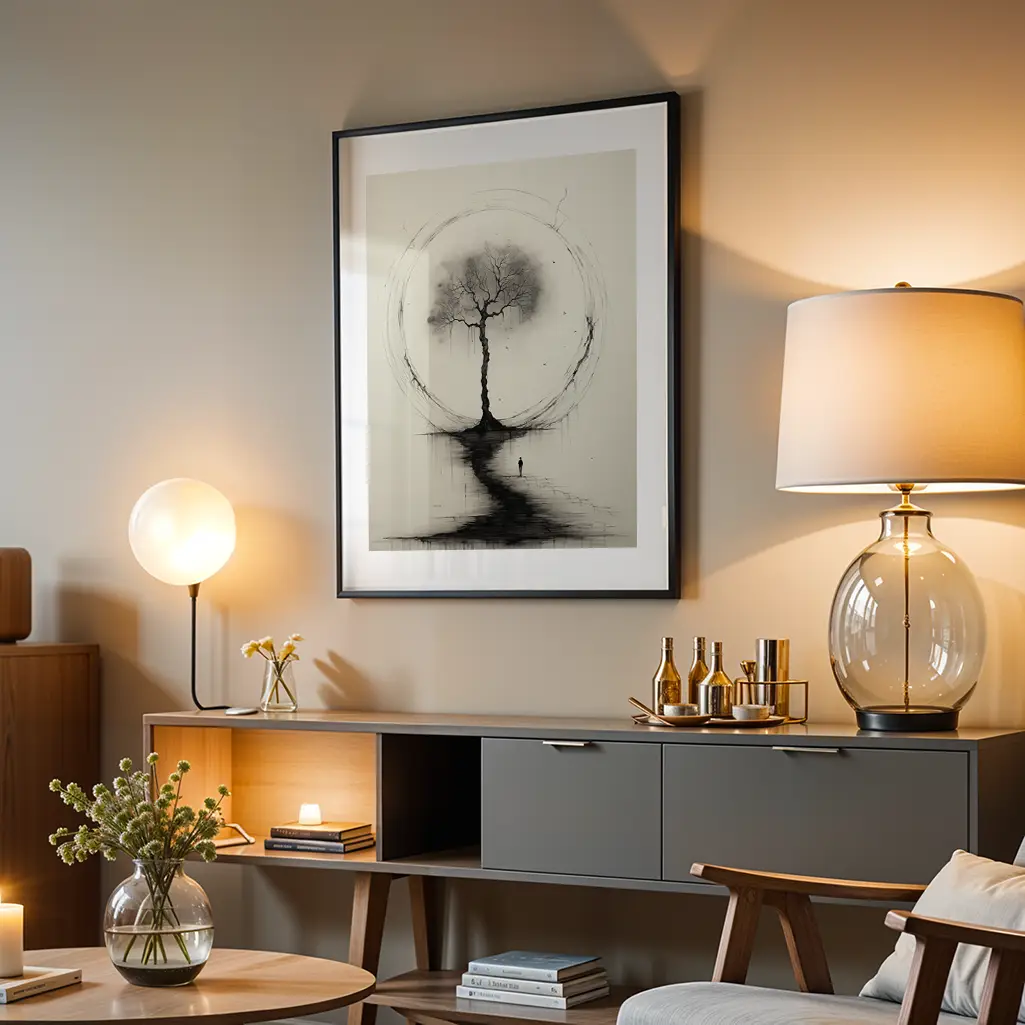
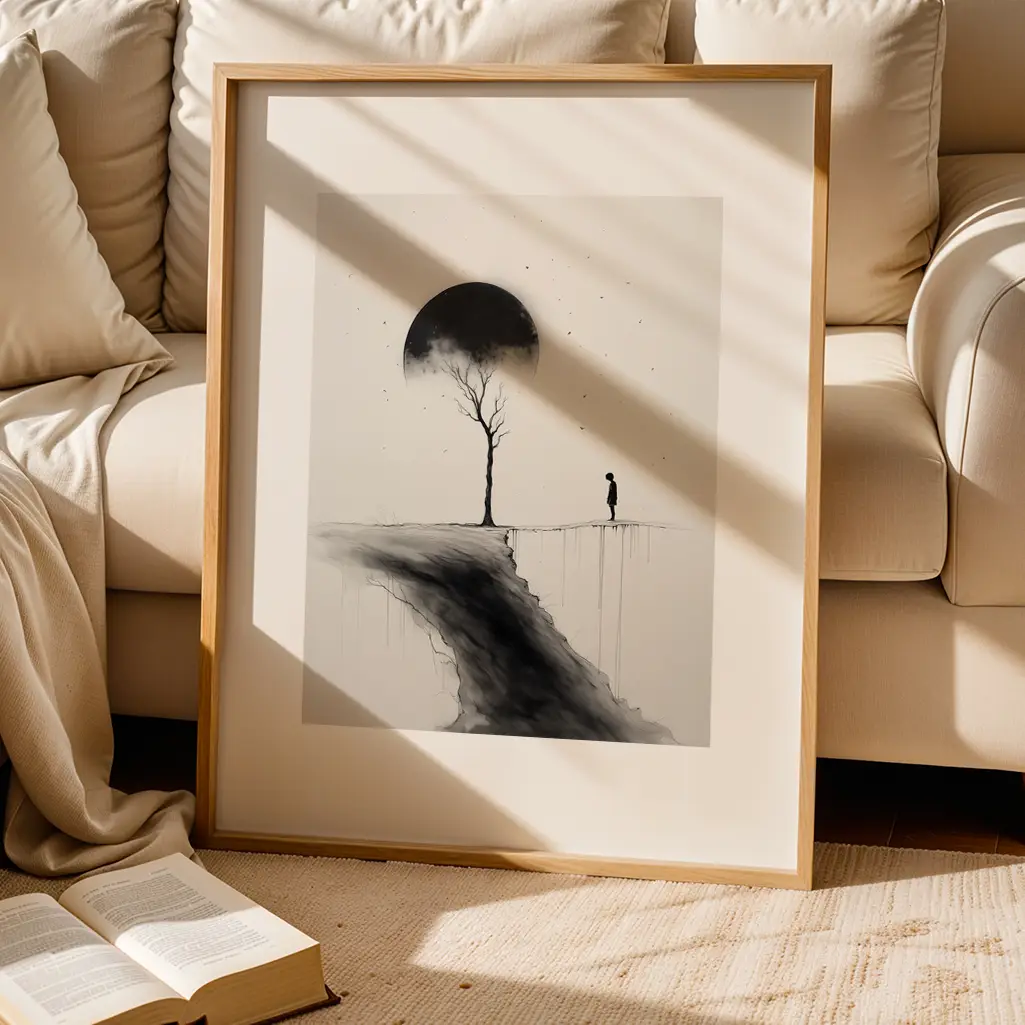
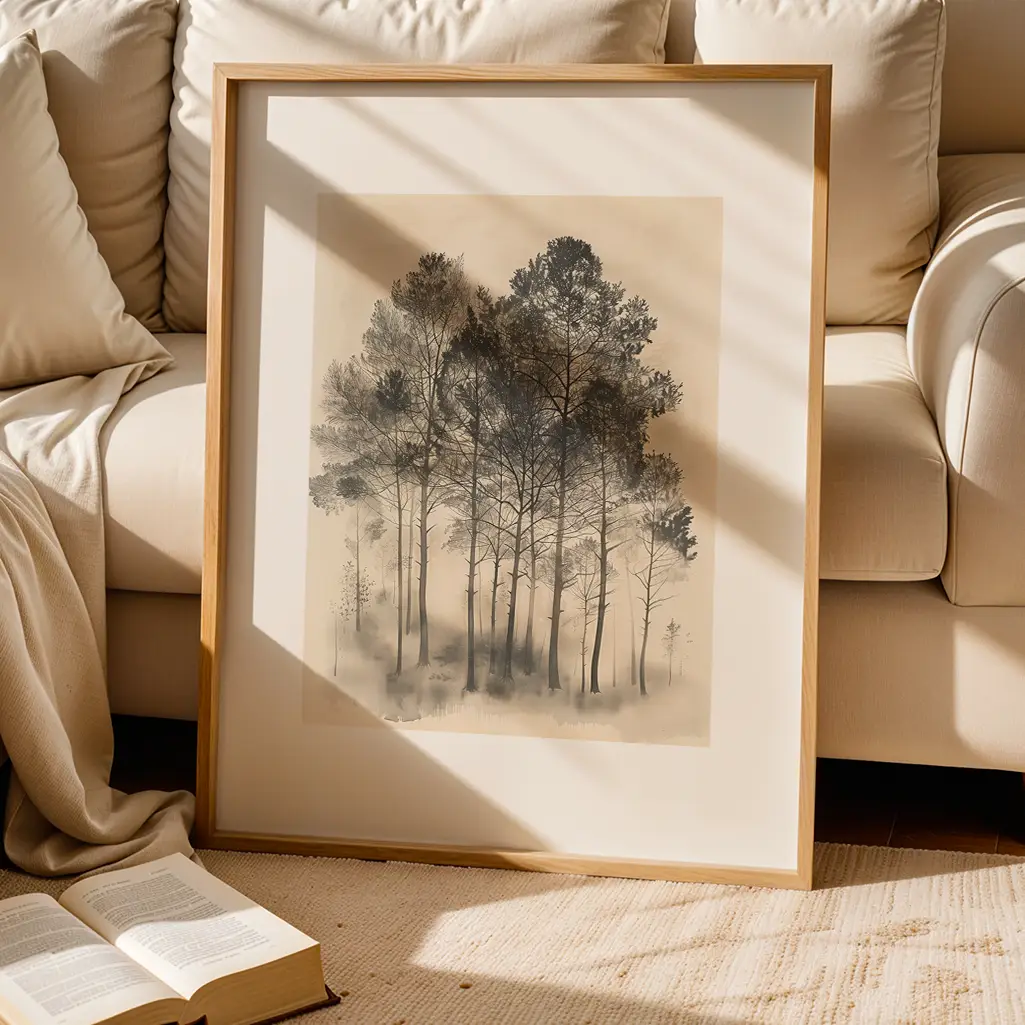
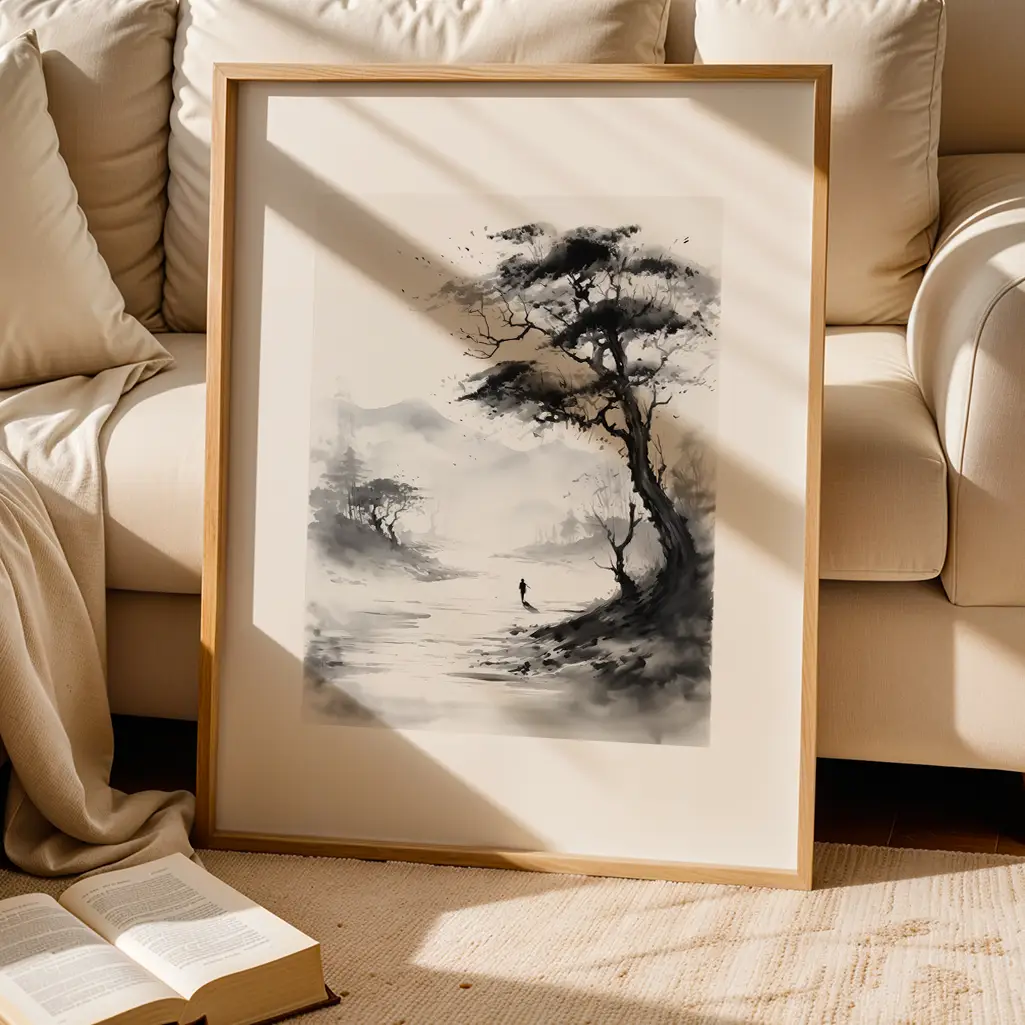
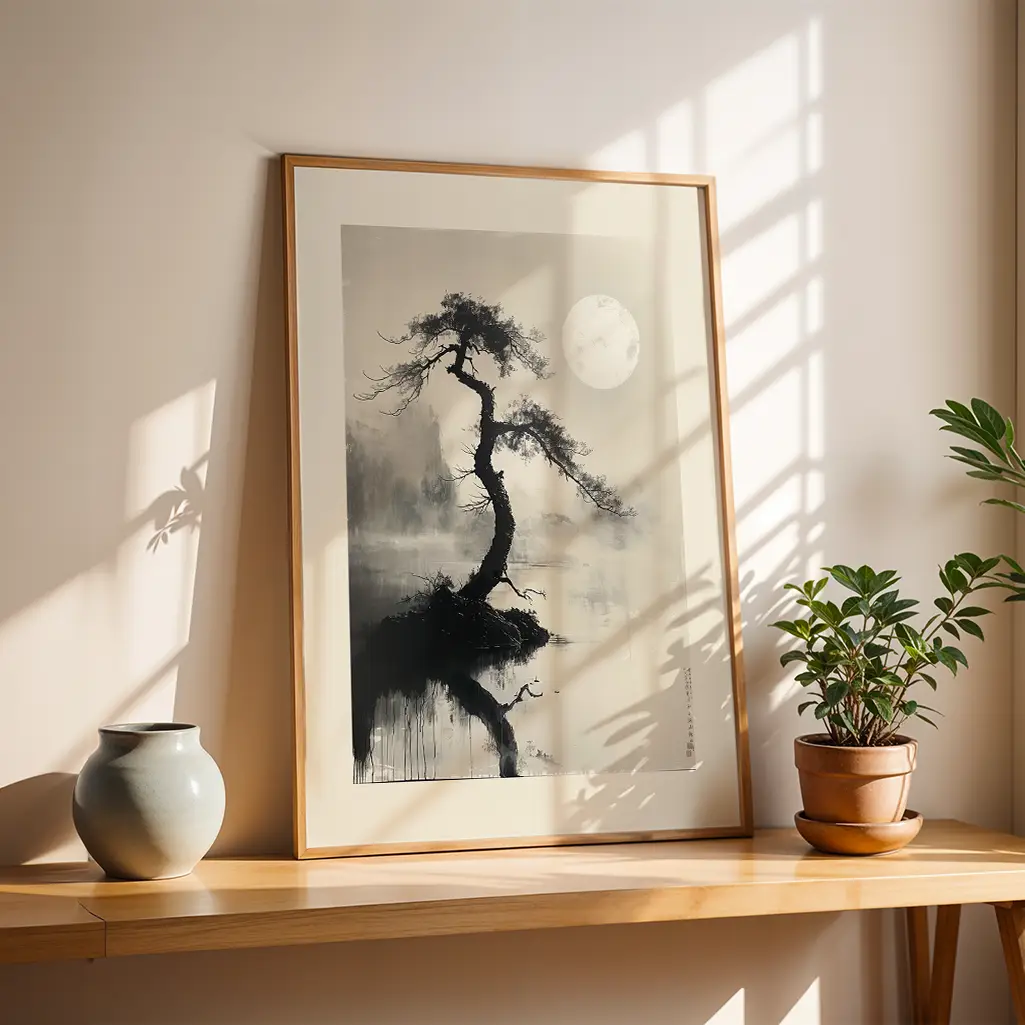
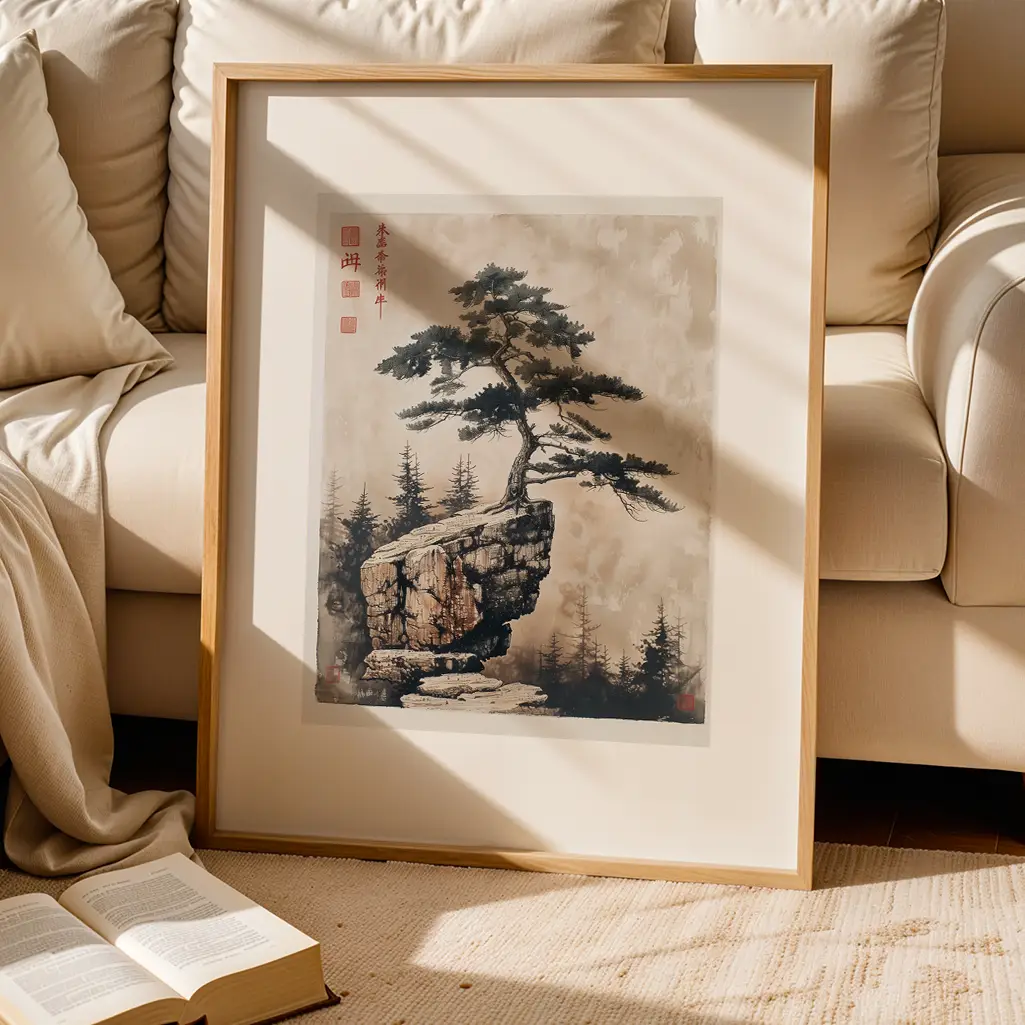
There is also a psychological shift when you commit to one large work. Many small objects suggest decisions deferred: you can always add another. A single, bold piece is a declaration that the room has a point of view. That doesn’t mean it needs to shout. Some of the most effective large wall art is whisper-soft: a pale abstract wash, an oversized charcoal line drawing, or a photograph in tones barely darker than the wall itself. The size supplies the statement; the palette supplies the calm.
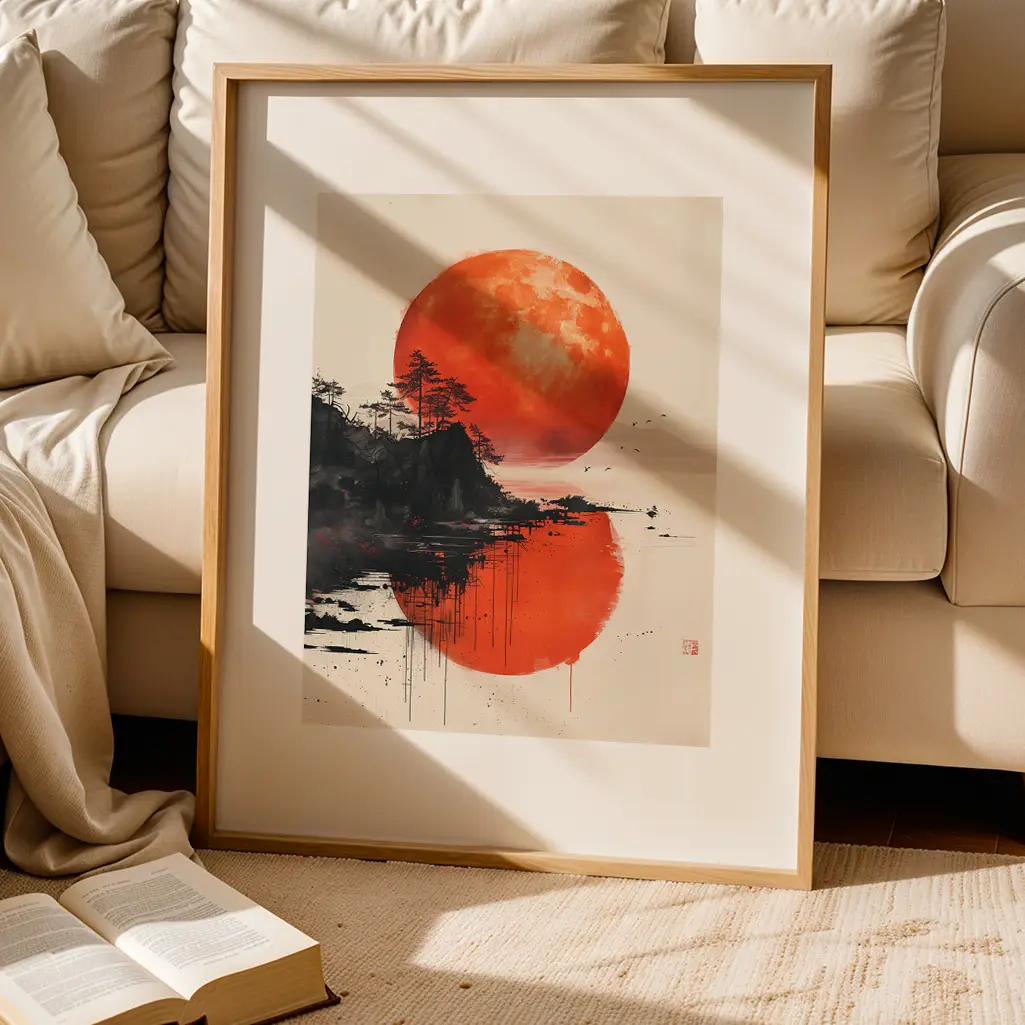
If you are worried that a big canvas will take over, step back and think about how you actually use the room. In a living space meant for relaxation, you do not want the wall to read like a news feed. You want it to behave more like a window, a single large opening through which your eye can rest. Even bold color can feel restful at scale when it is not chopped into small, competing fragments.
The art world often suggests we should live with what moves us, but in a home, how it moves you over time matters. Big work has a way of dissolving into the background of daily life until, in a quiet moment, you discover it again. That rhythm of forgetting and re-seeing can be one of the most satisfying forms of visual companionship.
Composing the Wall: Breathing Room, Lines and Light
Clutter on a wall rarely comes from size alone; it comes from a lack of breathing room. Think of the space around your large wall art as part of the piece itself. The margins are your interior version of white space on a page, the silence between notes in a melody. Without that margin, even a well-chosen work can feel pushy.
Start by measuring the wall, then study it from the main vantage points in the room: the sofa, the dining table, the doorway. You want the center of the piece close to eye level when standing, but in a living room, slightly lower often feels more intimate, aligning with how you actually see the wall while seated. Leave several inches of visual air between the frame and any architectural feature below it, whether that is a headboard or a console. The goal is to create a distinct “field” for the art, so it does not look jammed into the furniture arrangement.
Lines matter as much as size. A horizontal work stretches the room, echoing a long sofa or low credenza and expanding the sense of width. A vertical piece pulls the eye upward, emphasizing ceiling height and lending a subtle formality. In a square room that feels static, a strongly vertical piece can introduce a sense of movement; in a narrow space, a broad canvas can counterbalance the corridor effect.
Color interacts with clutter in surprising ways. Busy colors at small scales create vibration; the same hues in a large, simplified field can feel serene. If your room already has multiple patterns, consider choosing large wall art that distills the palette instead of adding a new story. Pick up a single thread: the green from a plant, the warm tone of a wood floor, the smoke blue in a rug. When the artwork’s color relates quietly to what is already present, it reads as part of the architecture, not an afterthought.
Light is the final collaborator. Natural light will shift across a large piece during the day, changing its mood without adding any physical clutter. If you introduce picture lights or sconces, avoid turning the art wall into a stage set. A soft wash of light is usually enough. The aim is to reveal texture and depth, not to demand constant attention.
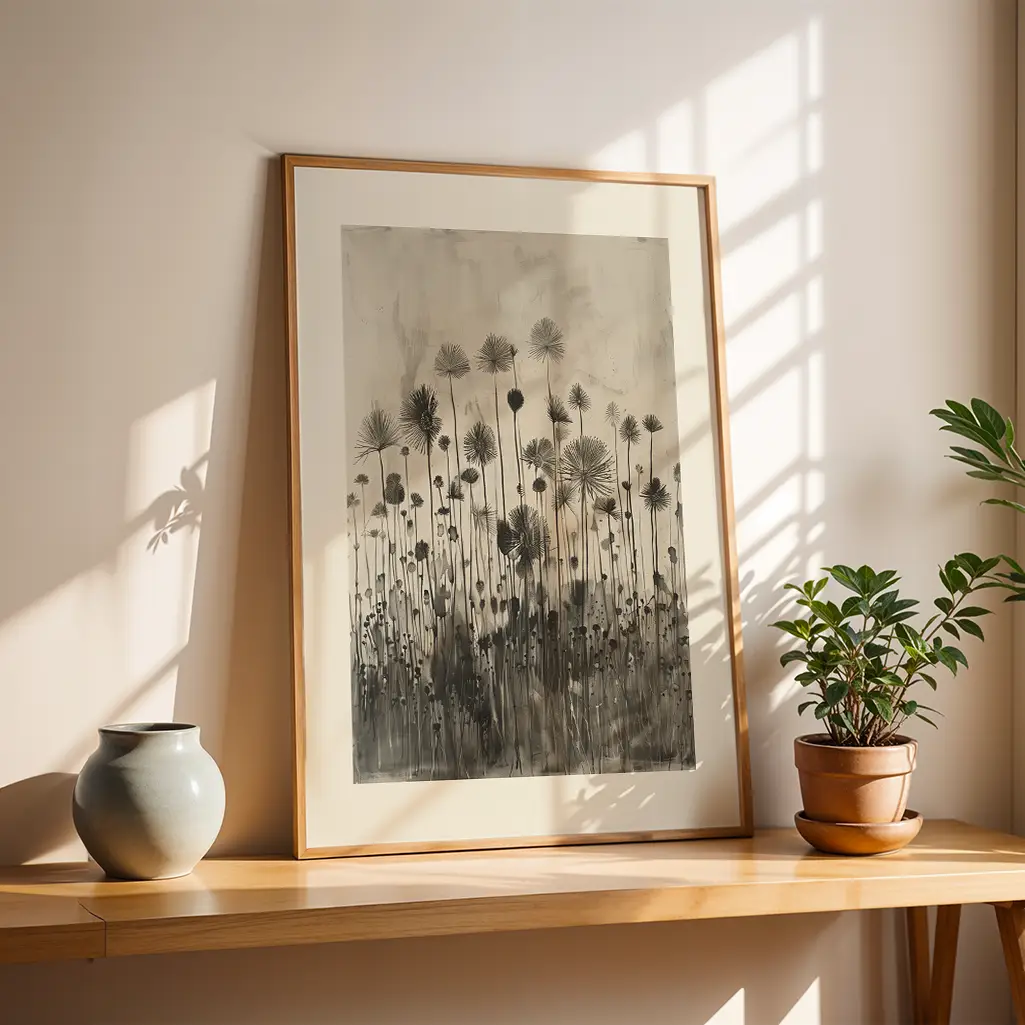
Glass and framing choices can either simplify or complicate the view. For a polished but quiet effect, a very thin frame in a finish that matches existing hardware can create a subtle outline, almost like a drawn border. Heavy, ornate frames around large work can feel like a second artwork vying for your eye. In a calm room, they are often more noise than narrative.
Letting the Room Breathe: Editing Objects Around the Art
A large piece of wall art does not live in isolation; it converses with every object nearby. To avoid visual clutter, consider the wall with the art as the resting heartbeat of the room. That means editing what gathers at its feet. If a console table below the piece holds a tangle of small decor, your eye never really arrives at the art. Reduce the surface to a few elements with clear intention, like a single lamp and one sculptural object with enough height to acknowledge the scale above.
There is a quiet discipline in choosing what not to hang. Resist the urge to “balance” the large work by filling adjacent walls with secondary pieces of similar intensity. Instead, think of the room as a sequence: one dominant statement wall, one or two supporting walls that carry lighter, more textural work, and perhaps a wall or corner left almost bare. That emptiness is not neglect; it is a pause.
Clutter also arises when every story in a room speaks at full volume. If your large wall art is highly detailed or emotionally charged, let other decorative elements take a step back. This might mean keeping textiles more tonal, choosing furniture with cleaner lines, or storing away smaller knickknacks that no longer add meaning. Each subtraction gives the artwork room to resonate.
The most successful large pieces often act as emotional anchors. They set the temperature of the room the way a piece of music sets the tone of a film scene. Before choosing one, ask yourself how you want to feel when you enter the space: soothed, alert, contemplative. A soft, atmospheric canvas may slow your breathing in a bedroom; a bolder abstract might lend energy to a dining area. Once you have that emotional brief, editing becomes easier. Anything that pulls the room toward a different mood can quietly be let go.
In the end, using large wall art to make a statement without clutter is less about decoration and more about attention. You are deciding where the eye can rest, what deserves a second look, and what can recede into the useful but unremarkable background of daily life. When the balance is right, you may find that the biggest thing in the room is not the artwork itself, but the sense of spaciousness it quietly protects.