
The quiet revolution of loving-kindness
Loving-kindness meditation, or "metta," sounds almost suspiciously gentle in an era that glorifies productivity and optimization. It invites you to sit still and repeat phrases like "May I be happy" and "May you be safe," which can feel quaint compared with timers, trackers, and high-intensity everything. Yet this simple, almost old-fashioned practice has quietly become one of the most researched and respected forms of meditation, with effects that reach far beyond the cushion and into the way you decorate a corner, speak to a partner, or move through a crowded subway car.
At its core, loving-kindness meditation trains the emotional tone of your attention. When you practice metta, you are not trying to erase thoughts or float into abstraction. You are very deliberately cultivating a quality of warmth and goodwill, then directing it toward yourself and others. Over time, that emotional habit begins to leak into the rest of your life. The same way a home takes on the personality of its inhabitants, your inner space slowly rearranges itself around this new, kinder default.
The traditional sequence of metta begins with yourself, then moves outward: a loved one, a neutral person, a difficult person, then all beings. The point is not to force yourself into instant universal love, but to discover, step by step, how the heart behaves when you turn toward instead of away. You begin to notice that resentment and self-criticism feel like heavy furniture in a narrow hallway, constantly bumped into. Loving-kindness is the slow work of moving those pieces, making room to walk without bruising yourself on the way to the kitchen.
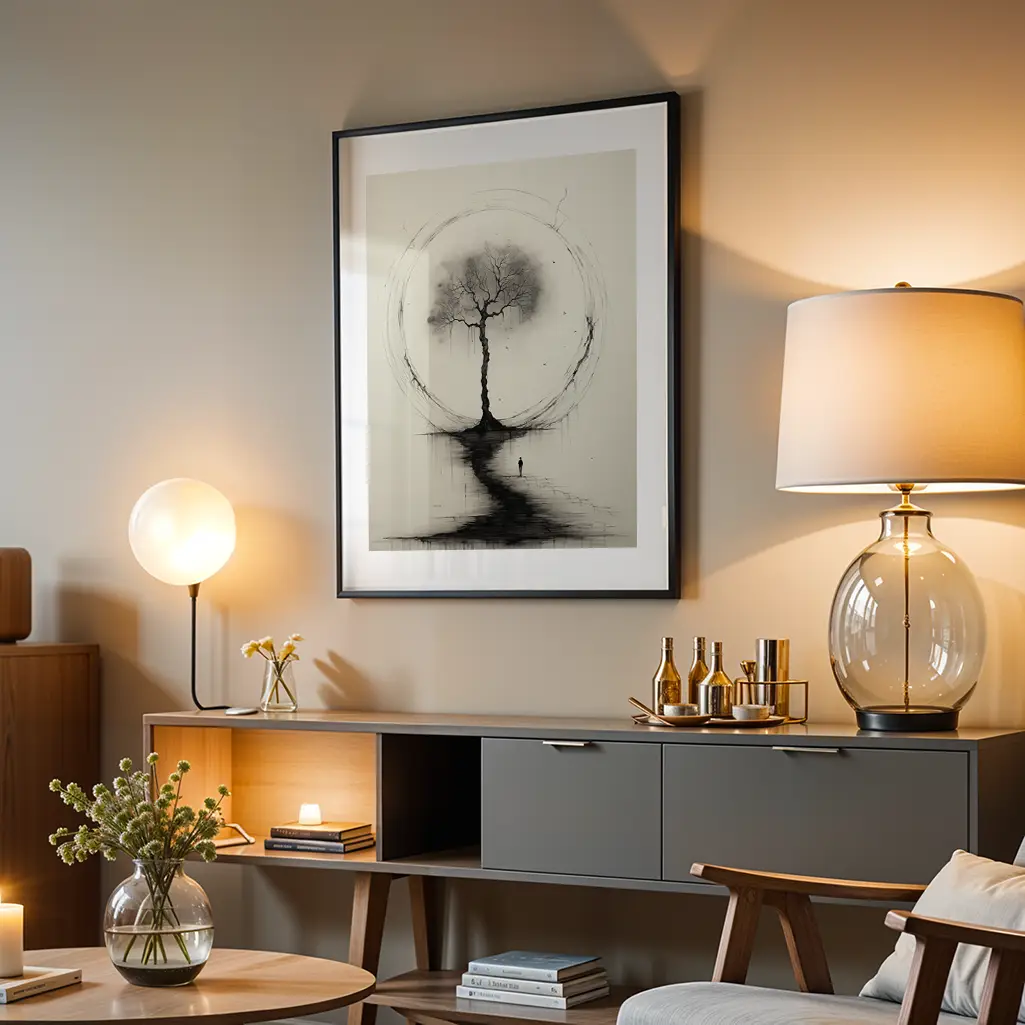
This is why the way you set up your physical surroundings matters. If loving-kindness is a kind of emotional interior design, your home becomes the training ground where inner and outer spaces echo each other. A chair angled toward a window instead of a television, a small plant on the table where your phone used to live, a blanket that signals "this is where I soften"—these are not just aesthetic choices. They are invitations your nervous system recognizes long before your mind catches up.
When you imagine making your home more peaceful or "zen," it can be tempting to think first of objects: the right cushion, a particular incense, a minimalist lamp. Metta suggests a different starting point. Ask instead, What would make this room feel more forgiving? Where in this space can I sit without being rushed? The practice of loving-kindness, as it spills off the cushion, becomes less about perfecting a ritual and more about adjusting the climate in which you go about everything else.
How to practice metta, from cushion to couch
A basic loving-kindness meditation can be done in ten minutes, though its texture changes as you linger. Begin by choosing a spot that feels just a bit special without being precious. It might be the end of your sofa with a pillow you like, the corner of your bed, or a chair near a window. Let that place become "the seat where I practice being kinder," the way a favorite mug becomes the one you reach for on difficult mornings.
Sit comfortably, not rigid, feet on the floor or legs crossed. Close your eyes if that feels safe, or soften your gaze. Take a few slow breaths and notice where your body meets the furniture, how the weight of you belongs to this spot. This is the architectural foundation of metta: a sense that, at least for now, you are allowed to be exactly where you are.
Then silently offer yourself a few simple phrases. Traditional versions include "May I be safe," "May I be healthy," "May I be happy," "May I live with ease." If those feel stiff, you can translate them into language you would actually use with someone you love: "May I feel held," "May I get through this day gently," "May I remember I do not have to be perfect." The exact words matter less than their sincerity and repeatability. You are laying down tracks in the mind; the train needs a familiar route.
You will notice resistance. Part of you may argue that you do not deserve such kindness, or that repeating phrases is pointless. Rather than wrestling with those thoughts, include them: "May even this doubting part of me be held in kindness." Loving-kindness does not edit out the unflattering feelings; it sets another chair at the table and lets them sit down without running the show.
After a few minutes, bring to mind someone you care about easily. See them in a specific scene—laughing in your kitchen, texting you from their cluttered desk. Offer them the same phrases: "May you be safe, may you be healthy, may you be happy, may you live with ease." Notice how your chest, jaw, or breath respond. There is often a physical warmth here, subtle but unmistakable, like the way a room feels different when the lamp switches on at dusk.
Next comes a neutral person: the barista you see weekly, a neighbor you nod to but have never really met. They are the emotional equivalent of an overlooked corner in your home—neither cherished nor resented, simply there. Direct the phrases toward them. It may feel mechanical at first, but that is part of the practice; you are discovering how goodwill can be extended beyond your usual favorites without becoming fake.
The most delicate phase involves a difficult person. You do not need to begin with your greatest source of pain; start with someone mildly irritating. Picture them clearly and repeat, "May you be safe, may you be healthy, may you be happy, may you live with ease." You are not excusing their behavior or inviting them closer. You are acknowledging that their unskillfulness, like yours, arises from confusion and pain. In interior design terms, this is not romanticizing clutter; it is understanding how it accumulates so you can stop contributing to the pile.
Finally, expand your attention outward. Imagine your building, your street, your city, then all beings, held in the same field of goodwill. The phrases become something like an atmosphere: "May all beings be safe, may all beings be healthy, may all beings be happy, may all beings live with ease." Even if your imagination falters, the effort itself is refining the lens through which you see the world when you open your eyes.
When you finish, look around the room without rushing away. Notice how the space feels now that you have spent time softening internally. Often, small changes suggest themselves: a stack of unopened mail that pulls the eye like a nagging thought, a harsh overhead bulb that feels like criticism rather than clarity. Adjust one thing in the room as a continuation of the meditation—clear the corner of a table, dim a light, fold a blanket across the back of a chair. You are teaching your nervous system that kindness is not confined to closed eyes and crossed legs; it rearranges the very places you live.
Over weeks, loving-kindness meditation becomes less a discrete activity and more a way of moving through your home and your life. You catch yourself softening your voice during a tense conversation, choosing a gentler color for the bedroom, pausing to wish well to the neighbor whose late-night music once drove you mad. In those moments, metta is no longer an abstract ideal. It is the architecture of a livable interior world, built phrase by phrase, room by room.

.webp)