
What the “Middle Way” Really Means
The “Middle Way” is one of those phrases that sounds soothing and vague, like a lifestyle slogan about moderation or a wellness retreat tagline. In early Buddhist philosophy, though, it names something far more precise and demanding. It is the path the Buddha claimed to discover under the Bodhi tree, a way of living that avoids the twin traps of self‑indulgence and self‑torture and instead trains the mind to see clearly.Historically, the Middle Way first referred to the Buddha’s personal biography. Born into privilege, he knew the ease of pleasure and luxury. Later, as a wandering ascetic, he starved his body and pushed it to extremes, believing that suffering might unlock liberation. Neither extreme worked. Only when he abandoned both, accepting a simple bowl of food before sitting in meditation, did he claim to awaken. The insight was not that “a little of everything is fine,” but that clinging to any extreme, any rigid position or identity, distorts perception and generates suffering.
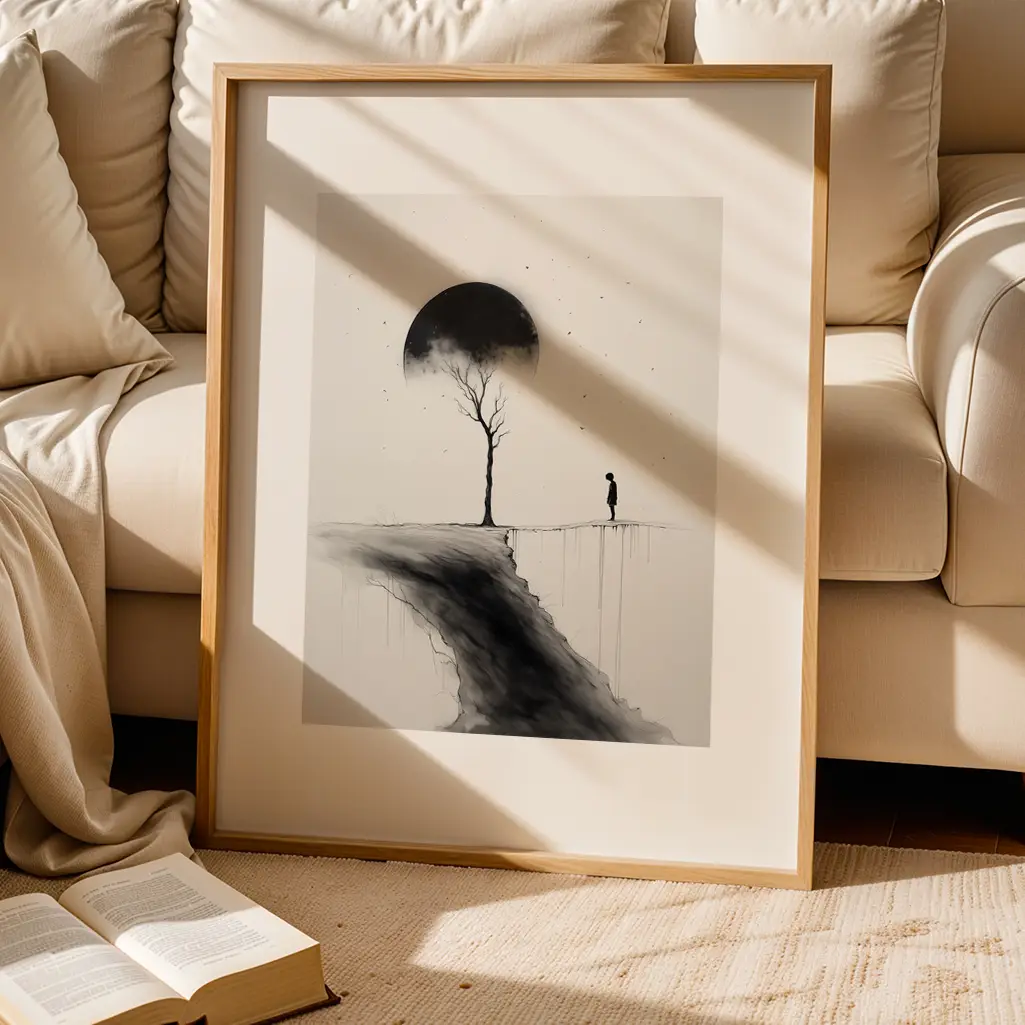
Philosophically, the Middle Way has a second, deeper dimension. It refuses to freeze reality into tidy binaries: existence or nonexistence, self or no‑self, permanence or complete annihilation. Things, including you, are not solid blocks of identity, nor are they nothing at all. They are processes, dependent on conditions, changing in every moment. To walk the Middle Way is to live inside that flux without demanding that it behave like a fixed story about who you are.
This can sound abstract until you notice how quickly extremes appear in ordinary domestic life. Perfectionism versus neglect, maximalism versus stark minimalism, rigid schedules versus chaotic spontaneity. In each case, clinging to a clean, absolute position offers the illusion of control. The Middle Way invites a subtler task: to respond to conditions as they actually are, instead of how your preferred extreme insists they should be.
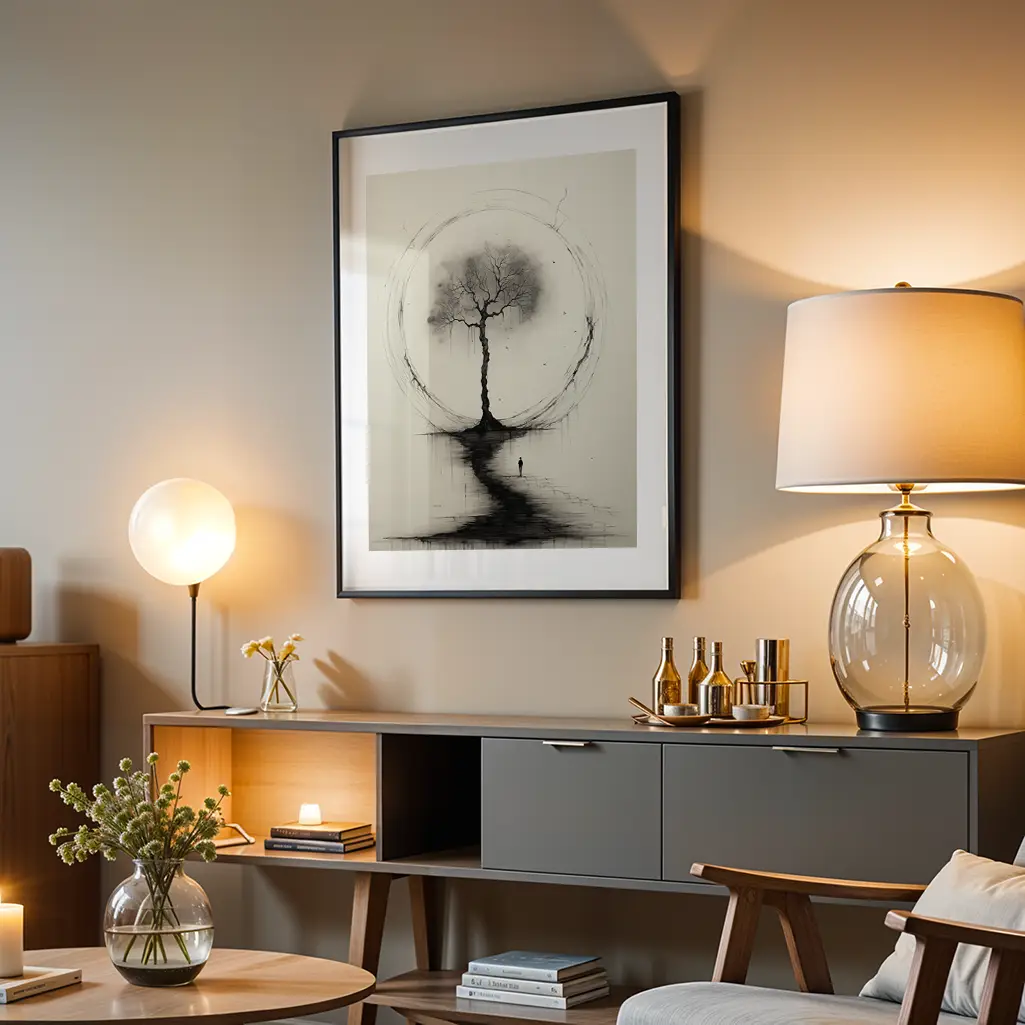
For the modern householder, that has consequences in the most concrete arenas: how you furnish a living room, how you respond to clutter, how you hold your ambitions for work, family, and self without turning them into weapons against your own peace of mind.
Middle Way as Daily Practice, Not Abstract Ideal
If you picture the Middle Way as a static midpoint, a straight line between too much and too little, you miss its most useful aspect. It is less a location, more a disciplined responsiveness. In any given moment you ask, not “What is the correct moderate thing?” but “What actually eases suffering and clarifies the mind right now, for me and for others?” The answer changes as conditions change.This is easiest to see in the texture of your home. Consider clutter. One extreme worships surfaces so bare that a single misplaced mug feels like a moral failure. The other resigns itself to piles of paper and overstuffed closets, a quiet belief that the mess is inevitable and therefore invisible. Each extreme carries its own flavor of suffering. Perfectionism sharpens anxiety and resentment. Resignation dulls the senses; you stop seeing the objects in front of you and, eventually, the people as well.
The Middle Way does not command you to own precisely a certain number of objects or to sweep at set intervals. It asks you to look carefully at how your environment affects the mind that lives in it. Does this room agitate or soften you. Do the objects here serve real uses, evoke honest joy, or are they monuments to older selves and abandoned stories. When you pay that kind of attention, you may still pare things down, but not in obedience to an aesthetic doctrine. You do it because breathing in the room feels physically different.
The same logic applies to how you work and rest at home. One extreme glorifies relentless productivity at the kitchen table, laptop always open, phone always within reach. The other drifts into avoidance, a stack of undone tasks exiled to a chair you pretend not to see. The Middle Way is neither a perfect eight‑hour efficiency nor a romanticized spontaneity. It is the shifting art of noticing when effort has tipped into strain, and when rest has curdled into escapism, then making small course corrections without self‑hatred.
Buddhist philosophy often describes this as balancing wisdom and compassion. Wisdom recognizes impermanence and interdependence: this room will change, this mood will pass, you are not a fixed project to be perfected. Compassion asks what would be gentle and helpful right now, not just for you but for the people who share your space. Together they form a kind of interior design brief for living: create surroundings and habits that make it easier to be kind and clear‑seeing, rather than harsher or more confused.
Designing a Home that Embodies Balance
Because the Middle Way is experiential, not dogmatic, there is no universal prescription for the right number of objects, colors, or cushions. Yet its principles translate into a few quiet experiments that can shift how your home feels from the inside.The first is to treat every design choice as a hypothesis about the mind, not a statement about taste. When you choose a deep sofa or a narrow chair, a bold painting or an empty wall, you are also choosing a future mental atmosphere. A bright, crowded gallery wall in a small room might energize you after work, or it might scatter your attention. A sparse, neutral bedroom might soothe you, or it might leave you feeling oddly disembodied. The Middle Way asks you to test these effects, not in theory, but in the grain of your actual evenings and mornings.
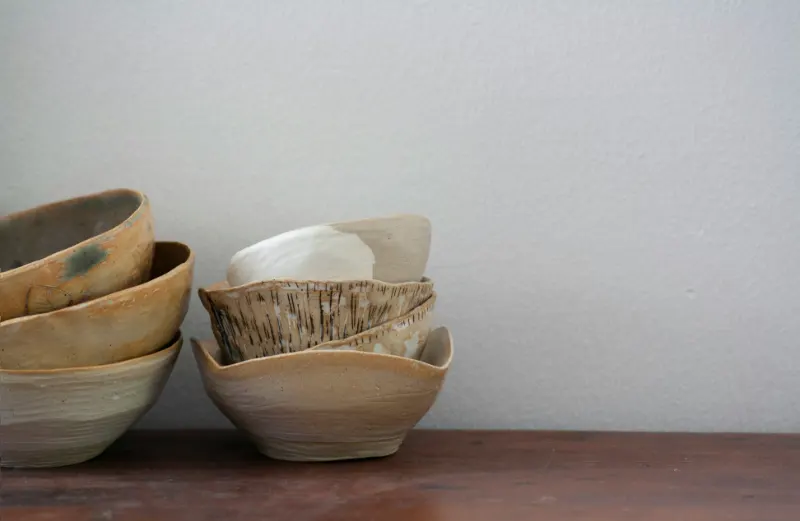
Spatially, that often leads to a kind of “dynamic simplicity.” Enough objects to tell the truth about who lives here, not so many that the story becomes illegible. A dining table with room for plates and elbows. Shelves that display a few beloved books or ceramics and leave patches of quiet space between them. Lighting that layers soft ambient glow with more focused illumination, so the room can move from conversation to solitude without a harsh break. These are not rules so much as invitations to notice where your own sense of ease peaks.
The Middle Way also resists the perfectionist fantasy of a finished home. If all things are changing processes, your rooms are too. Instead of hunting for the final arrangement, you might rotate objects seasonally, edit one drawer at a time, or occasionally sit in a little‑used corner simply to feel what the room is like from there. You are tuning the space as you might tune an instrument, ongoing, listening for the note when it rings clear.
Finally, the Middle Way suggests a gentler posture toward your own attempts at balance. Some days you will overshoot into excess, buying more than you need because beauty seduces you. Other days you will retreat into austerity, stripping away warmth in the name of order. The point is not to land forever in the exact middle, but to notice the drift and correct with curiosity instead of judgment. Your home becomes a living lab for that practice, a set of rooms where the furniture keeps quiet company with your evolving sense of what it means to dwell in the world without clinging too tightly to any fixed idea of yourself.

.webp)