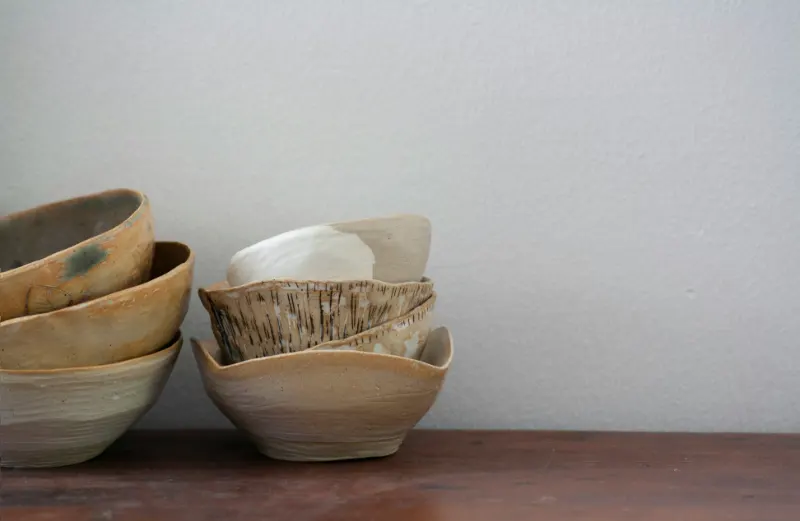
Seeing Walls As Part Of Your Nervous System
Most people think of walls as a backdrop for furniture, something to be painted once and ignored until the next renovation. Your nervous system disagrees. The surfaces around you act like a constant, low-volume soundtrack, sending signals about safety, threat, stimulation and rest. Your eyes scan those planes every few seconds, even when you are not consciously “looking” at them, and your brain translates that visual information into physiological responses.
The nervous system has a bias toward survival. It quietly asks: Is this a place where I can let my guard down, or a place where I should stay alert? Walls answer this question through color, pattern, texture, light and imagery. A bare, echoing white wall in a sparsely furnished room may whisper “clinical” or “unfinished,” nudging your system toward vigilance. A dim, dark wall with no variation might lean too far toward heaviness, edging into lethargy. Between those extremes lives a sweet spot: visual conditions that support both calm and alertness, so you can read, talk, cook or rest without your body feeling like it is either on high alert or falling asleep.
Think of your home as a nervous system prosthetic, an external extension of how you want to feel in different zones. You do not need to become a neuroscientist or a professional decorator to work with this idea. You only need to notice how your body reacts. Does your breathing change when you walk from a cluttered hallway into a simpler bedroom? Do your shoulders drop a little when you sit near a wall washed with soft light rather than harsh overhead glare? Those micro-shifts are your nervous system giving design feedback.
Mindful decorating starts here: paying attention to those internal signals and letting them guide decisions about what goes on your walls. Instead of asking “Is this stylish?” you begin to ask “What state is this wall training my nervous system toward?” Over time, that question leads to surprisingly concrete choices about color temperature, contrast, visual noise and the stories your art is telling you day after day.
Color, Texture And The Volume Knob On Arousal
Your nervous system has two main gears for everyday life. There is sympathetic activation, which helps you focus, respond and move. There is parasympathetic activation, which allows you to rest, digest and repair. Your walls act like a volume knob on these states. Color, texture and contrast either dial arousal up or down.
Bright, saturated hues and strong contrasts signal energy. They can be useful in short bursts, over a desk or in a creative studio. But when they dominate an entire wall, they keep your sympathetic system humming, which feels exciting at first and quietly exhausting over time. Soft, lower-saturation colors, especially in the blue-green range, tend to support parasympathetic activity, lowering heart rate and making it easier to unwind. Warm neutrals can do the same if they avoid veering into dull beige that reads as “stale office” rather than “quiet refuge.” The subtle trick is balance: a calm envelope with just enough accent to keep the mind awake, not jittery.
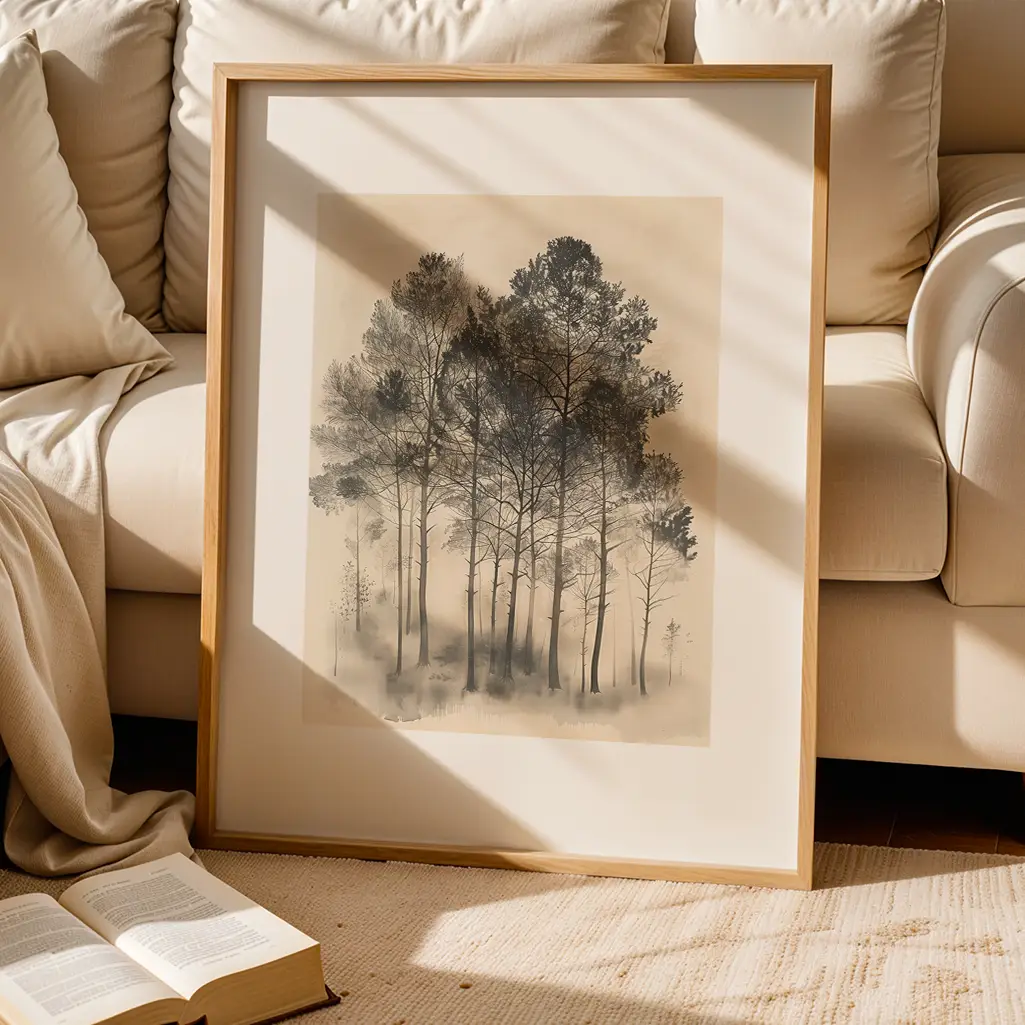
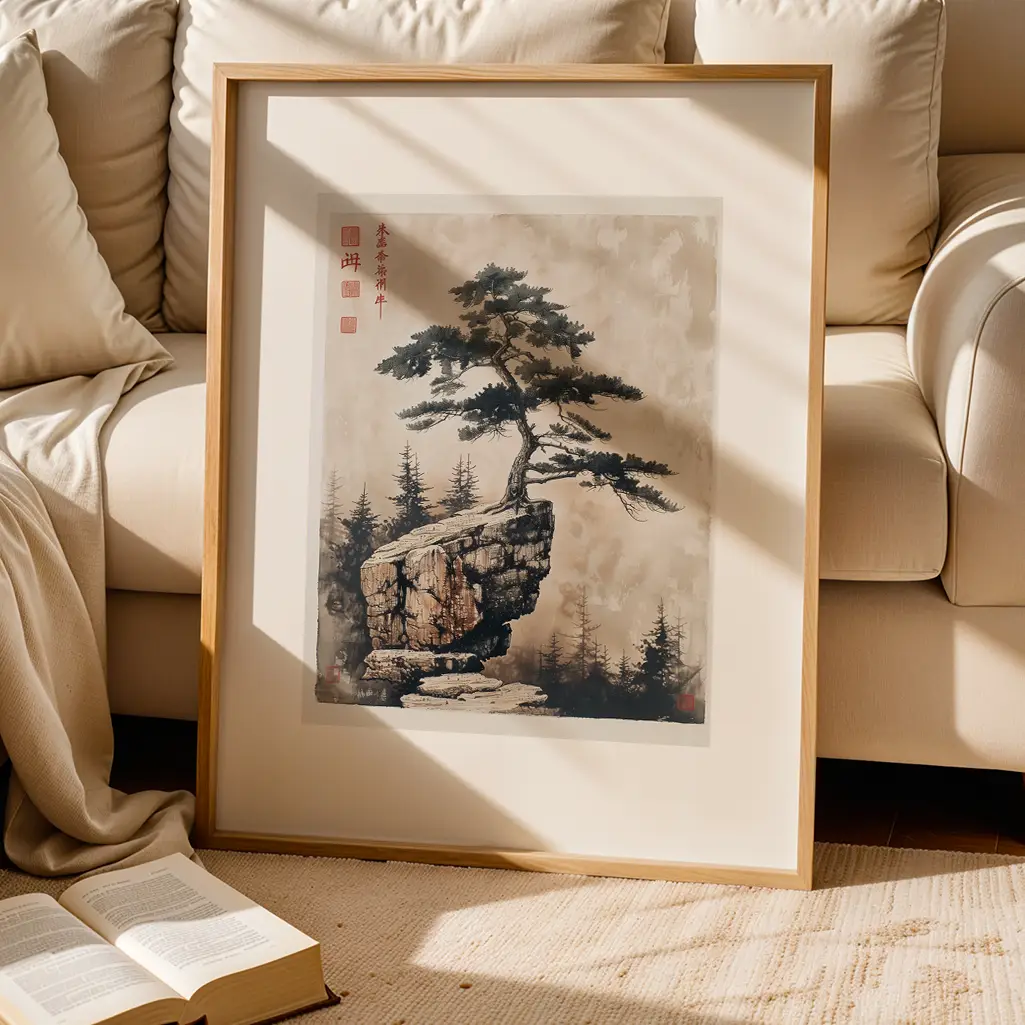
Texture matters just as much. Perfectly flat, machine-smooth walls catch and reflect light in a uniform way, which can feel almost virtual. A touch of visible brushwork, limewash, plaster or woven wall hanging softens that sharpness. Micro-variation in surface gives your eye something to rest on without overwhelming it. The nervous system reads this as naturalistic complexity, closer to what you would see on a stone surface, tree bark or a hillside. Those natural reference points are deeply coded as safe in the body, in part because they are what humans evolved to look at long before drywall existed.
The opposite extreme is visual noise: walls jammed with competing frames, mismatched colors and high-contrast patterns. Each element is a tiny alert that the brain must categorize. “What is this? Do I need to react? Does it belong in this narrative?” One or two striking pieces can sharpen attention beautifully. Twenty can scatter it. If you notice that your eyes keep bouncing around a room, never landing, your wall is probably over-activating your nervous system.
You can experiment in small, reversible ways. Drape a plain textile over a busy bookcase, remove half the art from a wall and live with the edit for a week, or paint just one test patch of color and watch how your body feels passing it each day. The nervous system responds to repeated exposure; give it time to weigh in before you commit.
Imagery, Edges And Designing For States Of Mind
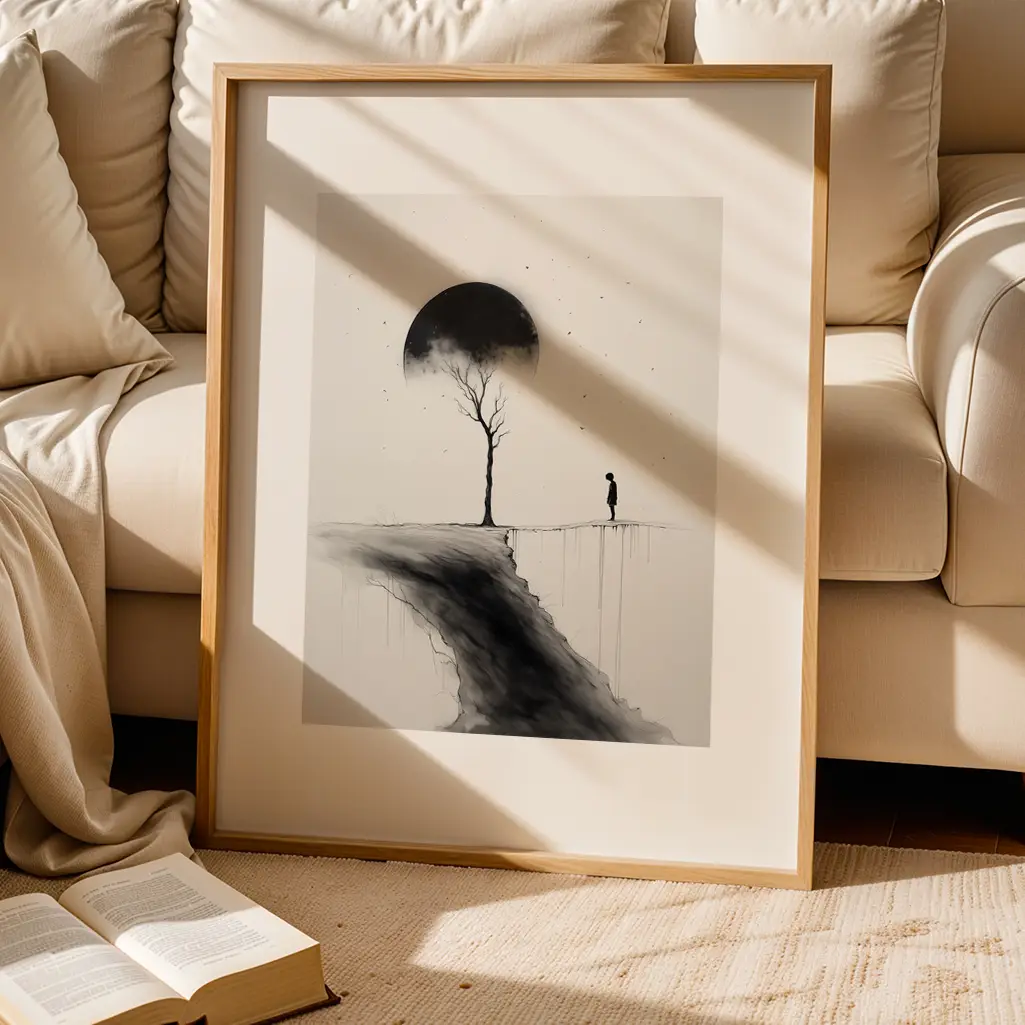
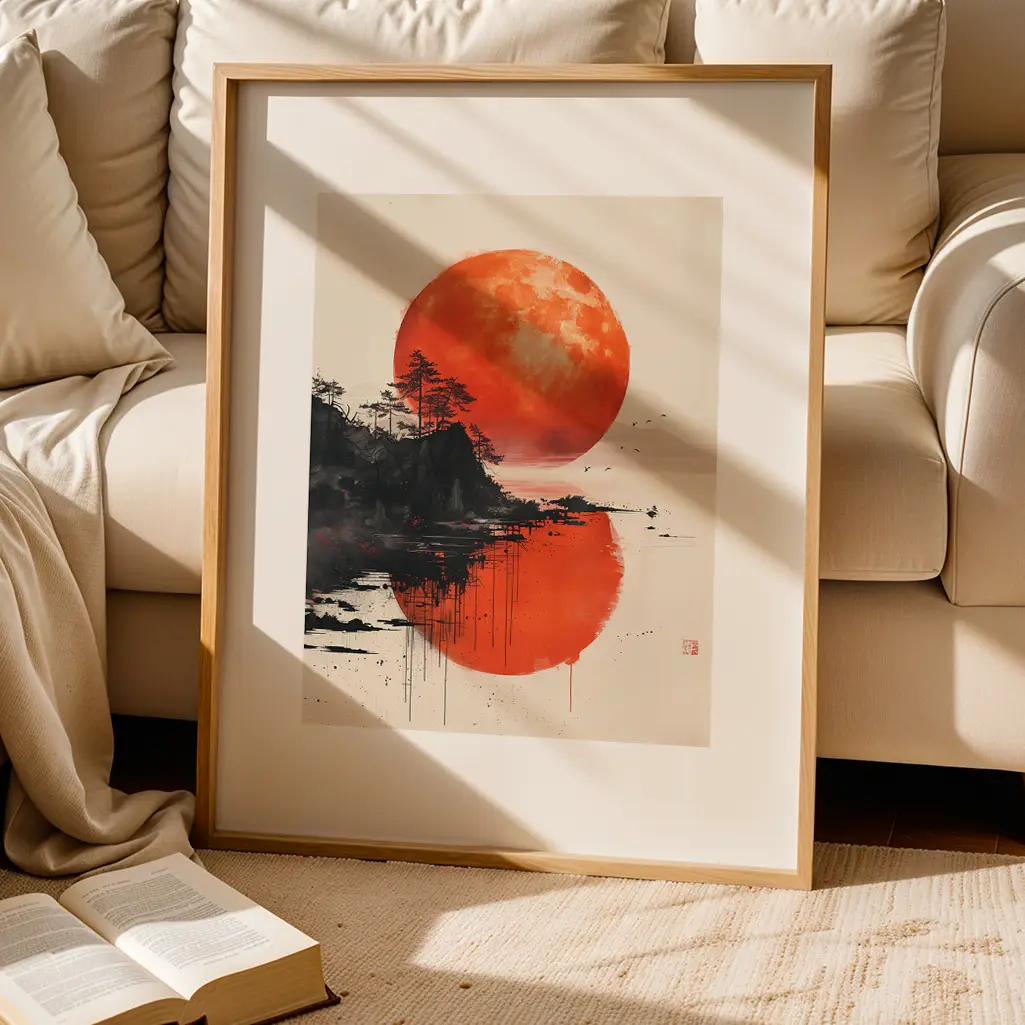
What you hang on your walls is not just decor; it is narrative. Your nervous system reacts to the emotional temperature of imagery even when you walk past it without stopping. A dramatic photograph, a chaotic abstract canvas, a sentimental print from childhood: each carries a mood that seeps into the room.
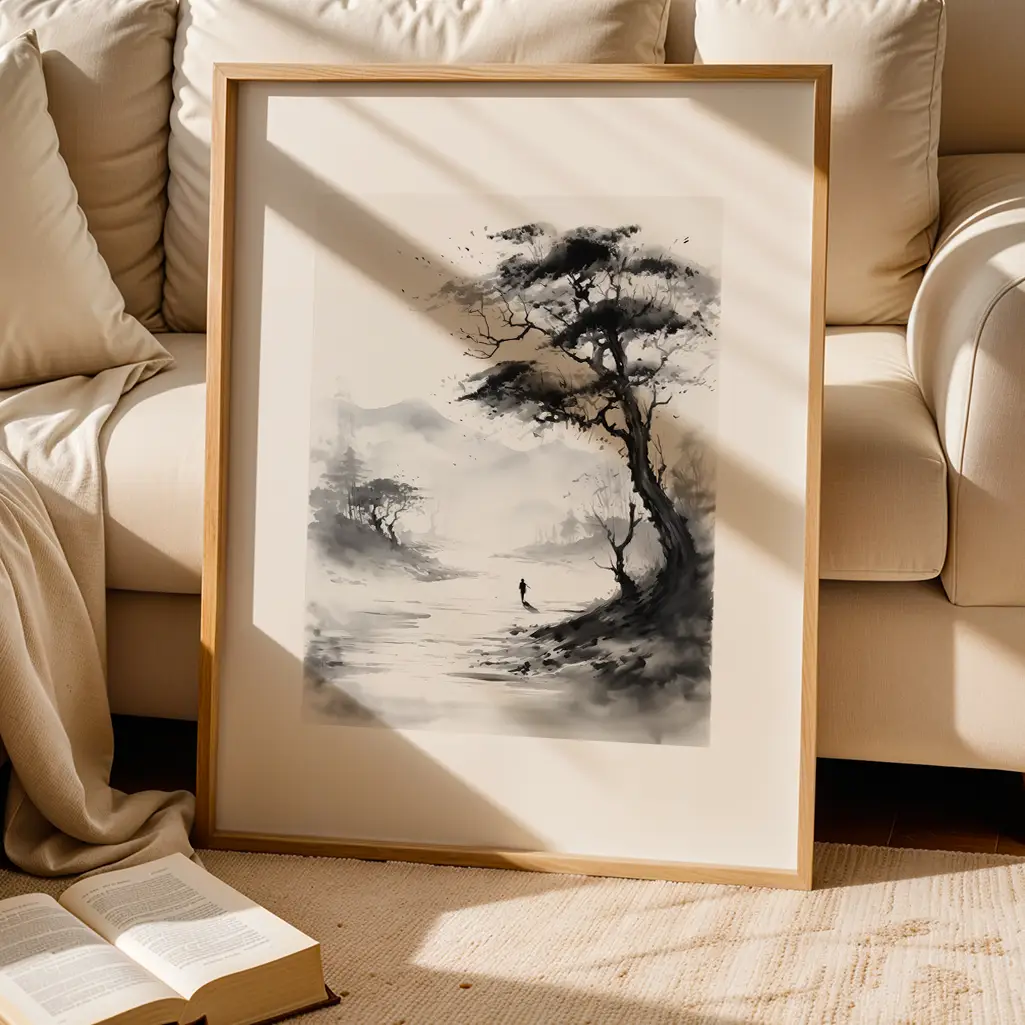
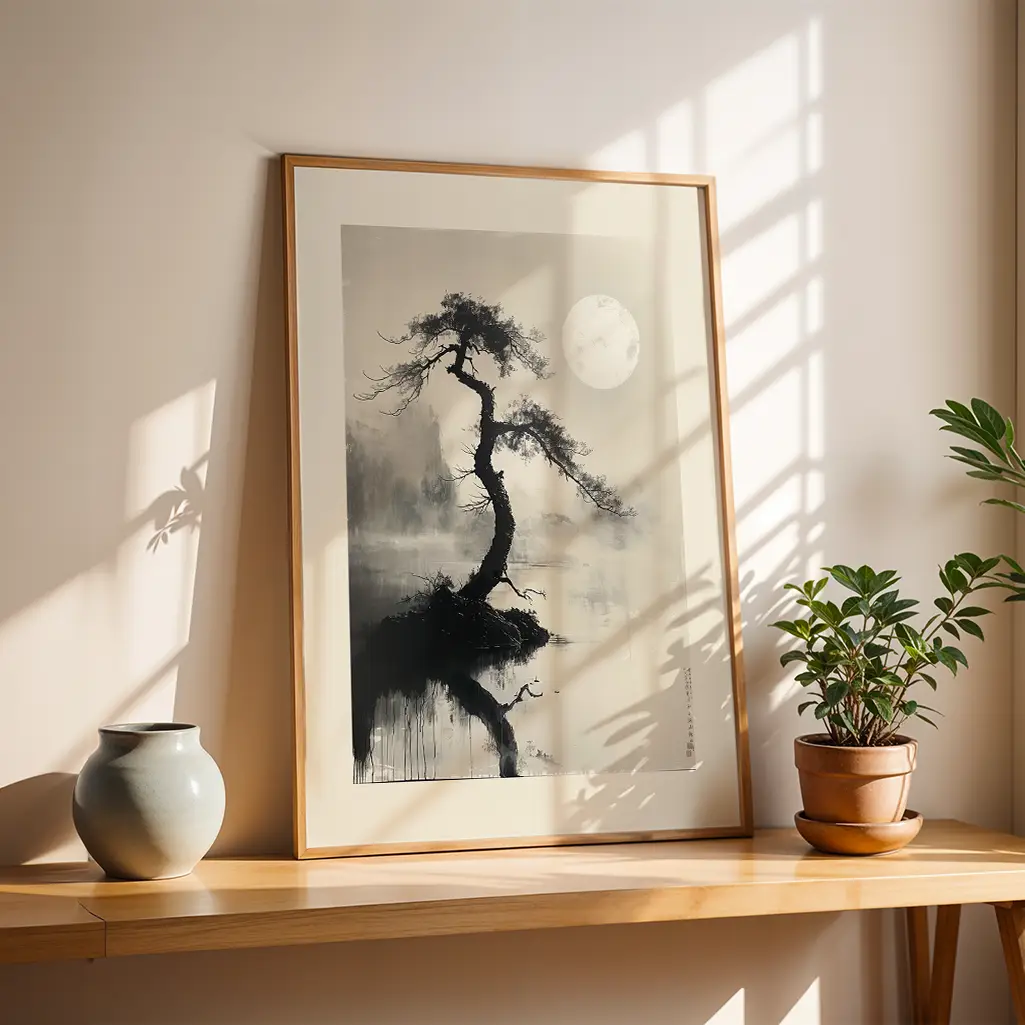
Scenes that imply depth, open landscapes, gentle movement of water or clouds tend to create a sense of expanded space and possibility. They give the eye a path outward, which can relieve the feeling of being boxed in. Highly compressed images with aggressive diagonals or stark fragmentation can be thrilling above a bar cart or in a music room, but might keep your body a notch too “up” in a bedroom where you are trying to downshift.
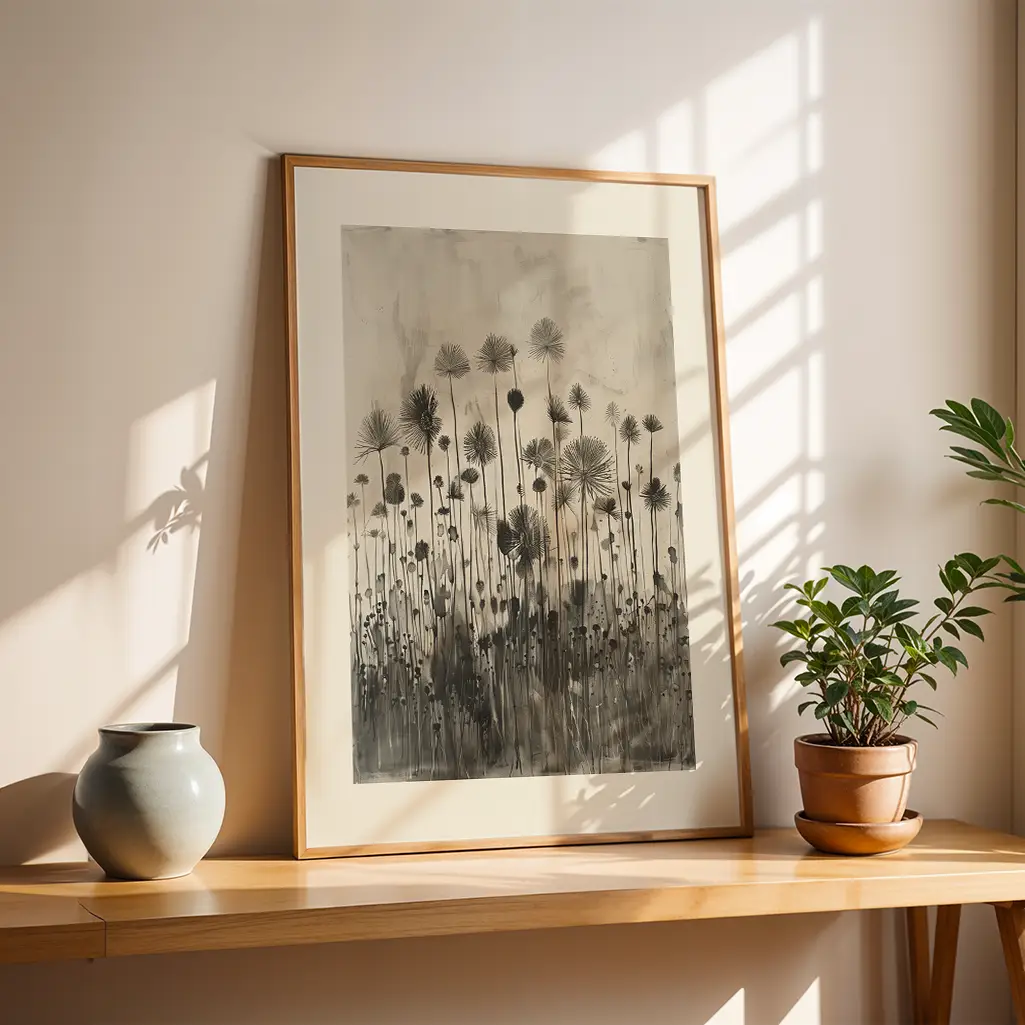
Edges themselves affect the nervous system. Hard, unbroken lines and grids reinforce a sense of order and control, which can be stabilizing in an office or kitchen. But an overabundance of strict geometry can feel rigid. Organic forms, curved shapes and asymmetrical arrangements introduce a softness that quietly communicates “It is safe to exhale here.” When you mix the two thoughtfully, you get an environment that feels both held and free.
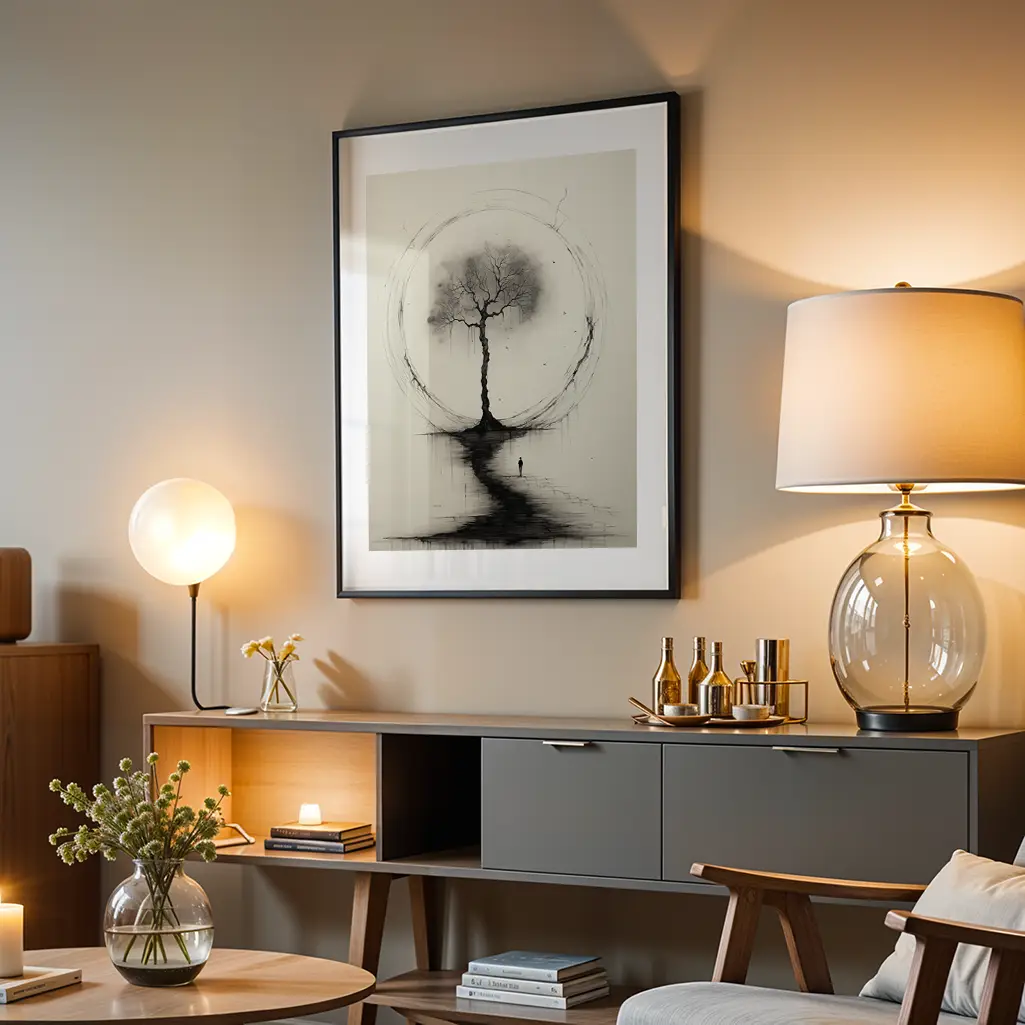
Light is the final collaborator. A wall that glows with indirect, warm light lowers perceived stress more than one blasted by a single overhead fixture. Simple choices help: a lamp aimed at a corner, a picture light washing a textured surface, a sheer curtain that diffuses sunlight into a playable gradient on the wall. Gradual transitions of light across a surface read as natural; sudden, harsh jumps read as artificial and demand more nervous system processing.
Designing a calmer home does not require mastering every theory. It asks for a different kind of attention. Notice which walls make you unconsciously speed up as you walk past and which make you pause. Notice where conversations feel easier, where you read longer, where sleep comes faster. Then, adjust the planes around you in the direction of those experiences. Your walls are already talking to your nervous system. Mindful decorating is simply learning to answer back with intention.

.webp)