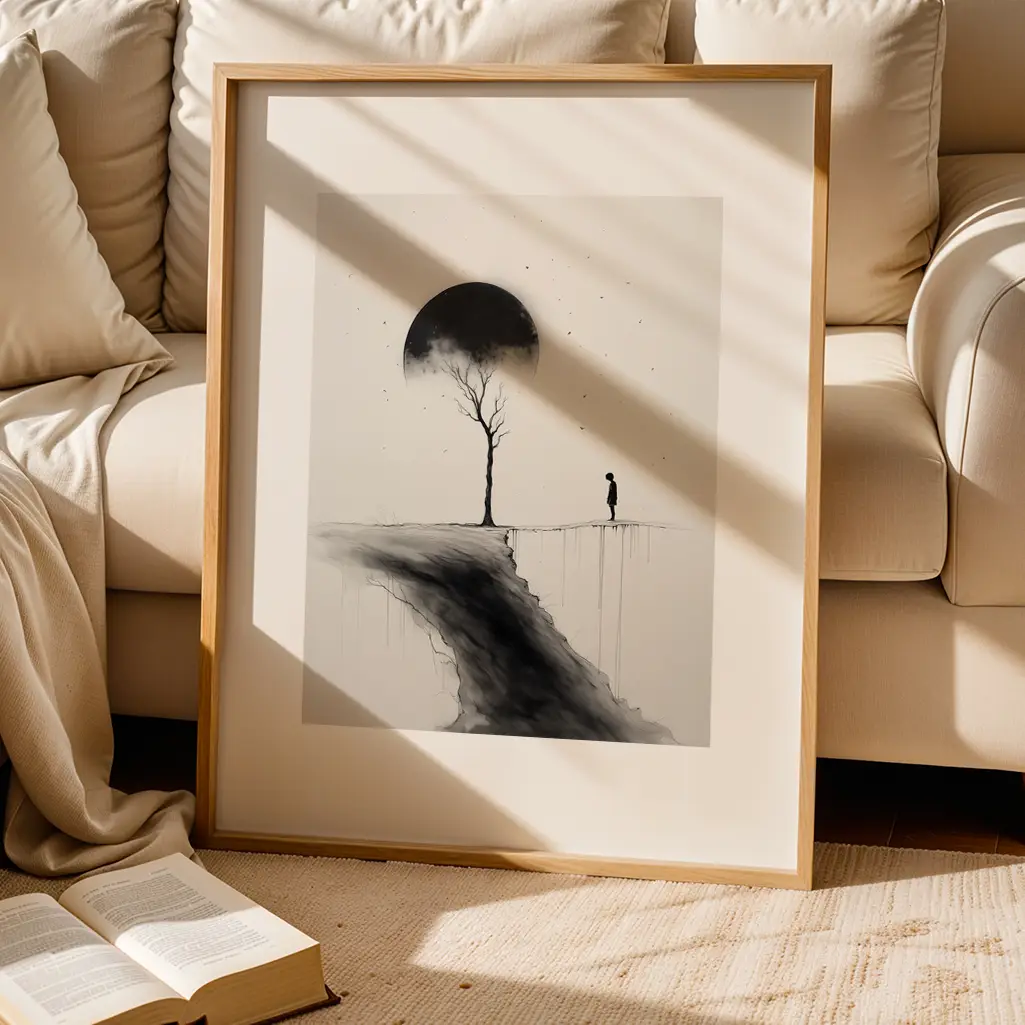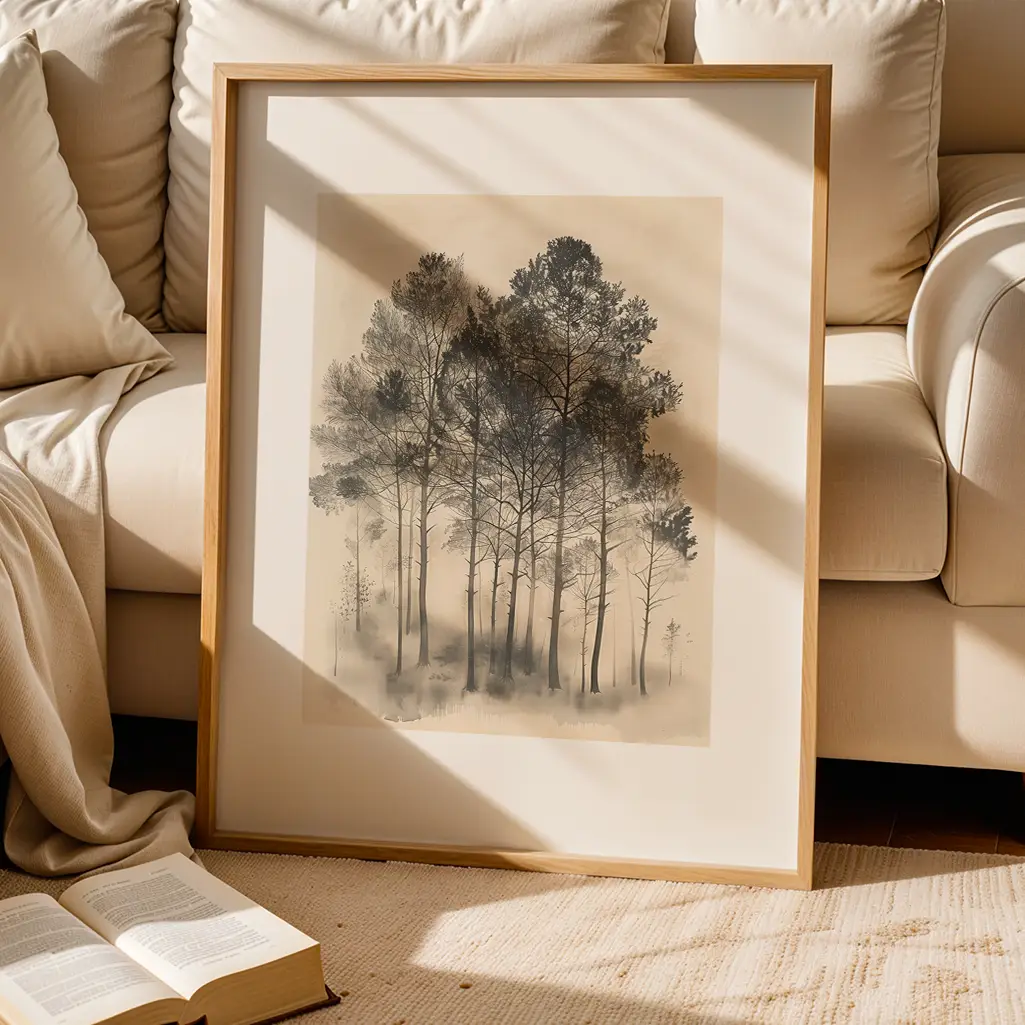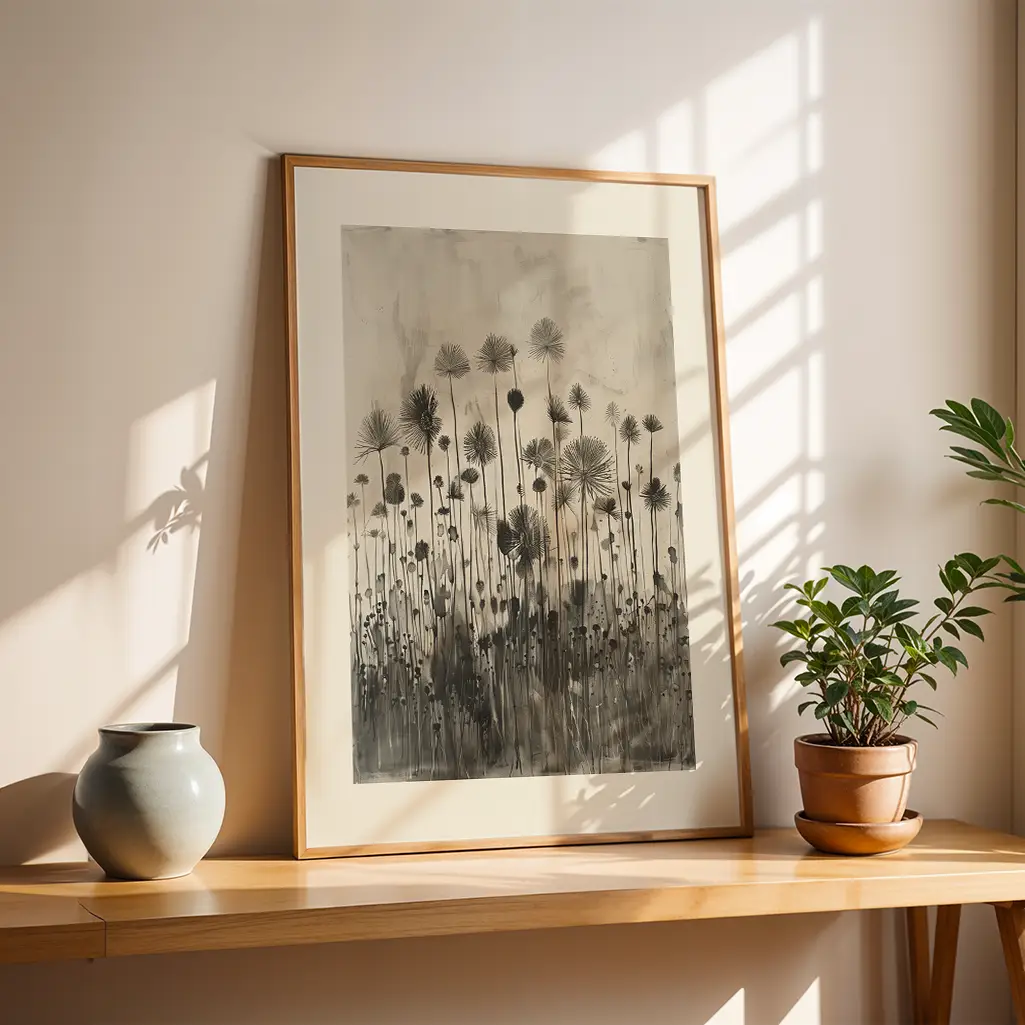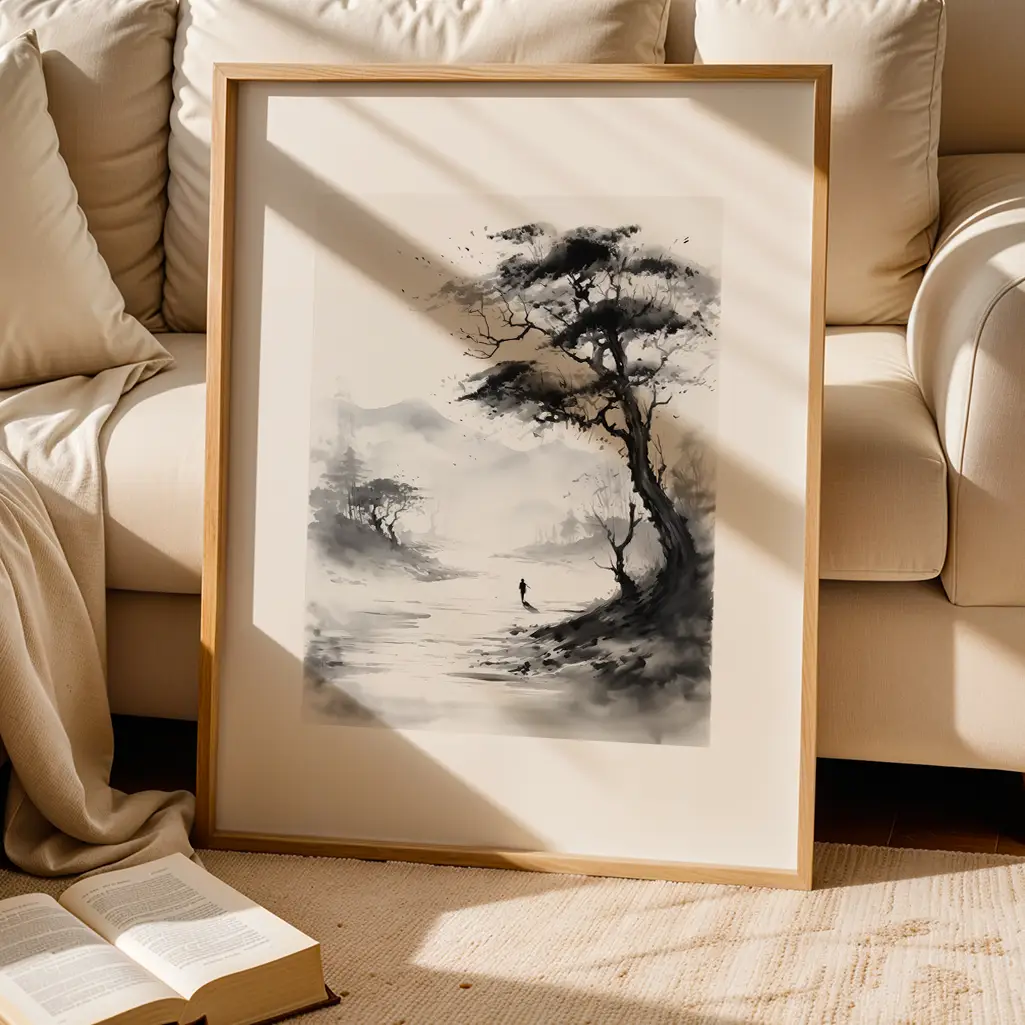
Seeing the Photograph as a Piece of Architecture
Minimalist nature photography is less a picture of a place than a way of arranging quiet. A single birch trunk, a horizon where water meets sky, the close rhythm of leaves in soft light: these images work because they leave out more than they include. When you bring them into a home, you are not just hanging art; you are installing a small, contemplative structure on your wall.The first step is to read the photograph like architecture. Notice its weight. Where does your eye land first, and where does it rest? If a branch curves from left to right, the image carries a directional push; if a rock sits in the lower third, it adds a low, grounding mass. This invisible geometry matters, because your room already has its own architecture: windows, doorways, radiators, sofa backs, the line of a dining table. The task is to let the geometry of the photograph converse with the geometry of the room, not compete with it.
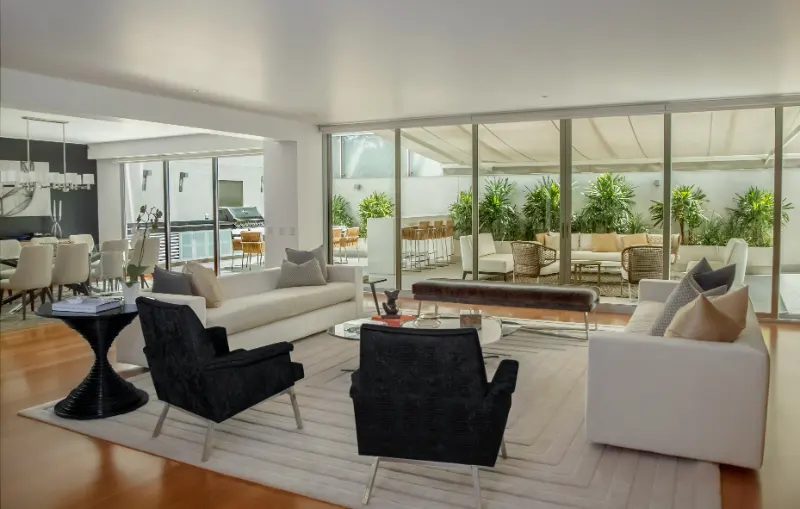
Stand in the doorway and look at the wall you have in mind. Register the dominant line: is it vertical, like tall ceilings and bookcases, or horizontal, like a long sectional or sideboard? Calm arises when you echo, rather than fight, that line. A tall, narrow print of grasses in fog feels natural between two floor‑to‑ceiling windows. A wide image of low dunes and sky settles above a sofa the way the horizon settles above the sea. When in doubt, let horizons parallel the nearest strong horizontal in the room. The eye relaxes when it does not need to resolve conflicting directions.
Scale is equally architectural. Minimalist photography often appears delicate online, but on a wall, small and tentative can quickly turn into “postcard syndrome,” with tiny frames floating timidly in too much air. The more empty space inside the photograph, the more generous you should be with its size in the room. A spare, snow‑covered field reads as an intentional focal point when printed large; the same image at letter size risks feeling like an afterthought. As a simple test, imagine the frame as a window. If it were a real opening to that quiet landscape, what scale would feel proportionate to the wall that holds it?
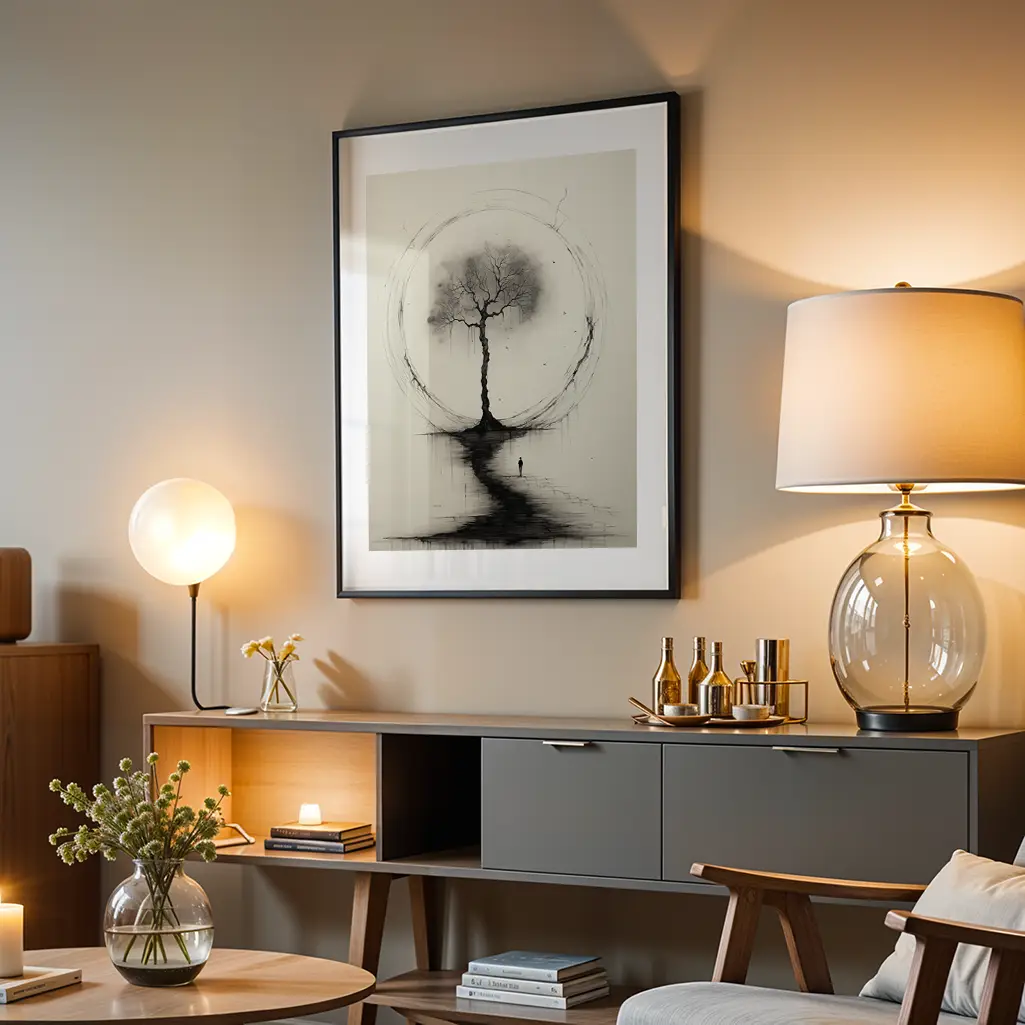
Finally, consider light. Minimalist nature photography tends to rely on nuanced tonal transitions, often in pale skies, fog or subtle greens. Hanging these works where direct sun strikes them for hours each day can wash out those quiet gradations and cause long‑term fading. Diffused light from a side window, or a pool of soft illumination from a wall washer or adjustable picture light, supports the mood without shouting over it. The goal is not drama, but legibility and calm: enough light to read the texture of moss or the grain of sand without turning the image into a stage set.
Color, Frames and the Texture of Calm
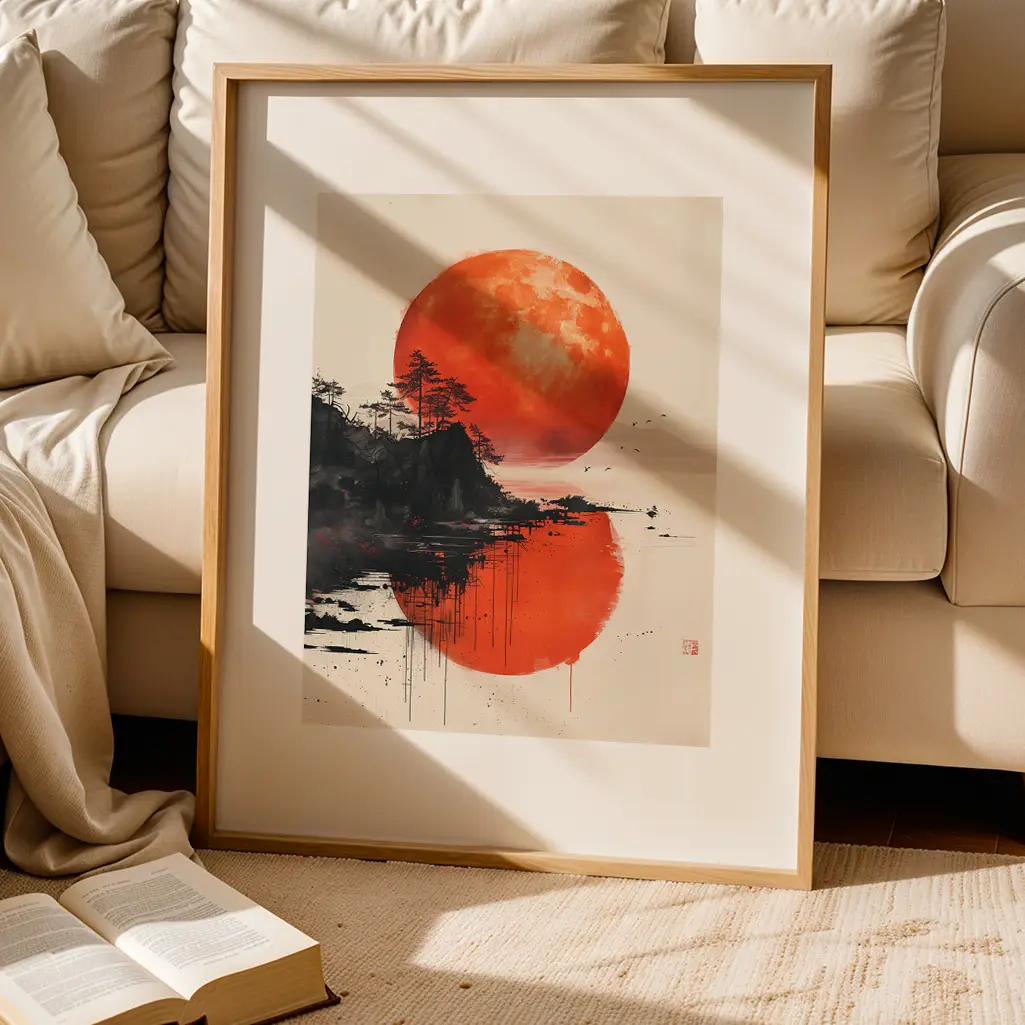
If composition is the skeleton of a photograph, color and framing are its skin and clothing. In minimalist nature imagery, color is often restrained: muted blues, smoke greens, gentle browns, the pale grays of winter branches. Styling these works in a home is a chance to tune the emotional temperature of a room with precision.Begin by looking not only at the dominant color, but at the color of the light within the image. A cool, overcast shoreline carries a blue‑gray cast even if the water itself is not strongly saturated. Place it above a warm, honey‑toned oak console and the contrast can feel pleasantly crisp, like a breeze through a warm space. Conversely, pairing that same cool image with icy white walls and chrome can tip the room toward sterility. Warm minimalist photographs, such as late‑afternoon reeds or sunlit lichen, can soften sharper, more modern interiors, especially when the paper they are printed on has a slight warmth rather than a bright optical white.
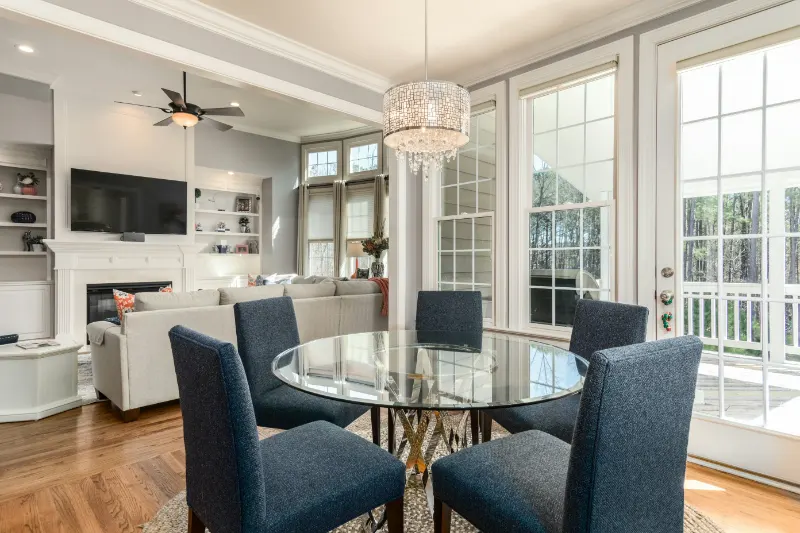
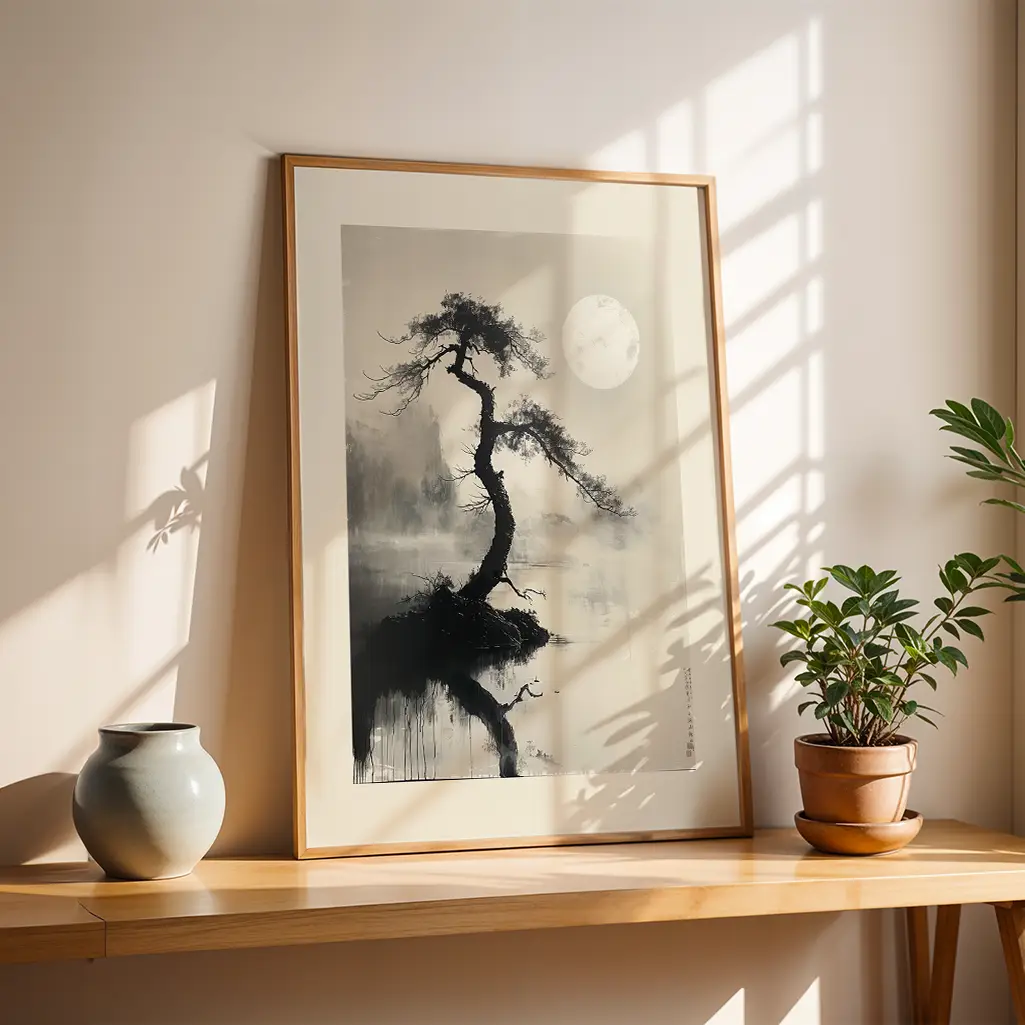
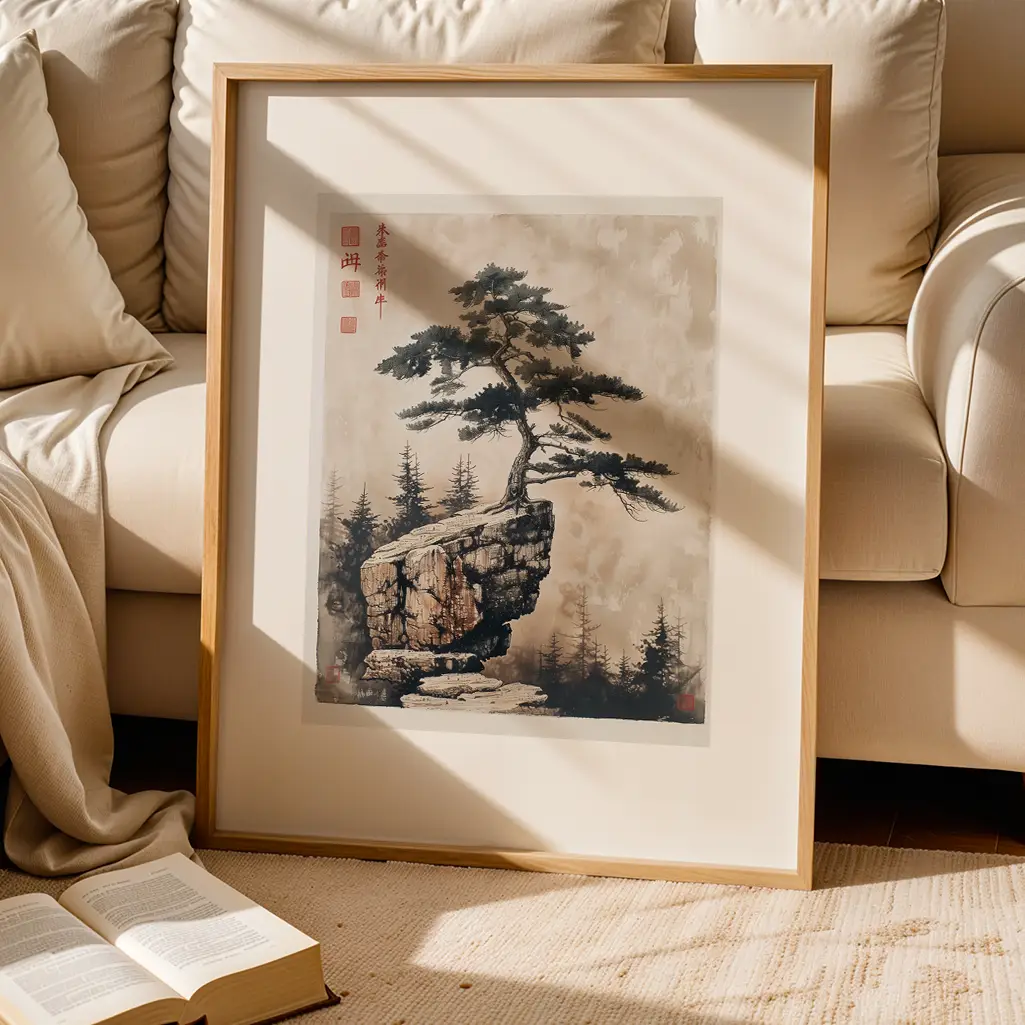
Frames act as a boundary between the internal world of the photograph and the textures of the room. For minimalist nature works, the frame is most convincing when it is almost self‑effacing: thin, well‑made, and quietly aligned with some existing material in the space. A light oak frame can echo floorboards or a wooden dining table, allowing the greens and neutrals inside the image to feel anchored rather than floating. Simple black frames can work beautifully when there are already black elements in the room, such as window mullions or steel legs on a sofa. The idea is not to create a matchy tableau, but to let the frame feel inevitable, as if it has always belonged to both the picture and its surroundings.
Matting introduces another layer of breathing room, which minimalist photographs often appreciate. A wide mat around a small, concentrated subject, like a single leaf or stone, amplifies its quietness. The empty mat space echoes the empty space inside the image, reinforcing the sense of calm. Choose a mat color close to your wall tone if you want the frame to hover lightly, or a slightly deeper neutral if you need a clearer outline. Beware of stark contrast between mat and wall unless you are intentionally after a gallery‑like sharpness; in a home, it can feel more formal than the rest of the room can comfortably support.
Beyond the frame, think about the textures nearby. Minimalist nature photography hums at a low volume. If you surround it with loud surfaces—high‑gloss finishes, busy patterned textiles—it has to struggle to be heard. Consider softening that soundscape. A linen curtain, a wool throw, a nubby jute rug: these materials do not have to match the photograph in color to be in conversation with it. They simply need to resonate with the same slowness. When your hand wants to rest on the arm of a chair the way your eye wants to rest on the horizon in the image, you are close to alignment.
Placement, Breathing Space and Daily Ritual
The last, and often most overlooked, aspect of styling minimalist nature photography is not visual at all; it is temporal. These works change you very slowly. Their power lies in the way they recalibrate your attention over time. To support that, placement should be guided as much by your daily movements as by your floor plan.Ask yourself where you most need a pause. A bedroom wall opposite the bed is different from the wall above the headboard. The first is what you see as you wake, the second is more peripheral, felt rather than studied. A serene image of mist over water can be a gentle first sight of the day when placed in direct view; a more textured, tactile image, like bark or stone, may be better suited to the sideways glance as you fall asleep. In living rooms, placing a single, strong photograph slightly off the main seating cluster—near a reading chair or at the end of a corridor—invites individual encounters rather than turning the work into background for conversation.
Breathing space around the photograph is as important as the image itself. Minimalism inside the frame asks for a touch of minimalism outside it. That does not mean empty rooms; it means a generosity of margin. Leave several inches, even feet, of clean wall between the frame and nearby objects whenever you can. Crowding a quiet photograph with shelves, sconces and tall plants compresses its effect. Let there be a slice of wall where your eye can arrive, meet the image and leave again without tripping.
If you choose to create groups, resist the urge to fill every square of a gallery wall. Minimalist nature images do best either alone or in small, thoughtful constellations. Two or three works that share a visual trait—similar foggy light, repeated verticals of trunks or grasses, a restricted palette—can form a kind of rhythm across a wall. Hang them with consistent spacing and aligned edges, so the group reads as a single, calm sentence rather than a collage of unrelated phrases.
Finally, consider the rituals you might attach to these pieces. A chair angled consciously toward a photograph and a small table with a book or cup of tea are not just styling moves; they are invitations. Over months, you may find that you sit there for a few stolen minutes, watching the same reeds or stones you have seen a hundred times. The photograph has become not a decoration but a companion, a fragment of the outside world that teaches the inside of your home—and your own attention—how to be quietly present.