What Minimalist Wall Art Really Is
Minimalist wall art is less a decorating trend than a disciplined way of seeing. It begins with the question, "What can I remove so that what remains feels truer, calmer, more alive?" Rather than filling a wall with images and ornate frames, minimalist art pares things down to simple forms, limited colors and generous breathing room.
Historically, minimalist art emerged in the 1960s as a deliberate rejection of drama and excess. Artists began using plain shapes, repetition and industrial materials to strip away narrative and emotion. On a living room wall, that legacy appears as a single color field, a quiet line drawing, or a gentle gradient that shifts almost imperceptibly from one tone to another. The work does not shout for attention; it waits to be noticed.
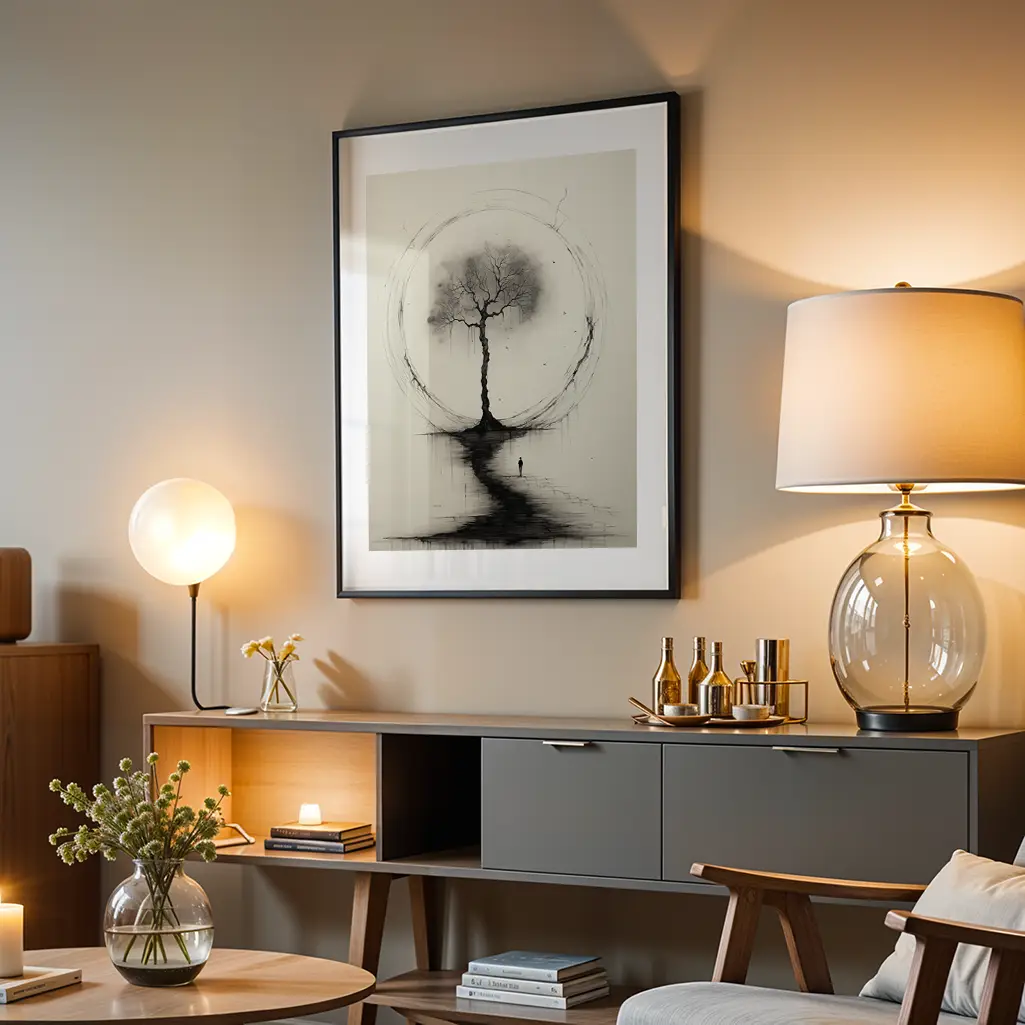
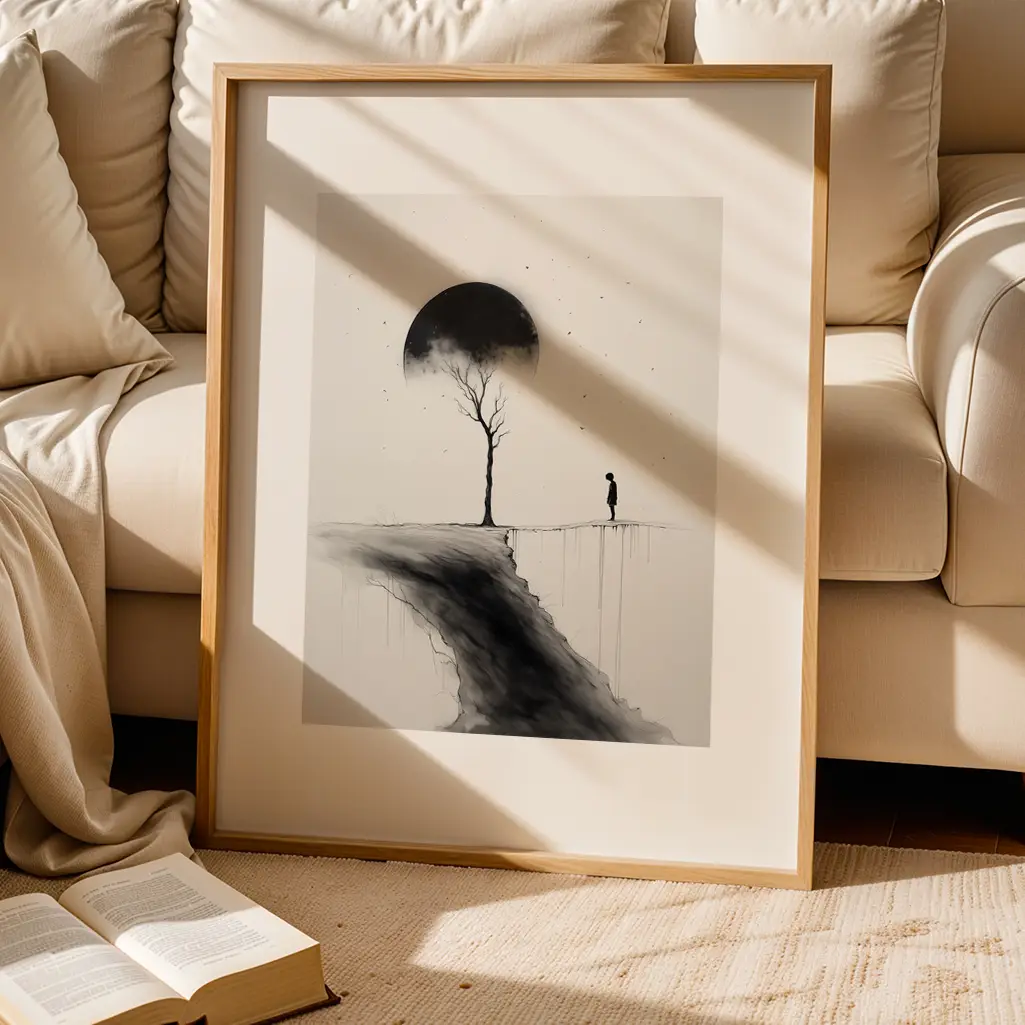
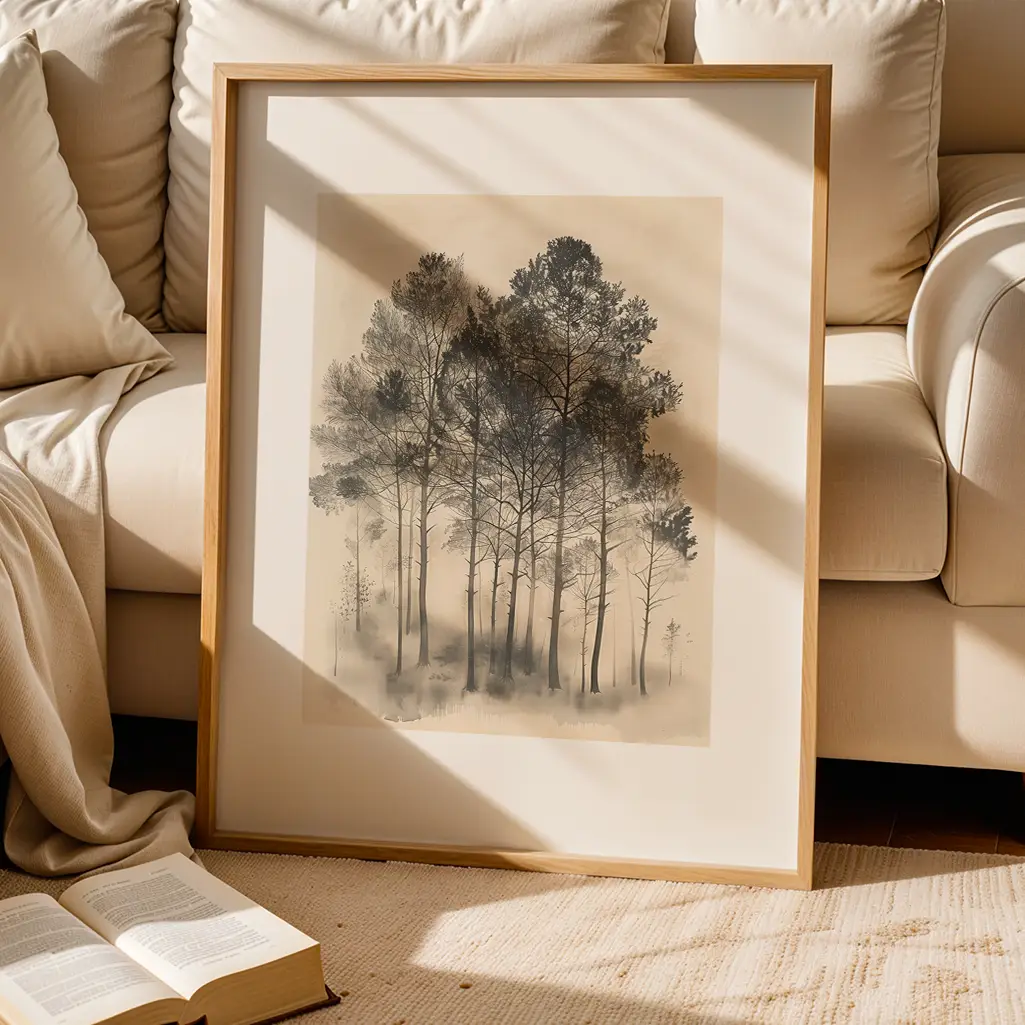
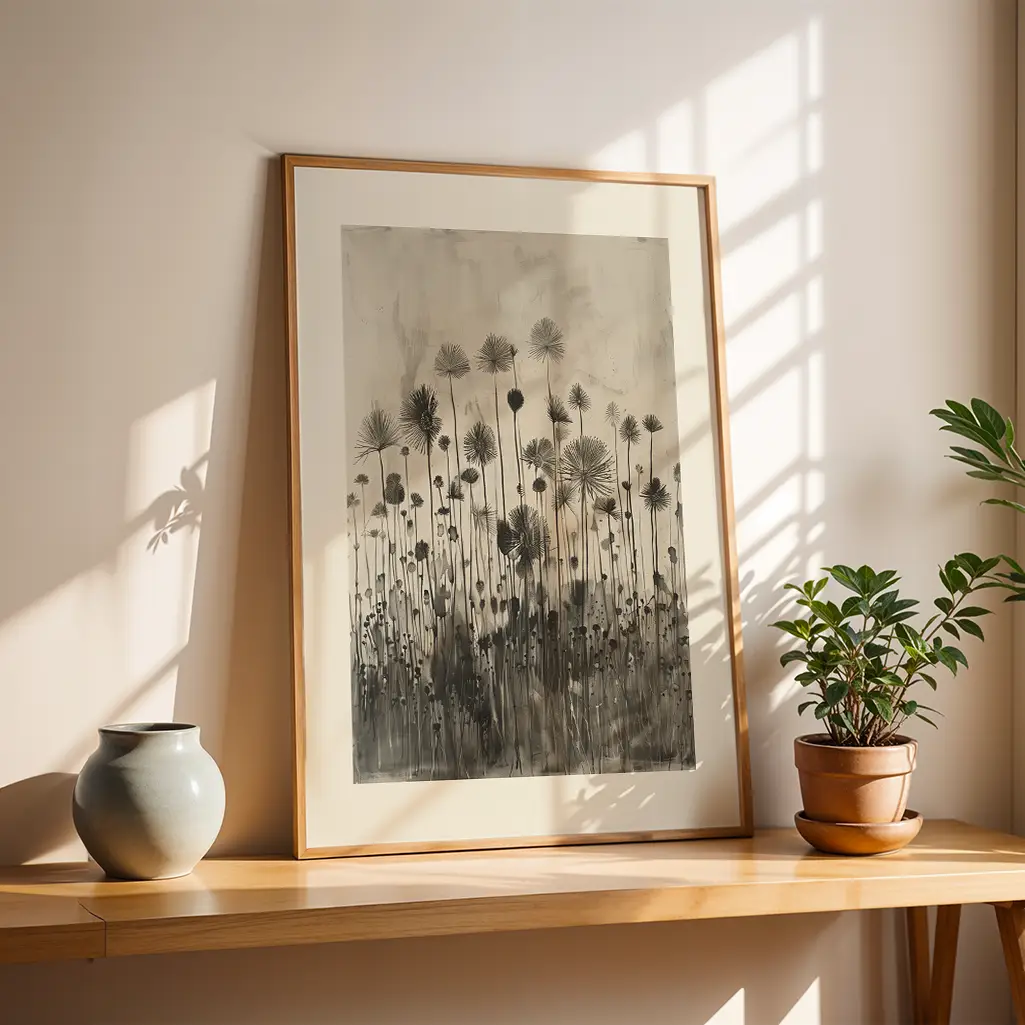
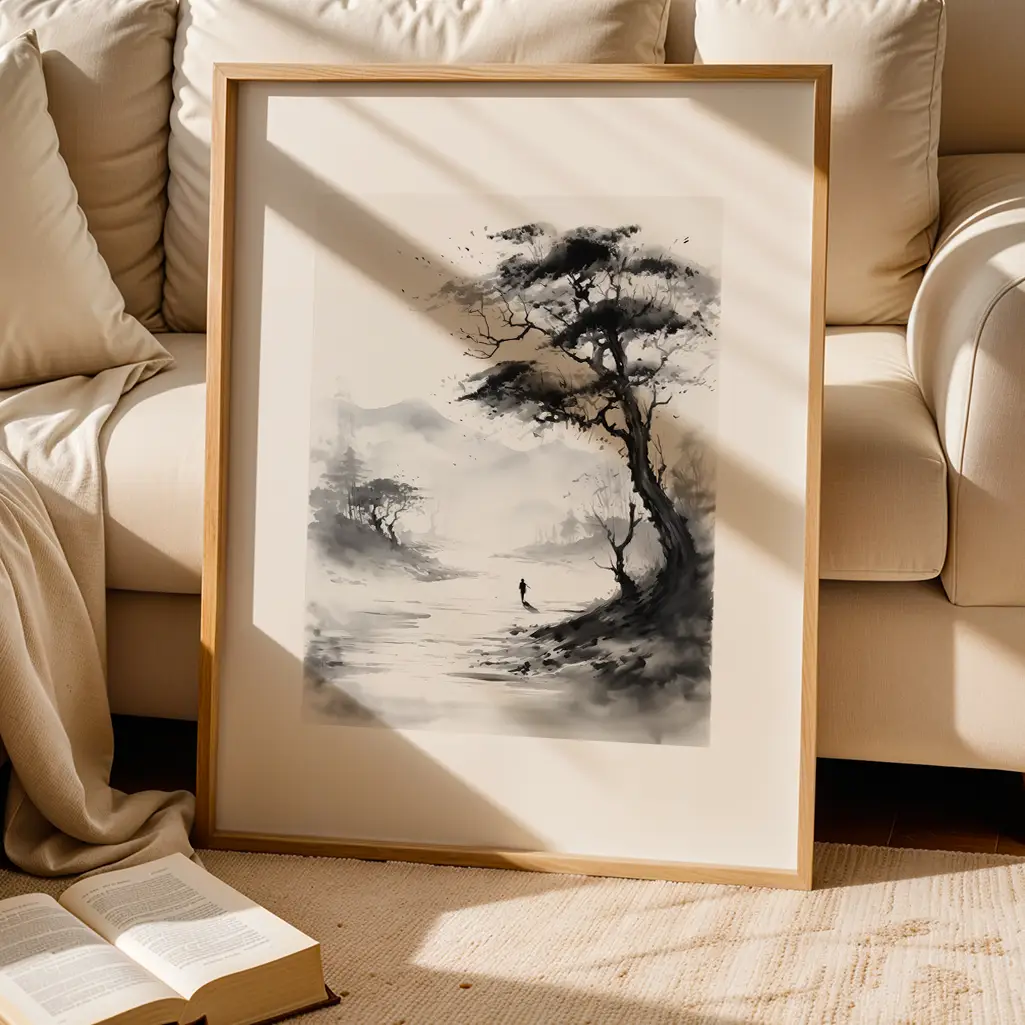
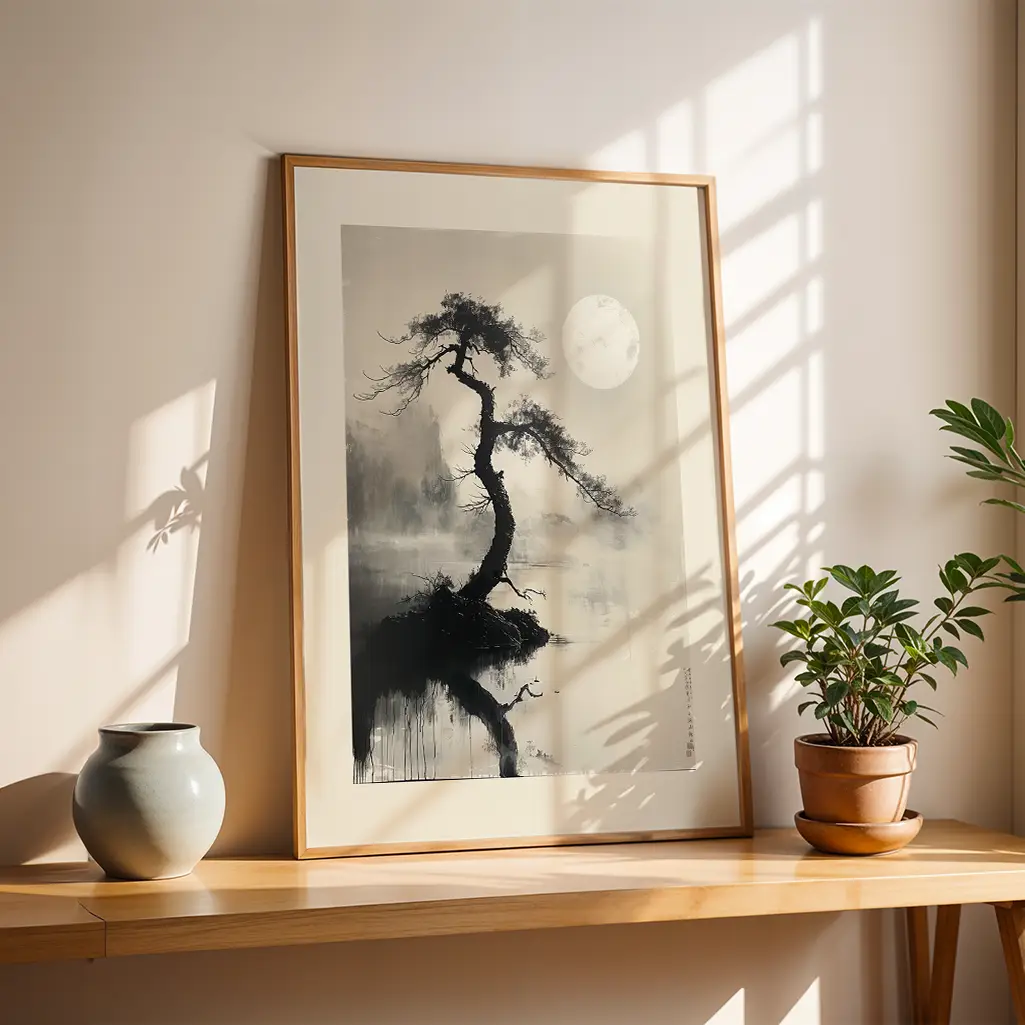
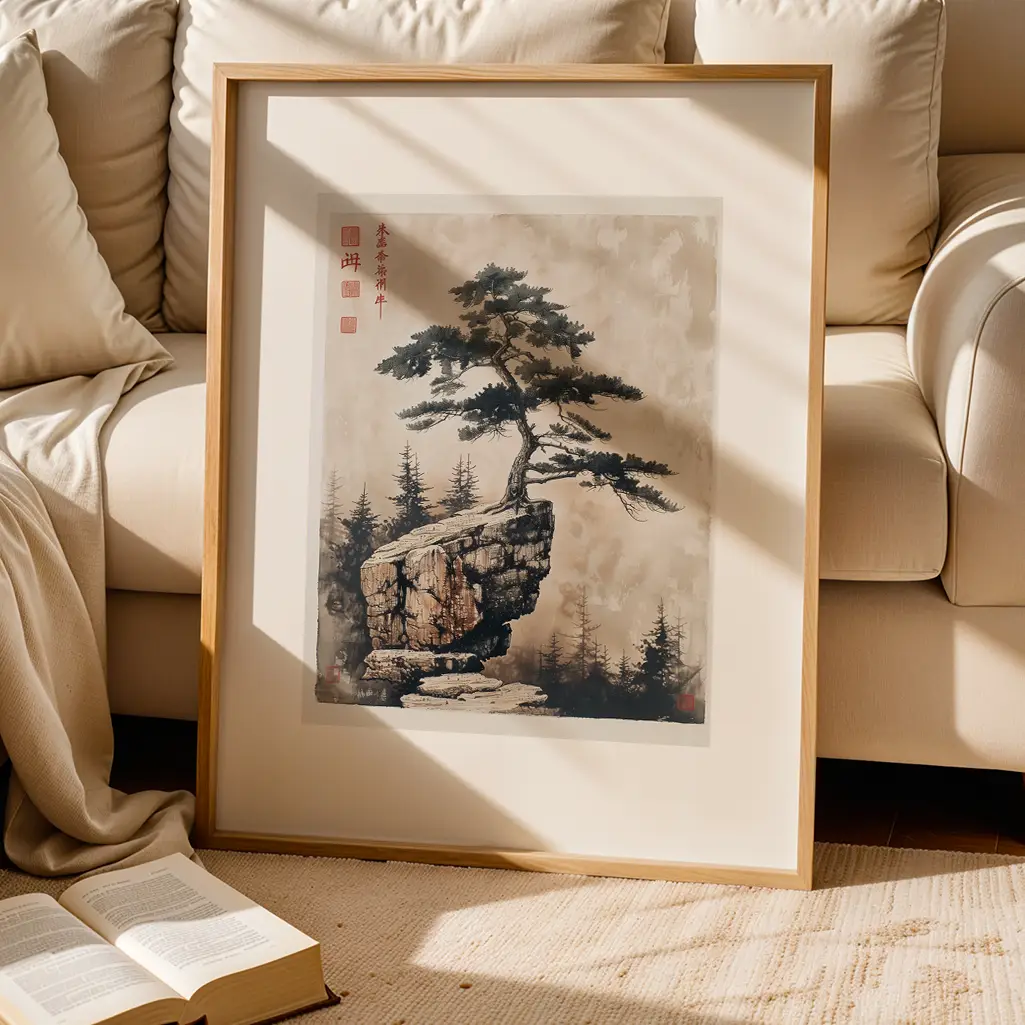
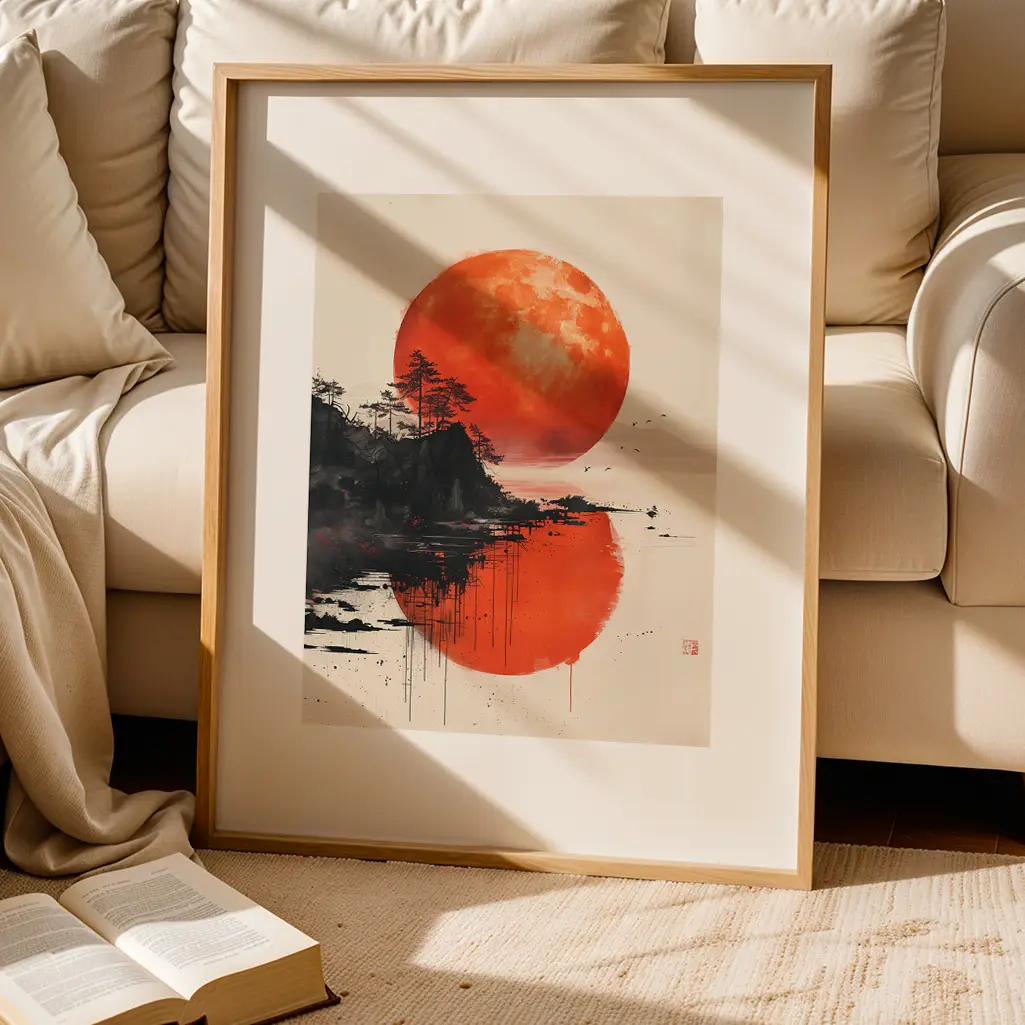
In a home, this restraint may look like a lone photograph in black and white, a canvas of charcoal lines wandering across warm off white, or a monochrome print framed in thin, unadorned wood. The power is in what is not there: no heavy ornament, no splashes of unrelated colors, no busy collage of memories competing for attention. The visual language is reduced, but the emotional impact is often amplified.
Minimalist wall art leans hard on negative space, the "empty" areas around and within shapes. That emptiness is not absence; it is a deliberate pause. It lets your eye glide, rest and return. In a cluttered visual field, your mind works overtime to process information. With minimalist art, there is less to decode and more to feel. The absence becomes a kind of quiet architecture for the image and, by extension, for the room itself.
Color plays a specific role here. Limited palettes, often neutrals with a few carefully chosen accents, help knit a room together. A single piece in soft sand, gray and black can echo the tones of a sofa, rug and wood floor without exactly matching them. This coherence is what makes minimalist art feel considered rather than sparse. It is not that nothing is happening, but that everything happening is intentional.
Texture also matters, especially when the design is simple. A nearly blank canvas with a subtle plaster relief or linen surface can add richness without noise. Up close, you notice tiny ridges of paint, the irregular weave of fabric, the slight shadow at the edge of a floating frame. These small details invite a slower kind of looking, the opposite of scrolling past an image on a screen. In this way, minimalist wall art is less about decorating a wall and more about changing how you inhabit the space right in front of it.
Why Minimalist Wall Art Works in Real Rooms
Minimalist wall art works because homes are not galleries. They are places where you cook, worry, rest and wake up too early on weekdays. Once a room is full of furniture, books, devices and the inevitable drift of daily life, your walls gain a new job. Instead of serving as an additional source of stimulation, they can become a counterweight, a visual exhale.
Psychologically, our nervous systems respond to uncluttered visual fields with a measurable drop in stress. When the eyes have clear focal points and open spaces, the brain does not have to triage competing messages. Minimalist wall art quietly organizes what you see. One anchoring piece above a sofa or bed gives your gaze a landing spot, which in turn makes the surrounding disorder, the mug on the table or the jacket on the chair, feel less overwhelming.
There is also a spatial trick at work. When you leave generous negative space around a single piece, the wall appears larger and the room lighter. A small abstract print, centered high on a narrow entry wall with nothing crowding it, can make the corridor feel taller. In a tiny studio, a calm monochrome diptych above the bed can suggest a kind of headboard of light, widening the sense of the room without adding bulk.
The discipline of minimalism can also sharpen your attention to what matters emotionally. With fewer images on the wall, each one carries more weight. A simple line drawing gifted by a friend, framed with care and given room to breathe, becomes an intimate landmark in the room. Instead of a crowded gallery of half remembered vacations, you have a handful of deliberately chosen presences, each one easier to see and remember.
Minimalist wall art also cooperates well with the rest of your home. Because it tends to use subdued palettes and simple forms, it rarely clashes with upholstered furniture, patterned rugs or personal objects. A single geometric print in soft tones can sit happily above a vintage cabinet full of colorful ceramics, allowing those objects to shine rather than competing with them. The art becomes a quiet horizon line against which the more idiosyncratic items in your life can stand out.
Finally, living with minimalist art subtly trains your own sense of editing. You may find, over time, that you begin removing small things from a shelf, rearranging books, or limiting the number of colors in your bedding so that the room feels as calm as the wall above it. In this way, minimalist wall art is not only decoration; it is a guide. It shows you, each day, how little you actually need for a space to feel complete, and how much beauty can be found in the spaces you choose to leave untouched.