The quiet center behind a viral diagram
Ikigai has had a strange journey from Japanese daily speech to Western self-help slogan. Online, it often shows up as a four-circle diagram: what you love, what you’re good at, what the world needs, and what you can be paid for. The overlap is labeled "ikigai" and presented as the master key to a meaningful career.In Japan, that diagram would look vaguely familiar in spirit but not in form. "Ikigai" is a much softer word. It combines "iki" (to live) and "gai" (worth, value), but native speakers rarely use it in grand, philosophical ways. Instead, they talk about an "ikigai" almost the way you might talk about a reason to get out of bed, a small delight that keeps you company in ordinary time. A neighbor might say that her potted roses are her "ikigai"; a grandfather might point to his morning walks and convenience-store coffee.
The mistake of the popular diagram is not that it is completely wrong, but that it grows too large. Purpose is certainly part of what "ikigai" can name, but the original nuance is less about optimizing your existence and more about noticing how life feels worth living at all. It points to an intimate, idiosyncratic pattern of satisfactions: work, yes, but also ritual, surroundings, relationships, weather, the particular slant of light on your kitchen table at 9:15 a.m.
When you think of it only as a career mandate, it becomes another demand, another productivity metric. When you return to its quieter roots, it becomes something else: a lens for arranging your days and, by extension, your home, so that small, almost invisible motives for living are not crowded out.
The question "What is your ikigai?" then is not code for "What is your single, perfect vocation?" It is closer to asking: "Where do you feel a subtle yes to being here?" and "What conditions help that yes return tomorrow?" Those conditions are often architectural and tactile as much as psychological, which is why your space matters.
Ikigai as pattern, not prize
A useful way to understand ikigai is as a pattern that emerges over time, not a treasure you discover once and for all. In interviews with older Japanese adults, researchers found that people rarely named a single, dramatic purpose. They described a mesh of modest reasons: caring for grandchildren, tending a vegetable patch, meeting friends for mahjong, keeping a family recipe alive. Any one of these might fade; meaning came from the continuity of the pattern.In this sense, "ikigai" is closer to a verb than a noun. It is something you enact by repeatedly returning to activities, relationships and environments that leave you just a bit more interested in tomorrow. You might experience it as a quiet charge: a slight lift in the chest as you put on the kettle, lay out your tools, open the curtains.
Our homes can either support this or erode it. Consider a dining table buried under mail and laundry. In theory it is a place for gathering, talking, shared meals. In practice, it may serve mostly as a storage surface, quietly canceling dozens of small chances for delight. When you finally clear it and place even a simple bowl of fruit in the center, you may not have achieved your "life purpose", but you have made room for small ikigai moments: an unhurried breakfast, a spontaneous sketching session, an evening of cards.
The same is true for a windowsill that could host three plants, or for a corner that might hold a chair facing a view you forgot you had. Ikigai does not insist that every inch be productive. It suggests that some inches be hospitable, ready to receive activities that matter to you in ways that are not easily defended on a resume. If you love hand-writing letters but never do, look for where that practice might naturally live in your rooms: a shallow drawer with paper and stamps, a pen that feels right in your hand, a lamp that makes evening writing gentle on the eyes.
Seen this way, the popular circles—what you love, what you are good at, what serves others—are less a single bull’s-eye than a loose constellation. You will likely host several, even contradictory, forms of ikigai over a lifetime. Your home can be thought of as the stage set that allows these forms to appear and disappear without having to redesign your life from scratch each time.
Designing rooms that hold what matters
If ikigai is a pattern of reasons to live, then interior design becomes less about impressing guests and more about quietly supporting what you actually do when no one is watching. This does not require new furniture as much as new attention.Begin by tracing your day through your home. Where do you feel slightly more alive, and where do you feel dulled? You might notice that a sunny patch on the floor near the window is where you always end up scrolling on your phone, even though you imagine it as the perfect reading spot. This friction is a clue. Perhaps the reading chair is turned away from the light, or the books you care about are on a high shelf behind glass. Small adjustments—angling the chair toward the window, keeping a single book on a side table—can turn a vague aspiration into an actual behavior.
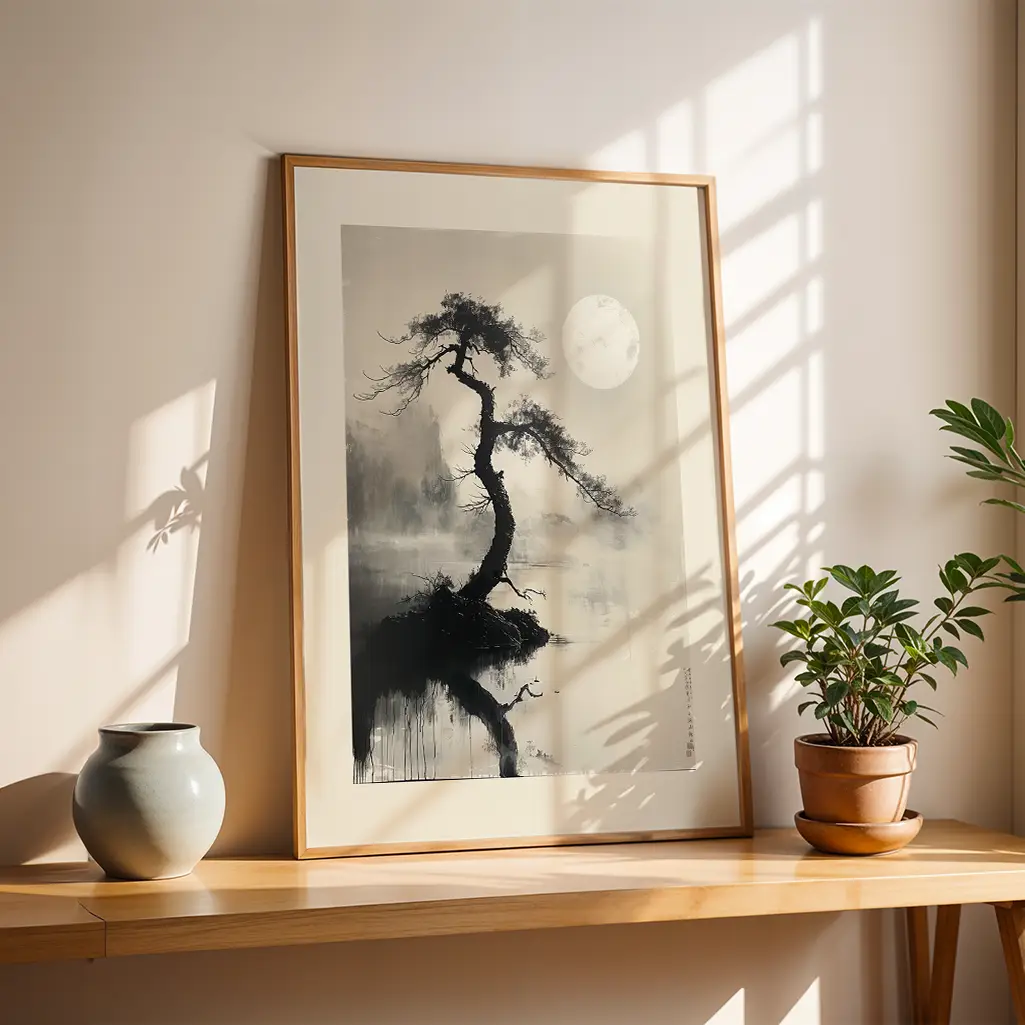
Japanese aesthetics offer one more hint: they are comfortable with incompletion. In a tea room, an alcove might display just one seasonal branch in a vase; the emptiness around it is not a lack but an invitation. In your home, leaving a clear, modest surface can function the same way. A cleared desk with a notebook placed just so is a standing offer to write. A kitchen counter with a single cutting board and knife within easy reach is an invitation to cook one simple meal instead of ordering out again.
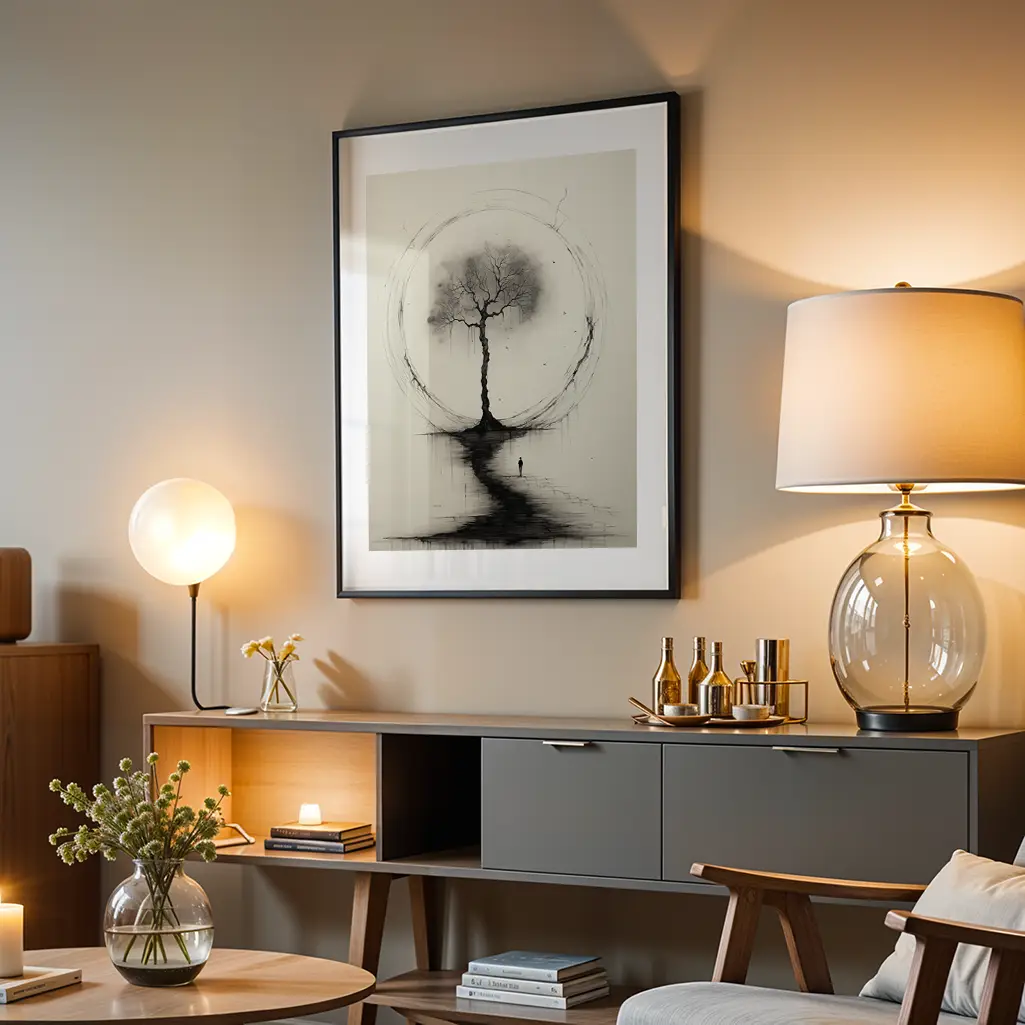
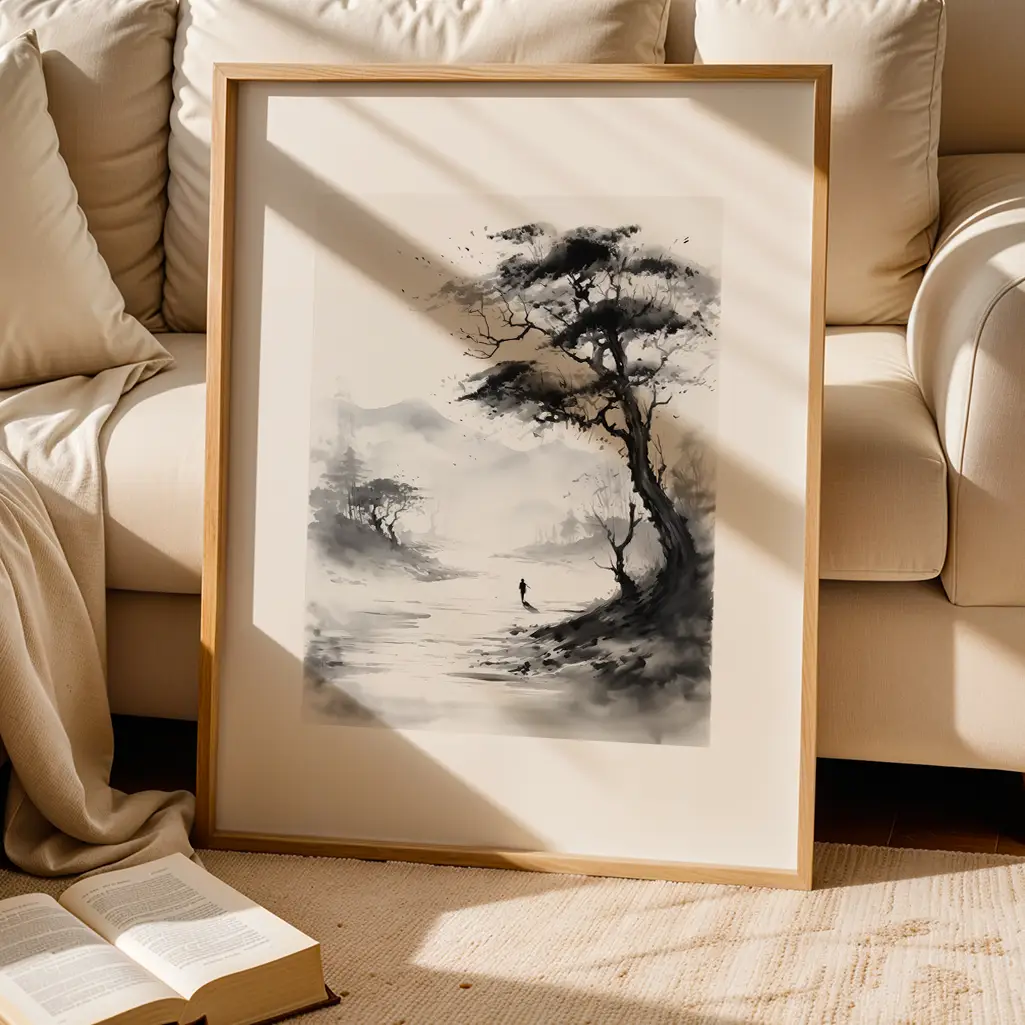
Light, sound and texture all influence how ikigai can show up. Harsh overhead lighting may be efficient, but a small table lamp near your favorite chair can create a pocket of calm where slow activities feel natural. A wool throw within arm’s reach might be the difference between collapsing on the sofa in a daze and settling in with attention. Even the way you handle noise—closing a door for an hour, placing a small rug to soften echo—can carve out time that feels different in quality, not just in length.
None of this is about creating a shrine to productivity. It is about aligning your space with the often unspoken reasons you are glad to be alive. The morning mug that fits your hand just right, always stored in the same reachable place. The low shelf where sketchbooks live, signaling that drawing is not a guilty pleasure but part of your ordinary week. The hook near the door that makes daily walks frictionless rather than aspirational.
Ikigai, in the end, is less a mystical secret than a patient arrangement of such details. It asks you to notice what, in the specific texture of your life, quietly says "Stay." Then it invites you to rearrange your rooms so those small reasons are easier to touch, again and again, as the days go by.
.webp)