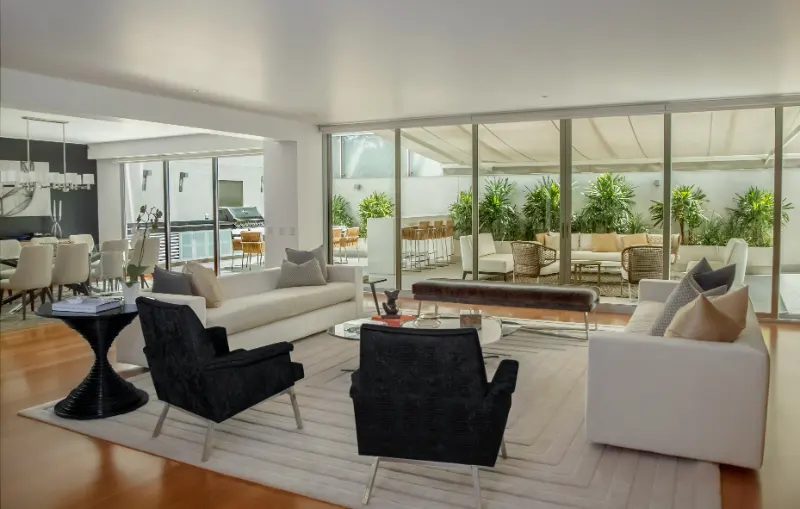
The Case for Slowing Down in a Fast Family Life
Slow living with kids sounds like an oxymoron, like trying to meditate in the cereal aisle at 8 a.m. on a Sunday. Children move in bursts. They spill into rooms, they narrate their own lives aloud, they leave a breadcrumb trail of socks and broken crayons. But that wildness is precisely why slowing down with them matters. The goal is not a silent house or a spotless floor. It is an environment where adults and children both feel their nervous systems exhale.
Despite the name, slow living is not about doing everything at half speed. It is about choosing what deserves your full attention and gently letting the rest be good enough. With kids, that choice happens in the margins of the day. On paper, those margins look trivial. In practice, they become the load-bearing beams of family life. Two minutes at the door instead of thirty frantic ones hunting for a missing sneaker. Five deliberate breaths before dinner instead of ten minutes of snapping at one another while the pasta boils over.
These are micro-habits: tiny, repeatable actions that quietly redirect the emotional current of a home. They demand almost no extra time, but they do demand intention. You could think of them as interior design for your nervous system, shaping not just how your rooms look but how they feel from the inside out.
Children are exquisitely sensitive to atmosphere. They notice the speed of our voices, the way we drop our keys, the way we glance at a screen mid-conversation. When the adult pace in a home becomes a constant sprint, kids tend to respond either by speeding up or melting down. Slow living with kids means listening to that feedback and editing the script of the day, much like editing a crowded room. You remove a little, you soften a little, you create space where eyes and shoulders can rest.
The temptation is to overhaul everything at once: new routines, new chore charts, new storage solutions. But slow living does not ask for an overnight renovation. It asks where you might place just one quiet stone in the river of the day and let the current reshape itself around that presence. Micro-habits are those stones, small enough to carry, heavy enough to matter.
Designing Micro-Habits into the Physical Home
If you want calmer behavior, you often have to rearrange the stage. Interior design for families tends to focus on durability and storage, but slow living with kids adds another layer: how each corner invites a certain pace. A floor scattered with toys suggests constant motion. A single low shelf with a few visible choices suggests a pause. One is not morally better than the other; they simply cue different tempos.
You can begin with thresholds, because thresholds set the tone. The entryway is where the energy of the outside world collides with the inside of your home. When shoes tumble into a heap and coats migrate to the back of chairs, every arrival begins with a sense of failure. A micro-habit here is not a perfectly styled mudroom. It is an intentional landing strip: a small mat, a single basket, a row of hooks at child height. The habit is that everything lands here, every time, without commentary. In design terms, you are reducing visual noise. In emotional terms, you are replacing a scolding ritual with a quiet one.
Consider the dining area next. The family table is ostensibly where we gather, but in many homes it doubles as a craft studio, mailroom and laptop dock. When a table is perpetually multitasking, mealtimes follow suit. A slow-living micro-habit is to clear just the center of the table before dinner and place one simple object there: a candle, a small plant, a bowl of oranges. You are not styling for a magazine spread. You are drawing a soft circle of attention and saying, without words, that for the next twenty minutes, this is what we are doing. Children read that cue faster than any lecture on manners.
Bedrooms, especially children’s rooms, often become storage containers for every phase of their short lives: newborn toys beside soccer cleats, picture books beside middle school trophies. The result is a space that hums with remembered activity instead of rest. A slow micro-habit is to choose one zone near the bed that remains visually quiet. It might be as simple as a clear nightstand with a lamp and one book instead of a teetering stack. Over time, this small island of intentional emptiness teaches the body that the room is not only for play but also for softening.
Light is another subtle designer of pace. Bright overhead fixtures shout; lower, warmer sources murmur. If bedtime is a battle, look first at the lighting script. A single lamp switched on at the same time each evening becomes a cue: the day is dimming. The micro-habit is the sequence of switches, not the fixtures themselves. Bathrooms and hallways, often overlooked, can carry some of this softness with a low-wattage night light, trading the harshness of a fully lit corridor for a gentle path between rooms.
Emotional Micro-Rituals That Slow Time
The architecture of slow living with kids is built as much from repeated phrases and gestures as from walls and furniture. Micro-habits on this level are tiny rituals that interrupt automatic reactions. They require no special tools, just the willingness to notice the moment before it runs away from you.
Take mornings, which are often less a routine than a controlled burn. A common script goes something like this: wake late, rush everyone through breakfast, repeat the same commands louder each time, arrive on time but internally frayed. Changing this whole sequence feels impossible. Shifting one beat is not. A simple micro-habit might be that for the first sixty seconds after a child appears, you do not give an instruction. You simply greet them and physically connect, even briefly. A hand on a shoulder, a hug, a shared look at the window. You are not losing time; you are investing it where it will buy you cooperation later.
Transitions are the weak joints of the day: leaving the playground, turning off a screen, beginning homework. Adults usually announce these moments like sudden weather events and then feel surprised by the storm. A slow-living micro-habit is to install a short, predictable bridge. You might always offer a two-minute warning in the same words, or sing a particular line of a song. In design terms, you are creating a little vestibule between activities, rather than slamming one door and opening another in the same breath.
There is also the emotional clutter that accumulates in a family, the unspoken frictions and minor irritations that, like small toys underfoot, eventually trip someone. Slow living with kids does not mean these frictions vanish. It means they are given simple, regular maintenance. One micro-habit is a nightly “reset round” that takes no more than five minutes. Everyone names one thing that felt good about the day and one thing that felt hard. You do not solve the hard thing in that moment; you simply agree that it gets to exist in the open. Over time, this practice turns the home into a place where feelings are part of the furniture, not stains to be scrubbed out of sight.
Parents often fear that if they slow down, everything will fall apart: the homework, the activities, the ambitions. But slowness here is not passivity. It is precision. By anchoring the day with a handful of micro-habits, you are not stepping away from structure; you are redesigning it to fit the actual people who live inside it. Children, for their part, generally do not ask for bigger houses or more elaborate outings. They ask for the same story again, the same lap, the same spot on the couch.
The quiet truth of slow living with kids is that they are often faster learners than we are. When a ritual is consistent, they adopt it - and enforce it - with almost religious zeal. The bedtime lamp must be switched on in the right order. The candle must be lit. The greeting at the door must be delivered. In their insistence, you will see the real project at work. You are not just calming your home. You are giving your children a template for what care can look like in their own spaces someday: not grand gestures, but small, repeated choices that say, over and over, this is a place where we do not rush past our own lives.
.webp)