The quiet power of “slow looking” at home
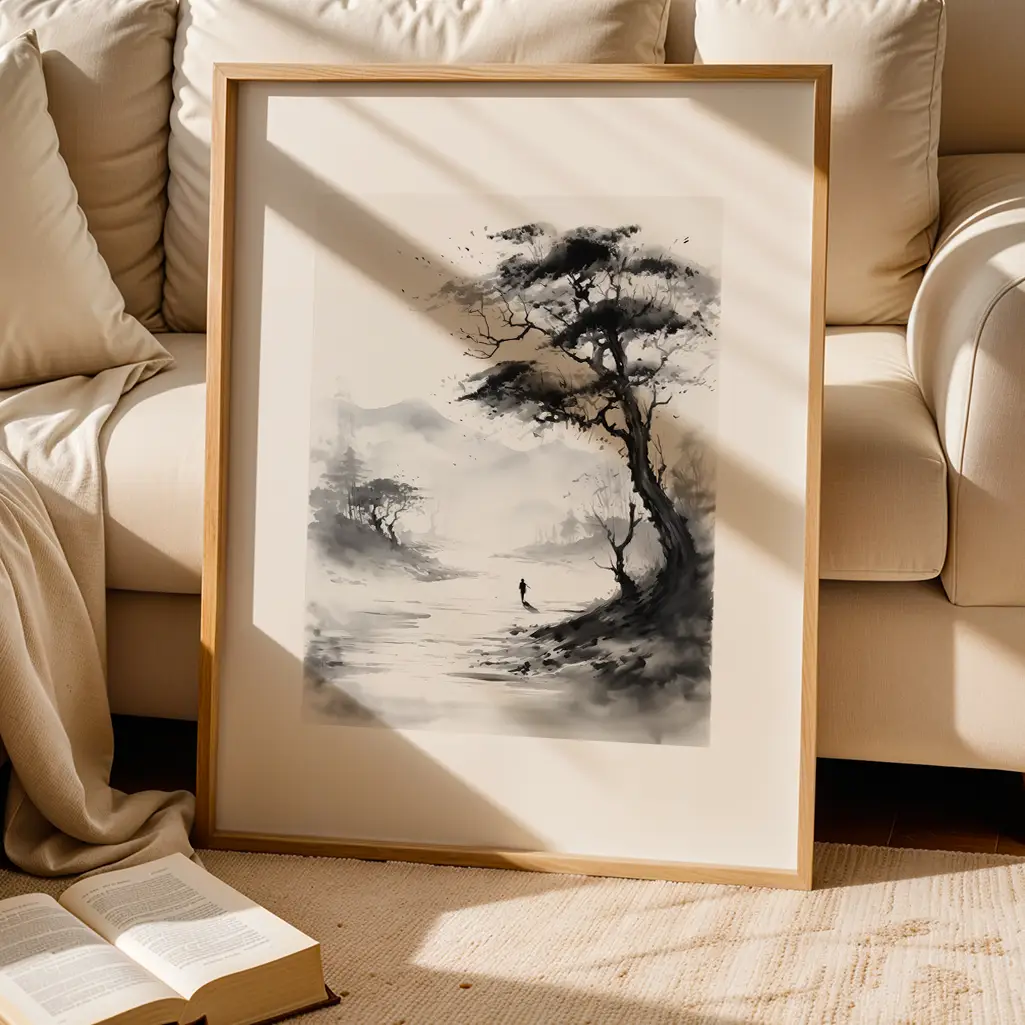
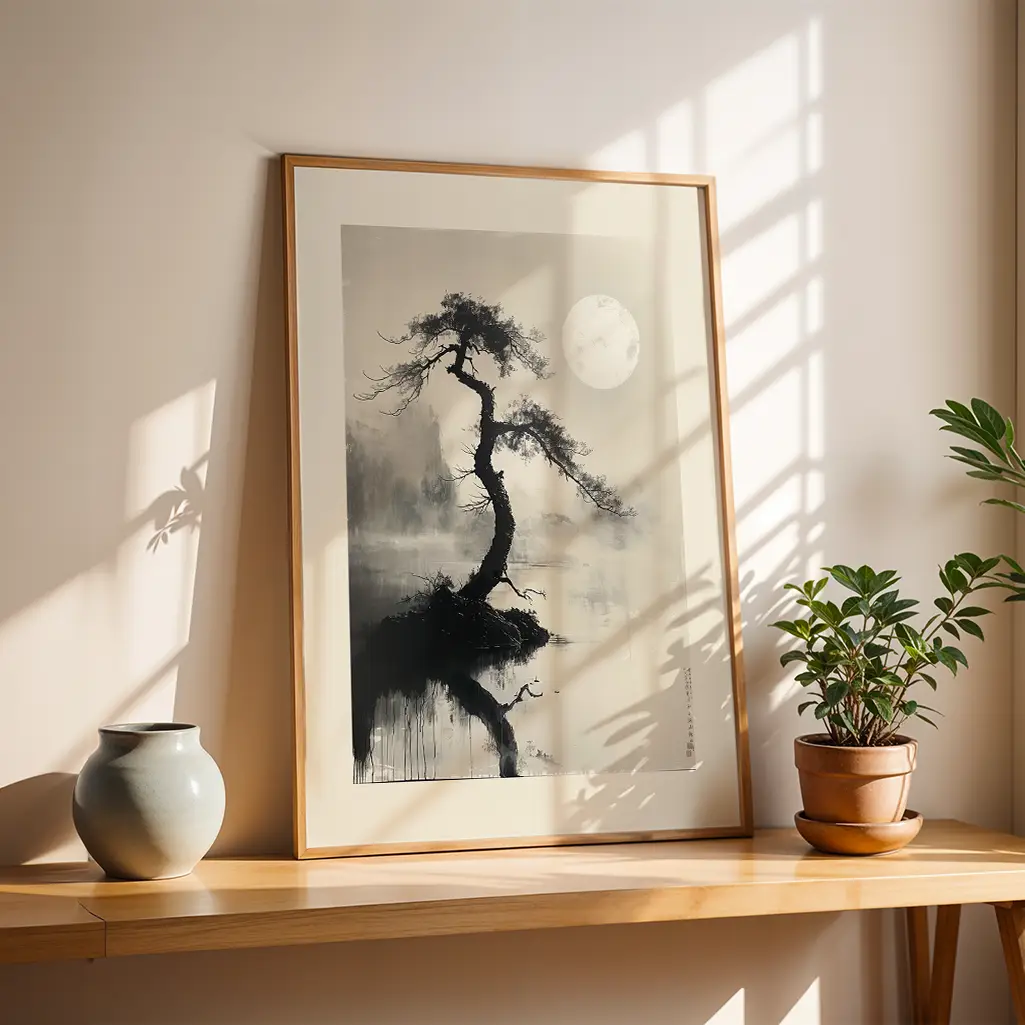
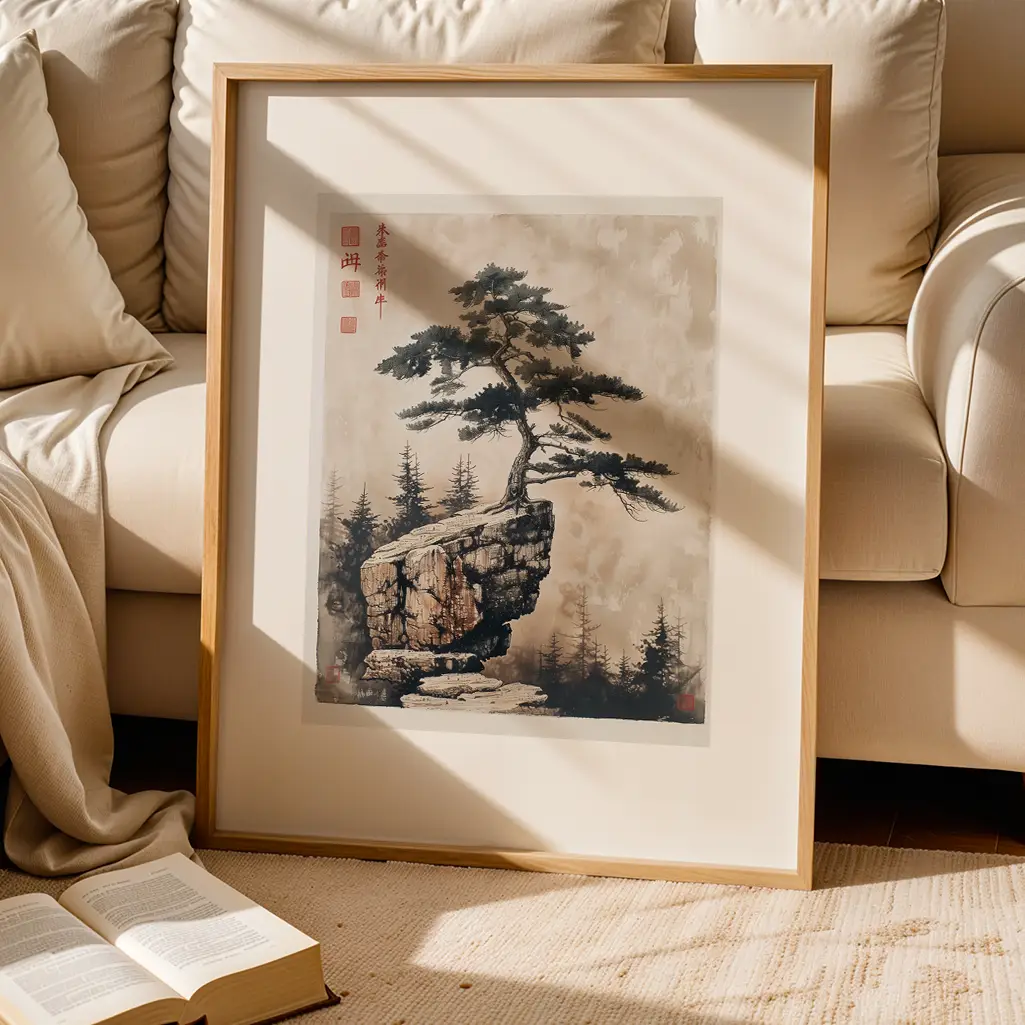
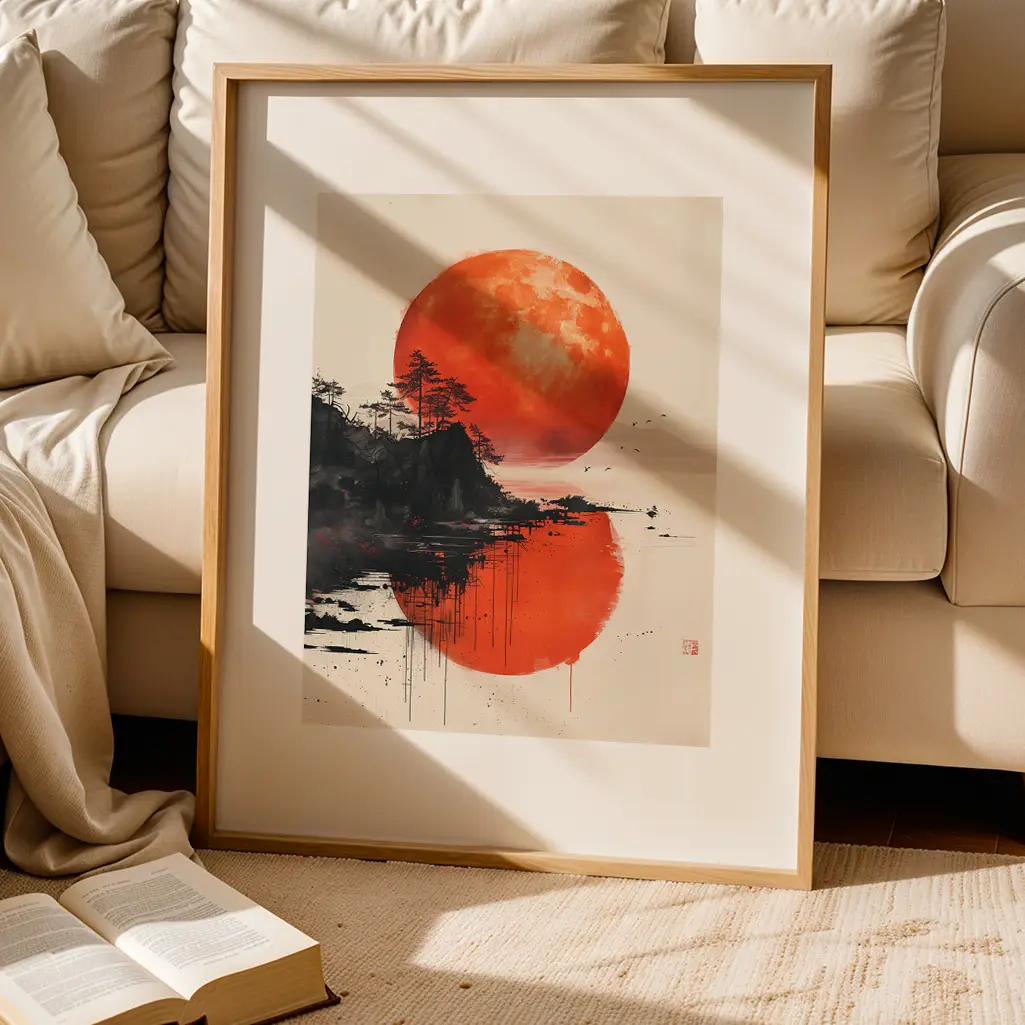
Slow looking begins with a refusal to rush. In museums, it is the simple act of standing in front of one work for longer than feels efficient, allowing the eye to wander and the mind to follow. At home, that same practice can turn a print above the sofa or a small painting by the entry into a daily mindfulness anchor.Most of the time, wall art functions as a backdrop, an atmospheric footnote to the furniture. We register it in a fraction of a second, label it as “landscape” or “abstract,” and then mentally move on. Slow looking interrupts that reflex. It asks you to stay with one image long enough for it to become a place rather than a thing, a space in which your attention can settle.
Mindfulness often starts with the breath, but for many people, focusing on the body can feel too direct, even confrontational. Art offers a gentler entry point. When you rest your gaze on a painting, your attention has somewhere concrete to land. The artwork becomes a “visual breath,” repeating in the same way each time you return to it, yet always slightly new.
Neuroscientists describe how the wandering mind jumps between past and future, scanning for unresolved tasks and imagined dangers. A sustained visual focus interrupts that loop, recruiting areas of the brain that track line, color, and pattern. You are not escaping your thoughts so much as giving them a softer, slower channel through which to pass. The painting holds the structure, and you move within it.
At home, this is more intimate than in a museum. You are not standing in front of a masterpiece guarded by glass and alarms. You are standing in front of something you chose, perhaps imperfectly, perhaps impulsively, and discovering that it can still carry you. Slow looking in this context is less about decoding symbolism and more about noticing your own responses. Which fragment of color relaxes you. Which edge makes you curious. Where your eye gets stuck, and where it feels free.
A wall becomes a kind of low-tech interface between inner life and outer environment. When you approach it with attention, it starts to work like a quiet ritual: you pause, you look, you notice, and you leave slightly altered.
Choosing art that invites attention, not noise
To use wall art as a mindfulness anchor, you are not hunting for a perfect piece so much as for a repeatable relationship. You want work you can meet again and again without boredom or irritation. This is less about price or prestige and more about the quality of attention it invites.One useful question is whether the art offers more than one way in. A photograph with both a crisp foreground and a soft, receding distance gives your gaze options. An abstract canvas where a single color subtly shifts from corner to corner can work in the same way. The mind needs a little complexity, but not so much stimulus that the eye feels chased around the surface.
Comfort also matters. Some pieces are brilliant but jangling, full of visual noise that may be exciting for an hour and exhausting after a week. When you look at a work and imagine seeing it every morning for a year, pay attention to what your breathing does in that moment. Does your chest lift, as if you are bracing, or does your exhale lengthen? That small physiological clue is often more accurate than any interior design trend report.
Scale plays its own psychological role. A very large work can feel like a presence in the room, almost another character. This can be grounding in a minimalist space but overwhelming in a small bedroom where you want a softer field of vision. Smaller works, especially if hung at eye level and given a margin of blank wall around them, often function better as calm focal points. The negative space becomes part of the mindfulness tool, a quiet buffer that lets the piece breathe.
Color is another subtle instrument. This is not about adhering to rigid palettes but about noticing how a particular hue behaves over time. Blues and greens often read as slow and expansive, like open sky or foliage. Warm earth tones can feel stabilizing, almost architectural. Very high-contrast compositions may sharpen your attention but can also keep your nervous system slightly on guard. The goal is not to anesthetize your senses but to find a visual rhythm you are willing to keep.
Perhaps the most powerful ingredient is personal association. A modest sketch by a friend, a thrift-store painting that reminds you of the light in your childhood kitchen, a printed still from a film you love: these carry a story that can deepen through slow looking. Each time you return, you re-inhabit that narrative, but a little differently, like revisiting a familiar path at a new time of day.
Designing a daily ritual of looking
Once you have a piece that feels right, the next step is to give it a role. Placement is as important as selection. A mindfulness anchor needs to live at the intersection of frequent passage and potential pause. The wall you face from a favorite reading chair, the space opposite your dining table, the stretch of hallway just outside the bedroom can all become small stages for slow looking.Hanging height subtly shapes how you relate to the art. Museums tend to center works around eye level for a standing adult. At home, consider where your body usually is when you would like to pause. If your ritual involves a soft chair, lowering the artwork slightly so that your natural seated gaze meets its center can make it feel more like an encounter and less like a lecture from above.
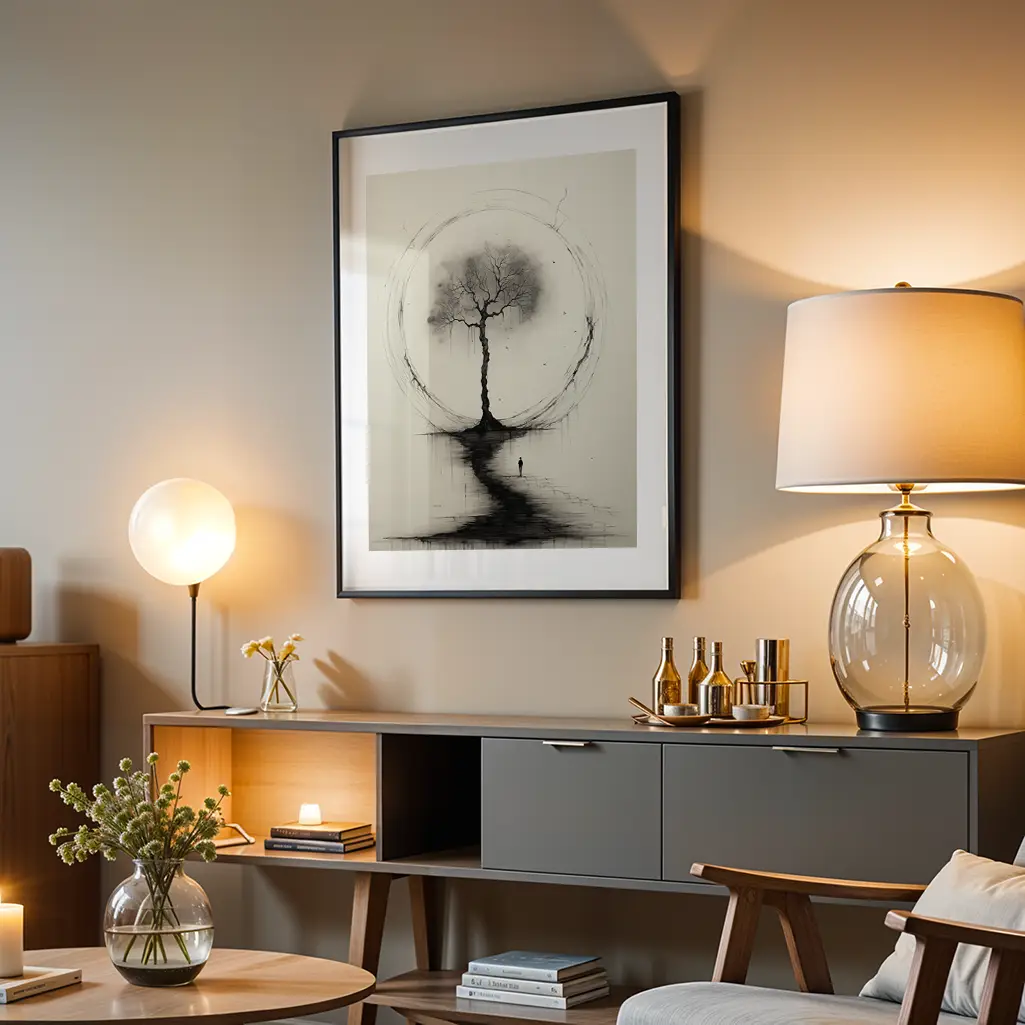
Light is another form of attention. Direct glare flattens a surface and makes it harder to stay with, while dimness can turn the work into little more than a silhouette. Soft, angled light from a nearby lamp, especially in the evening, tends to reveal texture and nuance. Over time, you begin to associate that particular glow with a certain kind of slowness, the way one associates dusk with winding down.
The ritual itself can be brief. You might sit in front of the work for two minutes before opening your laptop in the morning, or stand before it for a few breaths after coming home. Let your eyes land somewhere specific at first—a corner of shadow, a patch of saturated color, the place where two lines intersect. Then allow your gaze to travel as slowly as you can tolerate, following contours without naming them. When stray thoughts appear, instead of wrestling with them, simply note them and return your eyes to a particular detail in the image.
Over days and weeks, you will start to notice that the artwork is not actually still. The light changes with the weather and the season. Your own emotional state tints what you see: one morning the blues appear somber, another they feel endless. The piece reflects your interior landscape back to you without comment. In this way, it functions as both mirror and anchor, something steady enough to hold the shifting parts of your day.
Gradually, the rest of the home begins to align around this practice. You may clear a nearby surface, remove one decorative object that suddenly feels loud, or adjust a chair by a few inches to create a more direct line of sight. These are small design decisions, but they arise from an inner question rather than an external rule. How does this space feel when I am actually here, looking. The answer, if you let it, will quietly rearrange the room into a place that supports the kind of attention you want to live inside.

.webp)