The Art Of Space When You Don’t Have Much Of It
Small apartments have a way of narrating your life back to you. Every object declares itself, every color leans in a little closer. In tight quarters, nothing is neutral: a sofa can either ground the room or swallow it, a lamp can either soften a corner or spotlight its limits.Designing in a small footprint is less about renouncing possessions than understanding perception. You are not really decorating a box; you are choreographing light, lines, and thresholds so the eye keeps wandering instead of bumping into edges. When your rooms feel bigger, they feel calmer, and calm is a form of luxury available even in a studio walk-up.
Begin by paying attention to where your gaze stops. The visual “full stops” in a small apartment are low ceilings, dark corners, and heavy blocks of furniture that push against walls. Your task is to soften those stops and exchange them for commas and dashes, so the eye continues to travel. Counterintuitively, this often means choosing fewer, slightly larger pieces and allowing them to breathe, instead of lining every perimeter with small, anxious furniture.
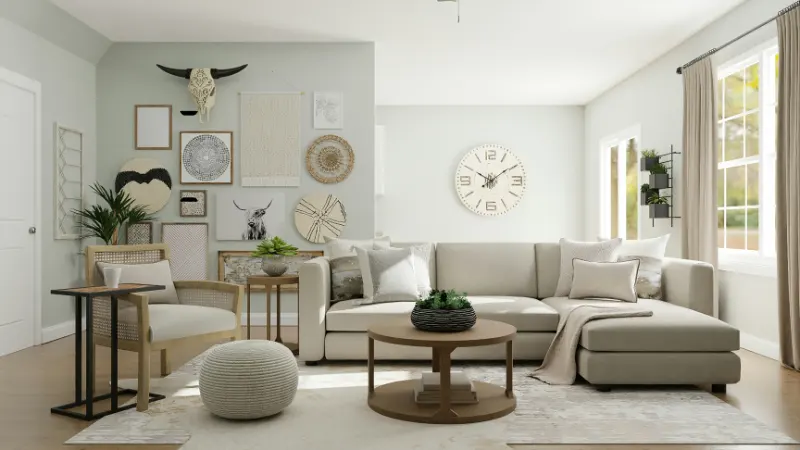
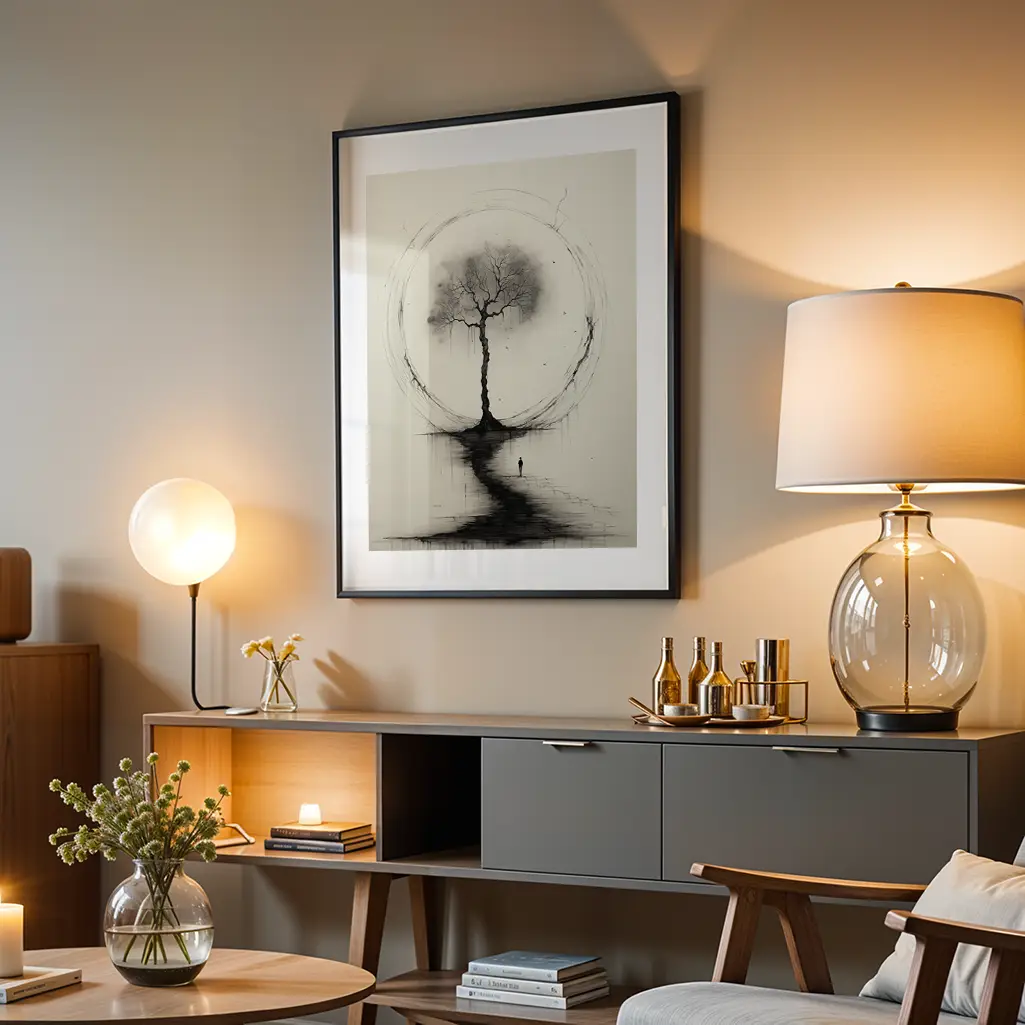
Light is the first collaborator. Natural light does not simply brighten a room; it extends it. Bare windows can feel harsh, but heavy curtains steal volume. A translucent, floor-length panel mounted a few inches above the frame lets daylight flood in while letting the ceiling appear taller. When the sun sets, layered lighting continues the illusion. Relying on a single overhead fixture flattens space; spreading small pools of light with floor lamps, table lamps, and a discreet sconce coaxes depth out of even a narrow room.
Color, used shrewdly, becomes another structural tool. Very dark walls shrink, but a space that is entirely white can feel clinical, like a rental that never met its tenant. The sweet spot is a light, warm envelope with measured contrast. Think of the walls as soft air—muslin, cream, pale gray with a hint of warmth—against which your furniture can step forward without shouting. Keep major surfaces, like walls and large rugs, in a similar tone so the room reads as one continuous volume. Allow contrast to show up in smaller, movable accents instead of immovable architecture.
Storage, inevitably, is where ideals meet reality. An overstuffed bookcase or open shelving filled to the brim reduces visual volume faster than almost anything else. Closed storage with quiet fronts—flat doors, minimal hardware—acts like a painted wall that just happens to hold your life behind it. What you leave out in the open should feel intentional, not apologetic. A single well-composed stack of books with a small bowl on top will always feel lighter than seven almost-finished piles.
Most important, small apartment decor works best when it is not at war with how you actually live. If you always drop your bag near the entrance, design for that instinct with a hook and a shallow tray instead of insisting on an empty hallway that never stays empty. Rooms feel bigger when they function smoothly; friction consumes mental space as surely as a bulky loveseat consumes physical space.
Lines, Proportion, And The Quiet Trick Of Continuity
Once light and color are working with you, the next shift happens in how you handle lines. In the language of interiors, lines are where the eye travels: across a rug, along a curtain rod, up the leg of a chair. Vertical lines invite the eye to climb, horizontal ones to coast. In a small apartment, a careful mix of both stretches the room in more than one direction.To give a low ceiling more presence, let a few elements reach toward it. A bookcase that nearly grazes the ceiling suggests height; so does artwork hung a bit higher than you might expect, as long as it stays in conversation with the furniture below it. The goal is to pull the gaze upward without making you crane your neck. Floor-length curtains, even on a modest window, create a column of fabric that quietly insists the room is taller than its measurements.
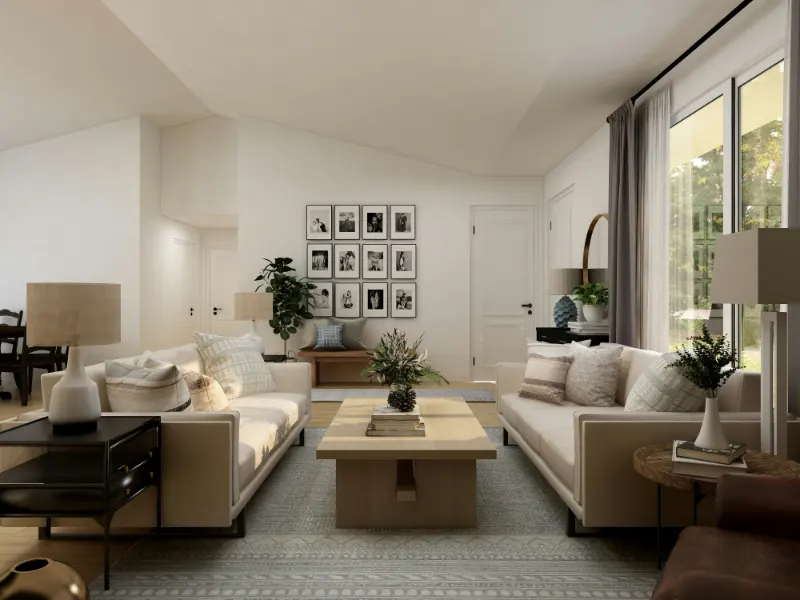
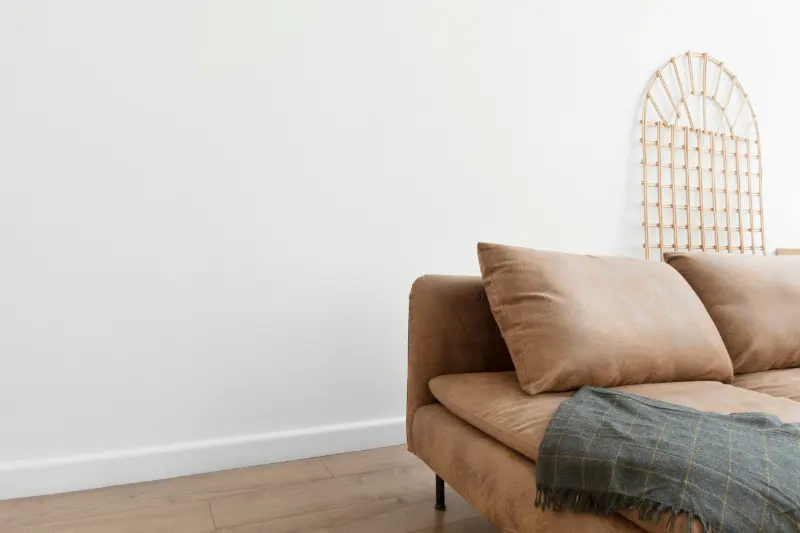
Horizontally, consider how uninterrupted you can make the floor look. Each object that touches the ground adds another visual boundary. Furniture with slim, visible legs shows more of the floor and allows light to pass underneath, which makes the room feel airier. Low, heavy pieces that sit directly on the floor create weight and bring the ceiling psychologically closer. You do not need to banish them entirely, but temper them with at least a few items that lift.
Proportion, often misunderstood, is not about choosing “small furniture for a small room.” Several underscaled pieces can make a room feel like a waiting area rather than a home. One full-size sofa, tailored and not overstuffed, may serve you better than a shrunken loveseat and two occasional chairs. A dining table with a slim top and narrow legs will feel more gracious than a tiny but visually bulky pedestal that demands attention.
Continuity is the final, often invisible, principle that makes rooms feel larger. When adjacent spaces share a vocabulary—similar wall color, related wood tones, repeated metal finishes—your eye stops treating each room as a separate container and begins to experience them as chapters of the same story. A narrow hallway painted the same hue as the living room no longer feels like a constriction; it becomes a quiet bridge.
Patterns can play a surprising supporting role in continuity. A striped rug that runs lengthwise in a living area, echoed by a thinner stripe in a kitchen runner, can elongate both spaces by linking them. A single color, maybe the soft blue of a throw pillow, repeated in a small print on a bedroom curtain, threads the rooms together without insisting on itself.
Above all, generous editing is what protects these tricks from becoming gimmicks. A small apartment rewards clarity. Each piece that earns its place should either pull in more light, soften a boundary, extend a line, or quietly hold what you do not wish to see. When those ambitions align, the room ceases to be defined by what it lacks and begins to feel, in a modest but indispensable way, like “enough.”