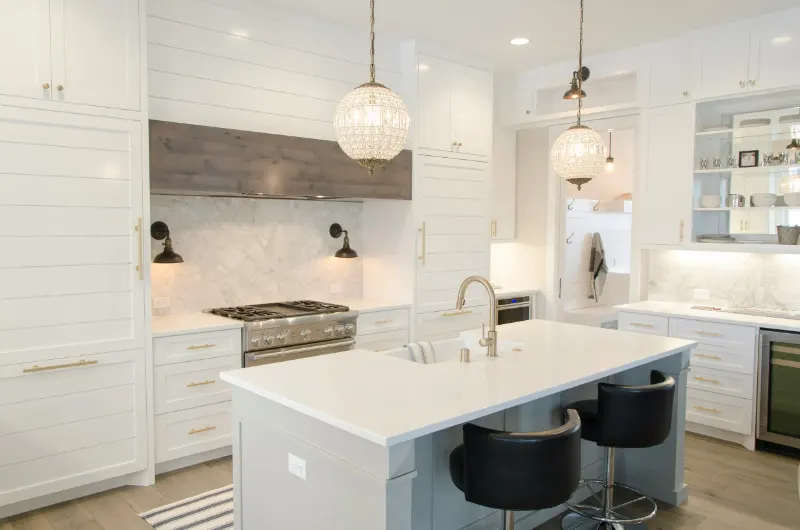
The Way You Don’t Have to Force
The Tao Te Ching opens with a caveat that sounds like a shrug from the universe: “The Tao that can be told is not the eternal Tao.” At first glance, this seems like a philosopher’s evasion, a refusal to define the very thing the book is about. Look closer and it becomes a surprisingly practical starting point for how you design your days, and even your living room.Tao, usually translated as “the Way,” is not a religion in the rulebook sense. It is closer to the underlying pattern of things, the way water takes the shape of whatever holds it yet is never quite contained. Taoism suggests that much of our suffering comes from fighting this pattern: overplanning what cannot be planned, overfurnishing what would be better left empty, overtalking where quiet would communicate more clearly.
“Those who know do not speak; those who speak do not know,” writes Lao Tzu, the name traditionally given to the Tao Te Ching’s author. Read literally, it is an admonition against chatter. Read in the context of your home, it is a reminder that the most convincing spaces rarely shout. A room that really works does not need to scream its style; it feels right before you can describe why. The Tao Te Ching keeps steering us toward that wordless rightness, the moment when your shoulders drop a little as you step through the door.
One of the book’s quiet revolutions is its stance on control. Modern life prizes mastery, optimization, constant tweaking. The Tao Te Ching distrusts all of that. It teaches “wu wei,” often rendered as “non-doing” or “effortless action.” This is not laziness. It is a refusal to fight the grain of reality. The skilled carpenter cuts with, not against, the wood; the wise host arranges the room in a way that lets conversations find their own corners.
In design terms, wu wei is what happens when you stop trying to force a space into an image from a magazine and begin listening to the room itself. Where does the light fall in late afternoon. Where do you naturally set down your bag. What spot in your home do people drift toward without being asked. Instead of imposing a concept, you let the layout, light, and daily rhythms tell you what they want to be. The Tao Te Ching suggests that a responsive, listening kind of action is more powerful than rigid intention.
The book is suspicious of accumulation, and its suspicion is not merely moral; it is spatial. “To hold and fill a cup to overflowing is not as good as stopping in time.” Every overstuffed closet understands this line. When you keep adding furniture, colors, or decorative gestures, the whole becomes less itself. The Tao Te Ching insists that there is a point where more becomes less, where a room tipped just beyond balance starts to feel anxious rather than abundant. Wisdom, here, is the nerve to stop before that point.
The Power of Empty Space
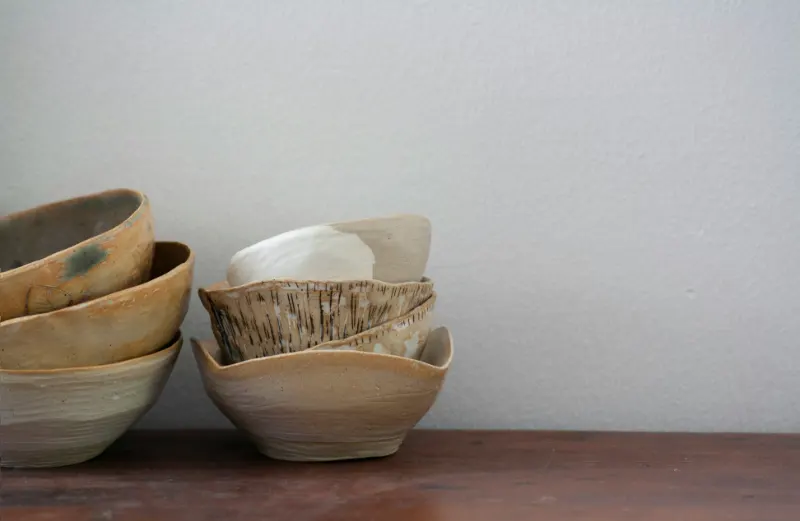
Some of the most vivid lines in the Tao Te Ching are not about what is present, but what is absent. “We mold clay into a pot, but it is the emptiness inside that makes it useful.” Taoism loves this kind of reversal: the value of what is not there. This idea translates almost perfectly into interior life. A room is defined as much by its unoccupied air as by the objects within it. Empty floor between the couch and the window, a bare stretch of wall, the generous pause between colors on a shelf, all serve as functional equivalents of the pot’s hollow center.Design often fetishizes the visible, the collectible, the showpiece. Taoism invites you to notice what happens when you treat negative space as its own kind of object. The clear surface of a table becomes a stage for the single bowl you actually love. A quiet corner, left intentionally open, becomes a breathing space for the eyes and the mind. The Tao Te Ching’s point is not that things are bad, but that space is what lets things breathe and be themselves.
There is a kind of compassion embedded in this approach. The text praises what it calls “the valley spirit,” low and receptive, always ready to hold water. Valleys do not compete with mountains, they collect what runs down from them. Applied at home, this is the decision to make your rooms hospitable rather than impressive, to value how a sofa welcomes a tired body over how it will photograph. The valley spirit is a posture of yielding that paradoxically creates strength because it does not need to win.
“Soft and weak overcome hard and strong,” the Tao Te Ching insists, returning again and again to the image of water. Verse by verse, water seeps into the conversation: it benefits all things yet does not compete, it flows to the low places others ignore, it erodes stone without declaring an agenda. To live in accordance with this insight is to arrange your space so that it supports you without drama. A chair that fits your spine like a riverbed. A path from door to table that meanders gently rather than cutting sharply. Light filtered through a curtain instead of blazing overhead.
This is also where Taoism diverges from the strict minimalism that has become a design cliché. The Tao Te Ching does not worship bareness for its own sake. It praises what is appropriate, responsive, proportionate. Sometimes that means a single ceramic cup on the counter; in another life, it could mean a crowded family table whose apparent chaos resolves into a kind of living pattern. The question is always whether the arrangement allows the Tao, the underlying Way of things, to move freely through it, or whether it blocks and hardens into static display.
Living with the Grain of Things
The Tao Te Ching is not a design manual, but it is a philosophy of atmosphere. It teaches that gentleness can be more transformative than force, that small, repeated gestures accumulate into character. “A journey of a thousand miles begins beneath one’s feet,” the text says in one familiar line. In the context of home, this is not an exhortation to grand renovations. It is permission to start where your feet already touch: the mat at the door, the first surface you see in the morning, the patch of floor where you like to sit with a book.Design in the Taoist spirit begins with attention. Before buying anything, you notice. How does the room sound when the window is cracked an inch. Where does clutter gather as if magnetized. What small change would make breathing easier here. The Tao Te Ching constantly praises the “uncarved block,” the thing not yet overworked. That might be your weekend left mercifully unscheduled, or the corner of a room you resist turning into storage just because you can.
There is an ethical undercurrent in all this. Taoism is wary of excess not out of hair-shirt austerity, but because excess isolates. When we pile up possessions, or social obligations, or ambitious décor, we unconsciously circle the wagons around a fragile sense of self. “He who knows that enough is enough will always have enough,” says the text. Enough, in a home, looks like a space that supports your life without needing constant performance from you. You do not enter it feeling you must tidy, adjust, or explain it. You simply inhabit it.
The Tao Te Ching ultimately offers a standard for both inner and outer design: ease without apathy, simplicity without sterility, beauty that does not depend on attention. When your home begins to reflect these values, it becomes less of a stage and more of what a valley is for water, a place everything in your life can briefly rest before it moves on. The teaching is not to chase some ideal of serenity, but to notice where you are forcing what could be flowing, and then, gently, to step aside.
In that sense, Taoism is less something to believe and more something to practice in the most ordinary ways. Clear one surface. Leave one wall a little bare. Sit for a minute in a room you are tempted to fix and let it tell you how it wants to be. The Tao Te Ching would say that in listening this way, you are already on the Way, long before you have words for where it is leading.