Redefining “Less” Beyond White Walls
Minimalism has been reduced, ironically, to an excess of images: perfectly white sofas, a single ceramic vase, sunlight pouring over bare wooden floors. These rooms photograph well, but they miss the quiet heart of the idea. Minimalism as a daily practice is not an aesthetic you buy; it is a series of small, repeated choices about what you allow to live with you and how much attention you are willing to give it.
Think about everything in your home as holding a tiny claim on your time. The extra armchair needs dusting, the third set of dishes needs washing, the unread stack of magazines needs your guilt. Minimalism begins with the recognition that attention is finite. Your home is not just a container for objects; it is a landscape of commitments. Each item, from the coffee mug collection to the “aspirational” yoga gear, asks you quietly: will you care for me?
Seeing your space this way reframes the usual decluttering advice. Instead of asking, “Do I love this?” you might ask, “Do I want to keep caring for this every week, every month, every year?” A chipped plate might survive that question. A rarely used gadget might not. In this sense, minimalism is less a philosophy of purity and more a realism about maintenance.
There is also a psychological shift at play. Many homes silently narrate their owners’ anxiety: the backup towels, the emergency candles, the “just in case” outfits waiting for events that never come. Objects become evidence against imagined futures. Practicing minimalism daily means noticing when “just in case” is covering for “I don’t quite trust myself or my life.” When you release a few of those objects and discover that you are, in fact, fine, you begin to build a quieter confidence.
Importantly, “less” is not a competition. There is no moral prize for owning fewer chairs. Two people can practice minimalism and arrive at very different rooms: one spare and almost monastic, the other warm and layered with books and textiles. The common thread is not a visual style but an internal metric: everything present earns its place by use, meaning, or beauty. Nothing is there purely by inertia.
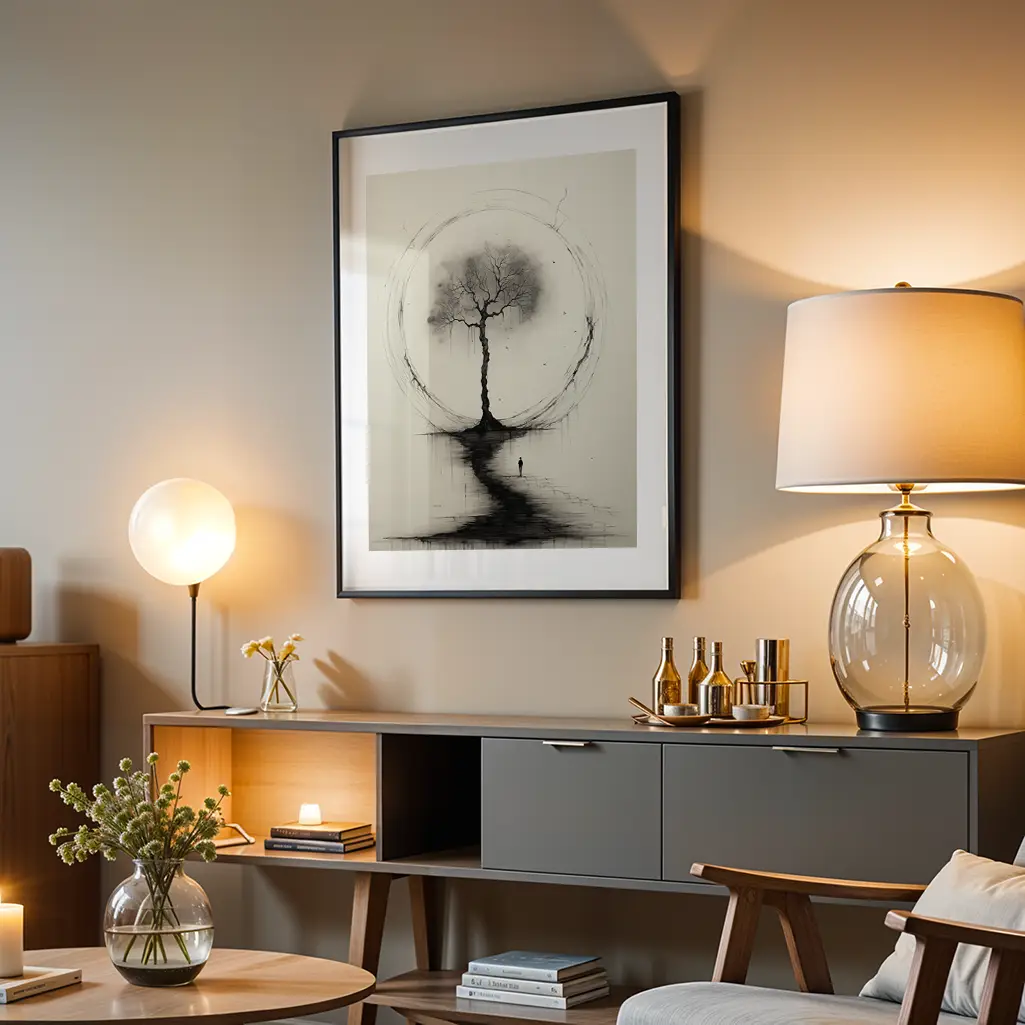
This is where design comes in. A minimalist home is not an empty home; it is a home where each object has enough space to be itself. A single painting on a wall suddenly matters more when it is not elbowed by six others. The worn wooden table that holds every family meal grows visually heavier, more significant, when the surrounding surfaces are not competing for attention. Negative space becomes a material in its own right, as tangible as wood or linen. You start to notice light moving across the floor, the outline of a doorway, the rhythm of full and empty shelves.
When you treat “less” as a daily practice, your home turns into a kind of living studio. You adjust, remove, and refine the way an artist returns to a canvas, not with anxiety, but with curiosity. You are no longer asking, “Is my home minimalist enough?” but rather, “Does this room make it easier or harder to live the life I say I want?”
Rituals of Editing: How Daily Choices Shape Space
The mythology around minimalism suggests that it happens in a weekend: a dramatic purge, dozens of donation bags, a cinematic before and after. The reality is slower and, in many ways, more interesting. Minimalism as a daily practice is built from rituals so small they almost disappear: the decision not to buy the thing, the habit of putting an object back in its place, the pause before saying yes to an inherited piece of furniture.
Begin with the surfaces you touch every day. A kitchen counter crowded with appliances becomes a stage for distraction. Removing even one object changes how you move. Suddenly there is space for cutting vegetables, for setting down groceries, for watching steam rise from a single pot. By clearing a surface and then defending that emptiness, you are not creating sterility; you are creating potential. That empty stretch of countertop is an invitation to cook, to spread out a puzzle, to share a late-night cup of tea.
The same logic applies to the entryway. Shoes, keys, unopened mail, scarves slipping from their hooks: this is the biography of your day, written in small piles. A daily minimalist practice might look like five minutes each evening spent restoring this threshold. Shoes lined up, mail sorted into “act now” and “recycle,” bags hung where they can be grabbed without thought. You are not chasing perfection; you are tuning an instrument you use every morning when you step out the door.
In the living room, the practice becomes quieter. Rather than “styling” your shelves once and declaring them done, treat them as a question. Which books do you reach for often? Which objects make your shoulders drop when you notice them? Which gifts live on the shelf purely because you are afraid of the story their absence might tell? Remove one thing and live with the gap for a week. Notice whether the room feels lighter or strangely unmoored. Minimalism at this scale is a conversation with your own nervous system.
Textiles tell another story. A sofa draped in six throw blankets and eight cushions can read as comfort, but it also demands constant reshaping. Editing down to the two cushions that actually support your back, the single blanket you always reach for, simplifies not just the look but the routine of using the room. You no longer spend the first few minutes of rest wrestling with your own idea of coziness.
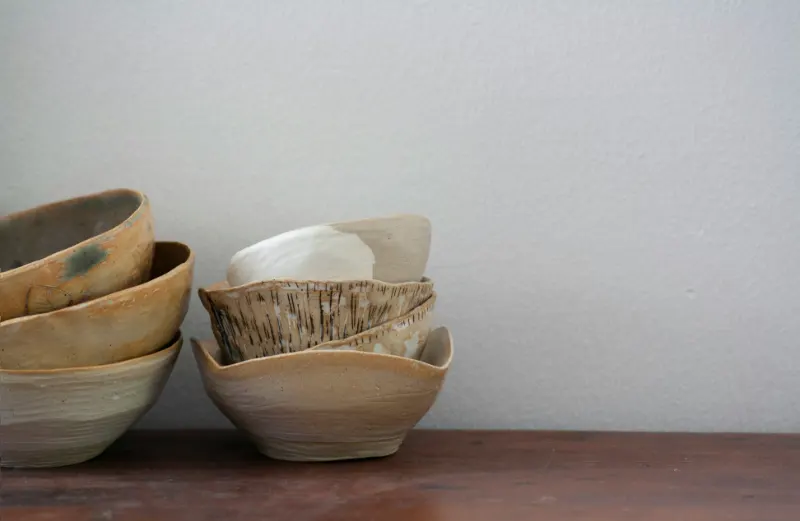
Underneath these gestures is a deeper discipline: learning to distinguish between the fantasy of an object and its reality in your specific home. A sculptural chair might be beautiful, but if no one sits in it, it becomes a pedestal for unfolded laundry. A set of minimal ceramic bowls might look perfect online, but chip easily in your sink. Practicing minimalism daily means allowing actual use to overrule abstract ideals. Your home becomes an ecosystem tuned to your life, not to the algorithms of taste.
Over time, these small acts of editing accumulate. Cupboards close easily. Morning routines require less hunting. The visual noise recedes, making room for subtler experiences: the sound of rain on the window, the way evening light pools near your reading chair. The art of less reveals itself not as absence, but as presence—more of you in every room, less of everything that once drowned you out.
.webp)