Seeing Your Home As If For the First Time
The Zen phrase “beginner’s mind,” or “shoshin,” is deceptively simple. On the surface, it sounds like a slogan from a productivity workshop, the kind that urges you to “stay curious” as if that alone could fix email. In its original context, though, beginner’s mind is more radical and far more intimate. It has less to do with what you accomplish and more to do with how you meet whatever is in front of you.
In Zen practice, beginner’s mind describes a quality of awareness that is open, unarmed and willing not to know. It is the state of attention you have on the first day in a foreign city, when every doorway, smell and train announcement lands vividly because you have not yet layered it with expectation. The homes we live in every day, by contrast, tend to disappear behind layers of assumption. You no longer see the pile on the chair because you have negotiated with it so many times. You do not truly notice the light in your kitchen because you are already halfway through tomorrow’s worries.
Beginner’s mind does not ask you to become naïve. It asks you to become available. The practice is less about acquiring insight than about gently loosening your grip on what you think you already know. Applied to interior space, this becomes a kind of quiet revolution in seeing. A bedroom is no longer only where you sleep; it is a landscape of textures, habits and small negotiations with comfort. A living room is not simply furnished; it is a visible history of what you have decided to keep close.
From a design perspective, the implications are practical. When you walk into a room carrying the belief that you already understand it, you will change, at most, the surface. A new lamp here, a different rug there. When you walk in with beginner’s mind, you are willing to ask more unsettling questions. Why does this corner feel dead. Why do I always sit in that same worn spot on the sofa when the light is kinder across the room. Why does this shelf make my shoulders lift a little when I pass it.
Beginner’s mind is an attitude you bring to these questions: curious without interrogation, precise without judgment. You are not looking for flaws to correct so much as for reality to reveal itself. The room, in this sense, is not a project but a partner in conversation.
Looking Again: Curiosity As a Design Tool
To live with beginner’s mind at home, you start by looking again at what is already there. Designers, at their best, are professional beginners. They enter a space without the numbness that comes from familiarity. They notice odd alignments, blocked pathways, the quiet dignity of a window that has never quite been honored. You can borrow this stance without buying anything new.
Begin, quite literally, at the threshold. Imagine walking into your home as a guest who has never seen it. What is the first impression in your body before your thoughts rush in. Is it a sense of compression, of visual noise, of welcome air. Beginner’s mind is partly about honoring those split-second impressions instead of talking yourself out of them.
Move slowly, letting your gaze rest on objects you usually glance past. A stack of unread magazines is no longer a neutral pile; it becomes a physicalized promise that has turned into faint guilt. A chair under a coat rack that has never hosted anyone’s sitting becomes a symbol of “almost,” of plans that did not quite materialize. Instead of rushing to label these as failures, you can meet them with the same kind attention you might offer a distracted friend. Is this still true for me. Does this still serve how I live now.
In this way, beginner’s mind becomes a diagnostic tool. You notice which objects carry a slight emotional weight and which ones feel strangely invisible. You notice where your hand always reaches for a surface that is not there, or where you instinctively avoid a dark corner. These are not trivial observations; they are the seeds of authentic design decisions.
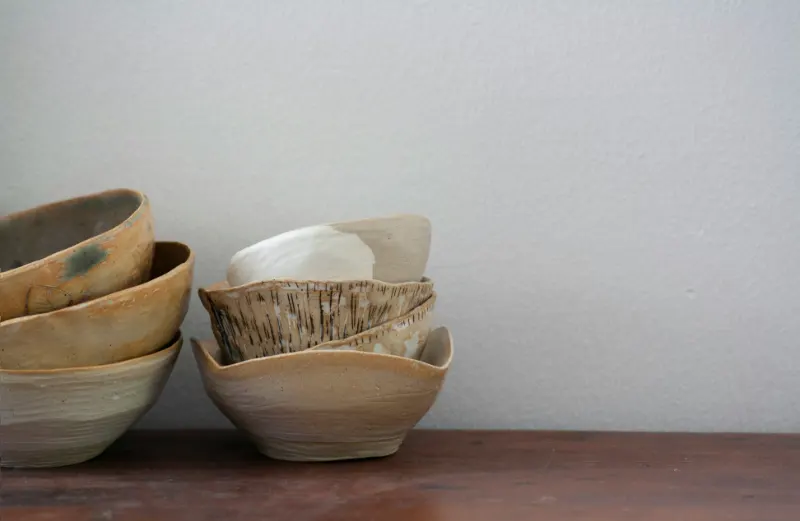
Importantly, beginner’s mind does not demand a blank slate. The fantasy of throwing everything out and starting over is its own kind of rigidity. Shoshin invites you instead to see what is alive and what is dead within your existing arrangements. A chipped bowl that still makes you smile has more vitality than a flawless vase that never earned your affection. The question is not “Is this stylish.” The question is “What happens in me when I encounter this.”
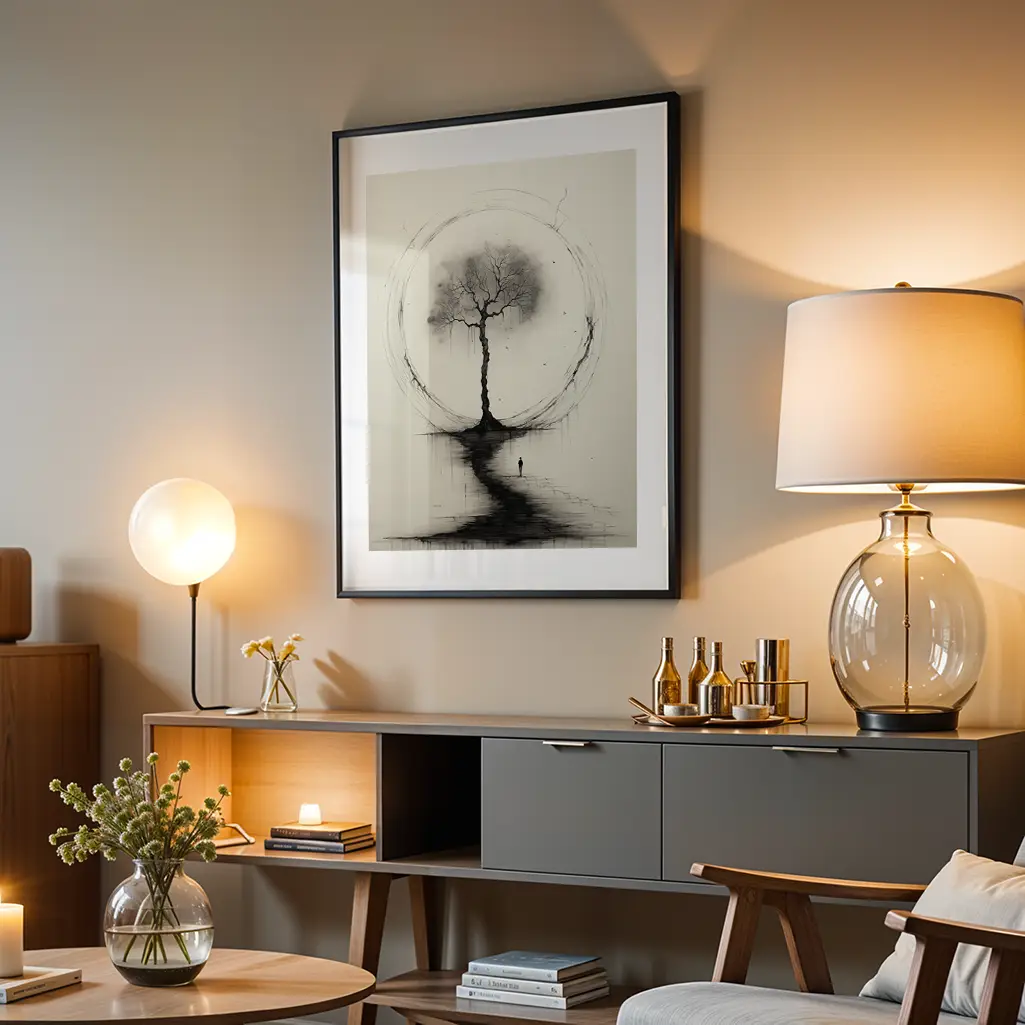
Over time, you may notice a softening. Detachment, in this context, does not mean indifference. It means you are less beholden to the story that this piece was expensive or that a certain layout is how living rooms are supposed to look. You become willing to let a sofa float more freely in the room because that is where people naturally gather, or to hang a beloved drawing lower because it wants to be in conversation with the chair beneath it. The room begins to teach you how it wishes to be used.
Designing Spaces That Keep Beginning
The deeper promise of beginner’s mind is not a perfectly edited home. It is a home that can keep changing as you do, without turning every adjustment into a renovation. To design for this, you pay attention not just to objects, but to relationships: between furniture and light, between surfaces and sound, between your inner life and the visible shapes around it.
One way to honor shoshin in your space is to keep a few things deliberately unresolved. Leave a small stretch of wall unfilled rather than rushing to cover every expanse. Let one table remain clear, not as an act of discipline but as an invitation to see what, if anything, truly deserves to land there. This is not minimalism as a style; it is minimalism as an experimental question. What happens when there is just a little more room than you think you need.
Rotation can also be a quiet expression of beginner’s mind. Instead of treating your belongings as a permanent cast of characters, imagine them as guests who come and go. A set of objects on a shelf today can rest in a cupboard next season, making space for other pieces to step forward. When familiar items retreat from view and later return, they are seen again, often with renewed affection or with the clear recognition that they belong to another chapter of your life.
You can extend this sensibility to how you move through your home. Sit in the chair you rarely choose and notice what the room looks like from there. Work for an afternoon at the dining table instead of the desk you have always used. Eat breakfast by a different window. These are small experiments, but they loosen the sediment of habit that accumulates around space. The room becomes multiple rather than fixed; it reveals new aspects depending on where you stand.
Underlying all of this is a kind of kindness. Beginner’s mind is not a test you pass or fail; it is a posture you can return to at any moment. On a difficult day, it might look like asking, without blame, which part of your home feels even slightly supportive and lingering there a little longer. On another day, it might look like finally releasing the object that has silently asked to leave for years.
Your home, like your mind, is not a finished project. Shoshin reminds you that this unfinishedness is not a flaw but a source of vitality. When you let yourself be a beginner again, even in the rooms you know best, the ordinary becomes available in finer resolution. A shaft of light across the floor, the sound of water in the pipes, the way fabric folds itself on the back of a chair; these are not design problems to be solved. They are the living textures of a place that, quietly and continuously, is teaching you how to belong.