What Wabi-Sabi Really Means
Wabi-sabi is often translated as "the beauty of imperfection," but the phrase is more compass than definition, pointing toward a way of seeing the world rather than a design recipe. At its core, wabi-sabi is an aesthetic and a philosophy that honors what is modest, weathered and incomplete, and treats time itself as an artist whose traces are worth keeping.
The two words began with different meanings. "Wabi" once suggested the loneliness of living in nature, away from society; over centuries it softened into an appreciation of understated, rural simplicity. "Sabi" originally referred to the bloom of time on objects, the patina that appears on metal, stone or wood. Together, they evolved into a sensibility that sees quiet dignity in the worn and the ordinary, and that treats impermanence not as a flaw in life, but as its most honest feature.
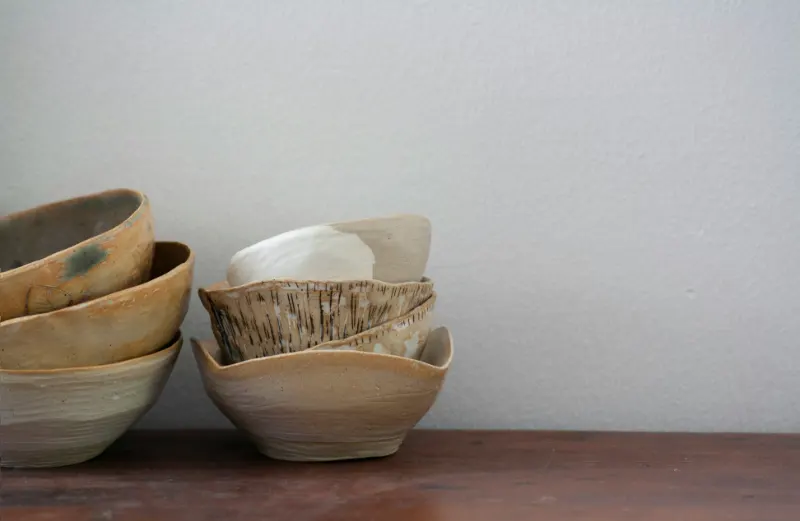
You can feel wabi-sabi most clearly in the Japanese tea ceremony. A host offers tea in a modest room, using bowls that may be slightly misshapen, perhaps even visibly repaired. Nothing is grand, yet everything is considered. The bowl fits the hand in an almost shy way; the light is low; a faint crack along the glaze reads less like damage than like a line of poetry. In this space, the guest is invited to notice things usually ignored: the thickness of the ceramic rim, the way steam curls over the surface, the silence between gestures.
Unlike many Western aesthetics that chase a polished ideal, wabi-sabi moves in the opposite direction. It asks what happens if you stop fighting entropy and instead collaborate with it. Perfection becomes less interesting than evidence of life: the dent in a favorite wooden table, the spot on the wall where sunlight lingers every afternoon, the patch on a beloved armchair. These traces say, "Someone has lived here. Time has passed. This, too, is beautiful."
To understand wabi-sabi meaning in daily life, it helps to set aside the idea of style as a fixed look. Wabi-sabi is less a palette of neutrals and rough linen, more a posture of attention. It is an agreement to let things age in place, to let rooms tell their stories, and to find a certain calm in the uneven and the unfinished. When you look at your home through this lens, you are not asking, "Does this look perfect?" but "Does this feel honest and alive?"
Impermanence, Imperfection and the Home
At the philosophical center of wabi-sabi is an acceptance of three truths: everything changes, everything ages, and nothing is ever truly finished. These are not new ideas, but in the home they can be quietly radical. Rooms are often conceived as projects to complete, as if there will be a day when the last throw pillow is perfectly fluffed and nothing ever needs adjusting again. Wabi-sabi suggests the opposite: that a living space is always in rehearsal, and that its charm lies in that ongoing evolution.
Consider a wooden floor that acquires a soft sheen where people walk most. A conventional mindset might see only wear and tear, a problem to solve with sanding or replacement. Through wabi-sabi, that path becomes a record of movement and gathering, a map of where life thickens. The floor is more itself because it has endured. The same is true for a clay pot that has survived a small chip, or a linen curtain that has faded in a band where the sun hits strongest. Their value is not despite these changes but because of them.
This is where the philosophy extends beyond objects into how we feel in our spaces. Wabi-sabi invites us to release the low-level tension that perfectionism brings into the home. When every scratch is an emergency, a house can begin to feel like a showroom you live inside only by permission. When signs of use are allowed, even quietly welcomed, your space can soften into something more hospitable. Imperfection becomes evidence that you belong there, that you and the room are in a relationship rather than a standoff.
There is also an ethical undercurrent to wabi-sabi meaning. To appreciate the aging of objects is to be less quick to discard them. Instead of chasing the new version of everything, you might repair, re-stain, re-cover or simply reinterpret what you already have. In this way, wabi-sabi aligns with a slower, more sustainable way of living. A table that bears rings from countless cups is not a failure of coasters; it is a long-running collaboration between wood, water and conversation.
In a wabi-sabi home, emptiness has as much weight as what fills it. Bare wall space, a quiet corner, an unadorned shelf between two more busy ones: these become deliberate pauses, the visual equivalent of breathing room. Rather than filling every surface, you allow some to stay open, giving attention a place to rest. Simplicity here is not austerity for its own sake. It is a way of making sure that what you do keep can be seen, touched and actually lived with.
Bringing Wabi-Sabi into Your Own Space
Inviting wabi-sabi into your home does not require turning it into a teahouse or adopting a strictly Japanese style. You are not recreating a catalog page; you are tuning your senses. The first step is simply to notice what already carries a wabi-sabi quality. Walk through your home as if you were visiting it. Look for objects that are quietly aging: the book with a frayed spine you reach for most often, the ceramic mug with a glaze that thins at the rim, the woven basket whose handle has darkened from use.
Ask yourself which pieces feel more comforting because they are not pristine. These may be the anchors of your wabi-sabi interior. Instead of hiding them, you might let them take a more central role. The slightly scarred dining table might not need a tablecloth. The old wooden stool can serve as a bedside table. In doing so, you are not lowering your standards; you are shifting them from sheer appearance to emotional resonance.
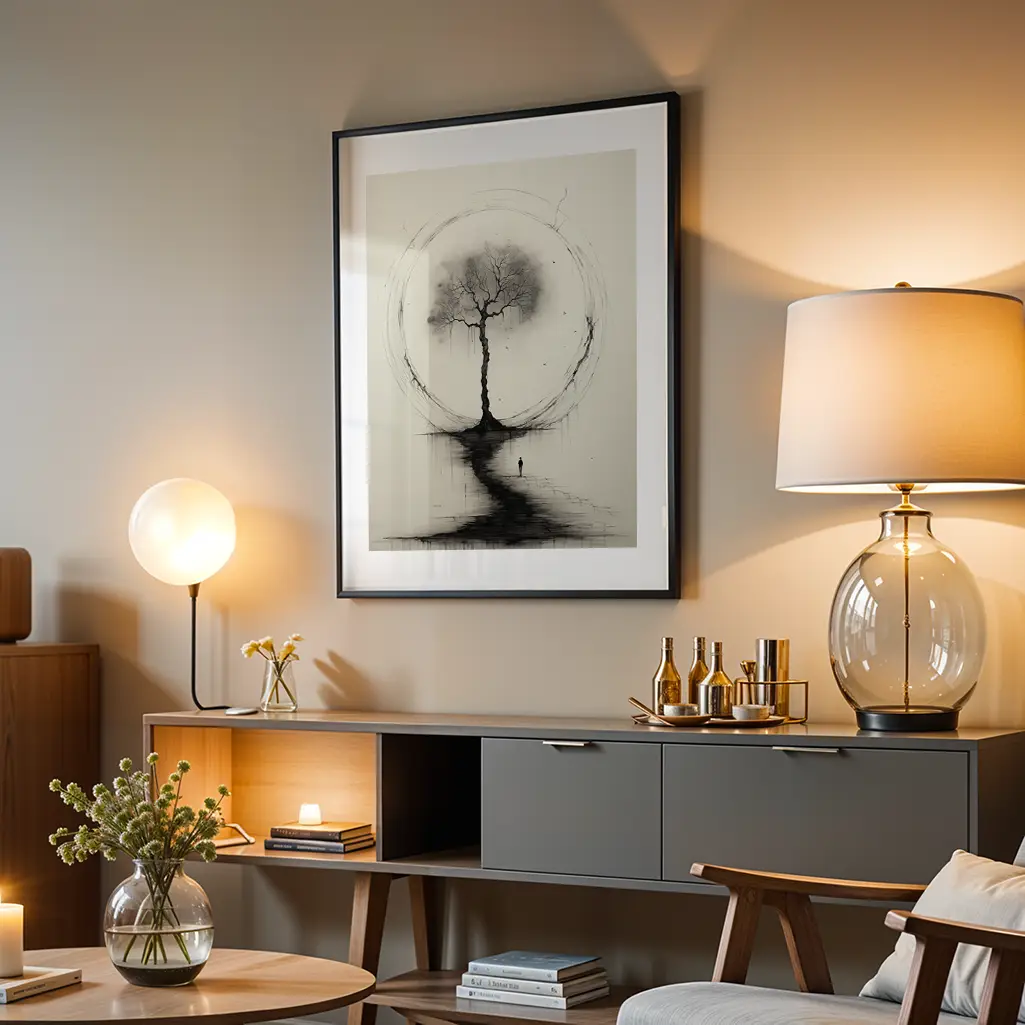
Light, too, is part of wabi-sabi meaning in design. Harsh, uniform brightness can flatten a room, leaving no place for shadow to gather. Softer, layered light lets depth and texture emerge. A single lamp that leaves parts of a wall in darkness can make the worn grain of wood or the uneven surface of a plaster wall feel almost lyrical. Dawn and dusk become collaborators, altering the mood of the same objects hour by hour.
There is also the matter of pace. Wabi-sabi asks you to let your home unfold gradually. Instead of rushing to finish decorating, you might live with a partially empty room and allow it to suggest what it wants over time. Perhaps the corner that was meant for a bookshelf insists on being left open and becomes a place for a single chair and a plant. Perhaps the gallery wall you imagined resolves into just three pieces that carry more meaning when they are not competing with ten others.
Finally, wabi-sabi is as much about your own inner posture as it is about your surroundings. When something chips or stains, notice your first reaction. Can you allow a beat of curiosity before the impulse to replace? Sometimes repair is the right choice; sometimes acceptance is. The art of kintsugi, in which cracked pottery is repaired with lacquer and gold, is often cited as a wabi-sabi emblem. Its real lesson is not that all breaks should be gilded, but that a visible history can be more beautiful than an invisible one.
In a culture that often celebrates the new, the glossy and the flawlessly symmetrical, wabi-sabi offers a quieter aspiration: to live in rooms that speak honestly of time, use and care. Your home does not need to be perfect; it needs to be true. And as it turns out, truth, with all its chips and seams, can be remarkably serene.