
The Wall Behind Your Desk Is Doing More Work Than You Are
In a home office, the wall behind your screen is more than background; it is “the silent partner” in every email, call and idea you produce. Its colors and shapes will be in your peripheral vision for hours, quietly nudging your mood and attention. Treating that surface as an afterthought almost guarantees a space that feels flat or vaguely agitating, even if everything else is beautifully put together.
Designing wall art for a home office is less about decoration and more about calibration. The goal is not to impress visitors with a gallery wall, but to create a visual field that steadies you. You are aiming for an environment that feels intentional yet not overdetermined, expressive but not noisy. That means thinking about content, scale, and placement with the same care you would give to lighting or your chair.
Begin with how you actually work. If your day is heavy on video calls, the wall behind you becomes a public stage; it should look composed from a webcam’s narrow point of view. If you spend long stretches in deep focus, what you see when you glance up from the screen matters more than what others see of you. In both cases, your wall art should be legible at a distance, not reliant on tiny details, and organized around one or two clear visual ideas rather than many competing ones.
A practical starting point is to stand where your chair will be, look at the wall and notice your instinctive reaction. Does it feel blank and slightly draining, or chaotic and unfinished? This gut check is a form of “visual weather report.” Your task is to move the conditions toward calm, with enough interest to keep the mind from feeling boxed in. Think of your office wall as a horizon line: it should offer a sense of direction and possibility without demanding constant attention.
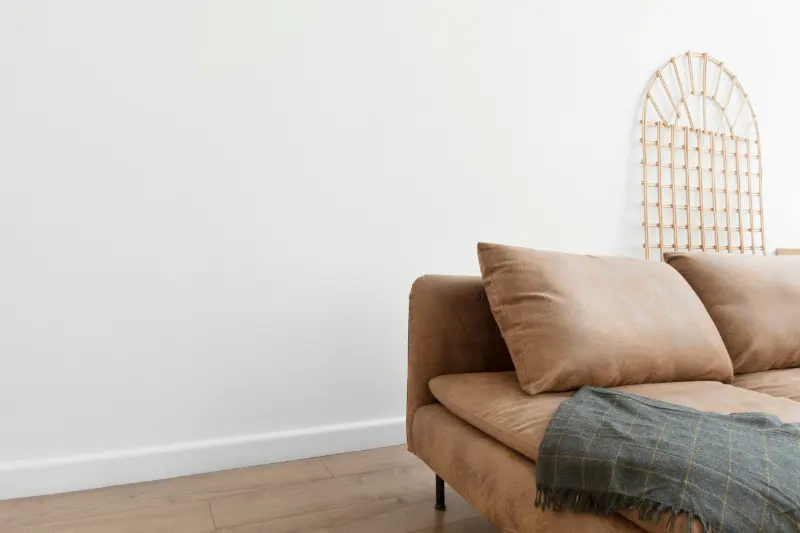
Scale is where most people go wrong. A single small print, stranded on a wide wall, reads as timid, almost apologetic. On the other hand, a dense cluster of tiny frames can turn fussy, especially in a small room. In a workspace, aim for fewer, larger pieces that establish clear anchors. A pair of medium-size works hung side by side above the desk can create a gentle rhythm. One large piece, centered and hung with its midpoint roughly at eye level when seated, can act as a visual “breath” that stabilizes the room.
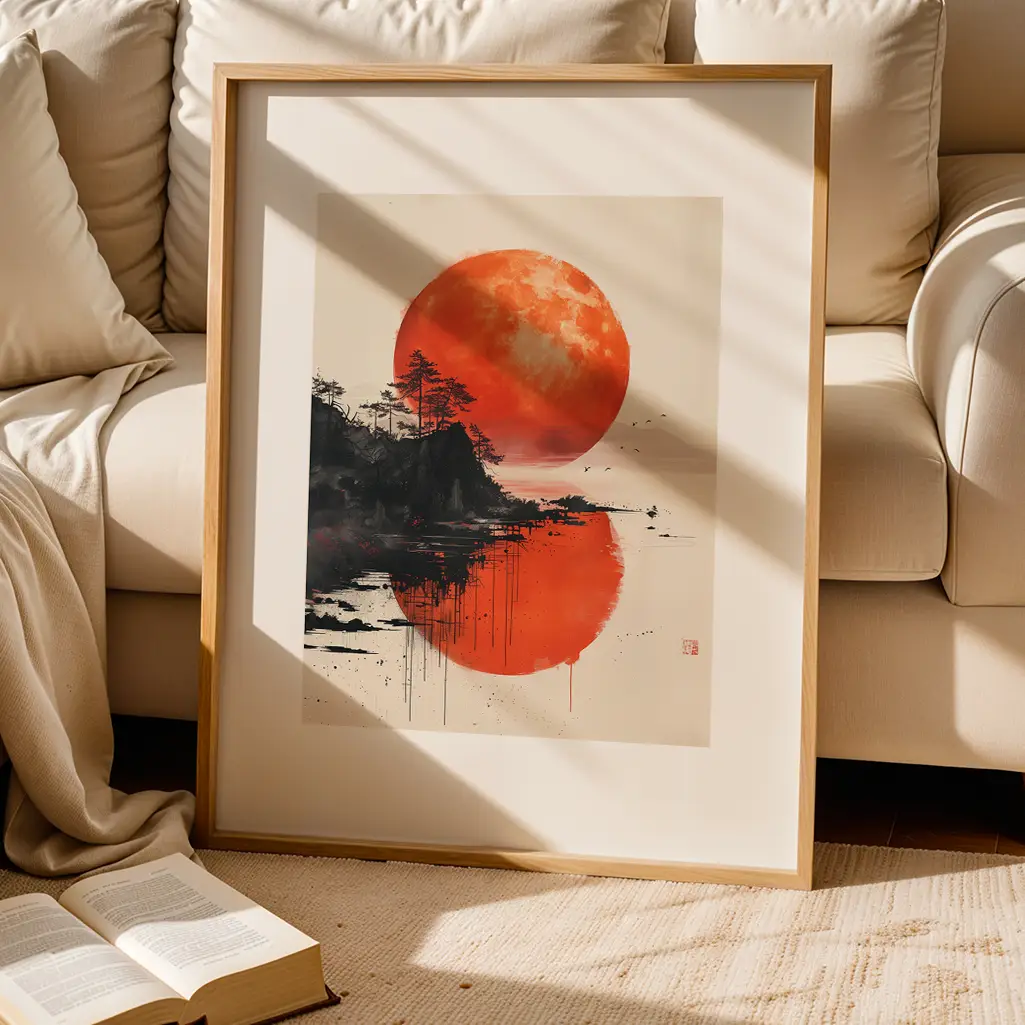
Color deserves similar precision. If your office leans neutral—white walls, light wood, restrained furniture—your art can carry the emotional temperature. Blues and soft greens tend to promote focus and a feeling of spaciousness. Warm oranges and muted reds can be energizing but should be handled sparingly; a large field of bright red over your monitor may end up feeling like a fire alarm. The trick is contrast with restraint: a mostly calm palette with one or two confident notes so your eye has somewhere reassuring to land.
Choosing Art That Supports, Not Steals, Your Focus
Once you understand what the wall needs to do, the question becomes what, exactly, should live there. This is where personality and psychology meet. The most successful home office art manages a quiet double act: it reminds you of who you are and what you care about, while also getting out of the way when you are trying to think.
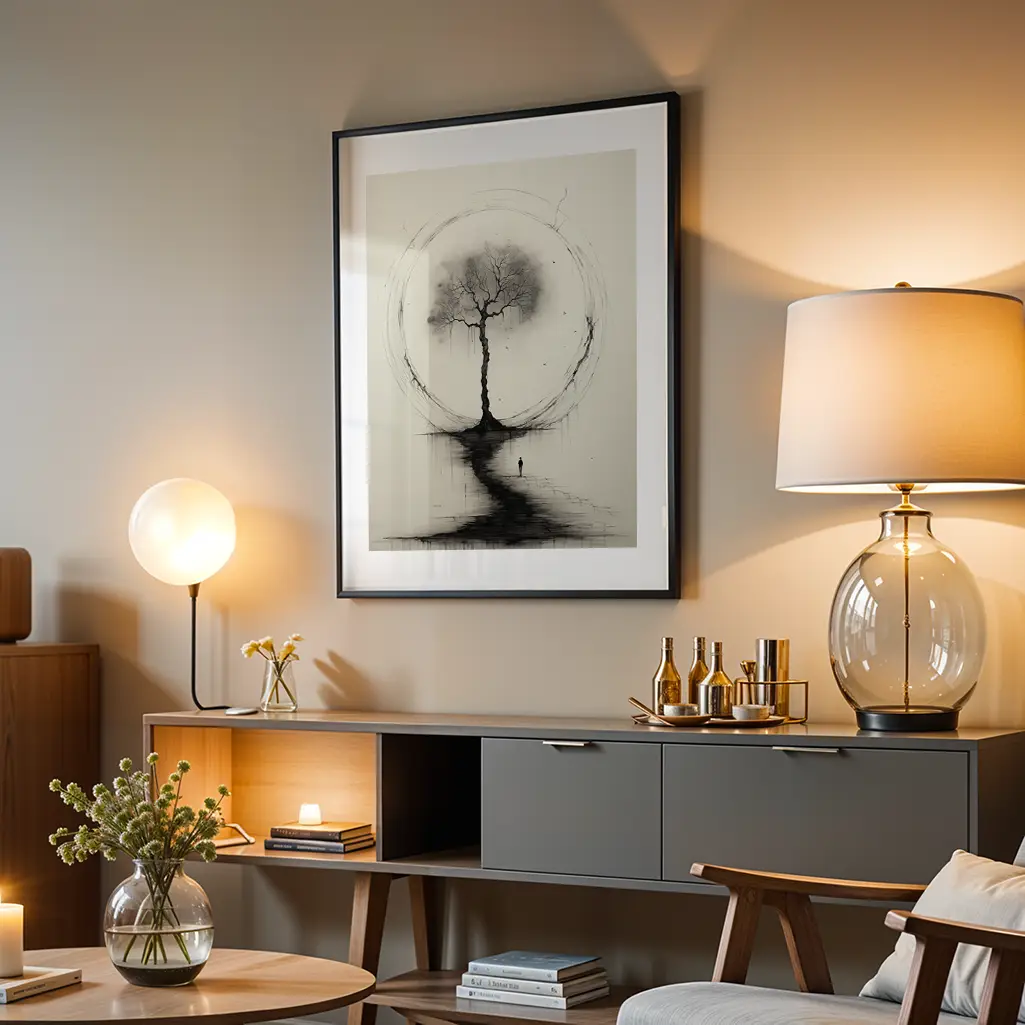
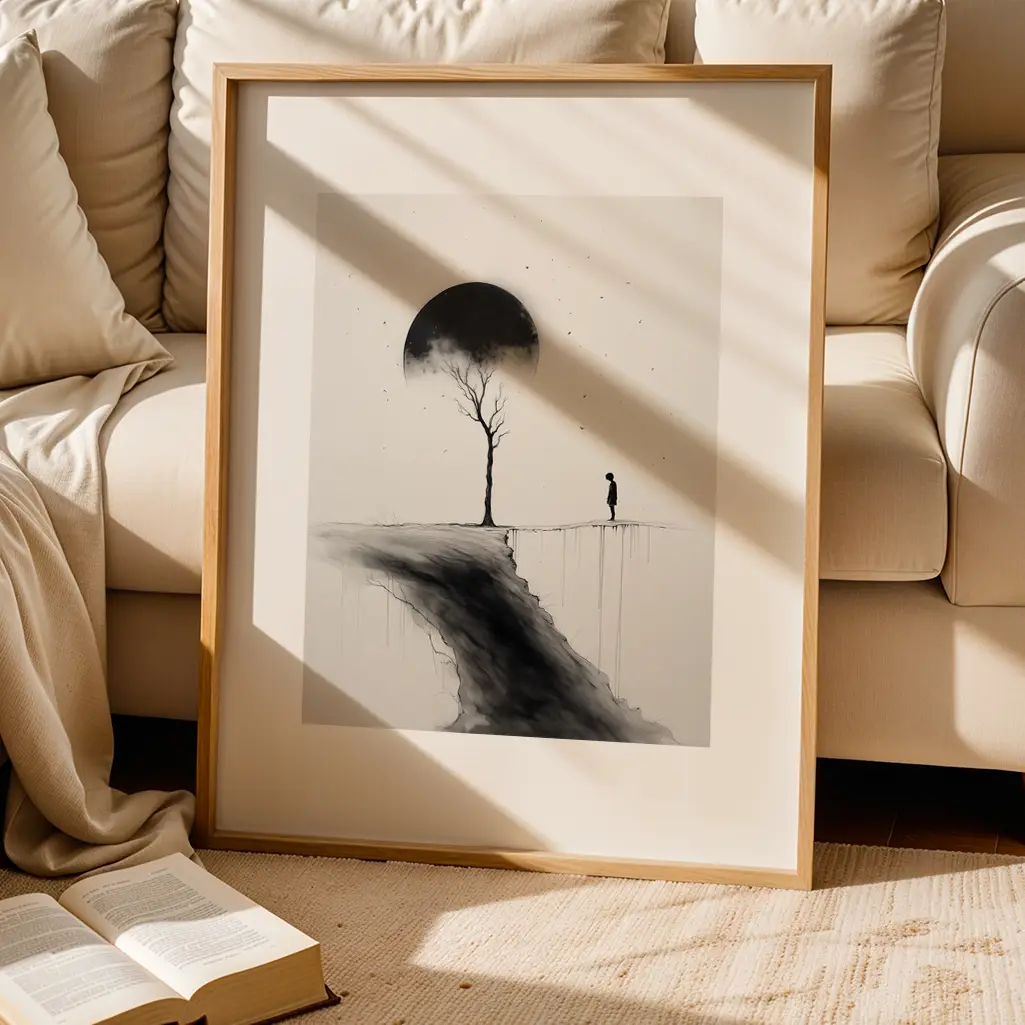
Abstract work is often ideal for offices because it sidesteps narrative. A soft, gestural painting or print with a limited palette can “hold” emotion in the room without telling a literal story that tugs at your thoughts. Think of misty gradations, slow curves and layered washes that echo natural forms rather than sharp graphics that shout for attention. If your days are already full of hard edges—spreadsheets, slide decks—these kinds of pieces can serve as a counterweight.
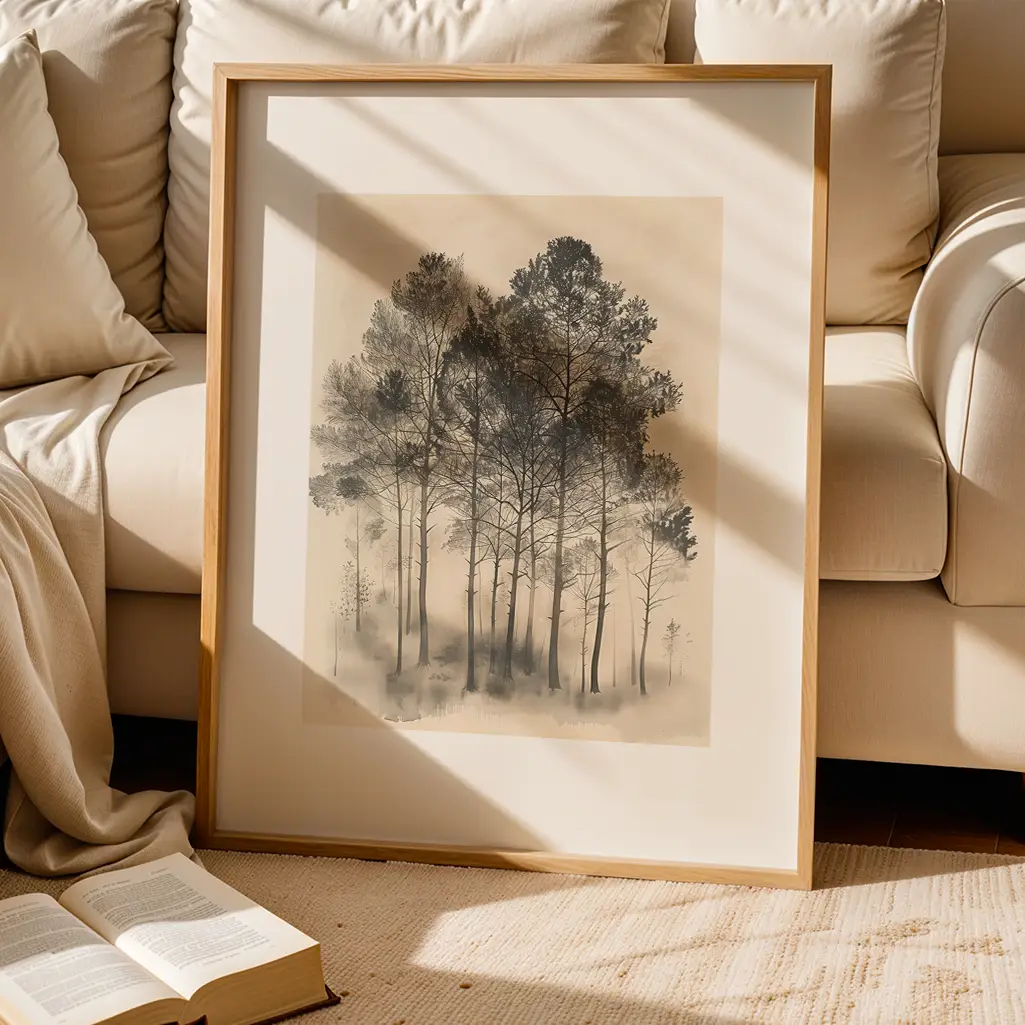
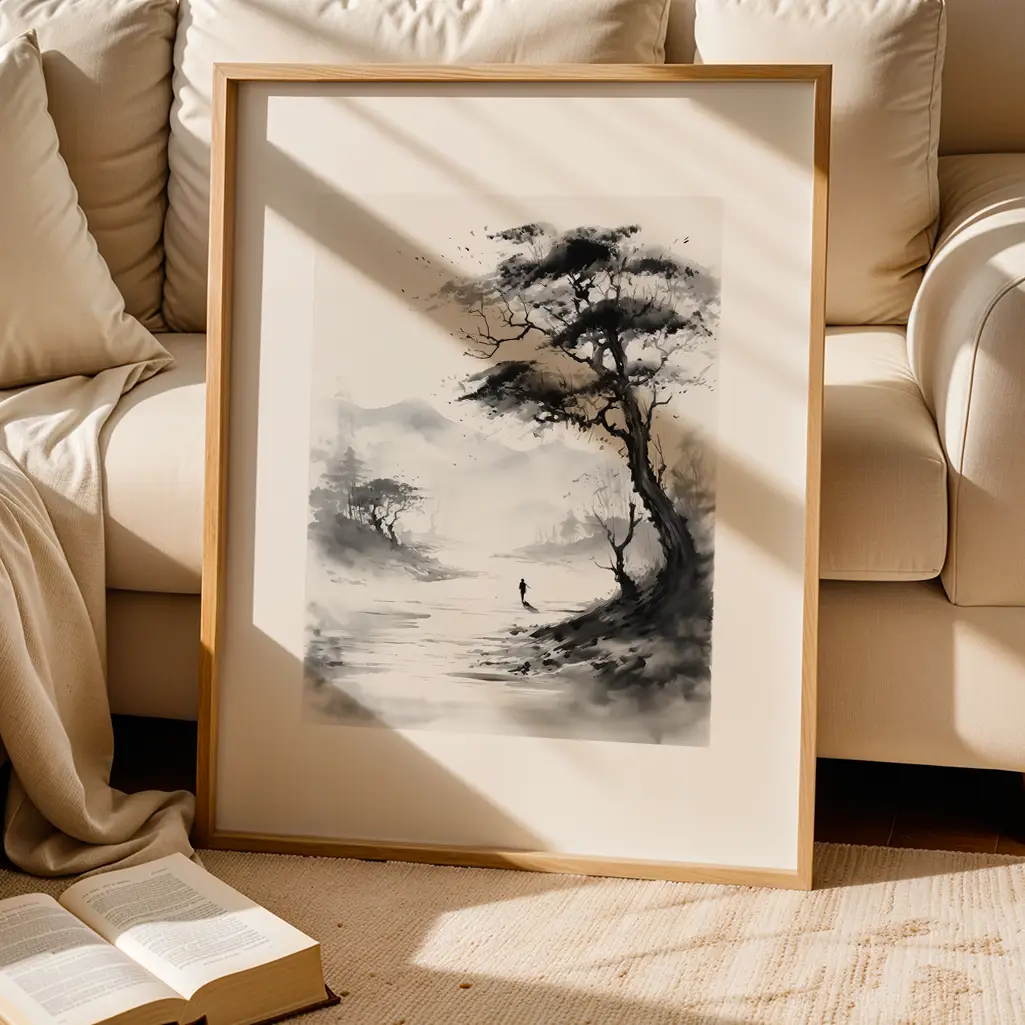
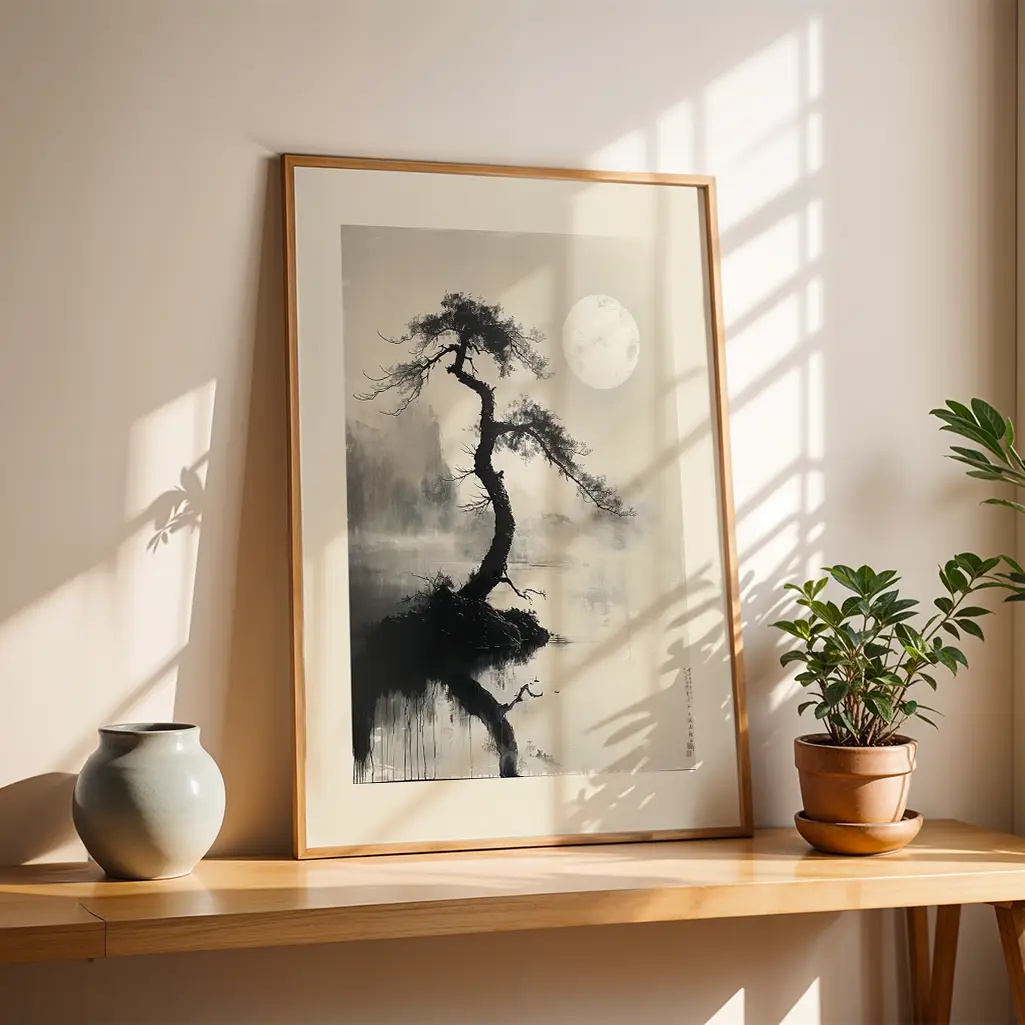
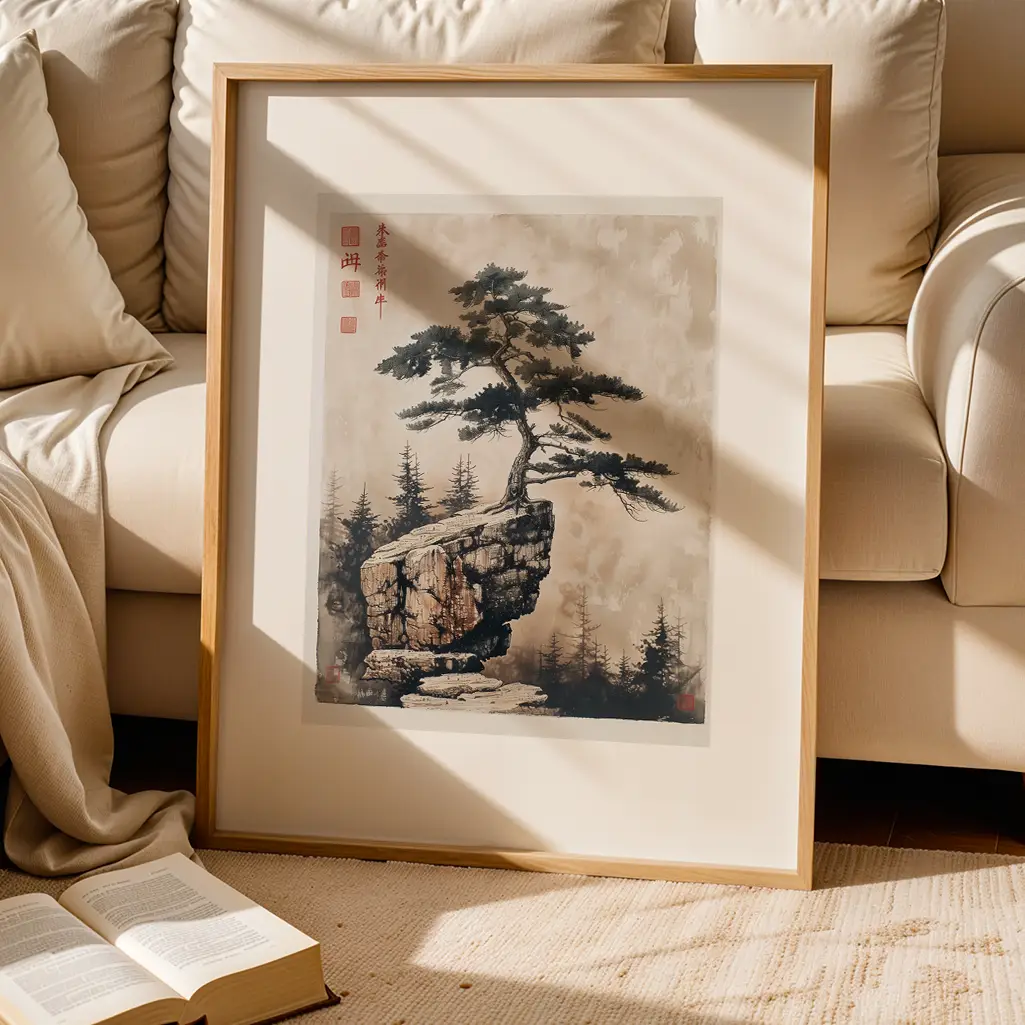
Landscape photographs and paintings bring a different kind of calm. A distant coastline, a line of trees, a misty mountain can function as a visual escape hatch during a difficult call. The horizon in such images offers a subconscious sense of orientation: there is a place your mind can travel to and return from. If you choose scenes, look for ones that feel open rather than crowded, with clear light and a depth that invites breathing room.
Then there is art that speaks to your work itself. Architectural drawings, typographic posters, scientific diagrams or vintage patents can anchor your sense of purpose without becoming corporate wallpaper. The key is editing. One beautifully framed schematic or a single oversized letterform can feel intentional; a collage of every inspirational quote you have ever liked will quickly read as visual noise. When it comes to text on walls, “one strong sentence beats a chorus of slogans.”
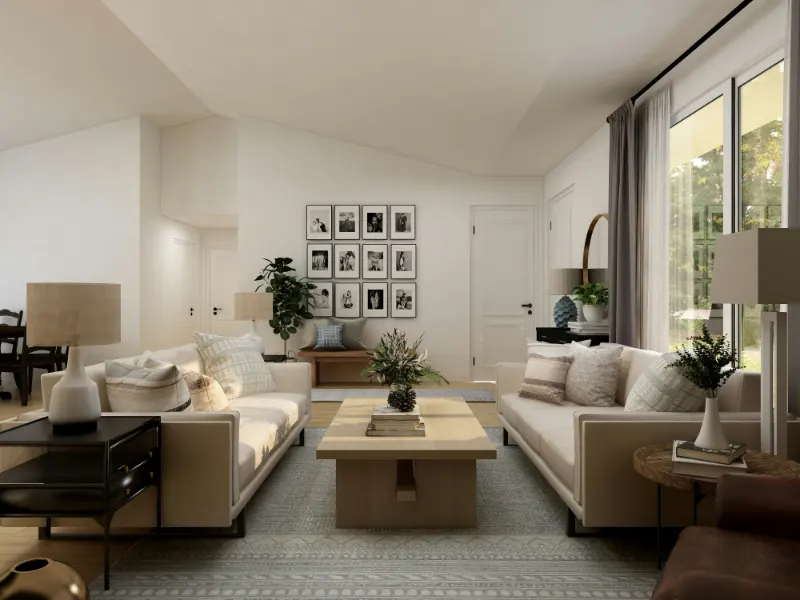
Personal photographs are powerful but tricky. In a home office, they can easily tilt the space toward the living room or bedroom, blurring the psychological boundary between work and private life. If you include them, consider black-and-white prints with consistent frames and mats, arranged in a calm grid. This turns intimate memories into a quiet, cohesive field rather than a bulletin board of overlapping moments. You are looking for a sense of continuity, not a reminder of every obligation at once.
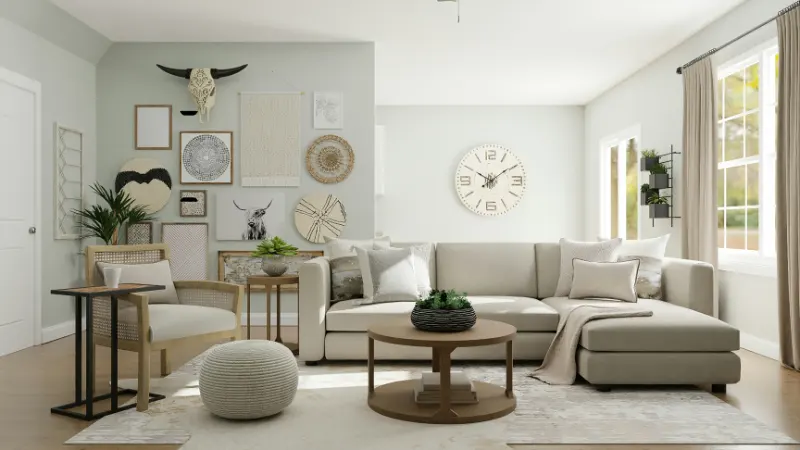
Materiality matters as much as imagery. Canvas, paper, wood and even textile pieces absorb and soften light differently. A woven wall hanging behind your screen, for instance, can subtly improve acoustics on video calls while adding tactile depth to the room. Matte finishes are almost always better than glossy ones in a workspace; they reduce glare and make the art feel integrated with the wall rather than floating above it.
Arranging, Layering and Living With Your Choices
Hanging wall art in a home office is less about following strict rules and more about creating a composition that feels balanced from where you actually sit. Start with the “center of gravity”: usually the wall behind or beside your desk. The midpoint of a primary piece should align with your seated eye level or slightly above, so that looking up to it feels like a gentle stretch, not craning your neck.
If you are drawn to multiple works, think in terms of clusters that share something—tone, color, line quality—rather than random variety. Two or three frames in a horizontal row can echo the shape of your desk, grounding it. A vertical pair can make a low ceiling feel taller. Leave generous breathing space between pieces; the negative space is part of the art, offering your eyes places to rest.
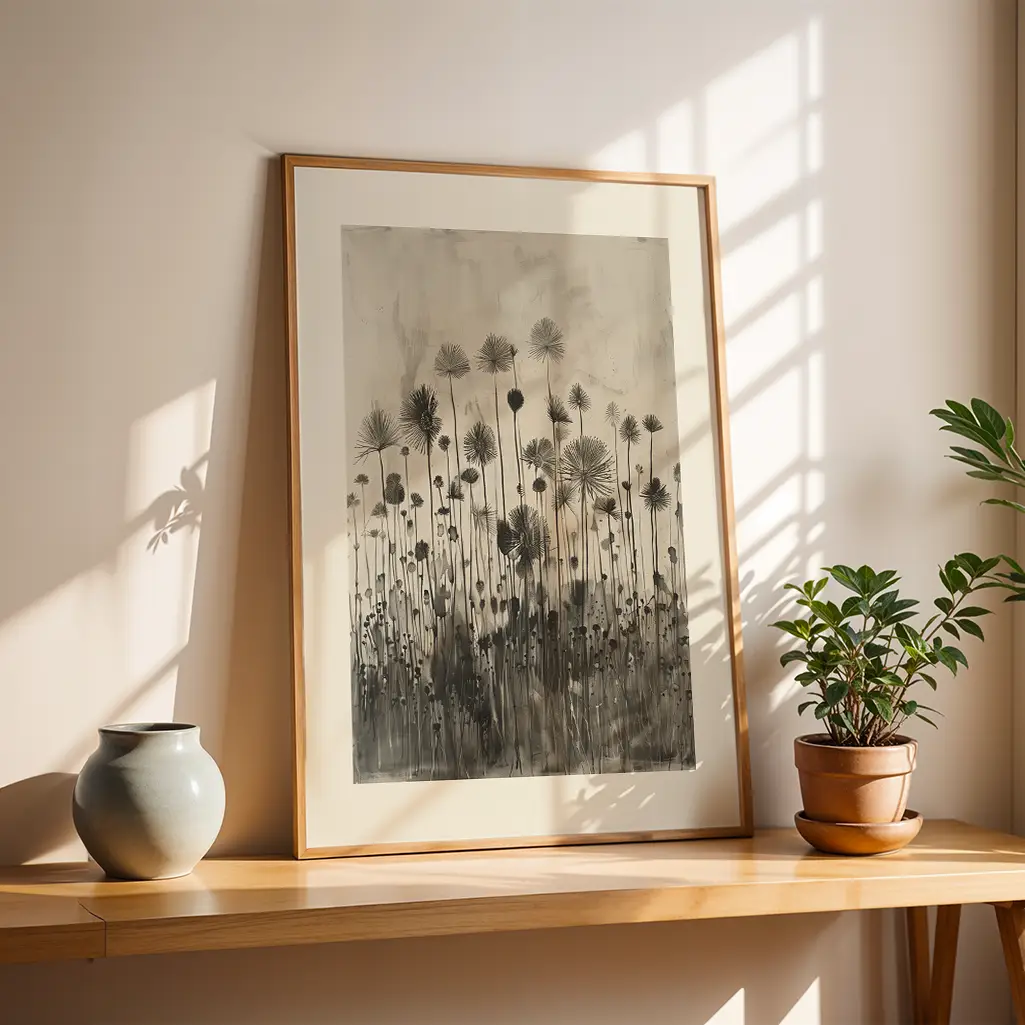
Consider how your wall art interacts with shelves, lamps and plants. A framed piece partially overlapping a tall plant or sitting just above a low shelf can create a sense of depth, as if the room extends beyond the wall. This is where a home office can borrow from the calm of a reading nook: layered objects, but each with its own respectful distance. Avoid lining up frames with the tops of doors or cabinets unless you are intentionally creating a strict architectural rhythm; small misalignments can subtly irritate over long workdays.
Lighting can quietly transform everything you hang. A single adjustable wall sconce angled across a painting can add warmth and texture in late-afternoon Zoom calls, while a cool overhead light alone may flatten even the most beautiful print. If you cannot install fixtures, a desk lamp with a swivel head can wash light onto the wall, bringing art to life during darker hours and turning the space into a soft cocoon when the workday ends.
Allow for evolution. A home office is not a museum; it is a living studio for your daily thinking. You might start with one large abstract print and an empty expanse beside it, then gradually introduce a small drawing, a postcard, a framed note that has meaning only to you. Rotating pieces seasonally or as your work shifts can refresh your relationship to the room without a full redesign. The wall becomes a record of your trajectory, not just a backdrop.
In the end, the best wall art ideas for home office walls share a single quality: they create a sensation of rightness that disappears as you settle into your tasks. You look up, feel subtly steadier or more spacious, and turn back to your work. The art has done its job not by demanding your attention, but by quietly rearranging the atmosphere in which your day unfolds.