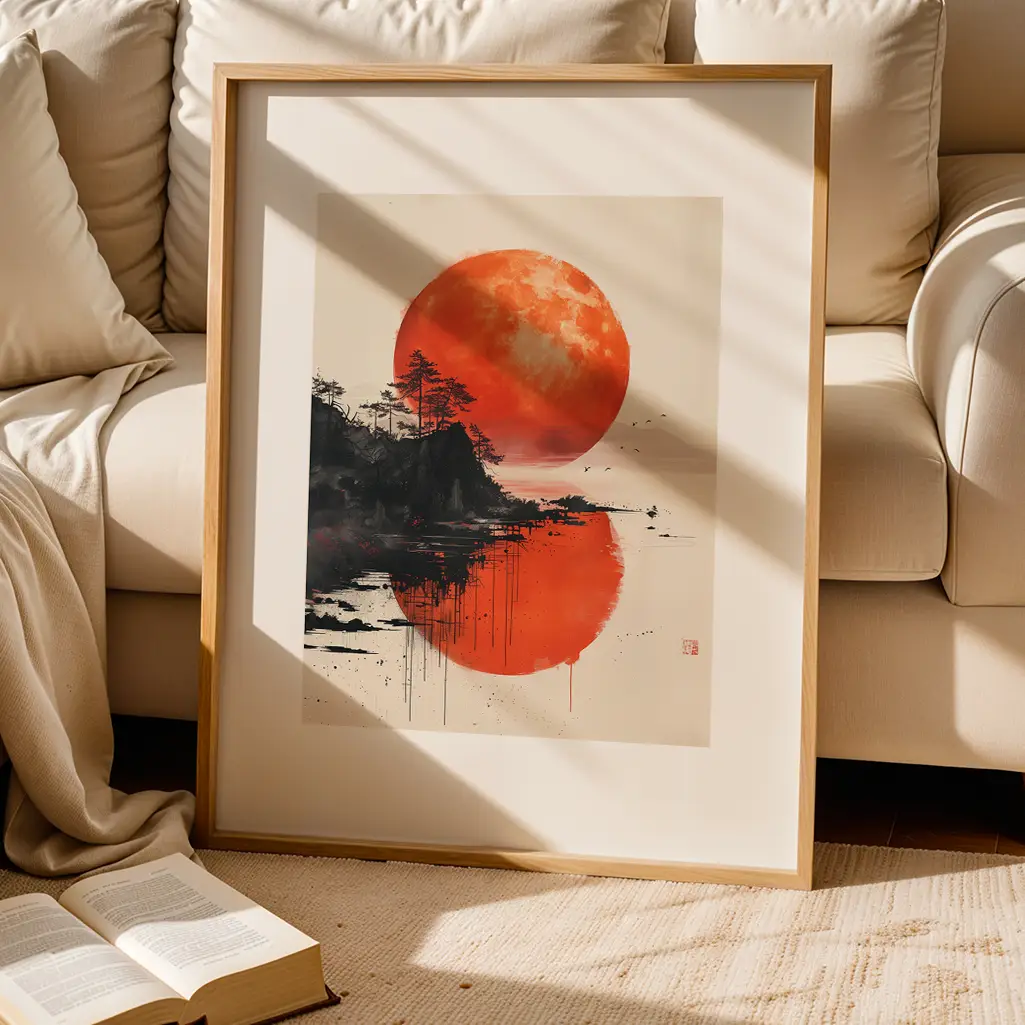

The Quiet Precision of Karuna
In everyday language, compassion is often confused with a vague softness, a willingness to be endlessly accommodating or emotionally porous. Buddhist "karuna" points in a more precise direction: it is the lucid wish that suffering and its causes be relieved, for oneself and for others, without being swallowed by drama or sentimentality. It is as much about clarity as it is about feeling.
In classical Buddhist thought, karuna sits alongside "metta," or loving-kindness. Metta is the wish that beings be happy; karuna is the wish that they be free from suffering. For the tradition, the two are inseparable. To want someone’s well-being is also to want their pain eased; to genuinely see their pain is to glimpse their capacity for well-being. Where the modern imagination might picture compassion as a flood of empathy, Buddhism is wary of that flood. The texts often describe the need to hold compassion with wisdom, so that it does not collapse into exhaustion, resentment, or self-sacrifice that quietly breeds bitterness.
This is one reason why karuna is considered an expression of insight rather than simply a mood. It begins with seeing that suffering is not a personal failure but a structural feature of life: bodies age, relationships shift, plans fall apart. In that light, compassion is not pitying someone from above; it is standing beside them inside a shared vulnerability. The difference is subtle but crucial. Pity divides: "your" problem, "my" stability. Karuna, as it is taught in many Buddhist schools, dissolves that division without erasing boundaries. It sees that the same fragile conditions shape your life and mine, and responds with care that does not need to make a spectacle of itself.
To live with this kind of compassion is not to be perpetually soft-spoken or agreeable. It can mean saying a difficult no, or setting the kind of boundary that protects everyone. Buddhist stories are full of teachers whose compassion looks, from the outside, more like firmness than indulgence. Karuna is not about letting anything pass; it is about asking what, in this moment, actually reduces suffering in the long run. Sometimes that answer is rest. Sometimes it is a clear conversation. Sometimes it is the quiet decision to stop doing something that harms you, even if others are comfortable with the status quo.
Seen from this angle, compassion becomes a kind of design principle for how we arrange our time, our attention, even our furniture. It asks, almost architecturally: what supports life here, and what subtly erodes it?
Karuna as a Way of Seeing Daily Life
Karuna in Buddhism is often trained through contemplative exercises that look deceptively simple. Practitioners are encouraged to call to mind someone they care for, notice their joys and struggles, and silently wish that their suffering ease. Then they expand that circle: to neutral figures, to difficult people, to themselves. The point is not to force a particular emotion but to reshape the way the mind categorizes others. Instead of "ally" and "enemy," "useful" and "irrelevant," one gradually learns to see "vulnerable being," over and over again.
This shift in perception has a practical, almost tactile quality. When you begin to see others as fragile rather than as obstacles, your responses reorganize themselves. The barista who seems distracted is no longer an annoyance but a person in the middle of their own invisible story. The neighbor whose late-night noise keeps you awake becomes, in your imagination, a person negotiating loneliness or stress. You may still ask them to be quieter; the difference is that your request is less drenched in blame, and more rooted in a shared circumstance: we are all a little lost, trying to rest, trying to connect, trying not to fall apart.
The same perceptual shift can be turned inward. Buddhist teachings repeatedly insist that genuine compassion cannot exclude the one person you are always with: yourself. Yet self-directed karuna is not the same as perpetual indulgence. It is more like an honest, steady appraisal of cause and effect. You notice which habits reliably leave you depleted, which rooms in your home leave you tense, which ways of talking to yourself close down curiosity. Then, quietly, you begin to redesign some of those habits and spaces in favor of what actually reduces your own suffering in a sustainable way.
There is a small paradox here. The more you include yourself in compassion, the less self-absorbed you become. When you stop treating your needs as either emergencies or embarrassments, they become easier to meet in simple, untheatrical ways. Instead of oscillating between overextension and withdrawal, you can move with a steadier rhythm, which in turn makes it easier to notice others. Karuna is not a heroic state reserved for saints; it is closer to a rhythm you gradually learn to keep, even on unremarkable days.
Designing a Home That Practices Karuna
If compassion is a way of seeing and responding, then your home is the laboratory where that way of seeing is tested. Spaces, after all, teach. They tell us what is acceptable, what is urgent, what must be hidden. A room full of precarious objects and harsh lighting whispers that perfection is more important than ease; a home with no quiet corner at all quietly teaches that rest is optional, always secondary to productivity or entertainment.
Bringing karuna into your living space begins less with shopping and more with listening. You can walk through each room and notice, as a Buddhist practitioner might notice thoughts in meditation, where your body tenses and where it exhales. Is there a chair you never choose because it faces a cluttered surface that nags at you? A hallway that always feels a bit too stark or accusatory? These small frictions are not decorative trivia; they are micro-sources of stress that accumulate across days and months. Compassion, in the Buddhist sense, would invite you to respond to them as you would to a friend’s discomfort: not with immediate judgment, but with thoughtful adjustment.
That might mean simplifying a corner so it holds only what you genuinely use, rather than what you think should be on display. It might mean softening a room with a textile, a plant, or warmer light, not to mimic a magazine spread but to support the kind of attention you want to cultivate there. A meditation cushion in a sunny corner can quietly declare that inward time is not an afterthought. A small table by the door, where keys and mail land in an orderly way, can reduce the low-grade chaos that often colors the transition between public and private life. In each case, the guideline is the same: does this arrangement reduce unnecessary suffering, or subtly increase it?
Karuna also changes how you host others. A Buddhist-inflected approach to hospitality pays more attention to how comfortable people feel than to how impressed they are. It might mean offering a guest a place to sit that allows them to see the door if that helps them relax, or leaving a dimmer light on in the hallway so late-night navigation is gentler. It might mean creating a shared space, however small, where people can be quietly together without the pressure to constantly talk. Such choices do not advertise themselves as virtuous; they simply allow a visit to be less taxing, more restorative.
In the background, there is an architectural question that echoes the central question of Buddhist compassion: are you designing for appearances, or for the deeper currents of experience? Karuna leans toward the latter. It suggests that the beauty of a home is measured not only by its lines and objects but by how people breathe inside it, how easily they can put down their worries for a moment, how gently they can pick them up again when they leave. A compassionate space, like a compassionate mind, does not erase difficulty; it simply refuses to add unnecessary hardness on top of what is already hard.
In this sense, practicing karuna at home is less about adopting a particular aesthetic and more about adopting a particular question, asked again and again in large choices and small: in this room, with these people, at this hour, what arrangement of things and attitudes would be kindest?