The koan that refuses to say yes or no
In a quiet Zen monastery centuries ago, a monk asked his teacher a question that sounds almost quaint: “Does a dog have Buddha-nature?” In classic Buddhist teaching, the expected answer was clear. Everything has Buddha-nature, the innate capacity to awaken. The teacher, the Chinese Zen master Zhaozhou, replied with a single word: “Mu.”On the surface, “Mu” is sometimes translated as “no.” But that translation flattens it into the kind of answer you might toss off in a text message. In Zen, “Mu” isn’t a simple negation; it is a refusal to accept the question on its own terms. It is like a hand that gently takes the question apart, suggesting that what you are asking cannot be answered by choosing between yes and no at all.
The word itself has roots in classical Chinese and Japanese where it can mean “nothingness,” “without,” or “emptiness.” But Zen teachers use it not as an abstract concept, but as a tool, almost like a tuning fork for the mind. Students sit in meditation with the koan, “Does a dog have Buddha-nature? Mu.” They pour their awareness into that one syllable until the usual dividing lines between subject and object, question and answer, start to fray.
“Mu” is not an opinion about a dog. It is the sound of the conceptual frame cracking. It is what appears when you realize that the question, shaped by ordinary logic, cannot touch what Buddha-nature actually is. It is like asking, “Is the color blue heavy or light?” The problem is not that you chose the wrong side; the problem is the either-or frame of the question itself.
This is why Zen teachers sometimes call “Mu” a “wedge.” It slips into the grain of your thinking and opens it up. Faced with “Mu,” thought cannot settle into its usual tracks. Instead, you are invited to experience directly, without the screen of fixed categories. The monk in the story does not receive more information. He receives a small, disciplined shock to the system of his assumptions.
In everyday terms, “Mu” is what appears at the moment when you recognize that your habitual way of slicing the world is itself part of the problem. Rather than choosing a side, you loosen the structure that insists on sides in the first place.
From empty concept to lived space
So what does any of this have to do with the way you design a home, arrange a shelf, or choose a sofa? More than it might seem. The same habit that pushes us to demand clear yes-or-no answers also drives us to fill our rooms with objects, functions and visual noise. We ask ourselves questions that are secretly cramped. Is this corner for working or relaxing? Is this wall artful or practical? Is this room minimal or cozy? We answer by picking a side, and then we decorate accordingly.Applying “Mu” to your space is not about importing some exotic spiritual décor. It is about noticing how binary your design questions can be, and gently dissolving that frame. Instead of insisting that every choice stamp a room as one thing or its opposite, you allow it to be more open, more fluid, more responsive to how you actually live.
Imagine a living room that you have silently defined as either a social zone or a retreat. Under that logic, you might either crowd it with seating or strip it down in the name of purity. To answer with “Mu” is to step back and ask whether the question itself is binding you. Perhaps the room does not need to be nailed down as one identity. It can hold quiet in the morning and conversation at night. The design then shifts away from declaring what the room is, and toward supporting the range of moments that unfold there.
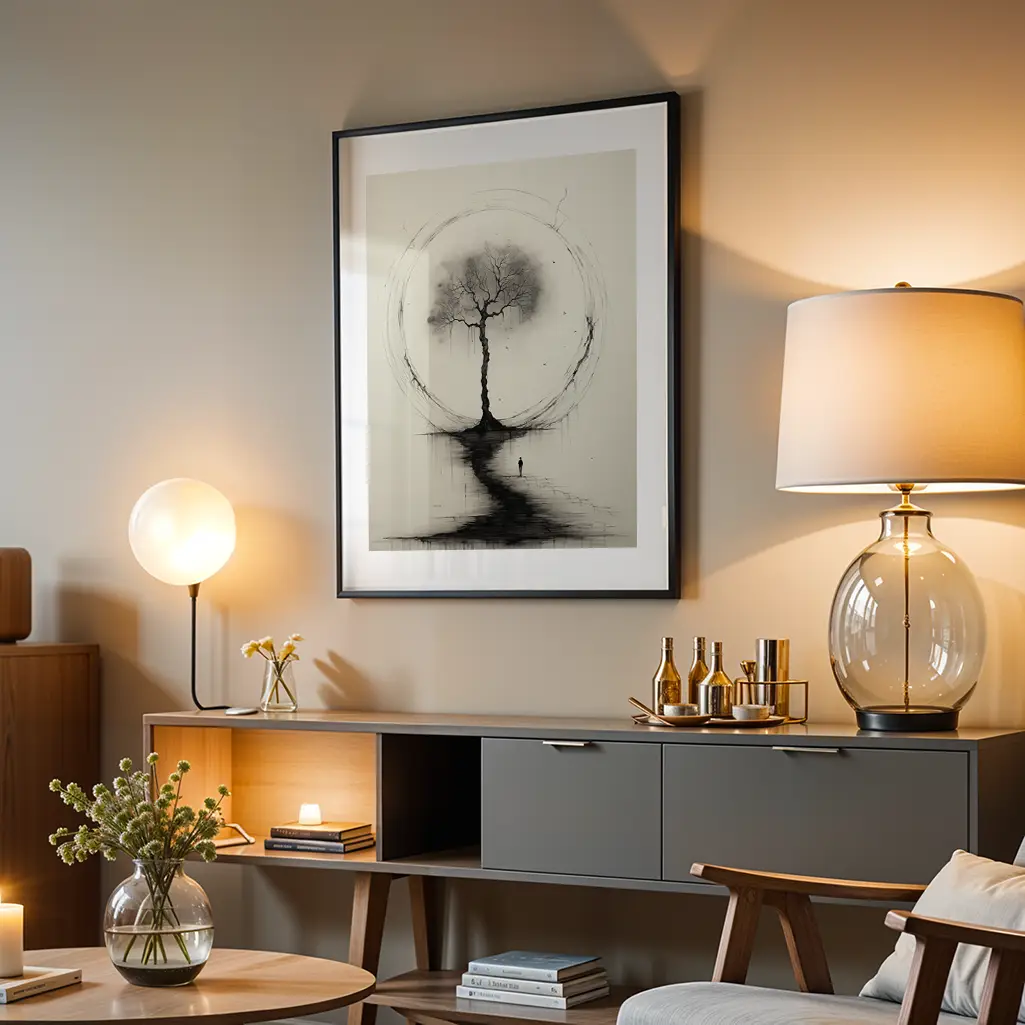
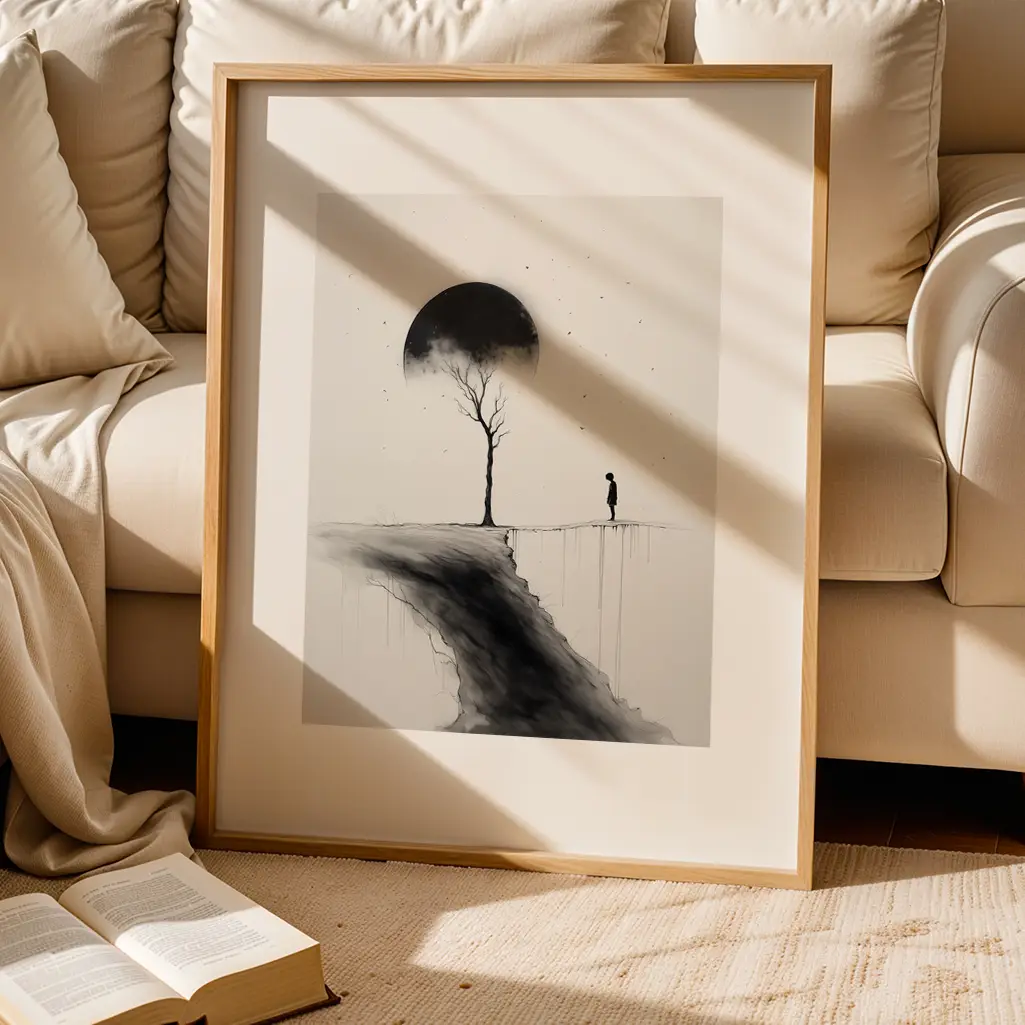
This is where absence becomes a design tool. In Zen aesthetics, what is left open or unfilled is not an afterthought; it is the space that allows everything else to breathe. Call it negative space, “ma,” or simply room to exhale. When you resist the urge to answer every empty patch of wall with another object, you are practicing a form of “Mu.” You are declining the default question, “What can I put here?” and discovering what happens when you do not rush to fill it.
Even color and texture can be approached this way. The conventional mind may insist on questions like, “Is this a warm palette or a cool one?” A “Mu” approach begins instead from how you want to feel. Calm might come not from choosing the correct color category, but from allowing natural materials, soft light and a few carefully chosen objects to exist without competing stories. You are not building a theme park of your taste; you are making a place where you can drop your guard.
The discipline here is subtle. It is the discipline of stopping before you answer, of noticing the question beneath the choice. Do you buy the new chair because the room truly needs it, or because the small discomfort of emptiness feels intolerable? Do you hang the extra artwork because it deepens the space, or because bare plaster makes you nervous? Each time you pause, you enact “Mu” in miniature. You refuse to be pushed into a reflexive yes or no by a restless mind.
Living with the quiet of not-yet
Zen teachers sometimes say that “Mu” is less a word to understand than a gate to pass through. In practice, that gate may look ordinary. It might be the choice to leave a low table unadorned for a while, or to let a corner stay unresolved instead of patching over it with a plant you do not love. In a culture that prizes “finishing” spaces, this can feel strangely transgressive.But the unfinished quality, the sense of not-yet, is often where the soul of a room lives. When you allow pockets of “Mu” in your home, you make a place not just for objects, but for change, for new habits, for mornings you have not lived yet. A blank stretch of wall today may be where a child’s drawing hangs tomorrow, or where nothing ever hangs at all. The point is not to script that future in advance. It is to trust that it can arrive without your constant intervention.
This is not the same as careless neglect. In Zen, “Mu” is paired with careful attention: floors swept, cushions straightened, flowers arranged with unhurried care. The emptiness is held, not abandoned. In design, the parallel is a room that is intentionally simple, not simply underfurnished. You might own fewer pieces, but each is chosen with a kind of quiet honesty. You are not furnishing a performance of minimalism; you are making enough space to recognize yourself when you walk in the door.
Over time, living with “Mu” can soften the pressure to define yourself through your things. Instead of reading your home as a verdict on your taste or success, you begin to experience it as a living question: How do I want to feel here, now? Some days the answer might be more light, less clutter; on others, it might be a stack of books left open on the table, a sign of a mind in motion. The room can flex with you because you have not locked it into a brittle identity.
The famous koan does not leave us with a better doctrine about dogs. It leaves us with a practice of questioning questions, a way of slipping out of the tight grip of either-or. Brought down from the monastery to the apartment or the house, “Mu” is a gentle permission. You do not have to resolve every corner into a statement, or every object into a proof of who you are. You can let some things remain open, unforced, and quietly alive.
In that loosened space, a different kind of clarity appears. Not the clarity of having the final answer, but the clarity of being at home inside a question that no longer needs to be closed.

.webp)