
The Emotional Architecture Of Home
Your home environment affects your mood long before you are conscious of it. Walk through your front door after a draining day and your nervous system is scanning long before your eyes have really looked around. It is reading light, color, clutter, echo, even the angle of a chair. What we call a "vibe" is often just your body running a rapid checklist of safety, comfort and possibility.Psychologists sometimes describe this as "environmental load" the sum of all the signals a space sends to your brain. High load feels like static: too many objects, competing colors, hard surfaces that bounce every sound back at you. Low, thoughtful load feels like a pause. Neither is good or bad in itself, but chronic high load forces your nervous system to work harder just to be in the room. That work can register as irritability, fatigue or an urge to escape your own living room.
Designers and architects have a quieter vocabulary for the same phenomenon. They talk about "visual rhythm," "resting points" and "negative space" the blank areas that allow your eye, and by extension your mind, to rest. A wall without art, a stretch of uncluttered floor, the empty center of a coffee table: these gaps create a kind of visual exhale. When every surface is occupied, your attention never finds neutral.
This does not mean your space must look like a magazine spread to feel good. Some people relax in rooms that border on maximalism because the objects hold stories and comfort. Others need monastic simplicity. The essential question is whether your rooms are working with your nervous system or against it. If you often feel tense at home and cannot quite say why, the answer may be in the quiet architecture of the space rather than in anything dramatic that happens there.
You can start noticing this architecture by paying attention to how your body behaves. Where do your shoulders drop half an inch the moment you sit down. Which corner you unconsciously avoid. The body is a sharper critic than the eye. If you always end up scrolling your phone in the kitchen instead of the living room you worked so hard to furnish, the kitchen is winning some design battle you have not named yet. Light, proximity to the door, scent from the stove these subtle cues matter because your emotional life is physical before it is intellectual.
Light, Color, And The Microclimate Of Calm
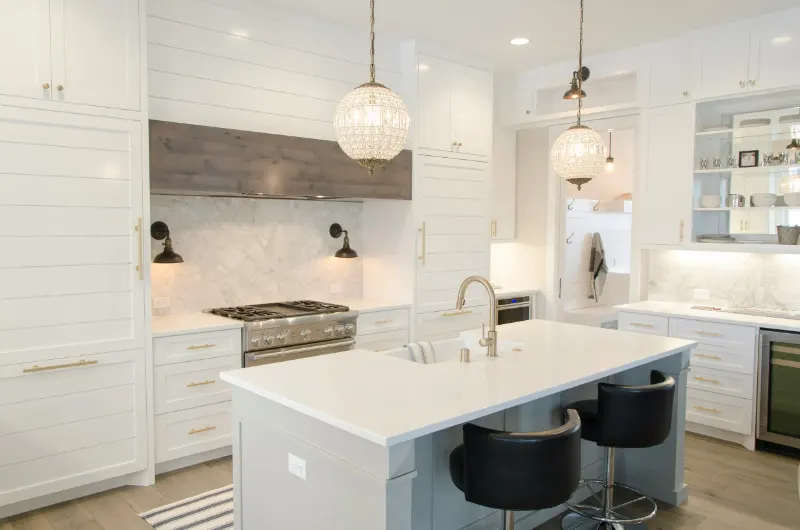
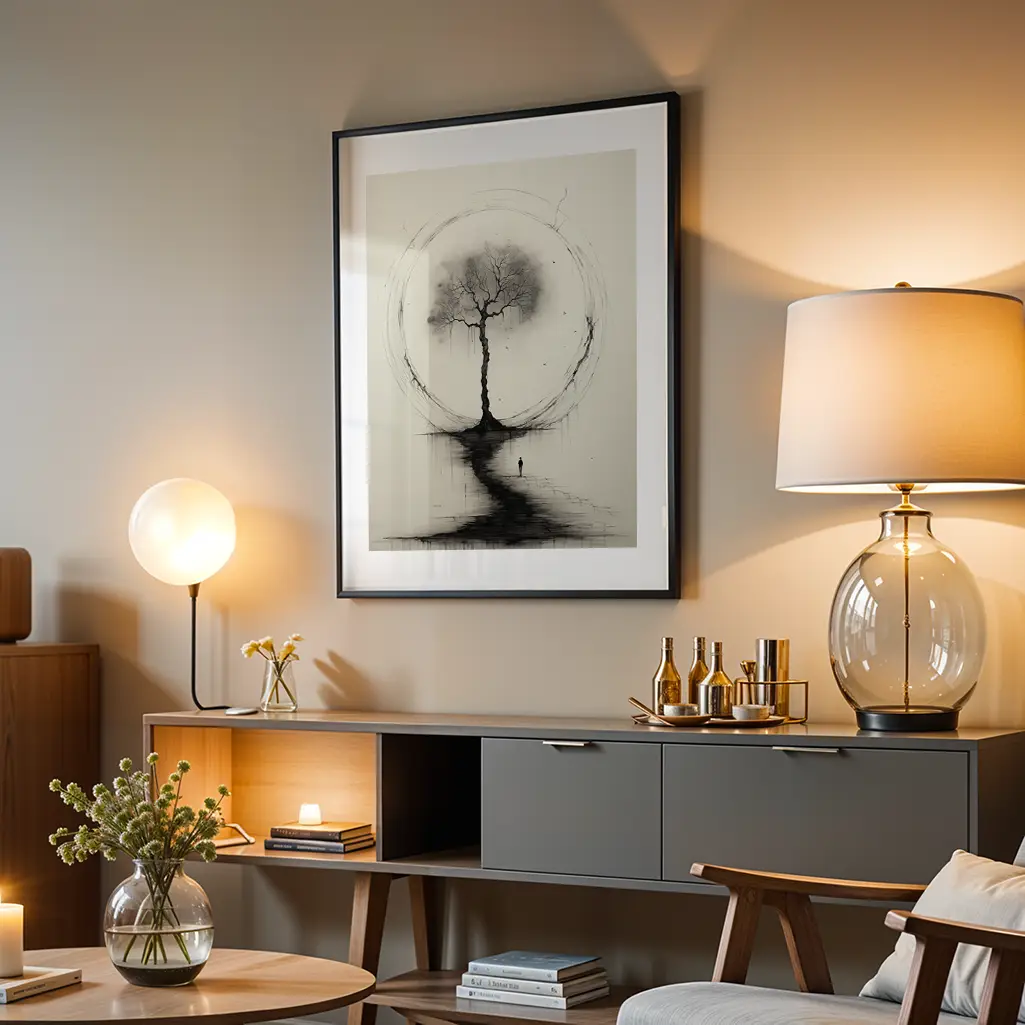
The most underestimated mood shaper in a home is light. Sunlight does not just make a room prettier; it calibrates your circadian rhythm and your production of serotonin and melatonin. A dim, cave like bedroom can feel cozy at night, but if it is also your workspace, your brain may struggle to fully wake. A home office lit by a single overhead fixture can feel like a late night airport no matter the hour, keeping you oddly wired and vaguely unsettled.Designers often chase what they call "layered light" to repair this. It means you have more than one source of illumination and more than one direction. A window gives you soft, shifting daylight. A table lamp casts a small pool of intimacy. A floor lamp throws light upward, softening corners. When these layers coexist, your brain reads the space as flexible: a place where more than one mood is possible. When there is only harsh overhead light, the mood is singular and usually not gentle.
Color works in a similarly layered way. We know the clichés about blue being calming and red being energizing, but what matters more is how saturated and how repeated a color is. A single vermilion pillow in a neutral room can feel like a lively friend at the party. Four vermilion walls will host the party for you, loudly, every day. Pale greens and earthy neutrals tend to sit closest to the colors of natural landscapes, which is why they often feel like a visual breath, but even these can overwhelm if used without relief.
When you choose colors, you are actually choosing the baseline emotional temperature of a room. Ask what you are asking the room to do, then adjust: a bedroom wants to hold you, a kitchen wants to wake you gently, a living room wants to expand or contract depending on who is there. Sometimes the smallest move repainting just the ceiling a quieter shade, or swapping a busy rug for a textured but plain one can gently tug the room in a calmer direction without erasing its character.
Think also about the way materials feel under your skin. Hard, shiny surfaces bounce light and sound; soft, matte textures absorb them. A glass coffee table and a leather sofa create a certain crispness, even if the colors are muted. Add a heavy woven throw, a wool rug, a linen curtain that moves when the window is open, and suddenly the same room seems to exhale. You have changed the microclimate not with a remodel, but with how the space touches you and how it handles sensory information.
Clutter, Meaning, And The Art Of Editing
Clutter is not just a visual problem; it is a narrative one. Every object in your home carries a small story: a decision made, a gift accepted, a past version of you who thought they might bake bread every Sunday. When too many of these stories sit in view at once, your attention is constantly tugged into the past or future. It is difficult to rest in the present when your desk is stacked with unfinished projects or your nightstand is a tower of books you feel you should read.This is why some researchers link visible clutter with increased cortisol levels and lower reported well being, particularly in spaces where you are supposed to unwind. Your brain interprets each unsorted pile as a small open loop, something not yet resolved. Multiply that by a bedroom floor of laundry and a kitchen counter of unopened mail and your home becomes a quiet chorus of things you have not done. The mood that follows is not just stress; it can be shame, or a dull sense of failure, even when you are objectively doing enough.
Decluttering in a way that supports your mood is less about minimalism and more about editing with kindness. Ask not "Do I deserve this object" but "Does this object still do a job for my present self" Some things earn their place because they are beautiful, some because they are useful, some because they are talismans of memory. The trouble starts when objects stay only because you have not decided. Decision, more than discarding, is what lightens a room emotionally.
Editing also creates what you might call emotional sightlines. When you wake up, what is the first thing your eyes land on. A clear stretch of wall, a framed photograph you genuinely love, a plant reaching toward the window will send a different morning message than a laundry basket or the glow of your laptop. The same square footage can either invite you into the day or remind you you are behind before you have begun.
The goal is not perfection; homes are for living, not staging. A truly supportive home environment is one that forgives you. There is room for a messy project on the dining table, as long as there is also one surface somewhere that stays reliably clear. There can be nights when dishes wait until morning, but if the sink is not already performing as storage for a month of what you would rather not see, the mood of the room will recover quickly.
In the end, your home is a sort of external nervous system, mirroring the states you move through and sometimes nudging you toward the ones you need. When you shape it with attention to light, color, texture and the stories your objects tell, you are not just redecorating. You are quietly revising the script of your days, creating a backdrop that makes ease a little more likely and agitation a little less inevitable. That is design at its most intimate: not a style, but a feeling you can live inside.