The quiet grammar of Zen symbols at home
Zen art is less a style than a form of guidance. It does not shout; it murmurs suggestions about how to see and how to live. When you place Zen symbols in your home, you are not decorating so much as adjusting the atmosphere of attention. "Enso" circles, mountains, pines and mist are a kind of visual grammar, each with a different way of saying pause, breathe, look again.Seen from a distance, these motifs feel almost obvious. Circles are circles, mountains are mountains. Yet in Zen, the familiar is used as a wedge to open unfamiliar states of mind. A circle drawn in a single brushstroke becomes a question about completeness. A mountain painted with two or three ink lines is less geology than backbone. Pines are not mere trees but stubborn, generous witnesses to time. Mist is everything we cannot quite see clearly but must navigate anyway.
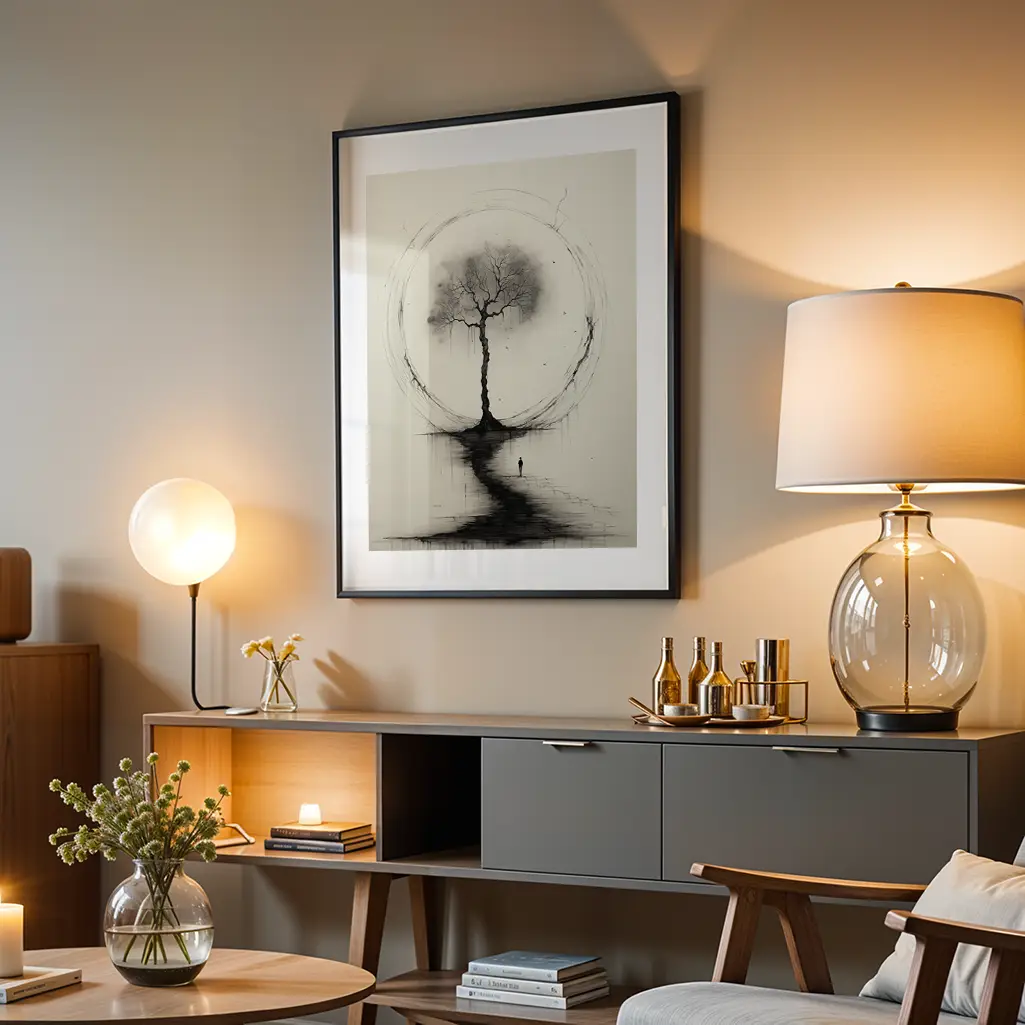
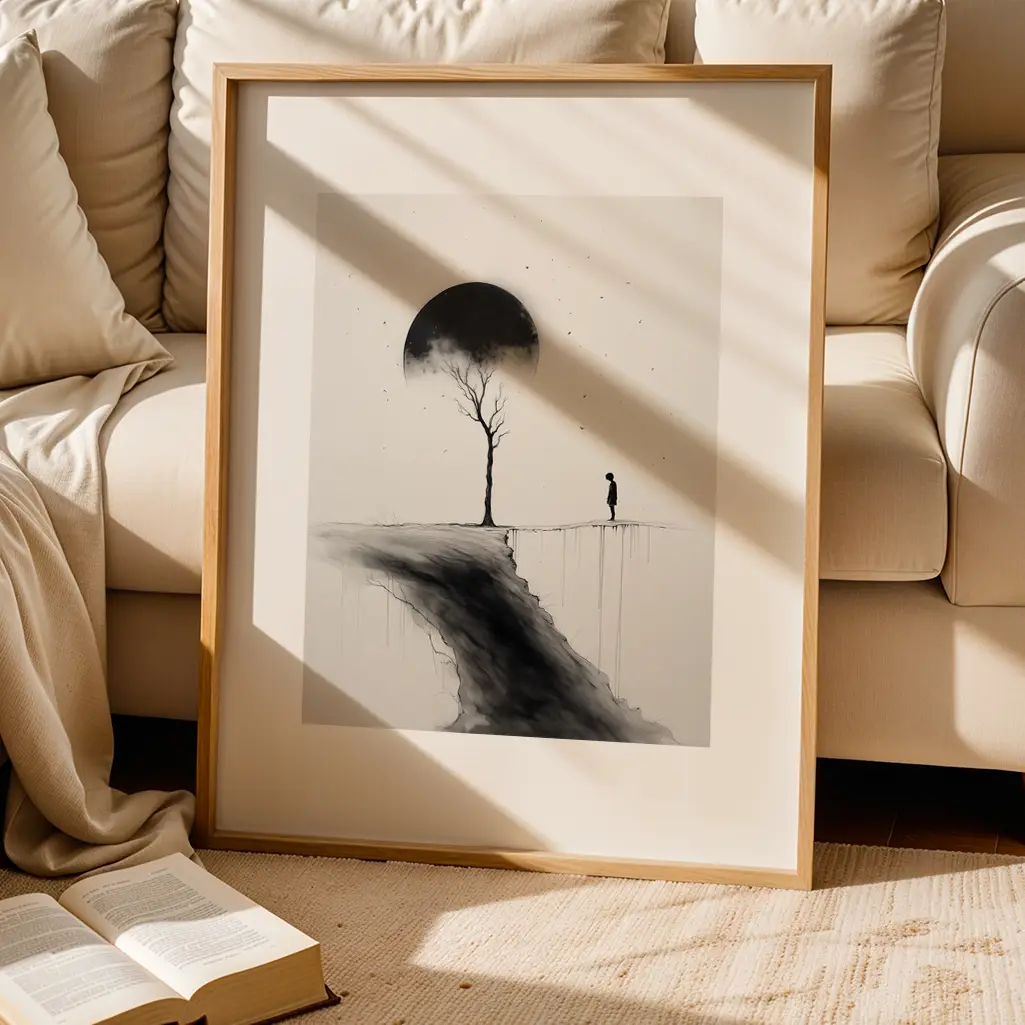
In interior design, these symbols can be powerful not because they are exotic but because they are disciplined. A quiet ink painting over a sofa carries a different kind of energy from a bright gallery print. One asks for conversation; the other invites contemplation. The challenge at home is not simply to bring in Zen symbols as decor, but to understand the logic beneath them so the space feels coherent rather than themed.
This begins with the insight that Zen art is about process as much as product. A slightly lopsided circle, a deliberately unfinished horizon, a pine with one awkward branch left in place instead of edited away, all signal that perfection has been traded for presence. Bringing that logic into your living room does not mean copying the look; it means allowing for a certain roughness, a visible hand, and the feeling that the room, like you, is still in progress.
Enso circles and mountains: form, emptiness, structure
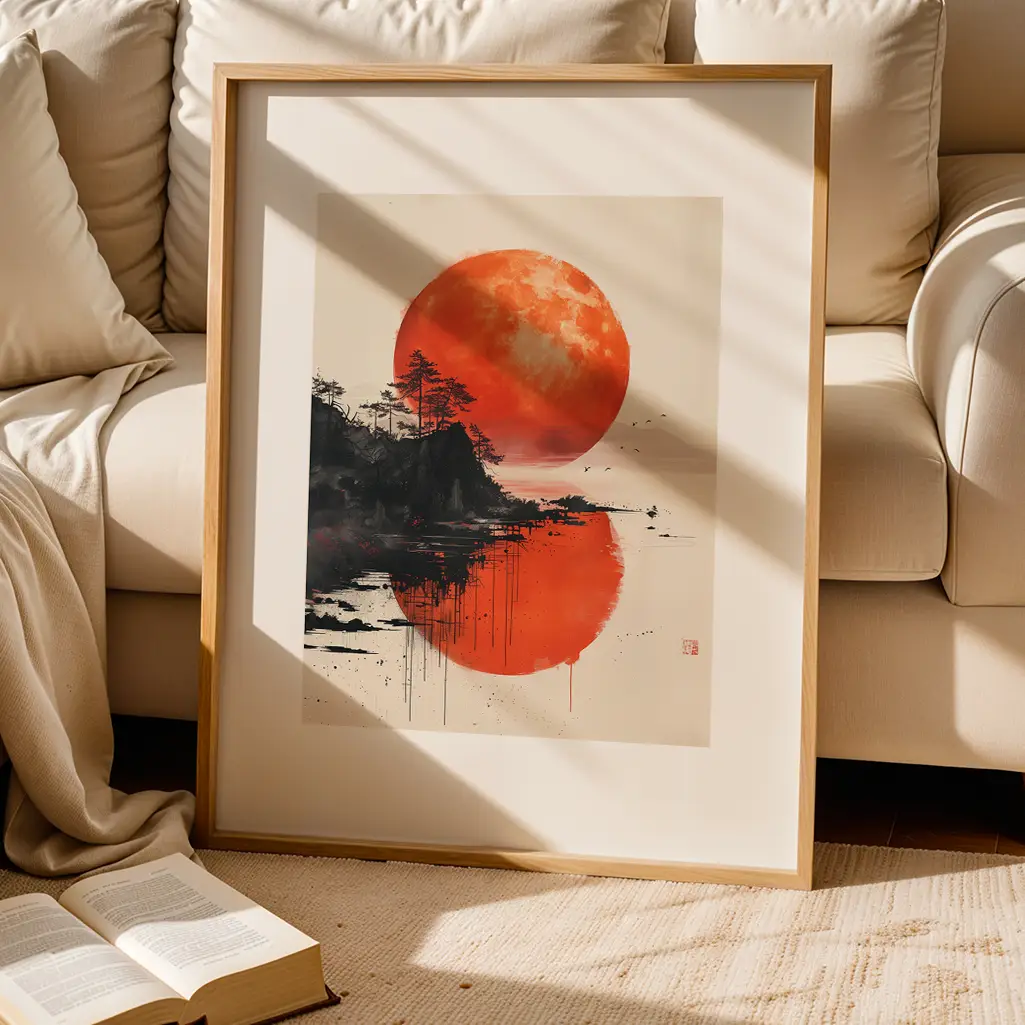
The "enso" circle is probably the most recognizable Zen symbol, a single stroke drawn in ink, often in one breath. It gestures toward the idea that form and emptiness are not opposites but continuous. The white interior of the circle is as important as the dark line that encloses it; the untouched paper is not background but active space. The artist reveals their state of mind in the stroke, but they also reveal an attitude toward imperfection. A slight break in the line is not necessarily a mistake; it can be a way of letting the world in.Hung in a home, an enso has a double effect. From across the room it reads as graphic simplicity, the kind of bold mark that modernist designers love. Up close the subtleties of the brushwork appear: the way the ink dries out at the end of the stroke, the pressure of the wrist visible in each swell and taper. This small drama rewards repeated looking. In a practical sense, placing an enso in a room can anchor the space the way a low drumbeat anchors a piece of music. It becomes a reference point for nearby objects. Sofas, lamps and tables suddenly orbit a center of gravity that is nothing more than an intentional circle of ink.
Mountains play a complementary role. In Zen painting, a mountain is less about accurate topography than about stability and perspective. A few vertical strokes rising through mist suggest both mass and distance. The mountain is a reminder that something in life should be non negotiable, a structure that does not sway with every passing mood. In the context of interior design, mountain imagery can help ground an otherwise loose, airy arrangement.
Think of a long, low room furnished with soft textiles and curved furniture. Introduce a narrow ink painting of a steep peak, and the room suddenly has a spine. The eye has a place to climb. The mountain image suggests a quiet heroism, a slowly earned clarity. Even when painted with the lightest touch, it carries weight. You can echo that vertical emphasis with a floor lamp, a tall plant or a bookcase, so the symbolism moves from the wall into the physical shape of the room.
In this way enso circles and mountains work together. The circle whispers that everything is already complete; the mountain insists that nonetheless you must keep ascending. Designing with both in mind allows a space to feel simultaneously accepting and aspirational, a good description of the mental state many people are hoping their home will support.
Pines, mist and the art of leaving things unresolved
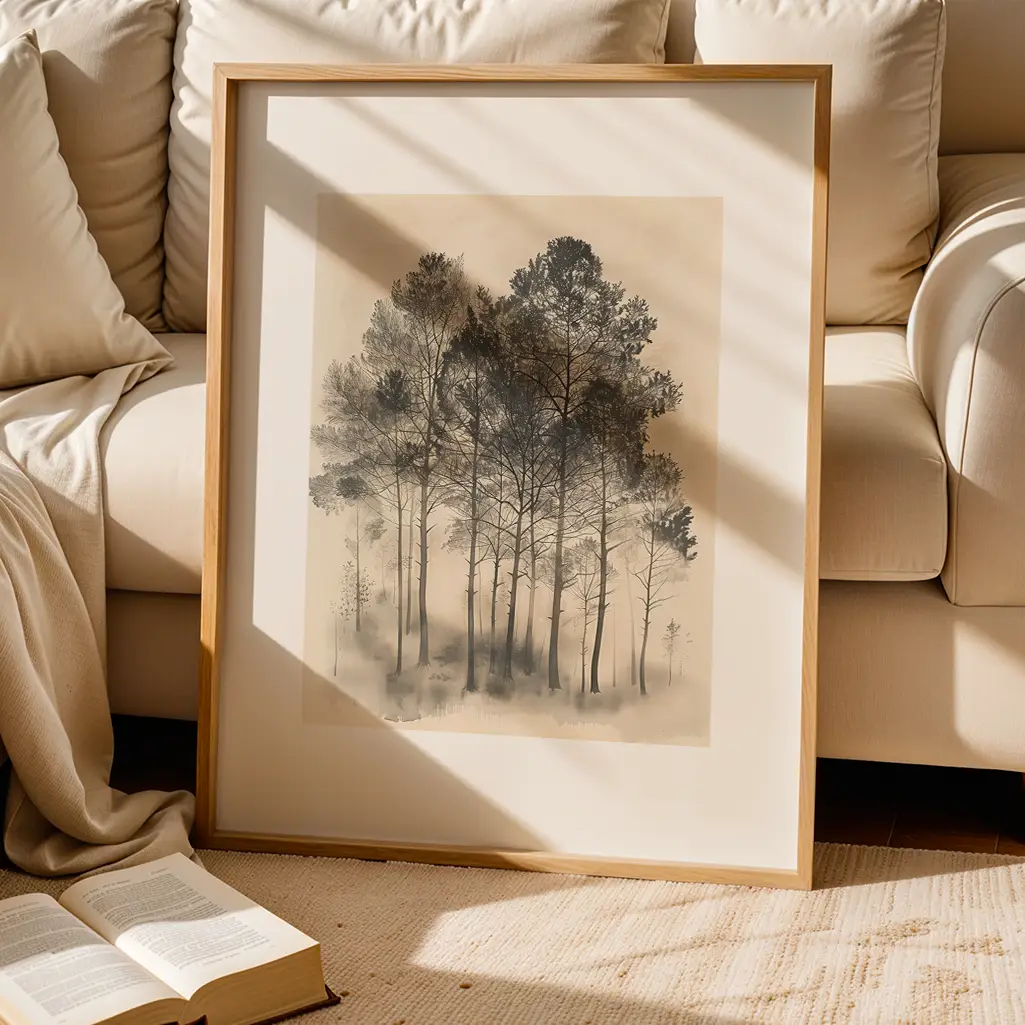
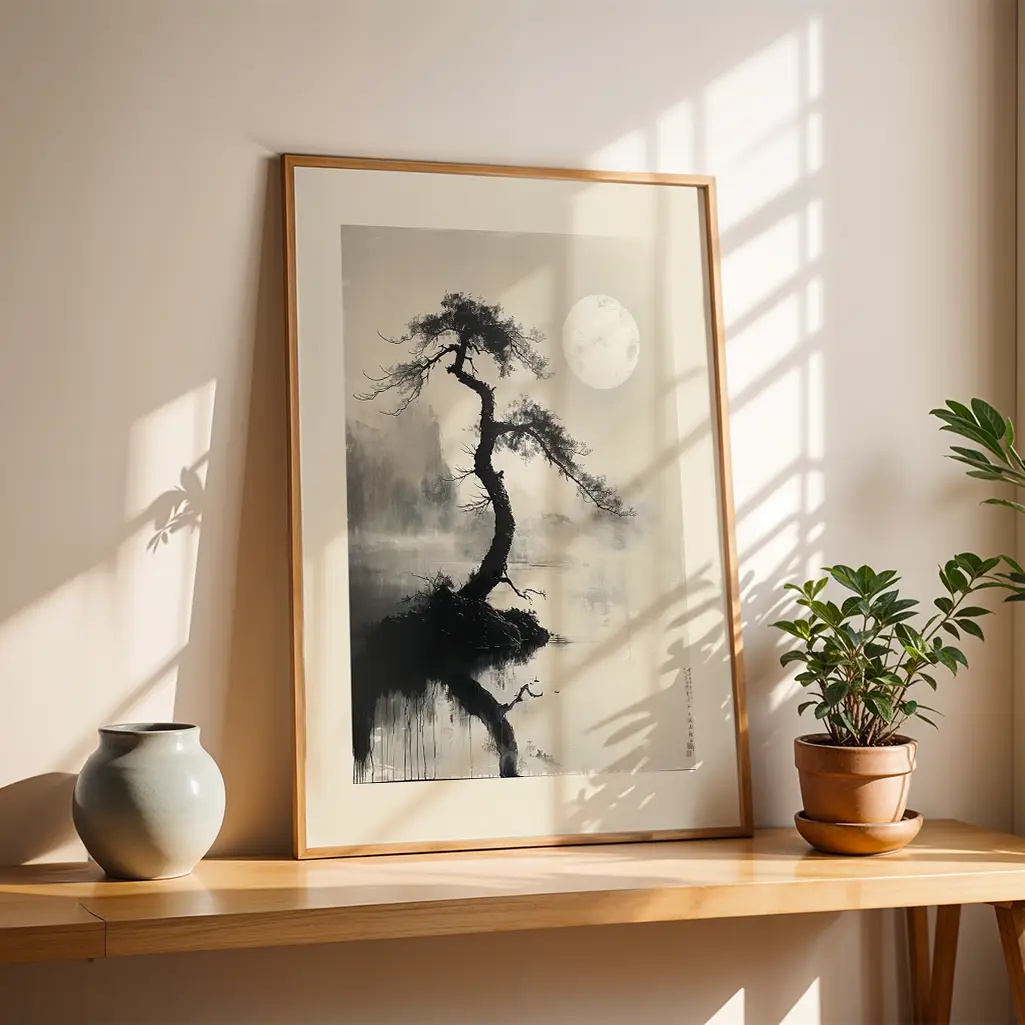
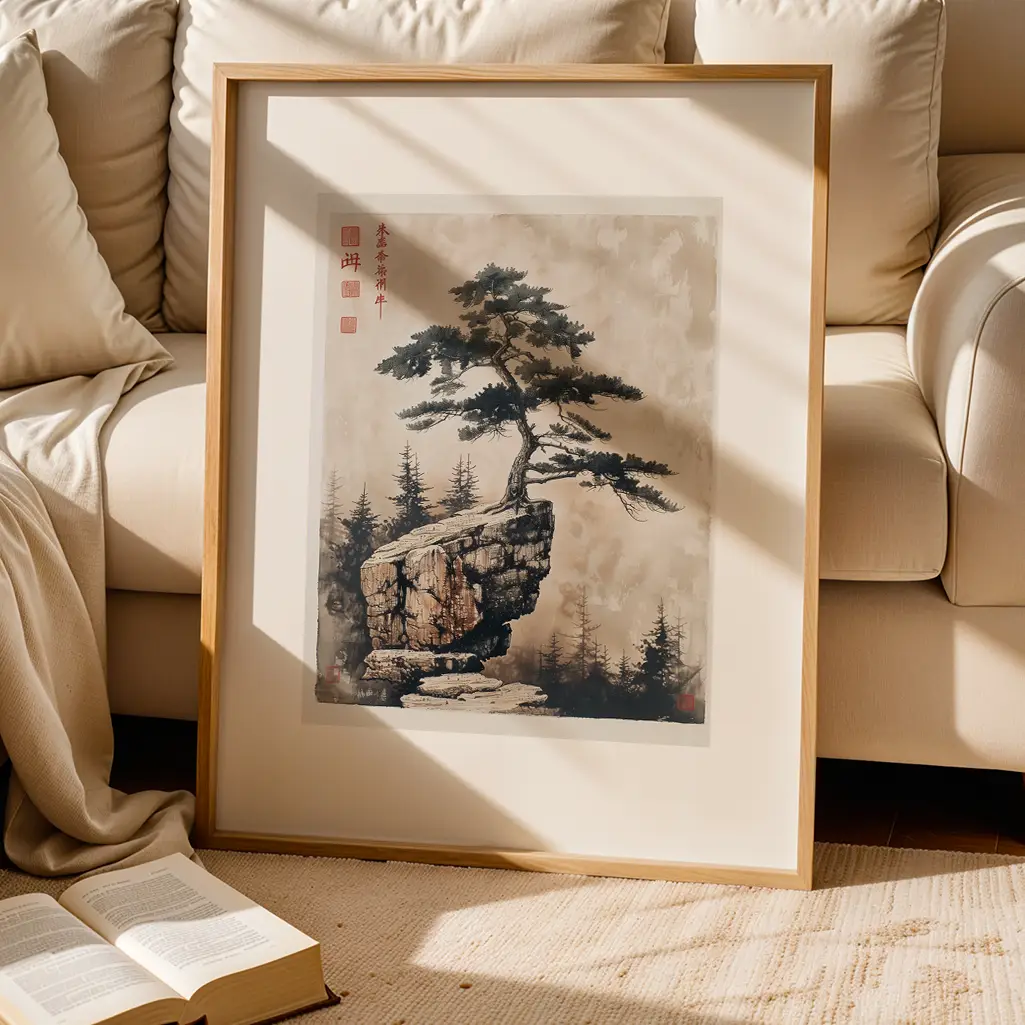
If enso circles and mountains give structure, pines and mist introduce a different quality: time and uncertainty. Zen paintings often show pines clinging to rocky slopes, their trunks bent but not broken, their needles rendered with a few economical flicks of the brush. These trees stand as emblems of endurance and generosity. They remain green through winter, offering shelter when other trees are bare. There is a quiet defiance in the way they lean into the wind.Translated into a home, pine imagery can be more than a nod to nature. A print of a solitary pine above a desk can subtly reframe the daily grind of email and tasks as weather to lean into rather than a storm to escape. The twisted trunk becomes a reminder that strength often looks gnarled from up close. Including an actual plant with a similarly irregular silhouette reinforces that message. It need not be an actual pine; what matters is the sense of a living form that has negotiated with difficulty instead of avoiding it.
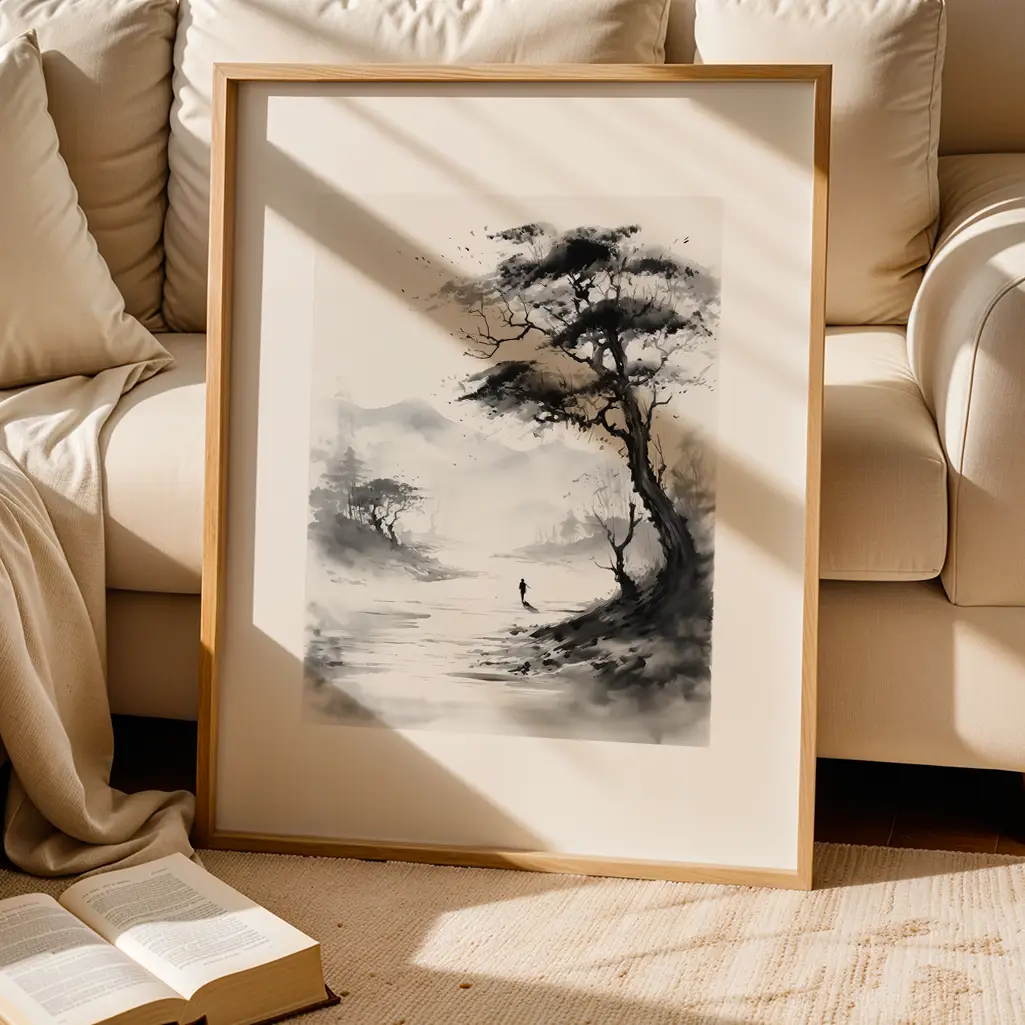
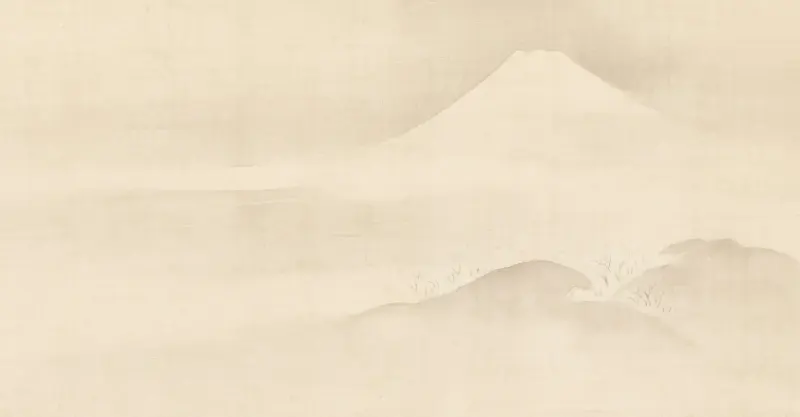
Mist in Zen art is almost the opposite of the bold enso. It is all about what you cannot fully see. Painters suggest it with diluted ink and soft edges, allowing mountains to fade at the base or distant trees to dissolve before they meet the ground. The effect is to make the viewer supply the missing information. Your imagination finishes the landscape, and in doing so you become engaged in the work rather than merely observing it.
In interiors, mist can be a metaphor for the spaces you deliberately leave unresolved. A wall not completely filled, a corner with more air than furniture, a blank stretch of floor where daylight can pool, all function as visual mist. They create a sense of potential rather than completion. Many homes feel unquiet not because they lack beautiful objects but because they leave no room for uncertainty. Everything is defined and labeled, and the eye has nowhere to wander without instruction.
Zen symbols suggest another approach. Allow one wall to hold a single, quiet landscape where peaks emerge from cloud and pine branches disappear into white. Keep the surrounding area relatively clear. Let the ambiguity of the image resonate with a bit of emptiness in the room. Over time that emptiness stops reading as absence and starts to feel like permission. You realize that a space, like a life, does not need to explain itself entirely to be trustworthy.
Working with enso circles, mountains, pines and mist in your home is therefore not just an aesthetic choice. It is a way of rehearsing a different relationship to control and openness. The circle honors what already is. The mountain reminds you to keep showing up. The pine proves that resilience can take a crooked shape. The mist gently insists that not knowing can be its own kind of clarity. The more your rooms reflect that logic, the more they begin to feel like collaborators in the quieter, slower life you may secretly be trying to build.