
The Quiet Side of Glamour
Art Deco lives in a strange cultural double exposure. On one side, there is the fantasy of "Gatsby" parties, mirrored bars and chrome cocktail shakers. On the other, there is the real history: a movement born from the optimism of the early twentieth century, devoted to craftsmanship, geometry and a streamlined sense of luxury. When you want to bring Art Deco into a contemporary home, it helps to remember that second story.Seen in its original light, Art Deco is less about piling on glitz than about refining it. The architects and designers of the period worked with clean, repeating shapes, rich but disciplined materials and a belief that even everyday objects could feel elevated. That perspective is the key to adding glam without turning your living room into a movie set.
Start by studying proportions rather than finishes. An Art Deco piece often has a strong silhouette you could recognize even in shadow: a fan backed chair, a stepped sideboard, a sunburst mirror with assertive rays. If you strip away the lacquer and brass, the outline is still graphic. In a modern space, that kind of profile can read as almost minimal, which is exactly why it can handle a bit of shine.
It also helps to understand what era specific interiors actually looked like. Original photographs are surprisingly restrained compared with the cartoonish hotel lobbies that sometimes wear the label now. You see one or two bold gestures surrounded by calm surfaces. Floors are often dark and continuous, walls nearly bare, and textiles solid or subtly patterned. The drama comes from a single chandelier, a curved sofa, a veneer with a high gloss sheen. This is the kind of balance that works just as gracefully in a small apartment as in a grand foyer.
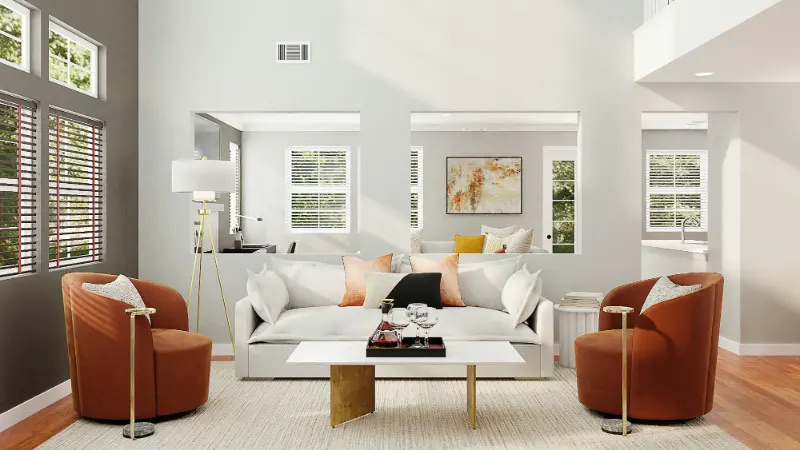
If your home already relies on quiet pieces and a simple palette, you have a strong foundation. The goal is not to swap your world for another period but to sharpen it. Let existing neutral sofas or wood floors play the role of visual silence. Into that silence, you can introduce one element that breaks it with intention, the way a trumpet cuts through a jazz band. The more deliberate the choice, the less likely you are to slide into costume.
Glamour in Measured Doses
The temptation with Art Deco is to chase every hallmark at once: sunbursts, zigzags, black and gold, mirrors on every surface. That is when rooms begin to feel like themed restaurants. To avoid that, decide first what kind of glamour you are actually after. Is it light, the kind that bounces and sparkles At night, is it tactility, the sort that invites you to run your hand along a glossy armrest, or is it outline, the pleasure of a sharply drawn curve against a calm wallIf you choose light as your main path into the style, concentrate it in one area. A single lacquered cabinet or a mirror framed in ribbed brass can give a room the visual lift often unfairly assigned to entire mirrored walls. The rest of the furnishings around it can stay matte and almost quiet. Linen upholstery, honed stone and bare wood floors become the foil that lets that reflective piece do its work. This way, you experience glam as an accent, not as a constant shout.
If material is your entry point, think in layers of richness rather than in volume of objects. A small side table in burled wood, a velvet cushion with a geometric ribbon trim, a slim band of inlaid metal on a console edge can each whisper the period without overwhelming your visual field. The secret is to keep the shapes simplified. The more elaborate the material, the cleaner the outline should be. That tension between richness and restraint is where Art Deco feels sophisticated rather than nostalgic.
Outline driven glamour comes from form. A deep club chair with tapering legs, a headboard that steps up in tiers, a rug with a single strong border can all nod to the period purely through geometry. Here, color can stay gentle. Soft tobacco, cream, muted teal and ink blue can hold their own against sharp lines without tipping into stage lighting. When form does the talking, you have less need for high contrast palettes, which helps keep the room from feeling over decorated.
It is also worth editing out one element every time you add something overtly Deco. Bring in a chrome floor lamp and remove a competing side chair. Hang a bold sunburst and clear the wall of smaller frames. Subtraction gives your chosen pieces the room to breathe and keeps your eye from pinging between too many focal points. What remains begins to feel intentional, like a considered collection rather than a themed haul.
Geometry, Rhythm and the Modern Room
At its core, Art Deco is a language of rhythm. Repeating lines on a cabinet door, fluting on a column, a sequence of stepped forms on a mantelpiece, all of these are variations on a beat. To translate that rhythm into a modern room without overwhelming it, focus on how often you repeat a motif. Twice can feel like harmony, five times like chorus, ten times like echoing noise.Choose one geometric idea and let it appear no more than a few times. A fan shaped pattern in a bathroom floor tile can repeat in the curve of a mirror, then stop there. A zigzag in a rug border can speak quietly to the edge of a bookshelf. Once your eye recognizes the pattern, it does not need to see it everywhere to stay engaged. In fact, small pauses between motifs give a sense of ease, which keeps the implied luxury from turning rigid.
Scale matters just as much as repetition. Oversized geometry in a small room can feel oppressive, like standing too close to a mural. If you love bold shapes but live in compact square footage, shift Deco elements to the level of the hand rather than the wall. A box with inlaid lines on a coffee table, a set of cocktail glasses with etched rays, drawer pulls in a simplified skyscraper silhouette all carry the theme into your daily rituals. They satisfy the desire for drama at a scale that does not crowd your field of view.
Color can either soften or sharpen these gestures. Traditional Deco palettes leaned heavily on contrast, but your version does not have to. A softened scheme of camel, cream and ink, with only a hint of brass, can feel grounded. The "glamour" arrives when evening light hits those metal edges or when a candle reflects in the bevel of a mirror. In daylight, the same room reads calm and almost understated, which is often what people mean when they say they want glam without the hangover.
In the end, bringing Art Deco home is less about accuracy than about editing. You are borrowing its confidence in line and material, not replicating a museum set. When in doubt, ask whether a potential piece will give your space more clarity or more noise. Choose the ones that sharpen the room and let the rest stay in the shop window. The result is a home that feels quietly cinematic, ready for guests, but still unmistakably yours.