The Quiet Side of Boho
Bohemian interiors are often misread from a single image: a riot of color, stacked textiles, and plants reaching for the ceiling. It looks improvised and effortless, as if everything simply landed in place during a particularly aesthetic yard sale. Yet the rooms that actually work, the ones you want to linger in, are engineered with an almost minimalist rigor.At its heart, boho is not a shopping list of objects; it is an attitude toward comfort, memory, and freedom from strict rules. The danger is that this freedom can slip into visual noise. Every patterned pillow, every basket, every trailing vine competes for attention, and the room begins to feel smaller and more anxious than soulful. To understand boho without clutter, imagine the difference between a jazz solo and a band all playing at once in different keys. The aim is syncopation, not cacophony.
The most reliable way to stay on the quiet side of boho is to anchor the room with restraint. A limited base palette, considered negative space, and a few strong, meaningful pieces create a stage where color and texture can actually be seen. Think of white, sand, clay, or mushroom as your canvas. Onto that, you layer one or two accent colors and a handful of patterns instead of a kaleidoscope. When you do introduce something vivid, it earns its place instantly because it is not drowned out.
Clutter in bohemian decor rarely comes from a single object. It accumulates at the edges: the extra side table you do not use, the seventh plant that has nowhere to go but the floor, the pile of orphaned textiles that were irresistible in the shop and aimless at home. Editing these margins is a deeply boho act when you see it not as deprivation but as honoring the pieces that remain. Suddenly your carved stool reads as sculpture instead of “just one more thing.”
This is the quiet paradox of the style. To get the lush, layered feeling, you must also embrace empty space. A bare stretch of wall between artworks, an uncluttered floor around a low sofa, a simple linen curtain with nothing in front of it: these are the pauses that let the more expressive boho moments land with grace.
Curating Layers Instead of Piling Things
The word that separates boho charm from boho chaos is “curation.” Not in the precious, museum sense, but in the way you choose which parts of your life you want visible, and how they talk to one another across the room. In practice, that means each layer in a bohemian interior has a specific job. The base layer offers calm. The second layer introduces quiet pattern and tactility. The final layer brings in a few pieces with stronger color, shape, or history.Start by assessing what you already own. Lay out textiles on the floor together and read them as a single painting. Where are they shouting? Where are they whispering? Often you will discover several items are repeating the same move. Three different throw blankets in busy patterns may be performing one role that a single well chosen textile could hold more clearly. When you remove the extras, the remaining pieces gain presence, and the room gains air.
Surfaces are the most treacherous places in boho decor. A low coffee table wants to gather candles, incense, ceramics, art books, mail, and headphones, until it becomes a still life of everyday life rather than a composition. To keep the spirit without the sprawl, think in terms of a single loose “story” per surface. On a console, that story might be a small lamp, a stack of books you actually reach for, and one sculptural object or plant. If you find yourself adding a fourth and fifth thing just because there is room, pause and ask whether they deepen the story or blur it.
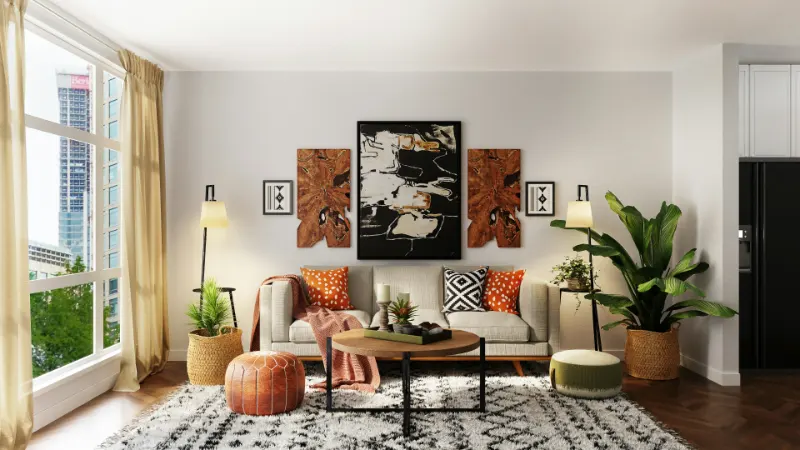
Textiles, a signature of boho style, are also a common source of clutter. Here, scale and repetition matter more than sheer quantity. A large, well patterned rug can carry a room, allowing pillows and throws to go softer and more solid. Conversely, if the rug is quiet, you can afford a more exuberant throw or two. Align colors so they nod to each other rather than compete. A rust stripe in a pillow that echoes a thread in the rug, the green of a plant repeating in a framed print: these small correspondences stitch the room into a whole, which makes even a layered space read as calm.
Storage is the unseen partner of boho freedom. Woven baskets, lidded boxes, and carved chests can be both decorative and practical, hiding the necessary clutter of life. The difference between a serene boho living room and a chaotic one is often that everything that does not need to be on display has somewhere dignified to go. In that way, the style keeps faith with its roots in travel and improvisation, while still acknowledging that real life produces cords, chargers, and paperwork.
Making It Personal Without Overwhelming the Room
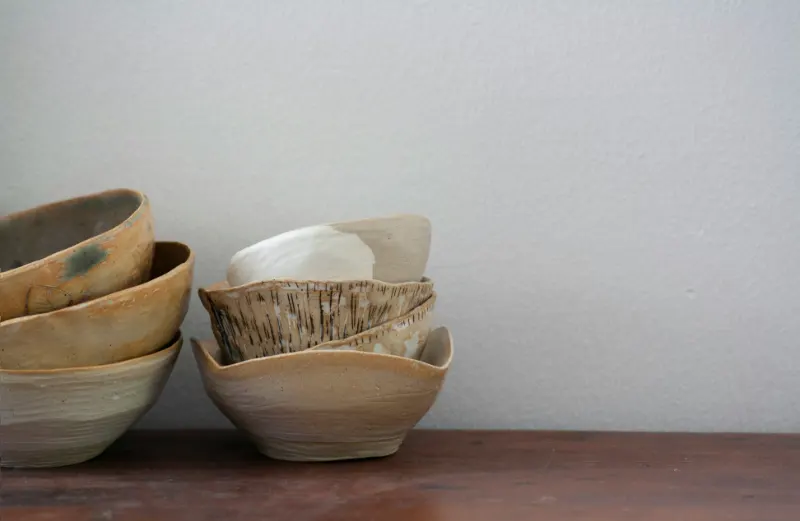
A home that leans bohemian is usually a home that wants to tell a story: where you have been, who you love, what you make with your hands. Clutter creeps in when every memory demands equal visibility. The art is not to hide your life, but to pace its revelations. The most successful boho rooms feel like conversations; they do not recite a biography all at once.Begin by choosing a few pieces that hold real emotional weight. A textile brought back from travel, a photograph of a grandparent, a handmade ceramic bowl from a friend. Give them enough space to be read clearly. That might mean one photograph on a small wall instead of a gallery grid, or a single textile hung like a tapestry rather than layered with three others. When something matters, let it stand alone. The restraint reads as respect, not minimalism.
Plants are another way boho rooms gain life, but they are also another way they lose composure. Rather than filling every empty corner, think of plants as living sculptures. One tall, narrow tree by a window and a trailing vine on a high shelf can create more impact than ten small pots scattered on the floor. Choose vessels with a shared material language, whether terracotta, simple white, or a limited mix of glazed tones. The plants then feel like part of the architecture rather than visual static.
Lighting quietly governs whether your boho space feels tranquil or cluttered. Harsh overhead light flattens pattern and makes every object equally loud. Softer, layered lighting lets texture and color recede or glow. A paper lantern diffuses light over a woven rug, a small table lamp pools warmth over a stack of novels, a candle throws a gentle flicker onto a carved headboard. The room becomes a landscape of emphasis and shadow, and what might feel busy in daylight softens into cohesion at night.
Above all, boho decor without clutter depends on rhythm. After every few additions, remove something. After a season, walk through with a visitor’s eye and notice where your gaze snags or tires. Those are the spots asking for air. Over time, you will find a personal equilibrium, where the room feels expressive but breathable, layered but legible. That is the moment when boho style fulfills its promise: a home that feels “collected,” not crowded, and deeply your own.