The Quiet Logic Behind Beautiful Storage
Minimalist storage that actually looks good begins long before the purchase of a box, basket or built‑in. It starts with a quieter and more uncomfortable task: asking what deserves to stay within reach of your daily life. Every container you introduce is, in a way, a tiny piece of architecture, and architecture makes a promise about how you will live. Over time, those promises either liberate you or slowly close in around you.
Designers who favor a minimalist vocabulary tend to approach storage as a question of visibility and rhythm. The instinct is not to hide everything, but to decide, with care, what earns the right to be seen. Open shelving, low credenzas and wall‑hung cabinets create long, uninterrupted lines that feel restful precisely because the objects on and in them are edited. A row of identical white dinner plates stacked on an open shelf can be visually calmer than a jumble of colorful mugs behind a door. The eye, like the mind, prefers patterns it can understand.
This is where function quietly shapes beauty. When you store by frequency of use rather than by category alone, your most reached‑for things naturally migrate to the most generous, accessible spaces. A single shallow drawer near the entry for keys, wallets and sunglasses eliminates the daily scatter along surfaces. A tall cabinet with just a few deep shelves may invite you to stack more than you need; two slimmer cabinets, lined up like book spines, will nudge you toward keeping only what fits without forcing it. Minimalist storage is less about severity than about friction: it gently makes any excess feel inconvenient.
There is also the question of visual weight. A wicker trunk the size of a coffee table might hide a family’s worth of toys, but it will always look like a large object in the center of the room. In a minimalist space, generous storage tends to slip into the architectural envelope: under a built‑in window seat, in the base of a platform bed, behind a flush wall of cabinet doors painted to match the wall. When storage recedes, negative space becomes the star, and the room reads as calmer, even when it is quietly doing a great deal of work.
The last, subtle ingredient is consistency. A closet with three different types of hangers, mismatched bins and a rainbow of product labels will feel visually noisy no matter how neatly arranged. The same closet, edited to one hanger style and a small family of neutral containers, gains a sense of order that feels almost luxurious. Minimalism, here, is really a form of hospitality toward your future self: you are making it easier for tomorrow’s you to put things back without renegotiating where they belong.
Designing Storage That Becomes Part of the Room
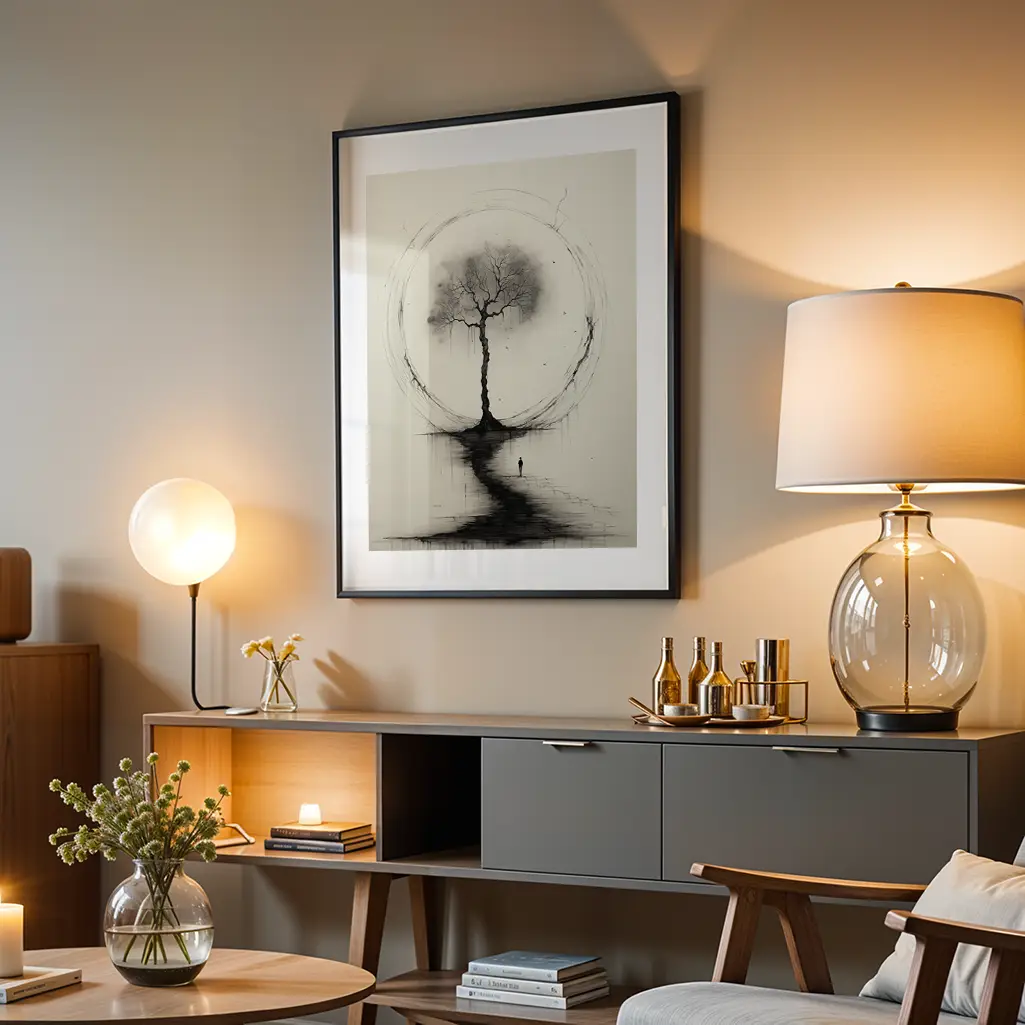
To make minimalist storage look intentionally beautiful, it helps to think of each piece as furniture first and storage second. The best solutions earn their footprint twice: they organize your life and contribute to the room’s composition. A low, long sideboard in the dining room, for instance, stretches the eye horizontally, making a small space feel wider. Its doors conceal the necessary mess of linens and serveware, but its top can hold a single ceramic bowl or a branch in a tall glass, turning a practical object into a quiet altar of sorts.
In living rooms, closed storage often reads calmer than open shelving, yet an entirely blank wall of cabinets can feel mute. A considered mix can solve that tension. Imagine a wall unit with closed panels below and a single open shelf running along the top, like a floating horizon. The closed portion swallows the unsightly necessities: remotes, chargers, the stack of old magazines you are not ready to part with. The lone open shelf, kept deliberate and sparse, becomes a gallery for a rotating cast of objects that actually mean something to you. The contrast between contained chaos and curated display is what makes the whole composition feel human rather than austere.
Materials matter here more than most product descriptions suggest. Minimalist storage does not require a monochrome of white laminate; in fact, a room full of identical flat white surfaces can feel more like a showroom than a home. Instead, aim for a restrained palette with a few warm notes. A pale oak cabinet front with discreet pulls can sit comfortably against a white wall, while a single black metal rail for hanging coats introduces a crisp line that anchors the space. Woven baskets, if you use them, look best when they are similar in tone and scale, lined up in a row rather than scattered. The key is repetition: once you commit to a material language, let it echo.
Depth and shadow play a quiet role, too. A recessed niche by the bath, tiled in the same material as the walls, can hold soaps and bottles without the visual clutter of a caddy. A ledge running just below a bathroom mirror can replace medicine cabinets entirely, keeping a small collection of daily objects visible but neatly corralled. Under‑cabinet lighting, often treated as a kitchen afterthought, can turn the cavity beneath overhead cupboards into a soft band of glow, making countertops look less like a catchall and more like a work surface waiting for use.
What you avoid is as important as what you choose. Overly clever organizing gadgets, with their swiveling tiers and tiny subdivided compartments, tend to add complexity faster than they add clarity. The most successful minimalist storage ideas are usually the most dumbfoundingly straightforward: a single shelf where you thought you needed a complex system, a large drawer that replaces three small ones, a narrow rail and a few sturdy hooks instead of an entire wardrobe of freestanding pieces.
Living With Less, Not Living Without
Adopting minimalist storage is often framed as a moral upgrade, but its real power is more modest and more useful: it makes daily life feel less dramatic. When every object has an obvious landing place, the rituals of leaving and returning, cooking and cleaning, dressing and undressing stop producing a trail of visual noise. The home becomes a backdrop for living rather than a constantly active participant in your stress levels.
This does not mean your spaces have to be empty, or that joy must be edited out in favor of a spotless grid. A row of cookbooks can live openly on the kitchen counter if they truly belong to your routines. A child’s favorite toys can have a low shelf of their own, visible and accessible, with the understanding that anything overflowed must be reconsidered. Minimalist storage ideas that actually look good are the ones that bend just enough to accommodate the real habits of the people who live there.
Over time, you may notice that the presence of well‑designed storage quietly changes your decisions. When adding something new, you automatically ask where it will live. If the answer is vague, the desire softens. If you know exactly which shelf or drawer it will inhabit, you welcome it in with less guilt. This feedback loop, repeated over months and years, is how minimalism becomes less of an aesthetic and more of a pattern of attention.
Ultimately, the most beautiful storage is almost invisible in daily life. It exists in the ease with which you can set the table, clear the desk, straighten the sofa before guests arrive. It exists in the pleasure of opening a cabinet and finding only what you expected, no more and no less. In that sense, minimalist storage is not about owning fewer things; it is about designing spaces that are honest about what you cherish, ruthless about what you do not, and generous in the calm they offer back to you every time you put something away.