Seeing the Wall as a Garden, Not a Backdrop
The most successful botanical wall art rarely starts with a shopping spree. It begins with a shift in how you see your walls. Instead of treating them as flat surfaces for random decor, think of each wall as a kind of vertical garden bed, a place where living forms, textures and light can interact.In a traditional garden, you layer tall trees, mid-height shrubs and low ground cover. On the wall, you can translate that hierarchy into larger anchors, medium focal pieces and smaller details. The anchors might be a big framed botanical print, a sculptural wall planter or a slim shelving ledge that runs like a quiet horizon. Around these, you cluster smaller pieces: pressed leaves, tiny planters, sketches, even fragments of herbariums. The goal is not to cover every inch but to create a rhythm of “density and breath,” pockets of interest followed by calm open space.
Light is your silent collaborator. Plants do not negotiate with dark corners, no matter how charming the pot. Stand in the room at different times of day and notice where the light lingers and where it dies quickly. A bright east-facing wall can host living trailing plants in mounted planters. A dim hallway might be better suited to botanical prints, pressed specimens or even high-quality faux foliage. You are not cheating by mixing real and artificial; you are designing with the realities of light and time.
Depth matters as much as height. If everything on the wall sits perfectly flat, your eye glides past it. Introduce a few three-dimensional pieces that gently project into the room: a narrow ledge with a row of small terracotta pots, a metal ring holding an air plant, a shallow ceramic pocket of cascading greenery. These elements pull the wall forward, so the room feels less like a box and more like a layered landscape.
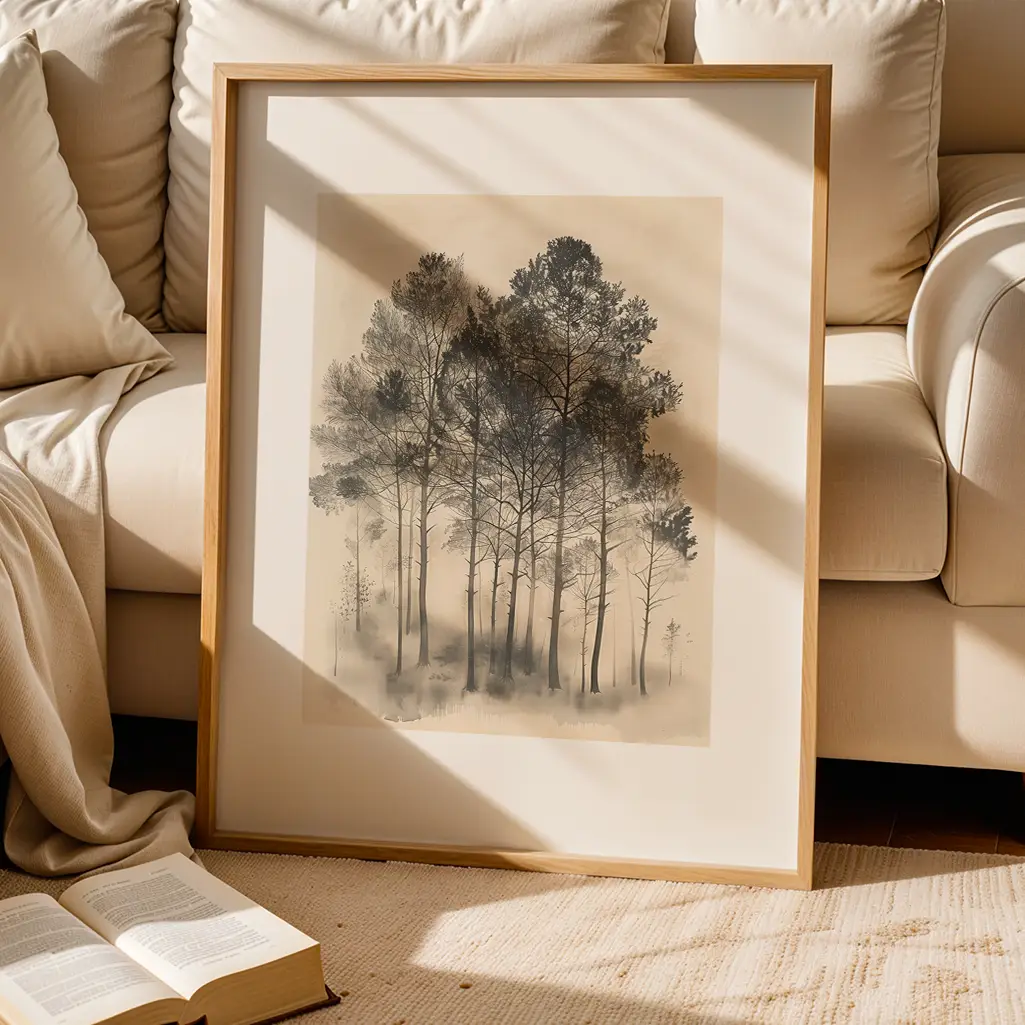
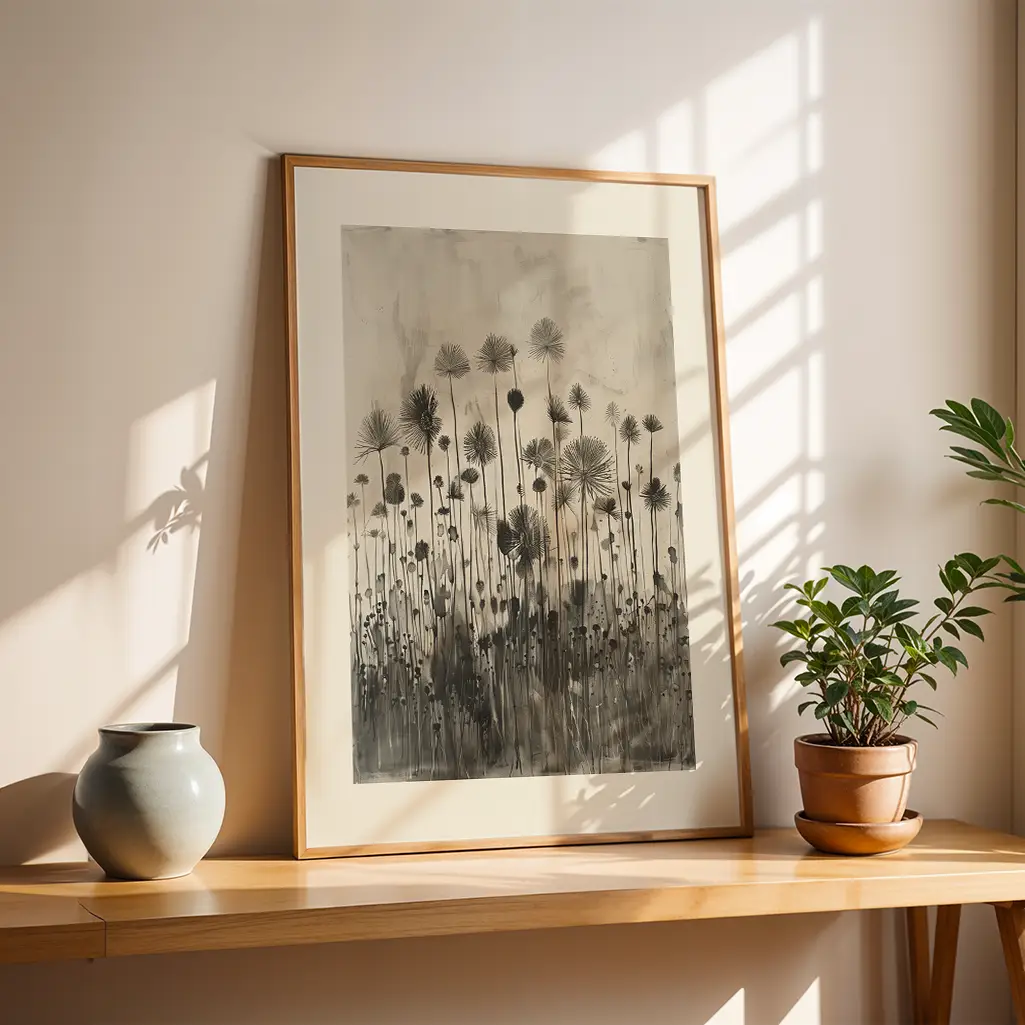
Color is where restraint becomes powerful. It can be tempting to gather every plant image that feels lush, but a riot of clashing greens and frames can make your wall feel chaotic rather than calming. Choose a limited palette: perhaps deep forest green and inky charcoal in the art, paired with warm wood or pale oak frames. Or keep the imagery almost monochrome, using sketches and pressed specimens, and let the actual living plants provide the only saturation of green. When you limit the noise, the few bold leaves or fronds you do display become quiet focal points instead of visual static.
Above all, remember that a botanical wall is not a static gallery. Leaves grow, yellow and fall; stems stretch toward the sun; you will shift pots and swap prints over time. Designing with that evolution in mind helps you loosen your grip and accept that a “perfect” arrangement is one that is alive enough to change.
Composing with Plants, Frames and Negative Space
Once you see the wall as a garden, the next step is composition. Botanical wall art lives or dies by its relationship to negative space, the unoccupied patches of wall that give the eye room to rest. Notice how a single, well-placed frond can feel more luxurious than a dense mass of leaves crammed edge to edge.Begin with one zone rather than the entire room. Over a sofa, above a bedroom headboard or along a dining wall, mark an invisible rectangle that relates to the furniture below it. Your grouping of plants and art should feel anchored to this zone, not drifting randomly. As a loose rule, keep the center of your composition close to eye level, but let your plants break that line, trailing upward or downward to create movement.
Think in clusters instead of symmetry. A grid of identical botanical prints has its own disciplined charm, but most homes feel more humane when the arrangement is slightly asymmetric. You might let one generous hanging plant fall like a green waterfall on one side while balancing it with two or three smaller images or planters on the other. The composition feels intentional but not overly rehearsed, like a garden path that curves just enough to invite exploration.
Pair opposites to create harmony. A delicate pressed fern framed under glass can sit near a rounded, fleshy succulent in a small wall-mounted pot. The paper-thin leaf and the dense, living body speak to each other across time, one a record of what was, the other proof of what still grows. Similarly, rough materials like unglazed clay or woven cane can offset the smooth coolness of glass and metal planters. This interplay of textures keeps the wall tactile, a surface you want to approach and almost touch.
Spacing is where discipline comes in. Instead of measuring every distance, train your eye. Step back, squint slightly and notice where objects feel cramped. Give each plant or print a small cushion of space around it; this allows the fronds or illustrated stems to read as individual gestures rather than tangled clutter. If you are unsure, err on the side of fewer pieces and more air. A single trailing pothos in a sculptural wall hanger, paired with two botanical drawings, can feel more luxurious than six competing plants gasping for attention.
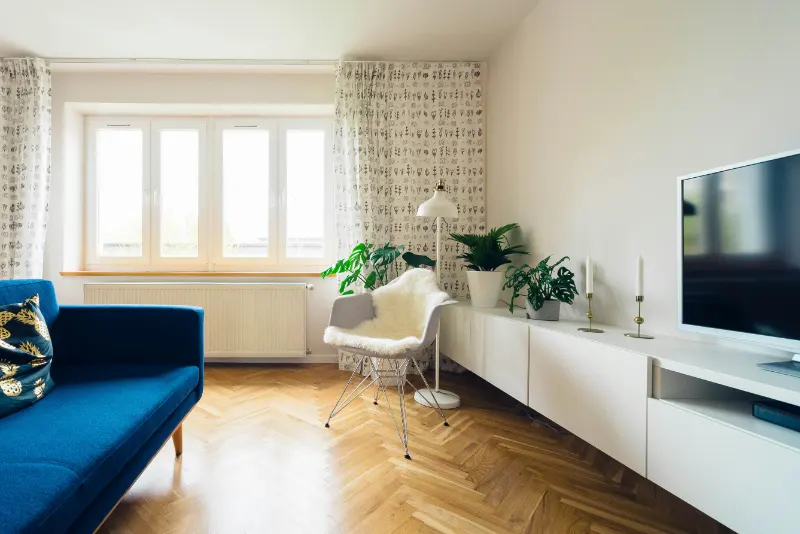
Do not forget the relationship between your botanical wall and the rest of the room. Echo a leaf shape from a print in the pattern of a cushion or the silhouette of a floor lamp. Repeat the wood tone of a frame in a side table or chair legs. These small correspondences tie the wall into the space so it reads as part of a whole, not a themed display glued on afterward.
Care, Longevity and the Mood You Are Growing
Behind every serene wall of greenery there is a system, even if it is invisible. Plants need water, light and air circulation, and your day-to-day habits will determine whether your botanical wall matures gracefully or becomes a brief experiment. Think about what you can realistically tend. If your schedule is demanding or your light is inconsistent, choose low-maintenance species for wall planters, such as pothos, philodendron or certain ferns, and lean more heavily on artworks and preserved specimens for the rest.Mounting hardware and materials are less romantic but essential. Lightweight frames, slim shelves and shallow planters are gentler on walls and safer over beds and sofas. When you arrange trailing plants above upholstered pieces, consider how drips from watering might travel. A removable tray under a planter or a shift in placement can prevent stains and rot. In old buildings, think about the wall itself: plaster will require gentler anchors than new drywall, and brick may invite exposure rather than concealment.
Over time, you will edit. A plant may outgrow its wall home and migrate to the floor. A once-precious print may feel too busy and be replaced by a more quiet drawing. Instead of seeing these shifts as failures, treat them as pruning. Gardeners accept that cutting back is part of keeping a plant healthy; the same is true for your visual landscape. Curating your wall seasonally, even if that simply means swapping a single piece, keeps the composition alive.
Most of all, be attentive to the mood you are growing. A wall of botanical art can tilt toward fresh and bright, with crisp line drawings and glossy leaves, or it can lean moody and contemplative, with deep green foliage and antique herbarium pages the color of tea. Both can be beautiful, but they feel different in the body. Ask yourself whether you want the room to wake you up, calm you down or simply soften the edges of daily life. Let that answer guide your choices more than any trend.
If your botanical wall succeeds, you will know not because guests comment on it, but because the room feels subtly more inhabitable. The air seems to move differently. Your eye finds resting places of green between tasks. In a world where screens pull us outward, a well-composed expanse of leaves, stems and shadows can quietly pull us back into the room, and into ourselves.