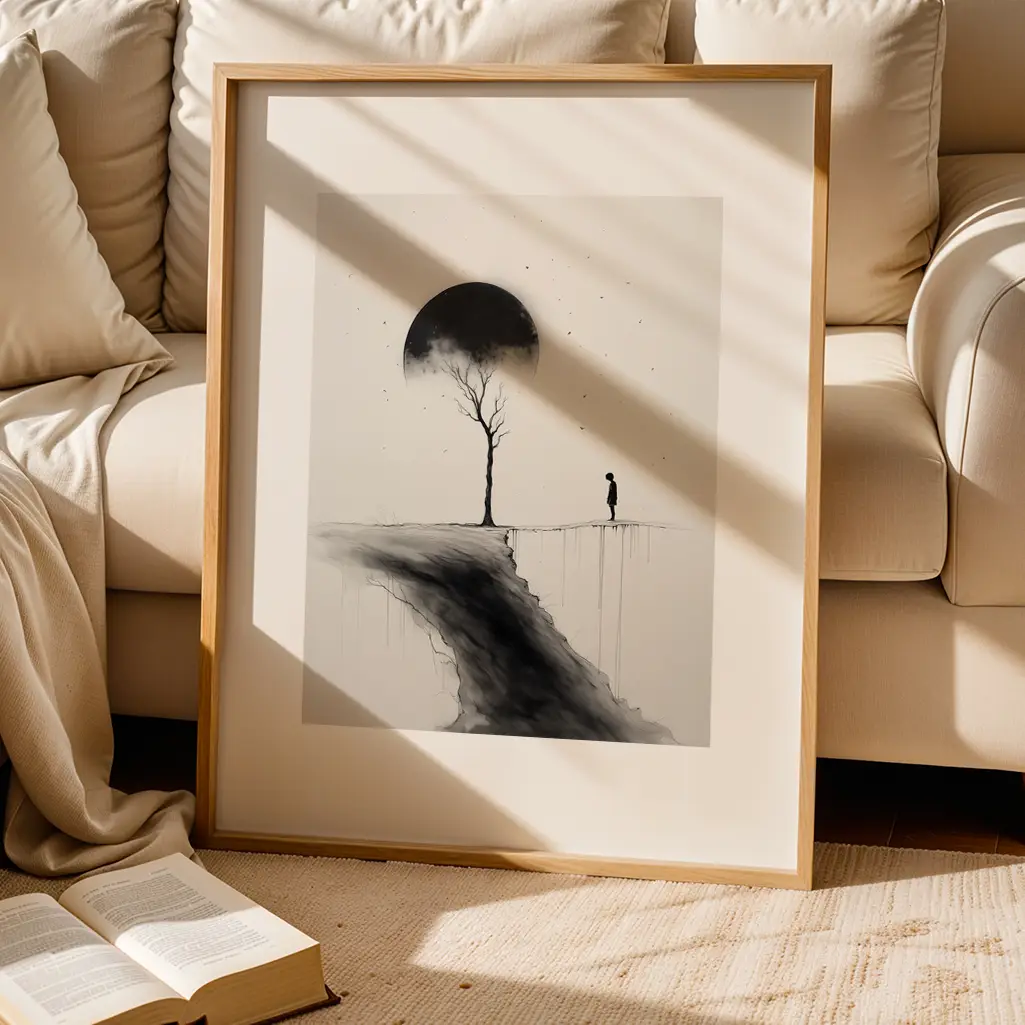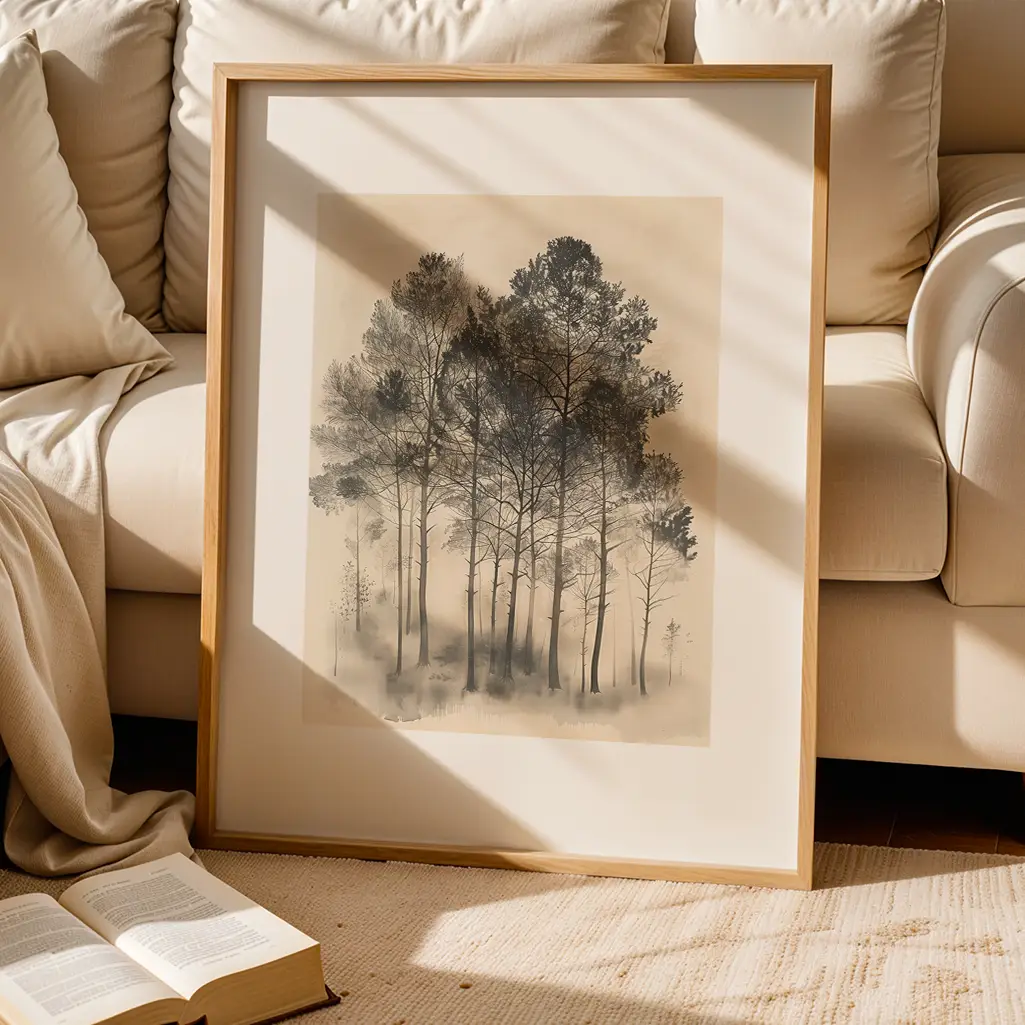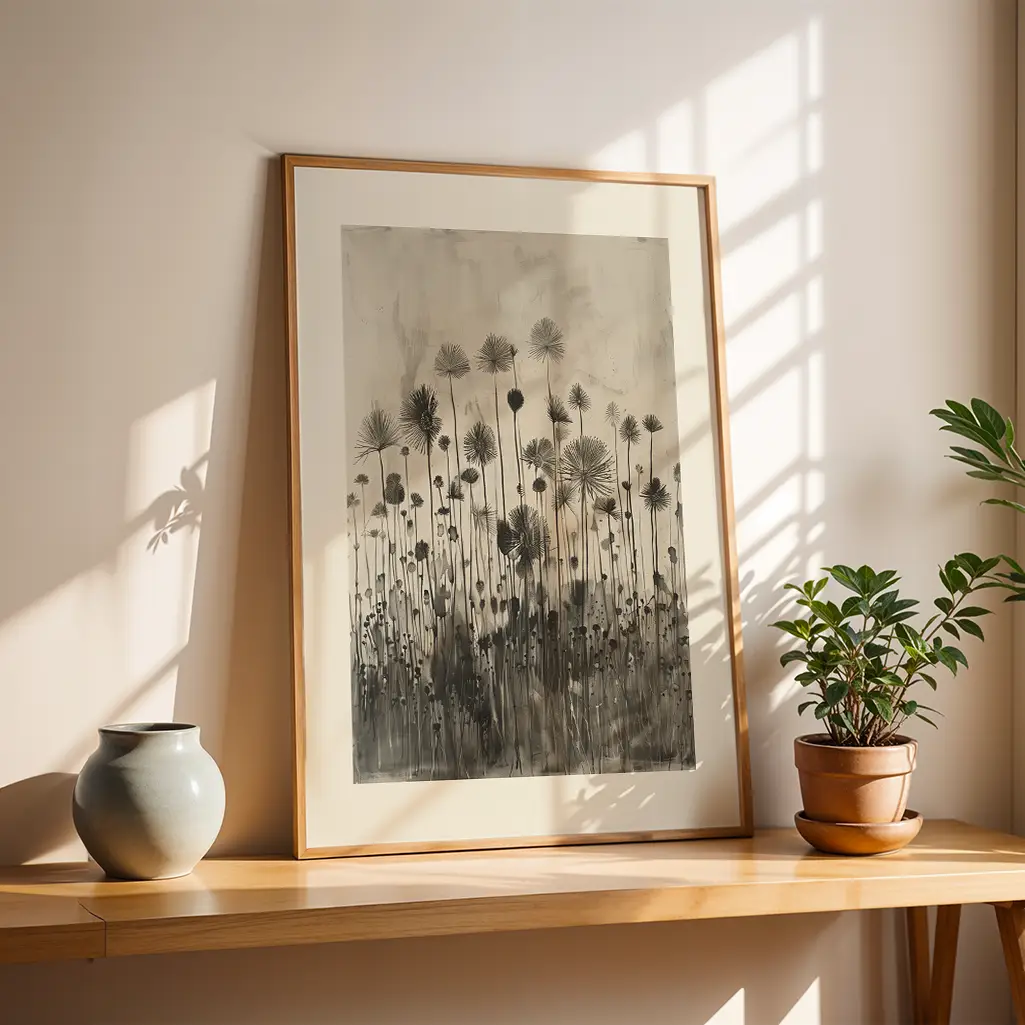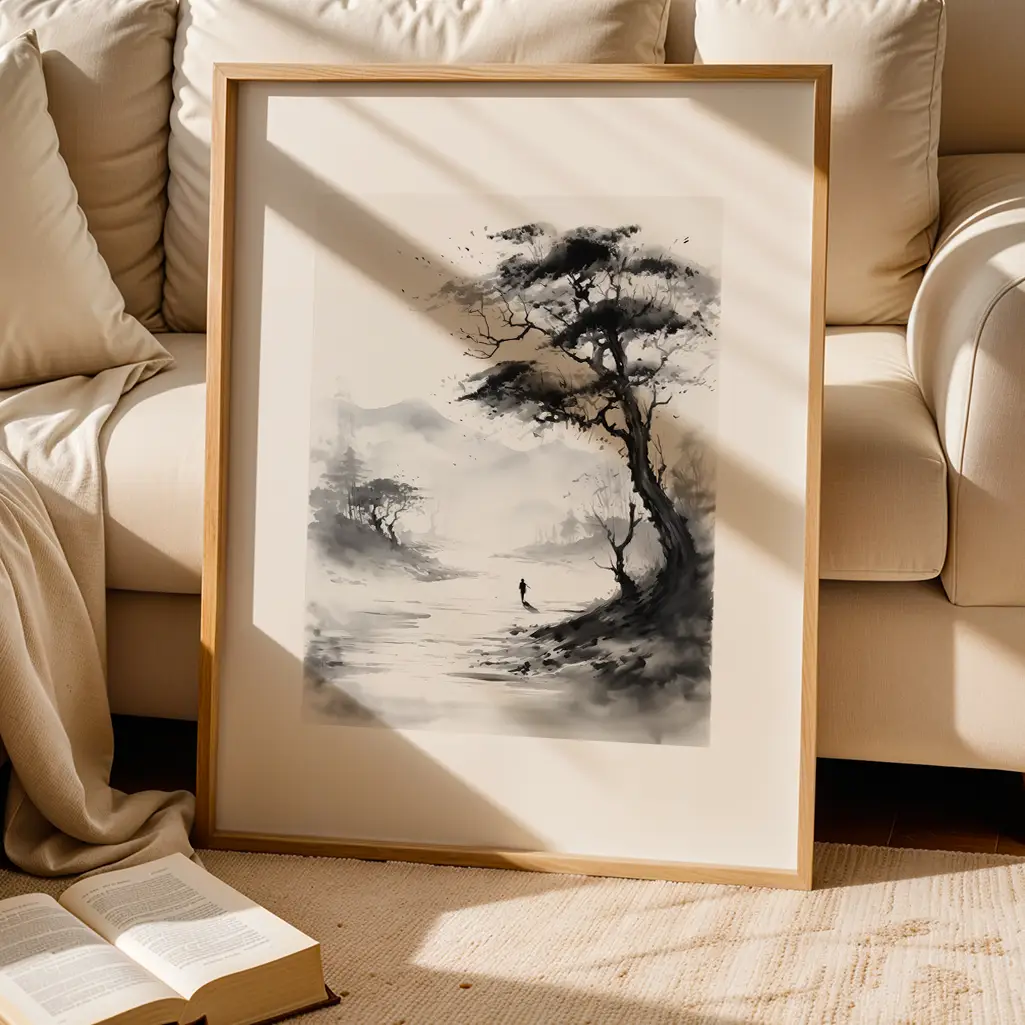
Seeing Your Walls as Windows to Nature
Walk into any room with bare walls and it tends to feel a little louder: shapes seem harsher, corners more pronounced, sound slightly sharper. Now imagine the same room with a large, quiet landscape on the main wall—muted greens, a distant horizon, a soft envelope of mist. Suddenly the edges blur, the room seems to breathe, and you do too.
Natural wall art has this peculiar ability to alter not just the look of a space, but also the way time moves inside it. Botanical prints can slow your gaze to the tempo of a garden; mountain vistas nudge your thoughts outward and upward; misty scenes dissolve visual clutter the way fog softens a skyline at dawn. You are not simply decorating; you are negotiating the emotional climate of your home.
The key is to think less like a shopper and more like a curator of your own inner weather. Before you pick anything up, ask yourself what the room is missing when you sit in it on a quiet afternoon. Is it lightness, depth, softness, or energy? Nature‑based art is most powerful when it fills a specific emotional gap instead of just occupying empty wall space.
If your living room feels chaotic, art with gentle horizons—fields, distant hills, lakes at rest—introduces visual rest stops for your eyes. In a narrow hallway, a vertical cascade of botanical drawings can stretch the space upward, like climbing a trellis. In a bedroom, a misty forest or soft mountain range can become a nightly signal to your nervous system: this is a place for exhaling.
By seeing your walls as potential “windows,” you are choosing what you want to look out at, even when you cannot leave the house. The right combination of botanicals, landscapes, mountains and mist can give each room its own view and, with it, its own mood.
Botanicals and Landscapes: Composing a Living Rhythm
Botanical art is the most intimate of the natural genres. It brings nature right up to the surface of the wall, leaf by leaf. Detailed illustrations of ferns, herbs and branches feel almost like pages torn out of a scientist’s notebook, but they can be surprisingly calming. Their intricate lines slow your attention, inviting you to trace veins and stems, to notice negative space between leaves. This kind of fine detail pairs especially well with quiet tasks: reading, writing, morning coffee.
If your furniture is clean‑lined and minimal, botanicals add organic complexity without making the room feel busy. Choose pieces with soft, limited color palettes—sepia, ink, desaturated greens—so the lines remain readable from across the room. For a warmer, more lived‑in atmosphere, vintage‑style botanical studies with aged backgrounds echo the patina of well‑thumbed books and sun‑faded textiles.
Landscapes, by contrast, manage distance. Where botanicals pull you in close, landscapes push your gaze outward. A framed coastal scene above a sofa or dining table extends the room psychologically, giving it a borrowed horizon. The trick is to pay attention to where the “eye line” of the art lands while you are sitting. You want the natural horizon in the artwork to roughly meet your own line of sight, so it feels like a continuation of the room rather than a separate rectangle.
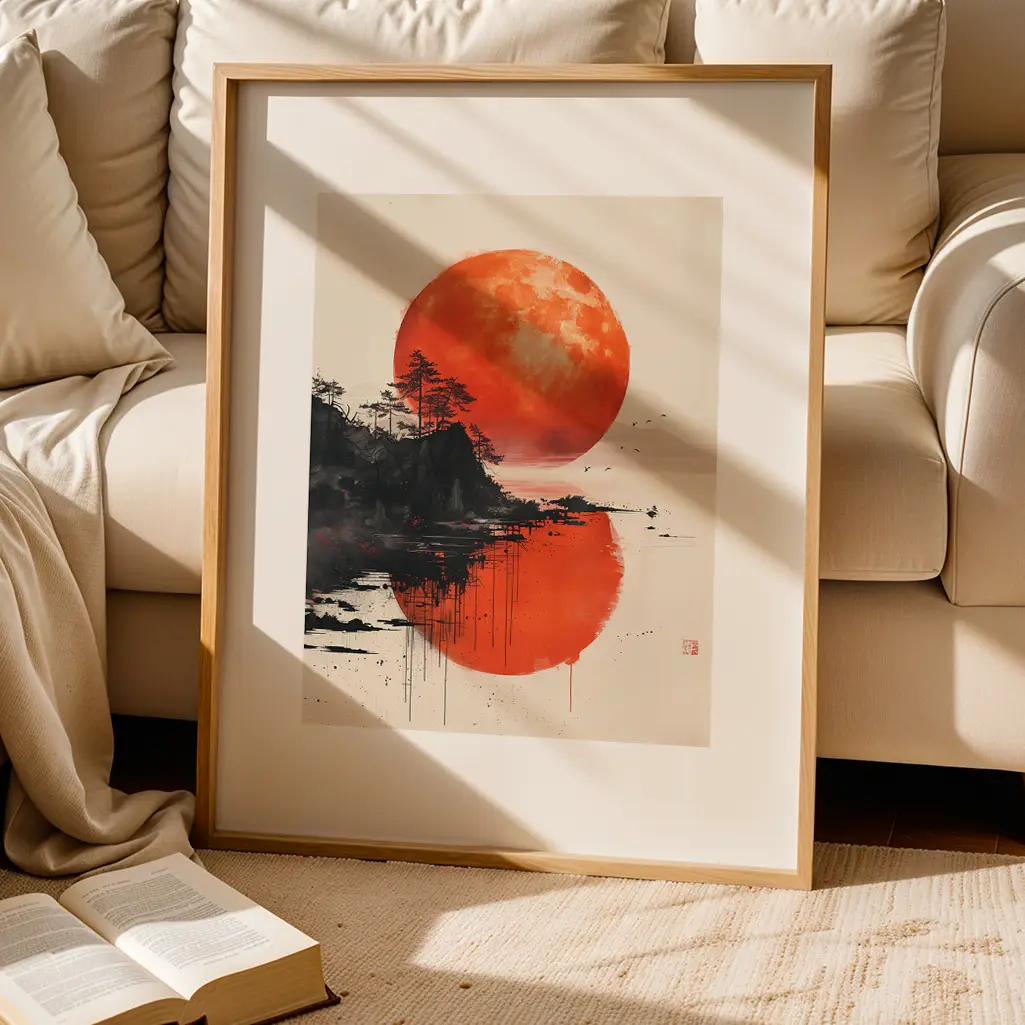
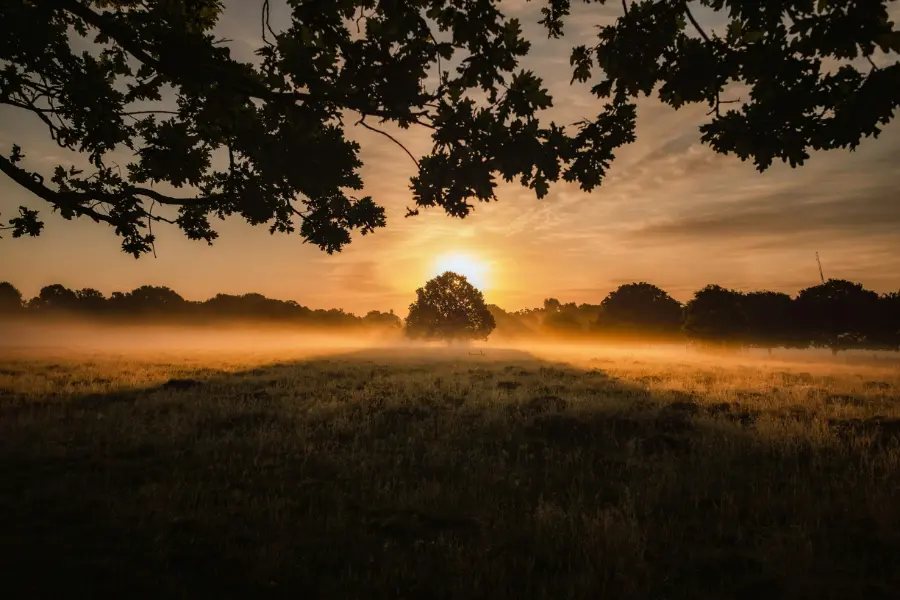
Color temperature matters. Warm sunsets and autumn fields lend a golden, convivial glow to social areas; cooler marshes, lakes and grey‑blue hills soothe rooms that receive harsh light. If your home already holds a lot of color in textiles and books, simpler landscapes with broad shapes and restrained hues will keep the walls from competing with everything else. Think of them as background music rather than a soloist.
You can also play with scale and rhythm. A single large canvas of a quiet landscape can act as a visual “deep breath,” especially above a low media console or bed. A series of smaller pieces—a river at three points along its bend, or a meadow from different distances—can create a narrative rhythm along a corridor, inviting movement rather than stillness. In each case, you are composing not only what is on the wall but also how the room is experienced in time: does it ask you to linger, or to keep walking?
Mountains, Mist and the Art of Soft Focus
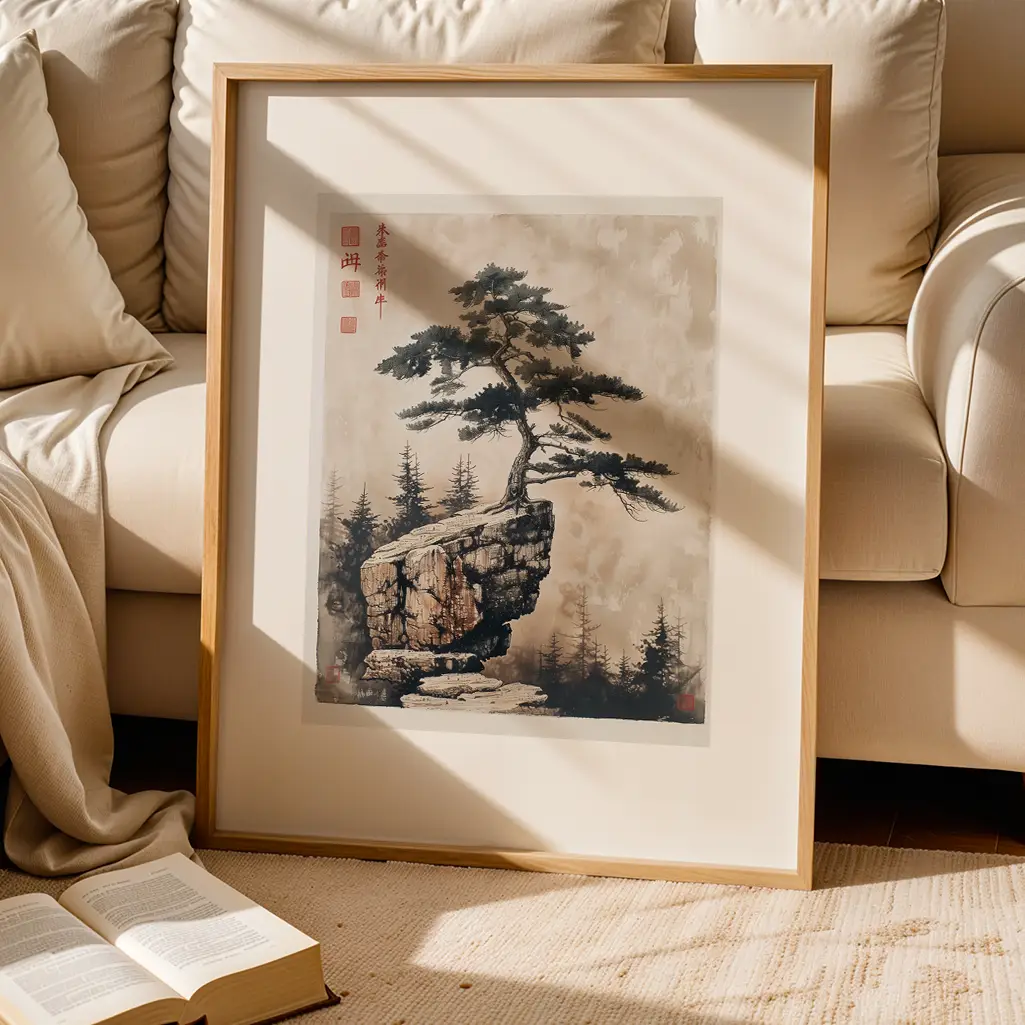
Mountains and mist introduce a more meditative register of natural wall art. Mountains carry a kind of architectural gravity. They give a wall presence. But in a domestic setting, it is not their drama that serves you best; it is their stability. A distant, snow‑dusted range above a workspace can feel like a wordless reminder of perspective. Your inbox shrinks next to rock that has barely changed in millennia.
To keep mountain imagery from overwhelming a room, look for compositions with generous sky or open foreground. This negative space functions like silence in a conversation; it lets the more dramatic forms breathe. Muted palettes—dusty blues, softened charcoals, slate greens—make the mountains recede just enough that you can live with them day after day without feeling shouted at by your own walls.
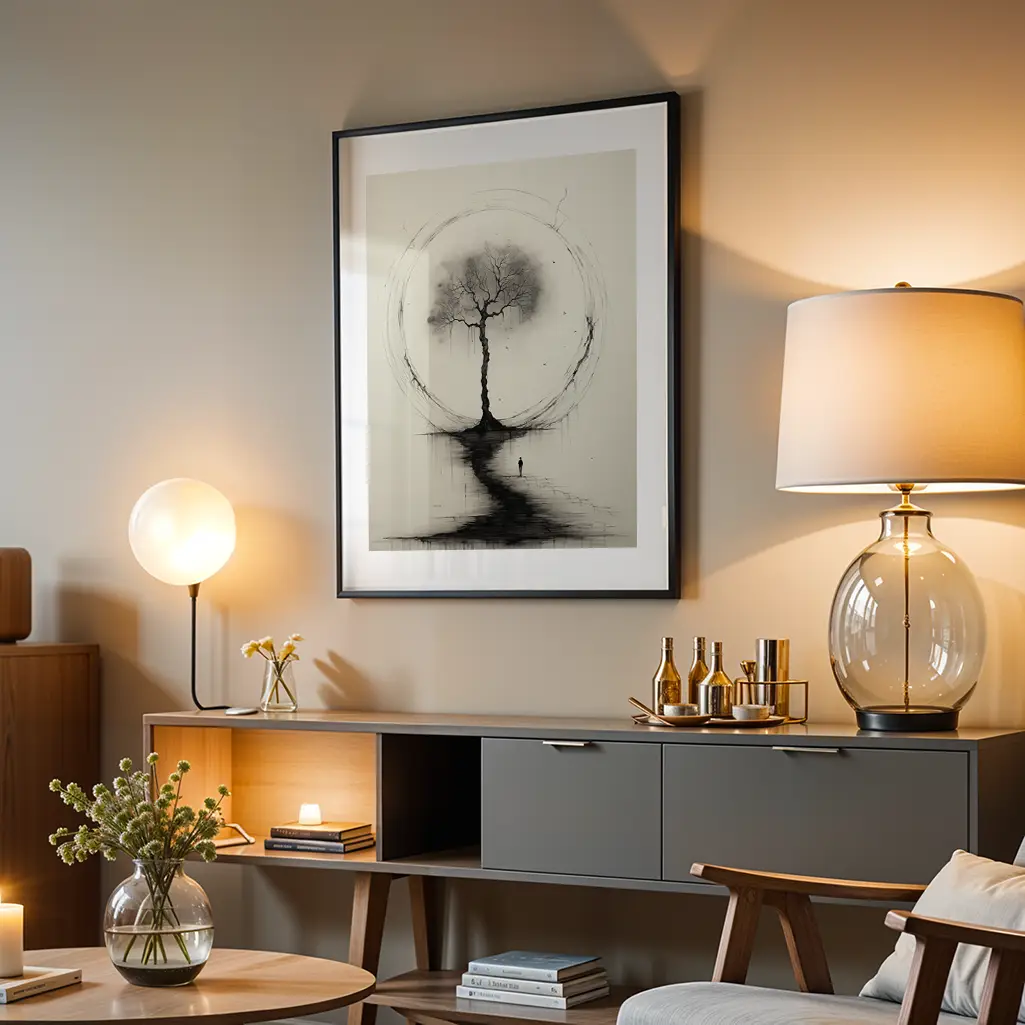
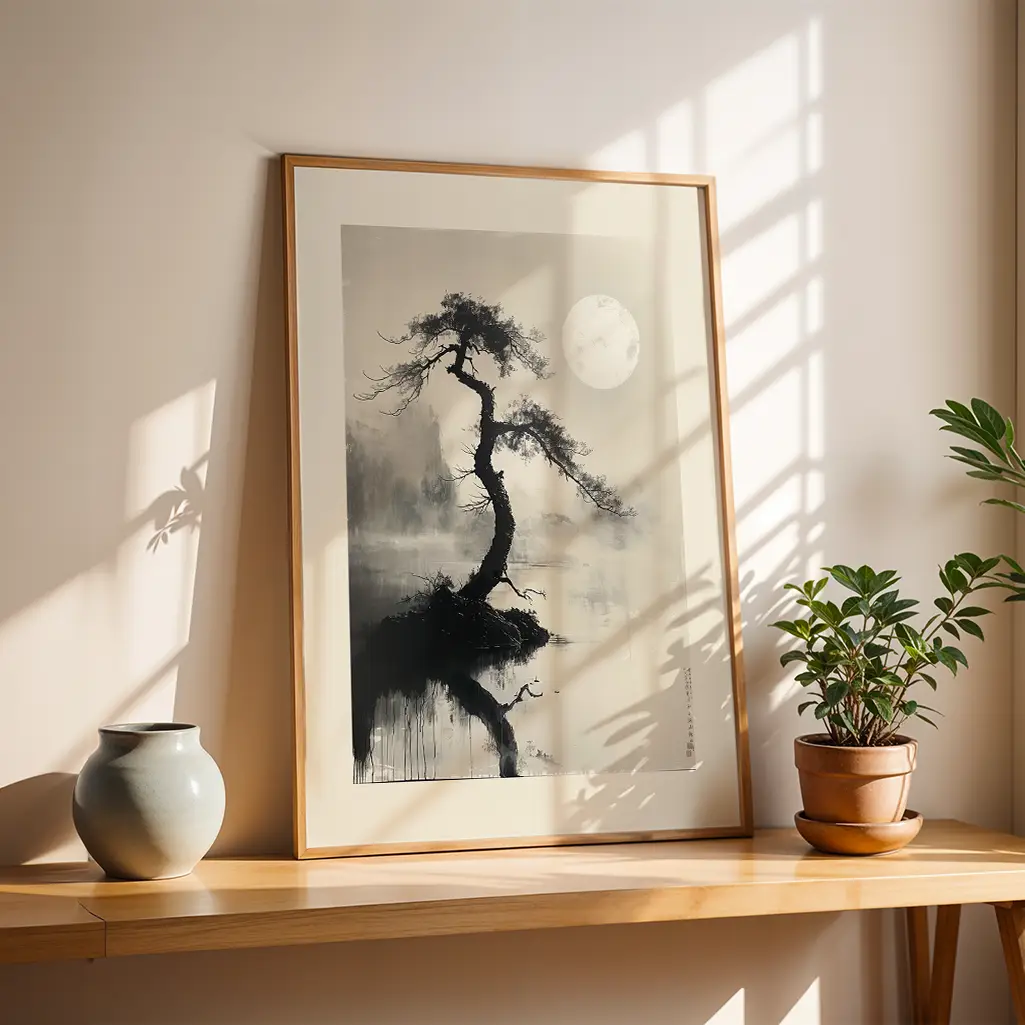
Mist, whether over water, forest or peaks, does something subtler. It softens edges, hides detail and invites your imagination to complete the scene. In a sense, misty art delegates part of the picture to you. That open‑endedness is deeply restful. Your vision can glide through soft gradations instead of colliding with hard lines, which makes such works ideal for bedrooms and small spaces where visual noise accumulates quickly.
If your room is crowded with objects or strong architectural features, a misty landscape can act as a counterbalance. Place it where your eye naturally lands first—the wall opposite the doorway, or the space above a frequently used chair. Its hazy forms create a gentle “soft focus” zone, teaching your gaze to slow down whenever it passes this point. Over time, it becomes a kind of visual mantra: a repeated cue to pause.
The most successful natural wall art arrangements often mix these modes. A cluster of precise botanical drawings near a reading chair, a single contemplative mountain scene grounding a long wall, a narrow strip of mist‑filled forest in a hallway: each plays a part in shaping how home feels from one room to the next. You are not aiming for a theme park of nature, but for a quiet continuity, as though the same weather were moving through every space.
Ultimately, the question to keep asking yourself is not “Does this match my sofa?” but “How does this make my breathing feel?” When a piece of art brings a slight unclenching to your shoulders, when it lets a room feel just one shade softer or wider or calmer, it is doing something more than decorating. It is re‑tuning the atmosphere of your everyday life, one carefully chosen window of nature at a time.