The Quiet Side of Coastal
There is a version of coastal style that feels like a souvenir shop, all anchor prints and novelty pillows that say "Beach, Please." Then there is another, quieter version, in which coastal is less a theme than a way of handling light, color and air. That second version is where homes become calm, breathable spaces instead of sets from a resort catalog.The distinction rests on intent. When coastal style chases a postcard, it leans on symbols: seashell mirrors, turquoise glass, rope-wrapped lamps. When it begins with the lived experience of being near water, it becomes about atmosphere. The way daylight diffuses across pale walls. The way natural textures invite touch. The way a room feels slightly loosened from time.
You do not need an ocean outside your window to borrow this language. What you need is a willingness to translate the sensory parts of the coast into design decisions. Ask what you actually remember from a day by the water. It is rarely the literal decor of the hotel lobby. It is the breeze across your skin, the quiet soundscape, the sense of mental decluttering that comes from looking out at a horizon line instead of a to-do list. Those memories are your palette.
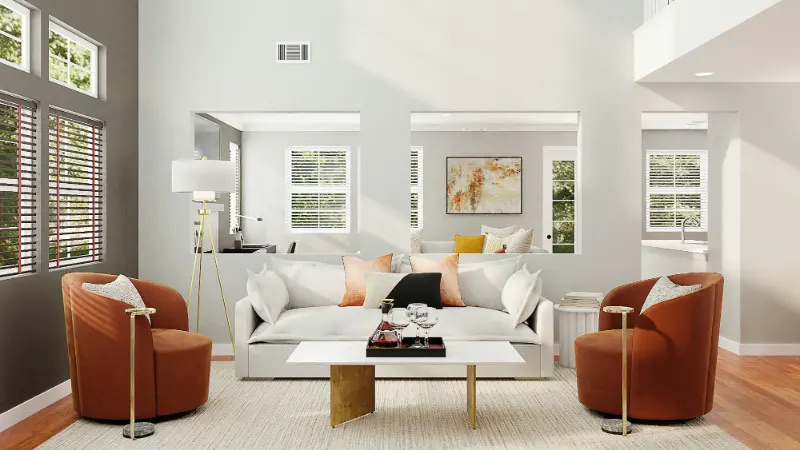
Start with light. In many seaside houses, the true luxury is not an overstuffed sofa but a long, uninterrupted window. If your room is smaller or faces a city street, the principle still applies: clear the path for daylight. Remove heavy window treatments in favor of simple linen panels or sheer shades. Keep furniture just far enough off the floor that light can slide underneath. Even the choice of lampshades matters; a tightly woven dark shade traps light, while a looser, pale one lets it breathe into the room.
Then consider color as air rather than paint. Traditional coastal schemes repeat the same navy and white stripes until they feel like uniforms. A more nuanced approach uses a horizon-inspired gradient instead. Think off-whites with a hint of sand, soft grays like weathered deck boards, and blues so grayed down they almost read as smoke. You can introduce warmth through bleached wood and muted terracotta, the color of sun-warmed roof tiles in old port towns. Coastal does not mean cold; the point is clarity, not chill.
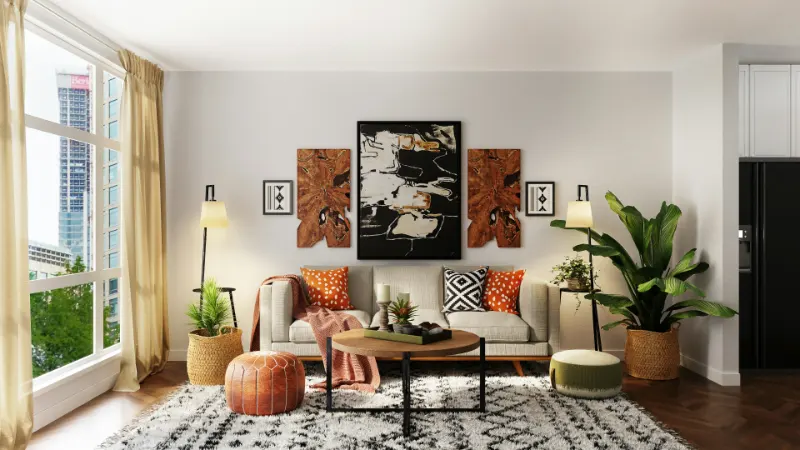
Texture is where a non-themed coastal interior really starts talking. Rattan, cane, jute and raw linen all reference the handmade, practical materials of working shorelines without printing a single seashell. These textures catch and scatter light in subtle ways. A coarse jute rug grounds a room with the visual weight of sand, while a nubby linen throw pulls the informality of a beach towel into a living space without literally being one. When the surfaces in a room feel touchable rather than precious, the entire space relaxes.
Editing the Ocean In, and the Gift Shop Out
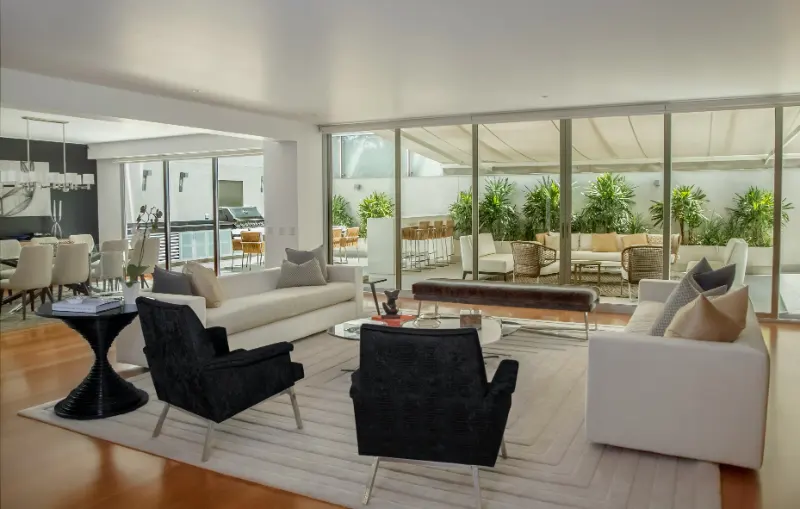
Designing coastal style that does not feel themed is less about adding clever objects than learning what to leave out. The seaside is not visually busy; it is often defined by large areas of openness punctuated by a few strong forms: a distant boat, a single dune fence, a stand of grass leaning in the wind. Your rooms can borrow that cadence.Begin with furniture silhouettes. If you think of coastal style as being about ease of movement, then heavy, ornate pieces are a mismatch. Look for simple lines, legs you can see beneath, arms that do not overtake the room. A slipcovered sofa in a sturdy cotton or linen does more for a coastal interior than a coffee table shaped like a surfboard ever could. The covers communicate casualness, and the fact that they can be cleaned gives you permission to actually live in the room the way you might in a rental cottage where sand is inevitable.
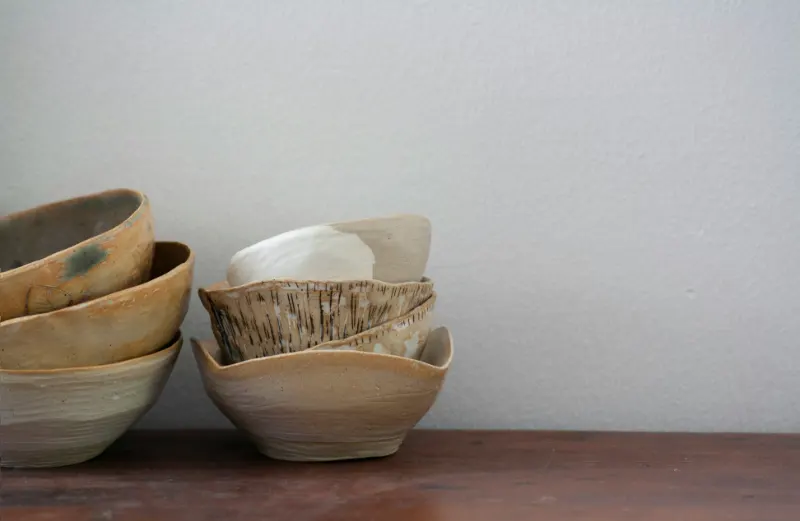
Next comes art and objects, the very place themed decor usually overreaches. The question is not "Is this coastal enough?" but "Does this hint at water, air or horizon in a way that feels honest?" Instead of a photographic print of a crashing wave, consider an abstract painting organized around horizontal bands of color. It will recall the layering of sky, sea and sand without insisting on recognition. Rather than a bowl of shells bought in bulk, display a single found stone with a stripe of quartz through it, or a piece of driftwood you actually picked up on a walk. Authenticity in coastal style is often a matter of restraint.
Color accents are where many spaces tip accidently into theme. A disciplined palette makes the difference. If your base is warm white, soft gray and pale wood, decide on one or two sea-adjacent hues and repeat them quietly. Maybe it is a smoky blue in the rug, echoed in a ceramic lamp and a stack of linen napkins. Maybe it is a sea glass green in the bathroom tile and a glass vase on the dining table. The goal is not to recreate the full spectrum of a beach souvenir stand but to hum a single note clearly.
Sound and scent, though invisible, also belong in this conversation. Coastal spaces often feel serene because they are acoustically soft: woven rugs, fabric sofas and curtains all absorb echo. Adding these elements in a city apartment does more to create a "by the water" sense of calm than another piece of coral ever could. Similarly, choose one subtle, clean fragrance that suggests salt, citrus or sun-warmed wood rather than a candle that shouts "tropical vacation." It should be a background presence, not the main act.
Most of all, remember that a non-themed coastal interior is less a look than a rhythm. It is the rhythm of open and closed storage, of objects and empty space, of pale fields of color punctuated by a few darker, grounding notes, like wet stones on the shore. If you can walk into a room and feel your shoulders drop a half inch, you are close. The home does not have to announce "We love the beach"; it only has to offer the same kind of exhale.
From there, the work becomes personal. You might be drawn to the spare, sun-bleached minimalism of a New England coastline or the warm, terracotta-and-olive palette of the Mediterranean. Both can be coastal without a single printed anchor. What they share is a respect for natural light, a trust in simple materials and a willingness to let the eye rest. The rest is editing: letting the ocean in at the level of sensation, and quietly, firmly, leaving the gift shop at the door.