The Difference Between Empty and Peaceful
Minimalism is often blamed for making rooms feel like galleries after closing time: echoing, overly bright, a little intimidating. The truth is that what many people call minimalism is actually just absence. Contemporary minimalism, at its best, is less about owning nothing and more about owning with intention. The warmth you feel in a space comes not from how much is there but from how thoughtfully each element participates.
In a conventional room, comfort is usually layered through accumulation: another pillow, another lamp, another throw. Minimalism flips that instinct. It asks what can be removed so that what remains has room to breathe. The line between empty and peaceful lies in how you handle that space in between. Designers often refer to it as "negative space". It is not a void but an active component of the composition, the way silence is part of music.
A room tips into coldness when that space is left unanalyzed. All white, all smooth, all hard is the interior equivalent of static. To avoid that, begin by noticing your own sensory responses. Stand in the room at different times of day. Where does light fall naturally. Which areas feel visually noisy. Which corners feel forgotten. Warm minimalism is not a style you impose; it is a series of small, precise adjustments to how your home already behaves.
Start with restraint, not restriction. Choose a limited palette but allow subtle shifts: a warm white instead of a cool one, an earthy beige in place of a gray that leans blue. Think of the room as a poem instead of a catalog. Every object gets a reason to exist: a vessel for branches that traces a tall, simple line; a low, comfortable chair whose curve softens a rigid architecture. As you edit, your goal is not perfection but coherence, a feeling that each piece is in quiet agreement with the others.
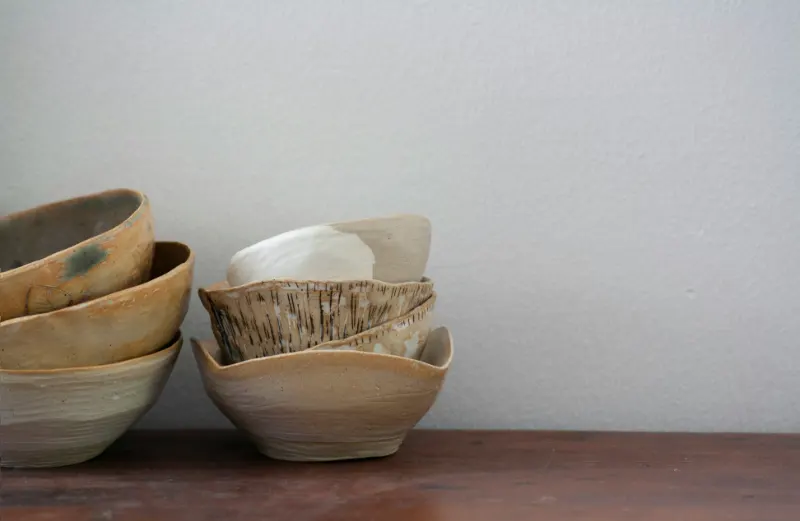
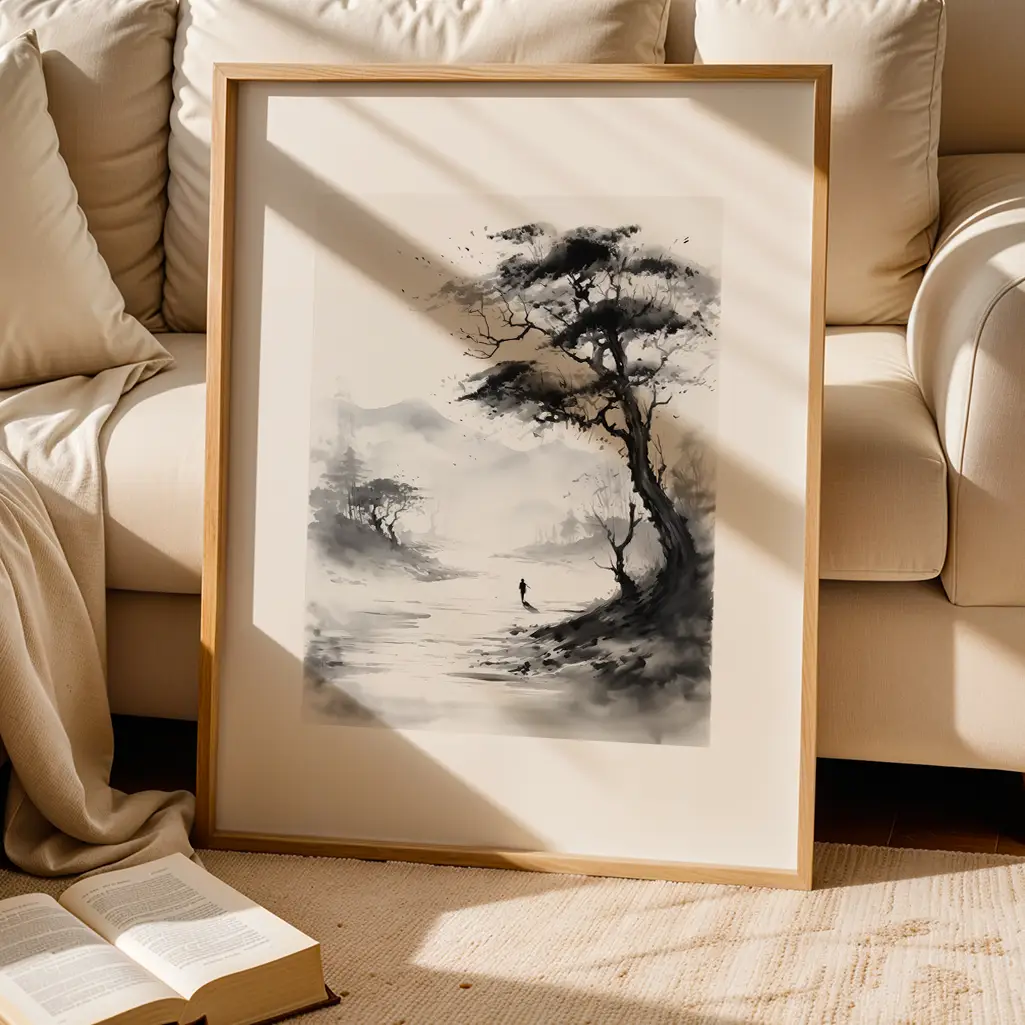
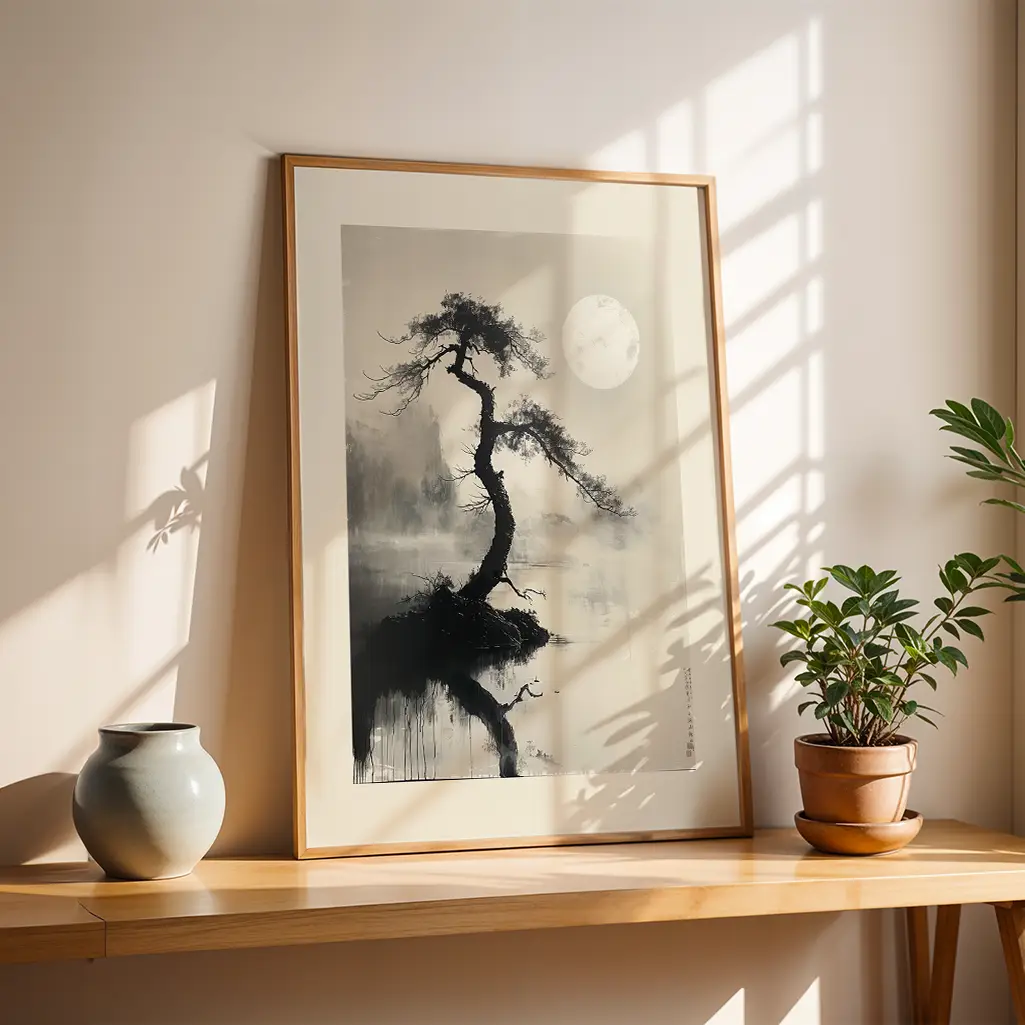
Warmth, in this context, is emotional as much as visual. A contemporary minimalist room should still reveal something about the person who lives there. If your space feels like it could belong to almost anyone, it may be time to reintroduce a few very specific, even slightly odd items: the landscape painting your grandmother kept in her kitchen, the chipped bowl that happens to hold your keys perfectly. Minimalism becomes humane when it is not afraid of a little imperfection.
Materials, Light and the Texture of Calm
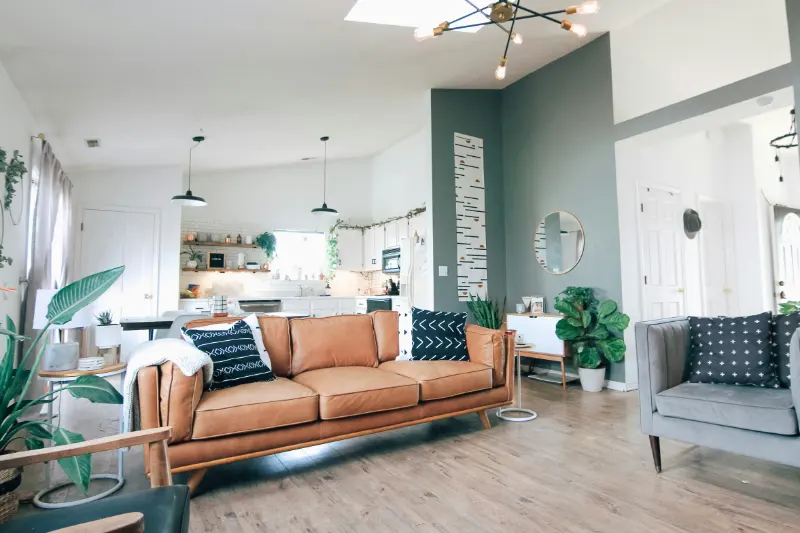
If minimalism is a language, then materials and light are its verbs. They do the active work of shaping how a room feels from the moment you step in. A white box with polished concrete floors and recessed lighting can be breathtaking in an art museum. At home, without the distraction of large-scale works, that same combination can slide quickly toward sterile. Warm minimalism relies less on color saturation and more on what your body senses when you sit, walk and touch.
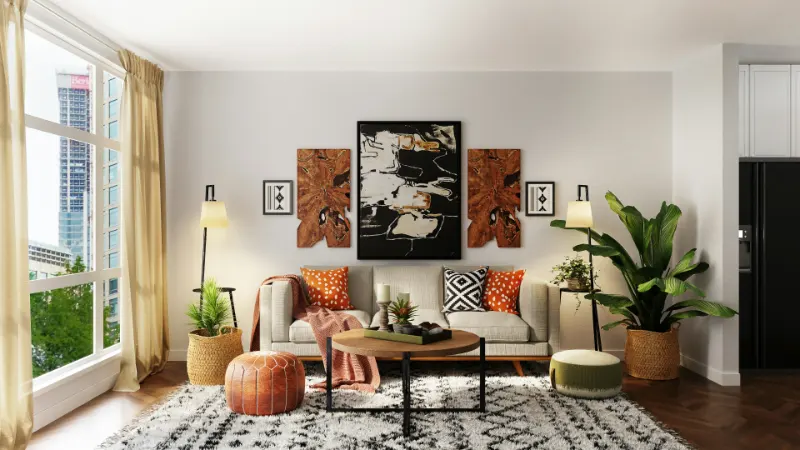
Begin underfoot. Hard surfaces like stone or concrete can stay if they are balanced by something softer and more porous: a wool rug with a low, dense pile; a flatwoven kilim that introduces a subtle pattern without visual clutter. The aim is for your feet to register a gentle give, a reminder that the space is meant to be inhabited, not only photographed.
Move upward to what your hands encounter. Replace shiny, fingerprint-prone metals with finishes that age gracefully: brushed brass, blackened steel, oiled wood. A plain oak tabletop, left with a visible grain, offers more visual warmth than a high-gloss lacquer even if both are technically the same color. Linen, cotton and wool on sofas and beds absorb light instead of bouncing it back at you. Their tiny irregularities, the slight slub in a linen curtain or the nap of a wool blanket, turn a supposedly empty room into a place where your senses have something to quietly explore.
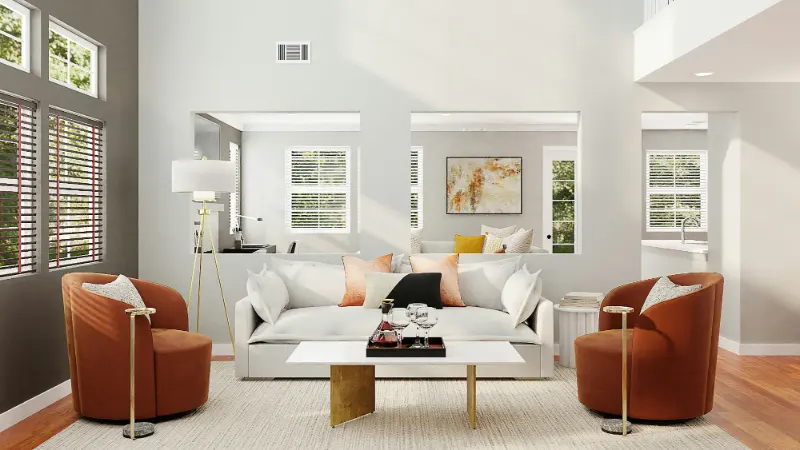
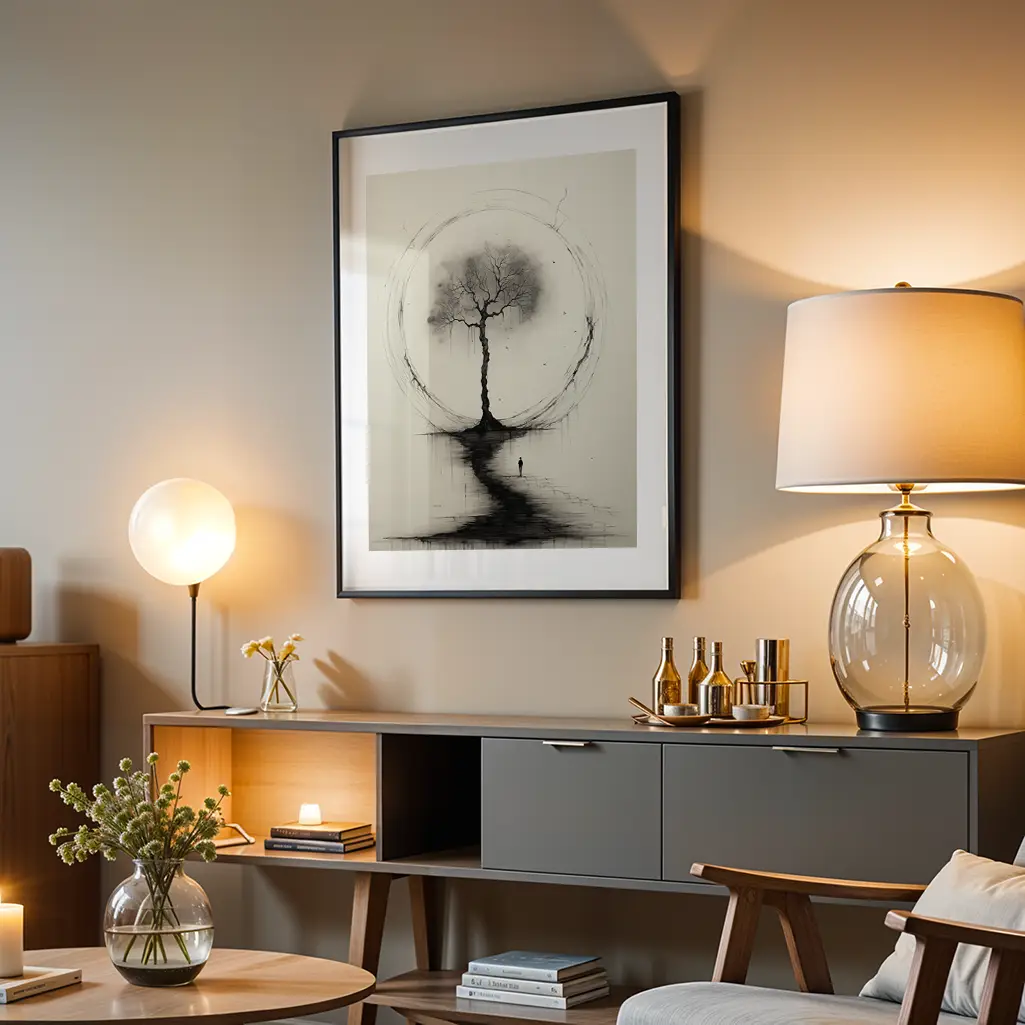
Light, meanwhile, is the most powerful and least expensive tool you have. Overhead fixtures alone tend to flatten everything beneath them, erasing shadows and nuance. A minimalist space thrives on layered, low-intensity light sources: a reading lamp that washes a wall rather than piercing it, a small sconce beside the bed, a candle that sends a soft halo across a shelf. Think in pools rather than floods. The goal is not brightness but clarity, a sense that you can see what you need while still feeling cocooned.
Color still has a role, even if you prefer a restricted palette. Instead of reaching for stark contrasts, consider tones that share an underlying temperature. Warm whites, sand, camel and muted terracotta form a family; sage, olive and deep forest greens form another. When your colors relate to one another quietly, the room feels whole without shouting for attention. The restraint is what allows a single, meaningful exception, such as a cobalt vase or a rust velvet cushion, to make a real emotional impact.
Editing With Feeling: How to Keep Minimalism Personal
The fear that minimalism will erase personality is understandable. Many of the most photographed minimalist homes are also the least lived in, their owners seemingly absent from the frame. But the path to a warmer version of the style is not to abandon editing; it is to edit with feeling instead of by rule.
Think of your possessions not only in terms of use but of narrative. Which objects do you reach for daily. Which ones hold stories you actually like telling. Which pieces would you notice missing a week from now. Those are candidates for staying in view. Everything else can either be stored, donated or allowed to exit your life without ceremony. The result is a home that shows you, just distilled.
Display becomes crucial. A cluttered bookcase can feel heavy, but an entirely empty one feels almost accusatory. Try grouping books by height or by general color tone, leaving negative space between clusters. A single framed photograph on a large expanse of wall might look lonely; a quiet row of three, hung at eye level, starts to read as intention. The same rule of coherent families that applies to color and materials applies to objects. Items that share a mood look harmonious even when they come from different eras or price points.
Finally, consider the choreography of everyday life. Where does your bag land when you enter. Where do you drop your mail. In a cold minimalist space, these human traces are treated as intrusions. In a warm minimalist space, they are anticipated and given shape: a shallow tray on a console, a hook that actually aligns with your arm’s natural reach, a woven basket that hides the tangle of charging cables. The design quietly accommodates your habits so you do not have to fight the room to keep it looking composed.
Over time, this gentler approach to contemporary minimalism reveals its real gift. With fewer objects demanding attention, you start to notice subtler shifts: the way the afternoon sun climbs your walls, the sound of rain softening against your rug, the pleasure of an empty table holding only a cup and a book. Warmth, it turns out, is not the opposite of minimalism. It is what happens when you allow spaciousness and life to occupy the same room.