Why Your Interior Style Is Already Inside You
You do not actually discover your interior style in a store; you discover it in your own reactions. Style is less about knowing the names of trends and more about noticing what makes your shoulders drop, your breath slow, your mind soften. A home that feels like you usually comes from paying attention to these quiet cues long before you buy a sofa.The trouble is that most of us shop first and notice later. We scroll, we add to cart, and only when the pieces are in the room do we realize there is no through line. That is where a quiz-style approach can be useful. Instead of asking, “Am I minimalist, modern, or boho,” this kind of quiz asks, “What do I do, feel, and reach for in an ordinary day.” The labels come last. Your patterns come first.
Think of this as an interior style quiz you do in your head, not on a website. Each question is designed to translate your lived preferences into tangible design decisions: colors, materials, shapes, and arrangements. The goal is not a perfectly labeled aesthetic; it is a home that behaves the way you need it to behave.
Begin with your body’s signals. When you enter a space you love, what happens. Do you immediately want to curl up in a corner, or do you feel pulled toward the center of the room. Are you drawn to the view, the light, the textures under your hand. These are not abstract impressions. They are practical data points that point to specific design moves you can make.
If you feel calm in a place with very little visual noise, that points you toward cleaner lines, fewer objects, and more negative space. If you feel soothed in richly layered rooms, it tells you that emptiness might feel more like absence than peace. One reaction is not more sophisticated than the other; they are simply different instructions for how to build a space that is honest about who lives there.
This inward-looking method is slower than matching a style board online, but it has a useful side effect. It gives you confidence. Once you understand the “why” behind your reactions, you can shop and rearrange with less second guessing, because you are working from principles instead of impulse.
A Quiz-Style Guide to Reading Your Own Taste
Imagine answering a series of quiet questions while you move through your day. Each one is simple, but together they sketch the outline of your interior style.Start with light. Ask yourself what kind of light makes you feel most like yourself. Do you crave bright, crisp daylight that shows every detail, or do you soften in low, warm lamplight. If you lean toward brightness, you probably want lighter walls, fewer heavy window treatments, and reflective surfaces like glass, metal, or pale wood. If you relax in dimmer light, prioritize table lamps, adjustable bulbs, and materials that absorb rather than bounce light, such as matte finishes, wool, or textured plaster.
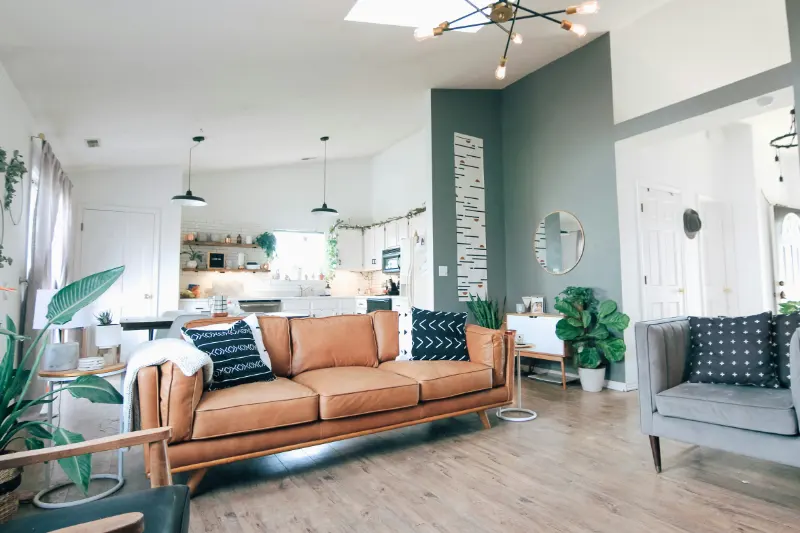
Next, consider how you use your living room when nobody is watching. Picture your ideal evening. Are you spread out on the floor with books and projects, or anchored to one seat with a blanket and a show. Floor-sitters often thrive with flexible furniture, modular pieces, and open space in the center of the room. Nesters do better with deep seating, side tables within reach, and a sense of enclosure created by plants, bookcases, or screens.
Then, think about your tolerance for visual stimulation. Open your closet and look at your clothes. Do you see mostly solids in a narrow palette, or a mix of patterns, colors, and textures. Closets are rehearsal spaces for the home. A restrained wardrobe often correlates with a preference for calm, tonal interiors where variation comes from texture rather than color. A playful wardrobe hints at comfort with pattern mixing, bolder hues, and objects on display.
Ask yourself how you feel in other people’s homes. Recall three spaces you loved, and three that quietly drained you. Describe them without using design jargon. Maybe one felt “airy and clear,” another “cozy and bookish,” another “dramatic but exhausting.” Underneath those words are design levers you can adjust: scale of furniture, height of art, density of objects, contrast in color. If a “bookish” room appeals to you, that might mean floor-to-ceiling shelving, lower lighting, and fabrics that invite lingering. If “airy” is your word, it might mean legs on furniture instead of skirted bases, fewer tall pieces, and a limited palette.
Finally, think about maintenance. This is the most unglamorous but honest part of your style quiz. How much upkeep feels acceptable before you start resenting your home. If you are already stretched thin, an interior that relies on pristine white upholstery, dozens of small objects, or elaborate tabletops might work against you. Your true style sits at the intersection of what you find beautiful and what you can realistically care for. When those two align, your home not only looks good, it stays good.
Turning Quiz Insights into a Coherent Home
Once you have your answers, you can begin to translate them into actual design moves. This is where the quiz becomes a guide rather than a personality test. Look for patterns in your responses. Maybe you like low, warm light, layered textiles, and rooms that encourage curling up with a book. That suggests softness in both shape and material. Think rounded corners, plush rugs, heavier curtains, and deeper seating. On the other hand, if you prefer bright clarity, open floors, and clean closets, you are signaling a need for visual simplicity and more air around each object.Color decisions become easier too. If your mental images of beloved spaces include a lot of natural material, let those tones do the work first. Wood, stone, linen, and clay offer a grounded palette that you can gently nudge warmer or cooler. If your quiz answers revealed comfort with bolder color, choose one or two hues you never tire of and let everything else support them rather than compete. Repetition is what creates style. Seeing the same accent color or material in several rooms makes your home feel intentional instead of accidental.
Arrangement is another place to apply your insights. If you discovered that you are drawn to connection, pull seating closer together and angle chairs toward each other, not just toward a screen. If solitude matters as much as gathering, carve out a small retreat: a chair by a window, a reading corner in the bedroom, a bench in an entry that feels like a landing pad. Your quiz results are essentially a list of non negotiables for how your home should support your daily rituals.
The deeper reasoning behind all of this is simple. When you design from self observation rather than trends, your interior style becomes durable. It will stretch to fit different apartments or houses because it is rooted in how you like to live, not in a specific piece of furniture. You can still admire images on social media, but you will filter them through what you already know about yourself. That filter is your real quiz score. It is the quiet confidence that lets you say, “Beautiful, but not for me,” and save your yes for the pieces that truly belong in your space.